
If you own a home with a cedar or wood shake roof anywhere in the Greater Toronto Area, you have probably already asked yourself why do wood shake roofs require frequent repairs compared to asphalt shingles or metal panels down the street. The honest answer is that wood is a living, breathing material, and Toronto’s climate is not particularly kind to it. Between freeze-thaw cycles, humid summers, heavy snow loads, and UV exposure, a wood shake roof is under constant environmental attack from every direction.
Wood shake roofing has a real appeal. It looks beautiful, ages into a distinctive silver-grey patina, and provides decent natural insulation. But that same organic material that gives it character also makes it far more vulnerable to moisture, rot, insects, and mechanical damage than manufactured roofing products. Understanding exactly why do wood shake roofs require frequent repairs helps homeowners budget correctly, catch problems early, and decide whether ongoing maintenance or eventual replacement makes more financial sense.
In this guide, we will walk through the specific mechanisms that cause wood shake deterioration, how Toronto’s seasonal weather accelerates the process, what a realistic maintenance and repair schedule looks like, and when it is time to call in a professional for a full roof repair or replacement assessment. We will also cover cost comparisons, a troubleshooting table for common wood shake problems, and answers to the most frequent questions homeowners ask us on site visits across the region.
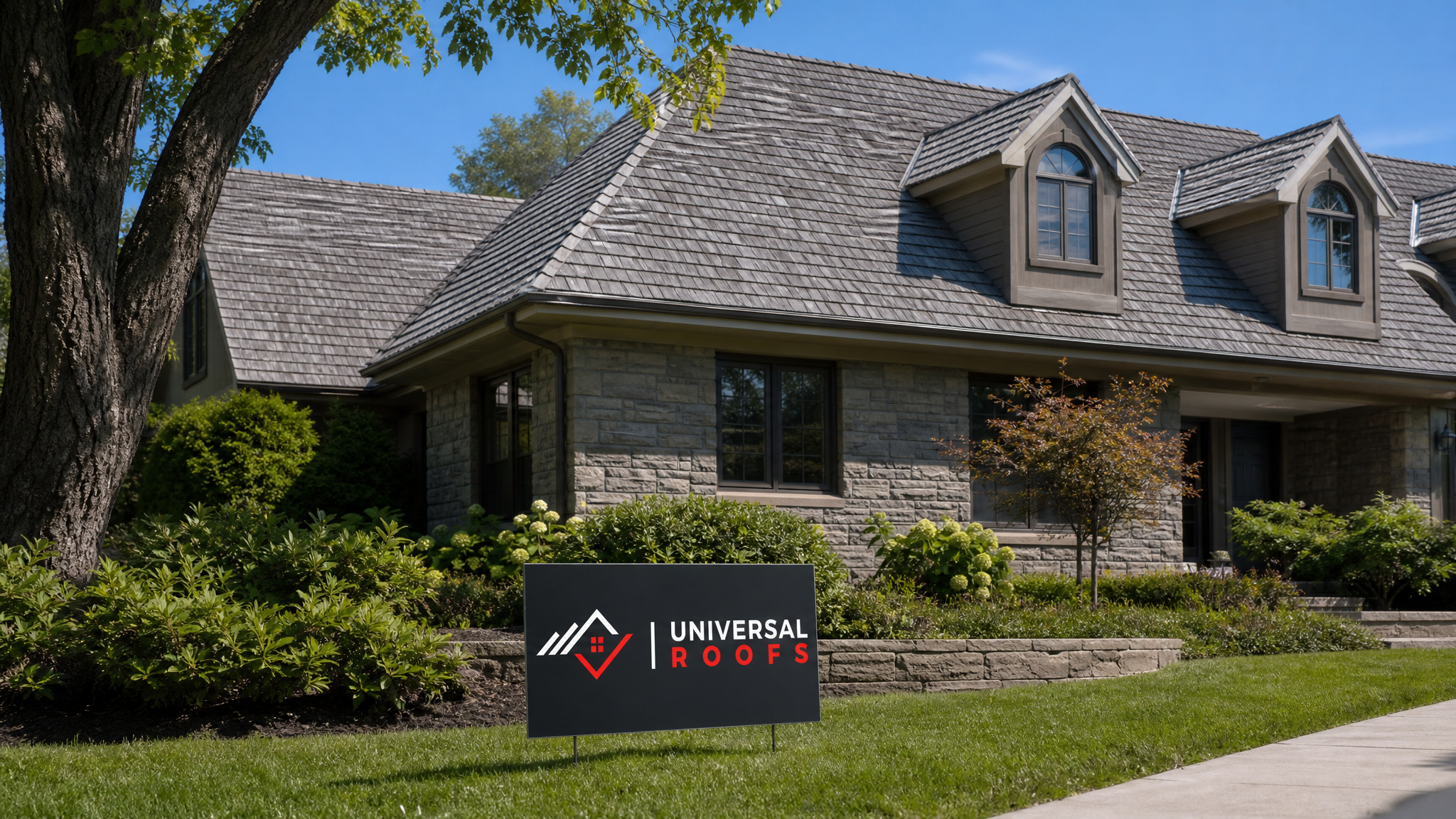
Why Do Wood Shake Roofs Require Frequent Repairs in the First Place
The core reason why do wood shake roofs require frequent repairs comes down to one word: moisture. Wood shakes and shingles are cut or split from cedar, cypress, or pine logs, and even after kiln-drying and pressure treatment, the material remains porous. It absorbs and releases water constantly as humidity levels change through the day and across seasons. That expansion and contraction cycle is what eventually cracks, cups, splits, and curls individual shakes.
In Toronto specifically, we see an unusually aggressive freeze-thaw pattern. Water that soaks into a shake during a late-autumn rain can freeze overnight, expand inside the wood fibres, and force micro-fractures that widen every time the cycle repeats. By the time spring arrives, a roof that looked fine in October may have dozens of hairline splits that were invisible from the ground. This is one of the biggest differences between wood shake maintenance here and in drier climates like the interior of British Columbia, where cedar shake roofing was originally popularized.
Beyond moisture cycling, five other factors compound the problem:
- UV degradation — sun exposure breaks down the lignin that holds wood fibres together, making shakes brittle over time.
- Organic growth — moss, algae, and lichen retain moisture against the wood surface and accelerate rot, especially on north-facing slopes that stay shaded.
- Wind uplift — individual shakes are held by only a few nails each, and severe wind events common to spring storms in the GTA can lift or crack them.
- Pest activity — carpenter ants and wood-boring insects are drawn to softened, moisture-damaged wood.
- Foot traffic damage — wood shakes are far more fragile underfoot than asphalt shingles, so even routine gutter cleaning or chimney inspection can crack shakes if a technician does not know how to walk the roof properly.
None of these issues are usually dramatic on their own, but they accumulate. A shake roof that is not proactively maintained tends to develop a growing list of small failures that eventually add up to a major leak, which is exactly why a genuinely disciplined repair rhythm is the only way to keep one performing well long-term.
How Toronto’s Climate Specifically Accelerates Wood Shake Wear
Every region has its own climate stress profile, and understanding Toronto’s is essential to understanding why do wood shake roofs require frequent repairs here specifically. The GTA experiences four genuinely distinct seasons, each of which stresses wood shakes differently.
Winter brings snow load, ice damming, and repeated freeze-thaw cycling — often more than 30 freeze-thaw transitions per winter in a typical year. Spring brings heavy rain and wind, often arriving before homeowners have had a chance to inspect winter damage. Summer humidity, especially through July and August, keeps moisture content in the wood elevated even without rainfall, which is part of why summer is actually one of the best times to schedule inspection and repair work — the wood is dry enough to work with, and there is no snow load complicating access. Autumn leaf litter, if left on the roof, holds moisture against shakes going into the next freeze cycle and restarts the whole pattern.
This is a meaningfully harsher cycle than what wood shake roofs experience in milder coastal climates. Homeowners who move to the GTA from regions with less dramatic seasonal swings are often surprised at how much more attention their wood shake roof needs here compared to what they were used to.
| Season | Primary Stress on Wood Shakes | Typical Damage Pattern | Recommended Action |
|---|---|---|---|
| Winter | Freeze-thaw cycling, ice damming, snow load | Splitting, cracking, nail popping | Post-storm visual check from ground; avoid roof access |
| Spring | Heavy rain, high winds | Lifted or missing shakes, curling | Full inspection once snow has cleared |
| Summer | UV exposure, humidity | Brittleness, colour fading, minor cupping | Best window for repairs and re-treatment |
| Autumn | Leaf and debris accumulation | Moss growth, trapped moisture, rot onset | Clear debris, clean gutters, pre-winter inspection |
The Most Common Wood Shake Roof Problems We See on Service Calls
When our technicians are called out for wood shake work across the region, the same handful of problems show up again and again. Recognizing them early is the single best way to avoid an emergency call.
Splitting is the most common issue. Individual shakes crack along the grain as they dry and swell repeatedly. A single split shake is a minor fix, but if left alone through several more freeze-thaw cycles it can widen into a channel that funnels water directly into the roof deck.
Curling and cupping happen when one side of a shake dries faster than the other, usually because of uneven sun exposure or poor attic ventilation pushing warm, moist air up against the underside of the roof deck. This is one of several reasons why attic ventilation matters so much for wood shake longevity — a poorly ventilated attic bakes the underside of the shakes from below even when the top side looks fine.
Moss and algae growth is extremely common on shaded, north-facing slopes in the GTA, particularly on properties with mature tree cover. Moss holds water against the wood constantly, which is essentially the ideal condition for rot to take hold.
Rot and soft spots develop where moisture has been trapped long enough for fungal decay to set in. Once a shake is rotting, it has no structural value and needs to be replaced, not patched.
Nail pop and fastener failure occurs as wood expands and contracts around galvanized nails over the decades, gradually working fasteners loose. A shake with a popped nail is prone to lifting in wind.
Valley and flashing deterioration is arguably the most serious category, because valleys concentrate water flow. Flashing failures around chimneys, skylights, and valleys are responsible for a disproportionate share of the leaks we diagnose. If your home also has a skylight integrated into a wood shake roof, the flashing detail around it deserves particular attention during every inspection — and if the skylight itself is original to the home, it may be worth pairing a shake inspection with a look at whether skylight replacement makes sense at the same time, since disturbing shakes around an ageing skylight frame is often the trigger point for a larger leak.
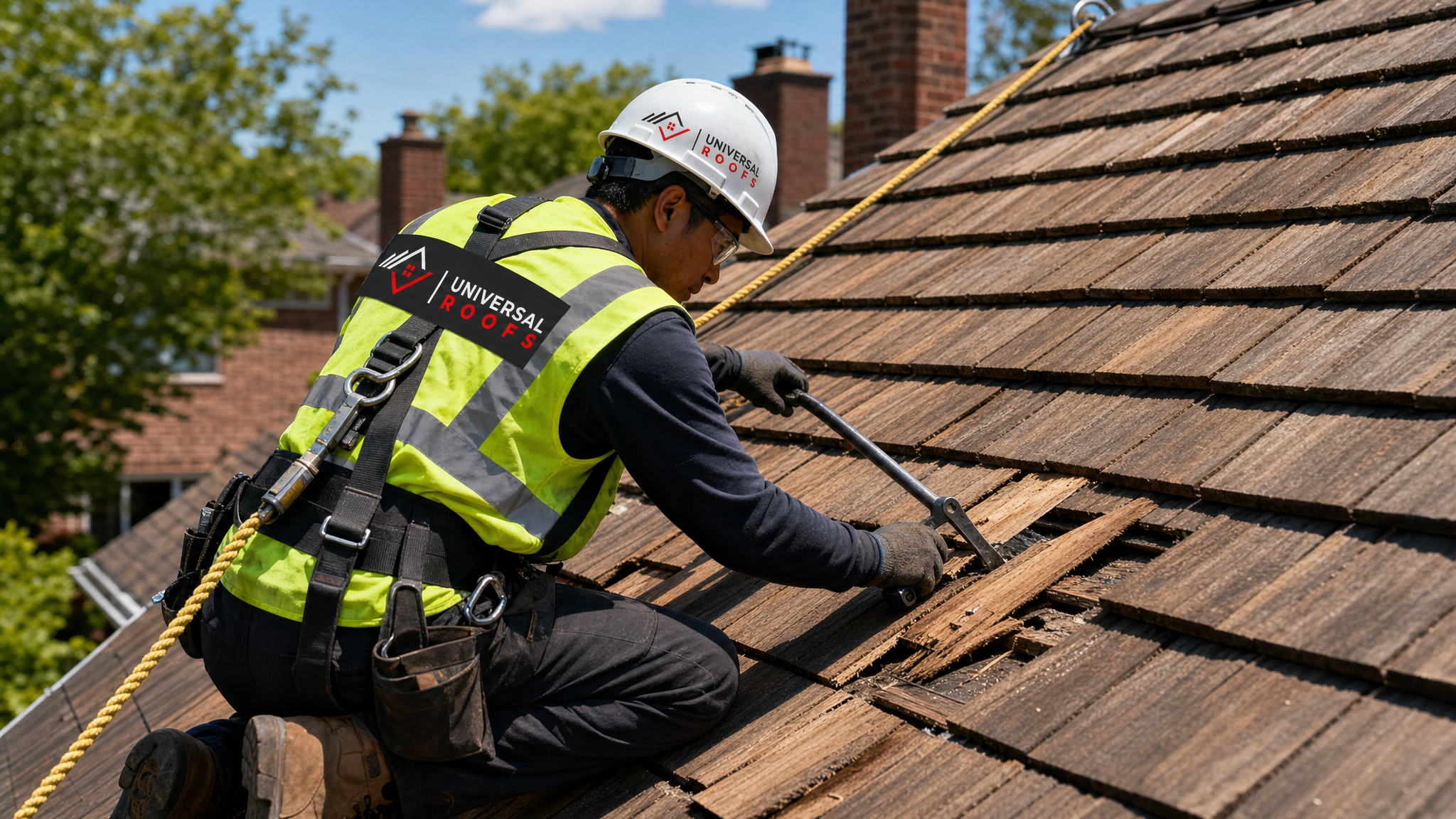
How Wood Shake Repair Actually Works, Shake by Shake
One thing that surprises many homeowners is how different wood shake repair is from asphalt shingle repair. You cannot simply lay a new shake over an old one or slap down a patch. Each damaged shake generally needs to be individually removed and replaced, which is a slower, more skilled process.
The typical repair sequence looks like this: the technician first identifies every compromised shake, not just the obviously broken ones, since hairline splits and early curling are easy to miss from ground level. Old, split, or rotted shakes are carefully split out using a froe or shake ripper so the surrounding shakes are not disturbed. The exposed felt or underlayment is checked for water staining, which can indicate a leak has already been travelling further than the visible damage suggests. New matching shakes are cut to size and slid into place, then face-nailed or blind-nailed depending on the original installation method and the shake’s position in the coursing pattern. Flashing is checked and resealed anywhere it intersects with the replaced section. Finally, the area is inspected for proper drainage and overlap before the crew leaves the site.
This individual, one-at-a-time process is fundamentally more labour-intensive than replacing a section of asphalt shingles, and it is one of the biggest reasons wood shake maintenance costs more per repair visit even when the total area being fixed is small.
Wood Shake Roof Lifespan vs. Other Roofing Materials
A fair question homeowners ask us is whether the frequent repairs are simply the price of a shorter-lived material, or whether wood shakes genuinely last as long as advertised if maintained properly. The honest answer is somewhere in between — a well-maintained cedar shake roof can reach 25 to 30 years in the GTA, but only with consistent attention. Left unmaintained, that lifespan can drop dramatically.
| Roofing Material | Typical GTA Lifespan (Maintained) | Maintenance Frequency | Relative Repair Cost Per Visit |
|---|---|---|---|
| Wood (cedar) shake | 25–30 years | Annual inspection, repairs every 2–4 years | Moderate to high |
| Asphalt shingle | 18–25 years | Inspection every 2–3 years | Low |
| Metal panel | 40–60 years | Inspection every 3–5 years | Low to moderate |
| Flat/membrane roofing | 20–30 years | Inspection every 1–2 years | Moderate |
Homeowners weighing whether to continue repairing a wood shake roof or transition to something else entirely often find it useful to compare against a flat roofing system for additions or garages, or to review full roof replacement options if the shake roof has passed the point where individual repairs are cost-effective.
Building a Realistic Maintenance Schedule That Actually Prevents Repairs
The good news is that the frequency and severity of wood shake repairs is not fixed — it is heavily influenced by how proactively the roof is maintained. Homeowners who follow a disciplined schedule spend meaningfully less over the life of the roof than those who wait for visible leaks.
A sound annual schedule looks roughly like this. In spring, once snow has fully cleared, walk the property perimeter and look for shakes that appear lifted, missing, or badly curled from the ground, then book a full inspection if anything looks off. In early summer, this is the ideal window for any repair work, re-treatment, or moss removal, since the wood is dry and temperatures are stable. In autumn, before the first hard frost, clear all leaf litter and debris from the roof surface and gutters, since trapped organic material is one of the single biggest accelerants of rot. Through winter, avoid roof access altogether unless there is an active leak, since walking on frozen, brittle shakes causes far more damage than the weather itself.
On top of that seasonal rhythm, a full professional inspection every 12 to 24 months is the single highest-value maintenance step a wood shake owner can take. Most serious wood shake failures we encounter on emergency calls trace back to a small, fixable problem that went unnoticed for one or two seasons too long.
| Maintenance Task | Recommended Frequency | Who Should Do It | Consequence of Skipping |
|---|---|---|---|
| Visual ground-level check | After every major storm | Homeowner | Missed early damage indicators |
| Gutter and debris clearing | Spring and autumn | Homeowner or professional | Trapped moisture, accelerated rot |
| Full roof inspection | Every 12–24 months | Licensed roofing professional | Small splits become major leaks |
| Moss/algae treatment | As needed, typically every 2–3 years | Professional | Ongoing moisture retention and rot |
| Individual shake replacement | As identified during inspection | Licensed roofing professional | Water intrusion to deck and attic |
Signs It Is Time to Call a Professional Rather Than DIY
Plenty of homeowners are comfortable clearing gutters or doing a ground-level visual scan themselves, but wood shake repair is not a great DIY category for several reasons. The material itself is fragile underfoot in a way that is easy to underestimate — a homeowner walking a shake roof to inspect a chimney can crack three or four shakes without realizing it, turning a non-issue into a repair job.
There are also several signs that point clearly toward calling a professional rather than attempting a fix. Any sign of water staining on interior ceilings or attic sheathing means water has already breached the roof assembly and the damage is likely more extensive than what is visible from outside. Multiple curled or cupped shakes clustered in one area often indicate an underlying ventilation or flashing issue, not just isolated wear. Soft or spongy spots underfoot (felt by a professional walking the roof safely) indicate rot that has already compromised the deck. Any flashing separation around chimneys, valleys, or skylights should be treated as urgent, since these are the highest-leak-risk zones on any wood shake roof.
If you are noticing any combination of these signs, it is worth booking a proper roof repair assessment rather than waiting for the problem to declare itself as an active leak during the next heavy rain.
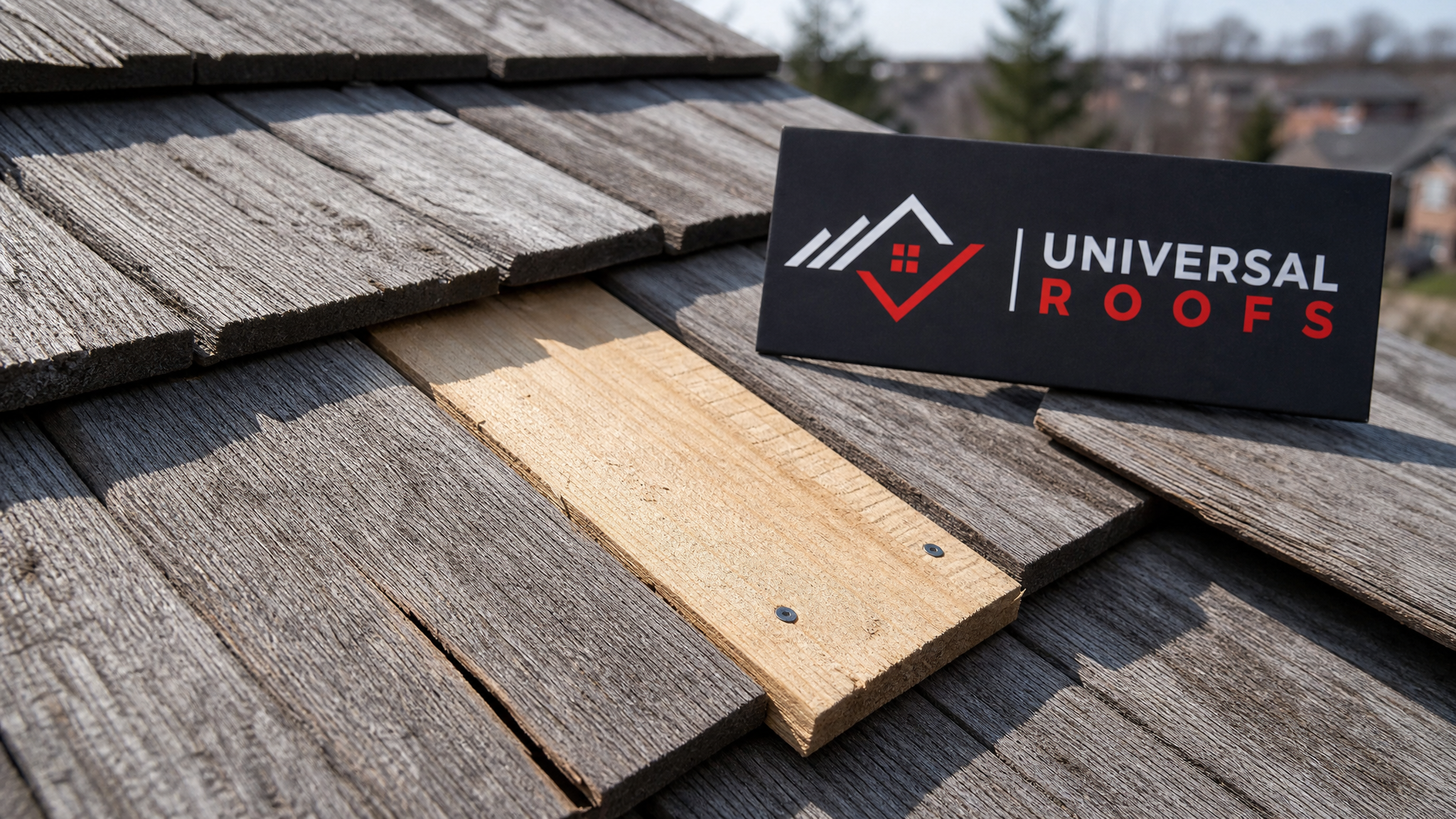
Cost Considerations Across the GTA
Repair costs for wood shake roofing vary depending on the extent of damage, roof pitch, accessibility, and the specific municipality, since permit and disposal requirements differ slightly across the region. Homeowners in Toronto, Peel Region, York Region, Halton Region, and Durham Region generally see fairly similar pricing, though older heritage properties in central Toronto sometimes carry additional considerations around matching historic shake profiles.
Generally speaking, spot repairs involving a handful of shakes are the least expensive category of roofing work, while larger sections affected by rot or flashing failure cost more due to the labour-intensive, one-at-a-time replacement process described earlier. Homeowners should be cautious of any quote that proposes patching over rotted wood rather than replacing it — that approach almost always results in a repeat call within a year or two.
Wood Shake Repair Troubleshooting Reference
The table below summarizes the most common wood shake symptoms we encounter, what typically causes them, and the appropriate response.
| Symptom | Likely Cause | Urgency | Typical Fix |
|---|---|---|---|
| Visible split or crack in shake | Freeze-thaw cycling, UV brittleness | Moderate | Individual shake replacement |
| Curling or cupping | Uneven drying, poor attic ventilation | Moderate | Replace shake, assess ventilation |
| Green or black staining | Moss, algae, lichen growth | Low to moderate | Cleaning and treatment |
| Soft, spongy area underfoot | Rot from trapped moisture | High | Replace shakes and deck section |
| Interior ceiling stain | Active leak, often at flashing | Urgent | Flashing repair, deck inspection |
| Missing shake after windstorm | Wind uplift, popped nails | Urgent | Same-week shake replacement |
Making the Long-Term Decision: Repair, Retreat, or Replace
Eventually, most wood shake roof owners reach a decision point. If less than roughly 20 percent of the roof shows damage and the deck underneath is sound, targeted repair remains the most economical path. If damage is widespread but the roof is still within its expected lifespan, a full re-treatment along with more extensive shake replacement across affected slopes can extend service life meaningfully. If the roof is approaching or past 25-30 years, or if rot has reached the deck in multiple areas, it is usually more cost-effective to plan a full roof replacement rather than continuing to fund incremental repairs.
There is no universally correct answer here — it depends on the roof’s age, the extent of existing damage, and how long the homeowner intends to stay in the property. A qualified inspection is the only reliable way to make this call with confidence, and it is exactly the kind of assessment our team provides across the GTA.
You can also read what past clients have said about our wood shake and general roofing work on our reviews page, or browse our FAQ page for more general roofing questions beyond wood shake specifically. To learn more about our history and licensing, visit our about page.
Why do wood shake roofs require frequent repairs compared to asphalt shingles?
How often should a wood shake roof be inspected in the GTA?
Can individual damaged shakes be replaced without redoing the whole roof?
Does moss growth actually damage wood shake roofs?
What is the average lifespan of a wood shake roof in Toronto?
How do I know if my wood shake roof needs repair or full replacement?
Need Help With Why Do Wood Shake?
Whether you are dealing with a handful of split shakes or a roof that has been neglected for years, Universal Roofs has the hands-on experience to diagnose the real cause of the problem and fix it properly the first time, rather than applying a temporary patch that fails again next season.
Call us today at (416) 732-2421 or request a free inspection to get started.
Universal Roofs proudly serves Toronto, Mississauga, Brampton, Vaughan, Markham, Oakville and the GTA since 2005.