
Soffit and fascia rarely get a second look until they start failing — and by then, water has usually already found its way into the roof deck, the attic, or the wall cavity behind it. If you are comparing soffit and fascia repair companies in Toronto or anywhere else in the GTA, the difference between a contractor who patches the visible damage and one who actually solves the underlying problem can cost you thousands of dollars down the road.
This guide walks through the ten things that separate a reliable soffit and fascia repair company from one that will leave you calling someone else in two years. We will cover materials, ventilation, ice damming, fastening methods, warranty language, and the questions you should ask before signing any contract. Whether you are dealing with a squirrel that chewed through a soffit panel or fascia boards that are visibly sagging after a rough winter, the same fundamentals apply.
At Universal Roofs, we have been repairing and replacing soffit and fascia systems across the Greater Toronto Area since 2005, and almost every callback we get traces back to one of the shortcuts described below being taken by a previous contractor. Use this as a checklist the next time you are getting quotes.
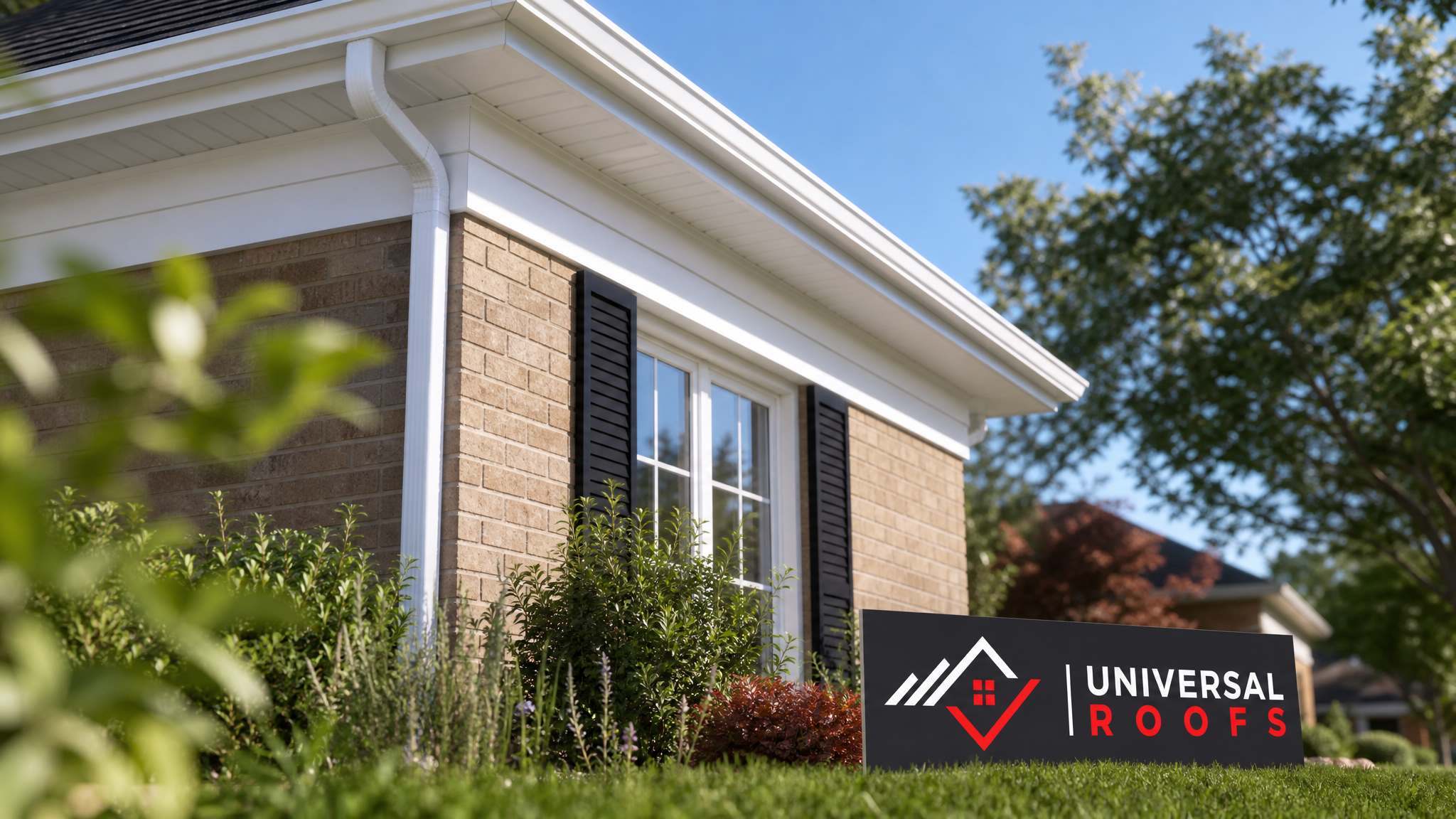
1. Confirm They Actually Diagnose the Root Cause First
The single biggest tip for evaluating soffit and fascia repair companies is watching whether they start with a diagnosis or jump straight to a quote. Soffit and fascia damage is almost always a symptom of something else: a clogged gutter overflowing onto the fascia board, an ice dam pushing meltwater back under the shingles, a squirrel or raccoon entry point, or attic moisture condensing on the underside of the roof deck and dripping down.
A contractor who simply measures the damaged section and quotes a like-for-like replacement is setting you up to pay for the same repair again in a few years. A proper assessment should include a look at the attic from the inside — checking for daylight gaps, staining on the sheathing, or signs of pest activity — as well as an inspection of the gutters, the roof edge, and the attic ventilation system as a whole. If gutters are pitched wrong or undersized for the roof area, no amount of new fascia board will stop the problem from recurring.
This is also the point where a company should flag whether the issue is isolated or whether it is a sign of broader roof repair needs, such as deteriorated flashing at the roofline or a shingle field that is past its serviceable life.
2. Understand the Material Options Before You Choose One
Soffit and fascia repair companies in the GTA generally work with three material families: aluminum, vinyl (PVC), and wood (sometimes wrapped in aluminum coil stock). Each has a different lifespan, cost, and maintenance profile, and a good contractor will walk you through the tradeoffs rather than defaulting to whatever they have on the truck.
| Material | Typical Lifespan | Relative Cost | Best For |
|---|---|---|---|
| Solid aluminum | 25-35 years | Moderate | Most Toronto homes; low maintenance, resists pests |
| Vented aluminum soffit | 25-35 years | Moderate | Homes needing added intake ventilation |
| Vinyl (PVC) soffit | 20-25 years | Lower | Budget-conscious projects; can become brittle in cold |
| Wood with aluminum wrap | 15-25 years (wrap dependent) | Higher | Heritage homes wanting original wood profile preserved |
| Bare wood fascia | 10-15 years | Lower upfront, higher upkeep | Only where repainting is regularly maintained |
Aluminum is the most common choice for GTA homes because it shrugs off our freeze-thaw cycles, does not rot, and does not attract carpenter ants the way exposed wood can. Vinyl is a reasonable lower-cost option but can crack in extreme cold snaps, which we see most winters. If your home has original wood trim and you want to preserve the look for resale or heritage reasons, wrapping the wood fascia in prefinished aluminum coil stock protects it without changing the visual profile from the street.
3. Ask How They Handle Ventilation, Not Just Cosmetics
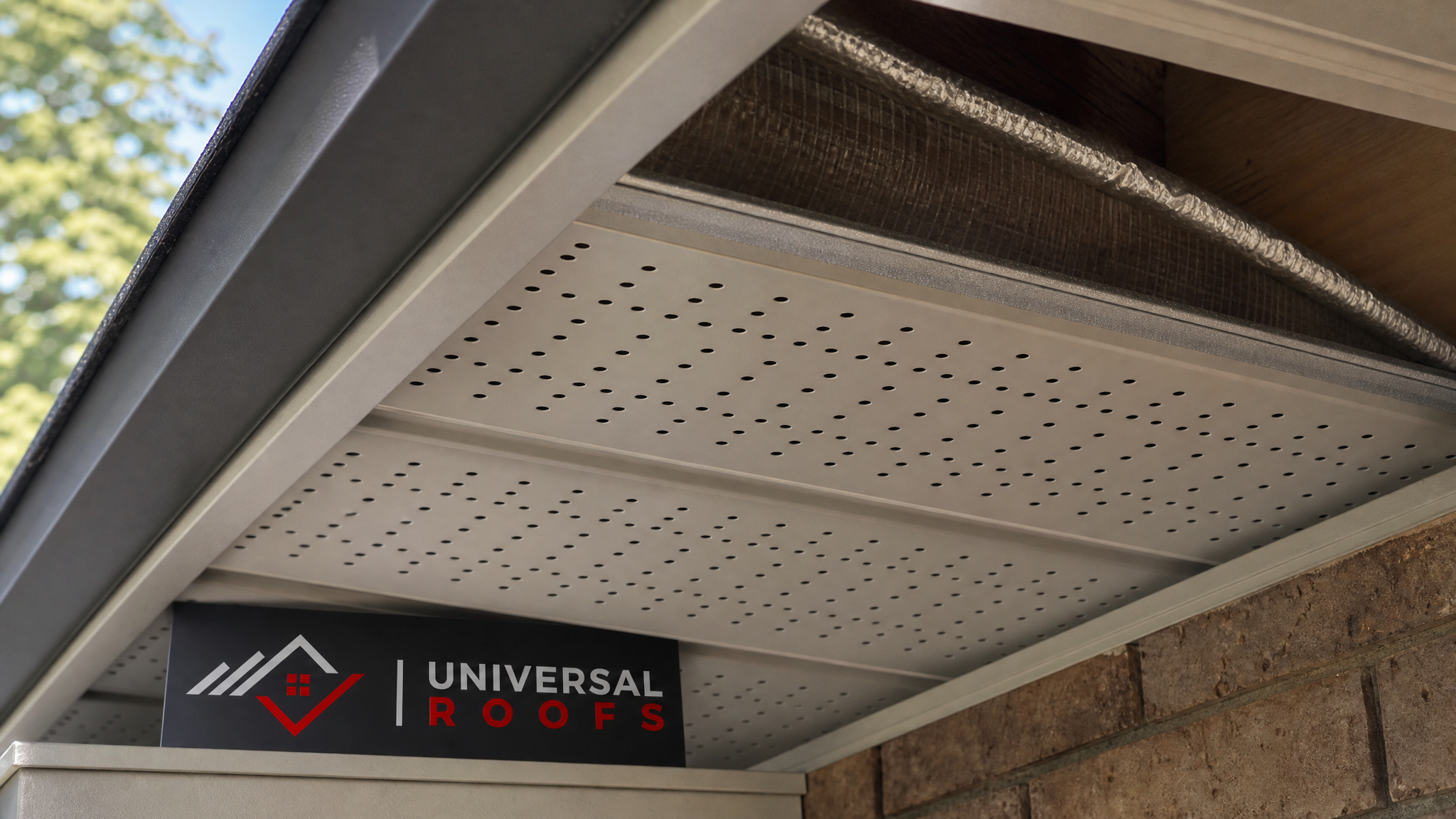
Soffit panels are not purely decorative trim — on most homes, the perforations in the soffit are the primary intake vents that feed the entire attic ventilation system. If a repair company replaces damaged soffit with solid (non-vented) panel to save money, or covers existing vent holes with insulation baffles that get installed incorrectly, they can inadvertently starve your attic of airflow.
Poor attic ventilation is one of the leading causes of ice damming in the GTA. Warm, moist air trapped in the attic melts snow on the roof from underneath; that meltwater runs down to the cold roof edge and refreezes, forming ice dams that back water up under the shingles and into the fascia and soffit assembly itself. A soffit and fascia repair that does not account for the balance between intake (soffit) and exhaust (ridge or roof vents) ventilation is only a cosmetic fix.
Ask any contractor you are considering how they calculate net free ventilation area, and whether they check that insulation baffles (sometimes called “raft-r-mate” or “wind baffles”) are installed in each rafter bay to keep insulation from blocking the soffit vents. This single question will tell you more about a company’s competence than almost anything else on this list.
4. Check Their Approach to Fascia Fastening and Flashing
Fascia boards take a beating in this climate: they anchor the gutters, they are the first thing ice and snow load pushes against at the roof edge, and they are constantly exposed to UV and moisture cycling. How a company fastens and flashes the fascia matters as much as the material itself.
| Detail | Proper Method | Common Shortcut That Fails |
|---|---|---|
| Fasteners | Stainless or coated ring-shank nails/screws into solid framing | Standard nails into rotted or thin board edges |
| Drip edge | Metal drip edge under shingles, over fascia top | Shingles overhanging with no drip edge, allowing water behind fascia |
| Gutter apron | Separate flashing piece directing water into gutter | Relying on gutter alone with no apron flashing |
| Joints | Overlapped and sealed with exterior-rated sealant | Butt joints with no overlap or sealant |
| Corners | Mitred or pre-formed corner caps | Caulked gaps that open up within a season |
A quality installer replaces any fascia board that shows soft spots or rot all the way back to solid framing rather than screwing new material onto punky wood. They will also confirm the drip edge and gutter apron flashing sequence is correct, since this is what actually keeps water from getting behind the new fascia in the first place — the fascia board itself is the last line of defence, not the first.
5. Ask About Pest-Proofing, Not Just Patching
Squirrels, raccoons, and birds are a genuinely common cause of soffit damage across the GTA, particularly on homes near ravines or mature trees. A contractor who simply screws a new piece of aluminum over a chewed entry hole without addressing why the animal got in — and whether it is still inside — is not solving the problem.
Good soffit and fascia repair companies will look for grease marks, scratching, or nesting material before closing up an opening, and they should be willing to coordinate with a wildlife removal service if there is an active entry point, rather than sealing an animal inside the attic. They should also reinforce any repaired section with heavier-gauge material or hardware cloth behind the vent openings in areas with a known history of animal activity, since a squirrel that got in once will often try the same spot again if it is patched with the same thin panel.
6. Compare Repair vs. Full Replacement Honestly
Not every soffit and fascia problem needs a full tear-off. But a company that always recommends spot repairs, even when the majority of the run is already failing, is often trying to keep the invoice small on the first visit and generate repeat business later. Conversely, a company that always upsells full replacement when a targeted repair would do is padding the job.
| Scenario | Recommended Approach | Approx. Timeline |
|---|---|---|
| Isolated animal damage, one panel section | Spot repair with matched panel | Half day |
| Sagging fascia at one roof edge from gutter overflow | Section replacement plus gutter fix | 1 day |
| Widespread rot across multiple elevations | Full soffit and fascia replacement | 2-3 days |
| Damage tied to failed roof edge flashing | Fascia replacement plus flashing correction, evaluate roof age | 1-2 days plus roof assessment |
| Cosmetic fading or minor dents only | No repair needed, monitor annually | N/A |
A trustworthy company will explain which category your home falls into and why, ideally with photos from the inspection. If the fascia damage is connected to a roof that is nearing the end of its service life, it is often more economical to address both in the same project rather than replacing fascia now and tearing it open again for a roof replacement a year or two later.
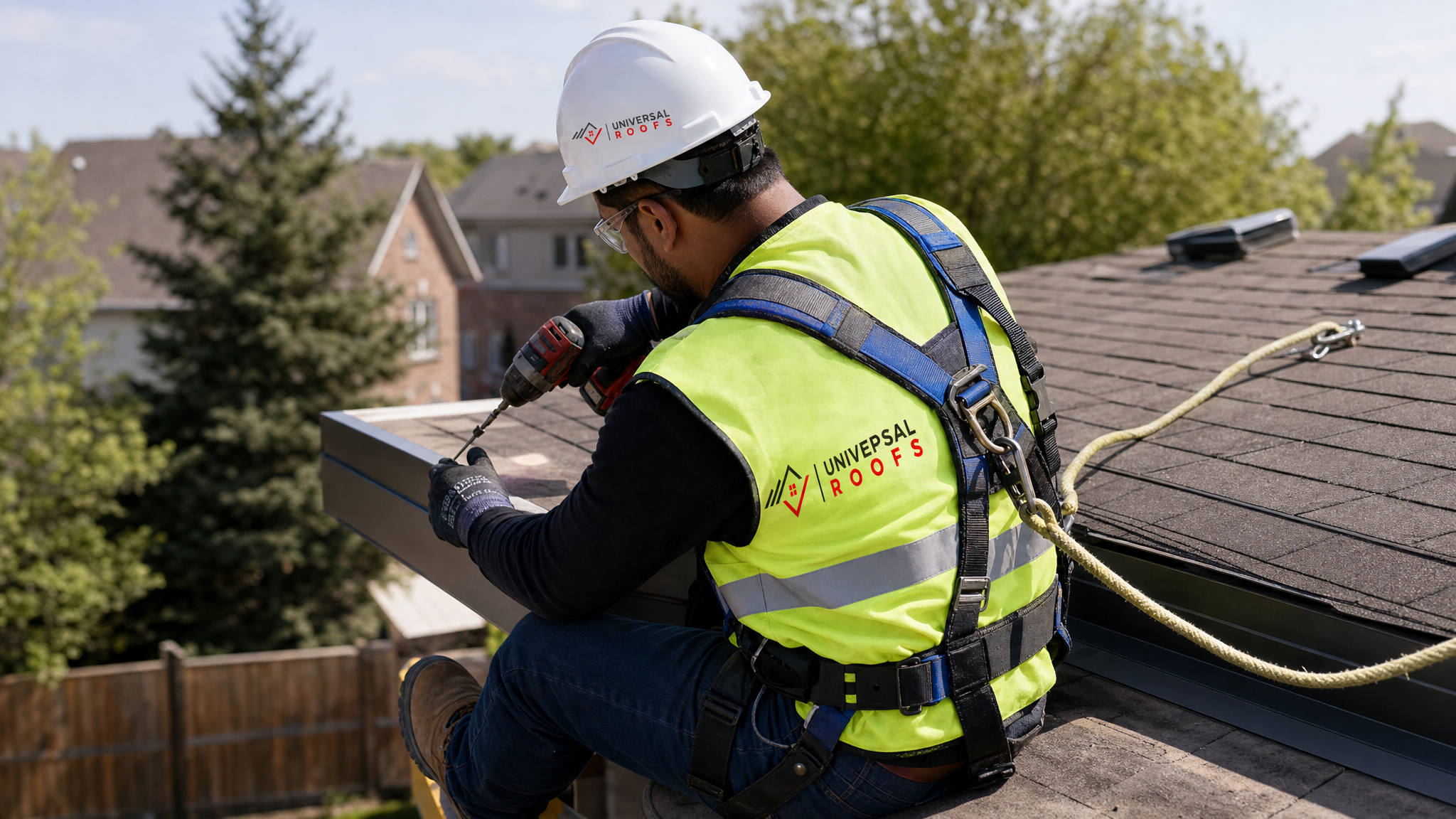
7. Ask How Flat Roofs and Skylights Factor Into the Assessment
Homes with a mix of pitched and flat roof sections, or with skylights near the roof edge, often see soffit and fascia damage concentrated at the transition points. Water shed from a flat roof section, for instance, can dump directly onto a section of fascia and gutter that was not sized for that volume, accelerating wear in that specific spot compared to the rest of the house.
Similarly, a poorly flashed skylight upslope from a soffit run can funnel extra water toward the eave during heavy rain, and if the skylight itself is due for a skylight replacement, that should be flagged as part of the same conversation rather than treated as an unrelated issue. A soffit and fascia repair company that only looks at the immediate damaged section, without asking where the water is actually coming from upslope, is more likely to miss these connections.
8. Get Clarity on Warranty Terms Before Work Begins
Warranty language varies enormously between contractors, and it is worth reading closely rather than taking “we offer a warranty” at face value. There are generally two separate warranties at play: the manufacturer’s warranty on the aluminum or vinyl material itself, and the contractor’s workmanship warranty covering the installation.
| Warranty Type | What It Covers | Typical Duration | What to Verify |
|---|---|---|---|
| Manufacturer material warranty | Fading, cracking, corrosion of the panel itself | 20-40 years, prorated | Whether it is transferable if you sell the home |
| Contractor workmanship warranty | Installation defects, water intrusion from install error | 2-10 years, varies widely | Get it in writing, not verbal |
| Labour-only warranty | Callback labour if material fails early | 1-5 years | Confirm it is not limited to material cost only |
| Emergency/storm damage coverage | Wind, hail, or ice damage soon after install | Case by case | Ask directly, this is often excluded |
Ask specifically what happens if a seam opens up or a panel comes loose eighteen months after the job — is that a free callback, or a new invoice? A company confident in its own workmanship will answer this without hesitation. It is also worth checking a company’s reviews for mentions of how warranty claims were actually handled after the sale, not just how the initial job looked.
9. Ask for Local References and Licencing Details
Soffit and fascia work interacts directly with your roof edge, gutters, and attic ventilation, so it is reasonable to expect a contractor to carry proper liability insurance and, where applicable, WSIB coverage for their crew. Ask to see a current certificate rather than taking their word for it, and confirm whether the company holds any relevant licence for the work being performed in your municipality.
Local references matter more than generic online testimonials for this type of work, because ice damming behaviour, snow load, and freeze-thaw stress vary block by block depending on tree cover, roof orientation, and elevation. A company that has done dozens of soffit and fascia jobs across Toronto, the Peel Region, York Region, Halton Region, and Durham Region will have seen the specific failure patterns common to each area and can speak to them specifically rather than in generalities.
10. Get a Written, Itemized Quote — Not a Verbal Estimate
The final and most practical tip: never proceed on a verbal number. A written quote should break out material type and gauge, linear footage of soffit and fascia being replaced, whether gutters are being removed and reinstalled or replaced outright, disposal of old material, and the workmanship warranty term in writing. Vague quotes that bundle everything into one lump-sum number make it difficult to compare between companies and make it easier for a contractor to substitute cheaper materials than what was discussed verbally.
It is also reasonable to ask for a start and completion date range, since soffit and fascia work is weather-dependent and a company juggling too many jobs at once can leave a partially completed roof edge exposed to rain for longer than it should be. A company with a track record will typically be transparent about their current schedule rather than promising an unrealistic same-week start just to win the job.
Putting It All Together
Soffit and fascia repair looks simple from the ground, but the decisions made during that repair affect your attic ventilation, your ice dam risk, your gutter performance, and your roof edge for the next two to three decades. The companies worth hiring are the ones asking questions about your attic and your gutters before they ever quote a repair, and the ones giving you a written breakdown rather than a round number over the phone.
If you are weighing quotes right now, use the ten points above as a scorecard. A contractor that checks most of these boxes is far more likely to hand you a repair that actually lasts through Toronto’s freeze-thaw cycles than one that simply matches the colour of your existing panel and calls it done.
What are the most essential tips for soffit and fascia repair companies homeowners should ask about?
How do I know if I need soffit and fascia repair or full replacement?
Why does soffit ventilation matter when repairing fascia and soffit panels?
What material should soffit and fascia repair companies recommend for GTA homes?
How much does soffit and fascia repair typically cost in the GTA?
What warranty should I expect from soffit and fascia repair companies?
Need Help With 10 Essential Tips for?
Reading through a checklist is one thing — having a crew that actually follows it is another. Universal Roofs has been repairing soffit, fascia, and everything connected to the roof edge across the GTA since 2005, and we start every job with a proper diagnosis rather than a guess.
Call us today at (416) 732-2421 or request a free inspection to get started.
Universal Roofs proudly serves Toronto, Mississauga, Brampton, Vaughan, Markham, Oakville and the GTA since 2005.