
If you have noticed dark green or black cushiony patches creeping across your roof, you are not alone. Every summer, our crews get calls from homeowners across the GTA asking the same question: what causes moss to grow on shingles, and is it actually a problem or just an eyesore? The short answer is that moss needs three things to establish itself on a roof surface: moisture, shade, and a rough surface to grip onto. Asphalt shingles, unfortunately, check all three boxes on north-facing slopes and tree-shaded roofs throughout Toronto and the surrounding regions.
Moss is not merely cosmetic. Left unchecked, it holds water against the shingle surface far longer than the roof was ever designed to tolerate, accelerates granule loss, and can lift shingle edges enough to let wind-driven rain underneath. In a climate like ours, where freeze-thaw cycles are constant from November through March, a moss-covered roof is a roof that is ageing faster than it should. Understanding the root causes is the first step toward a lasting fix, and it is far cheaper than waiting until moss has caused a leak.
In this guide we will walk through exactly why moss forms on asphalt shingles, which parts of a roof are most vulnerable, how moss differs from algae and lichen, the safest removal methods, and how to prevent regrowth for good. We will also cover when moss is a sign that it is time to consider a full roof replacement rather than another round of cleaning.
What Causes Moss to Grow on Shingles in the First Place
Moss is a simple, non-vascular plant that reproduces through spores rather than seeds. Those spores are essentially everywhere in the air, carried by wind, birds, and squirrels, and they are patient — a spore can sit dormant on a shingle for a long time waiting for the right conditions. What causes moss to grow on shingles is the convergence of four factors:
- Persistent moisture. Moss cannot establish itself on a surface that dries out quickly. Roofs that stay damp for extended periods after rain, fog, or morning dew give spores the window they need to germinate.
- Shade. Moss thrives in low light and struggles in direct, prolonged sun exposure. Overhanging maple, oak, and pine branches common across Toronto, Mississauga, and Vaughan properties create the shaded microclimate moss prefers.
- A rough, granular surface. Asphalt shingles are covered in mineral granules that create thousands of tiny pockets where spores, dust, and organic debris settle in and take hold. Smooth metal or slate surfaces resist this far better.
- Organic debris. Fallen leaves, pine needles, and airborne pollen build up in valleys and along the shingle’s lower edge, holding moisture and providing nutrients that accelerate moss growth.
Roof orientation plays a major role too. In the northern hemisphere, north-facing and heavily shaded slopes receive far less direct sunlight than south-facing slopes, so they stay cooler and damper for longer stretches. That is precisely why you will often see a homeowner with a spotless south slope and a moss-covered north slope on the very same roof.
Why Toronto and GTA Roofs Are Especially Prone to Moss
Our local climate is practically a moss incubator for parts of the year. Spring and autumn bring frequent rain and cool temperatures that keep shingles damp for days at a time. Summer humidity, especially in shaded or tree-lined neighbourhoods across Toronto, Mississauga, Brampton, and Markham, adds to the problem even when it is not actively raining. Winter snow that lingers in shaded valleys melts slowly, keeping the shingle surface saturated well into spring.
Freeze-thaw cycling compounds the issue. When moss holds moisture against a shingle and that moisture freezes overnight, it expands. Over dozens of freeze-thaw cycles each winter, this expansion works granules loose and creates tiny fractures in the shingle mat, giving moss spores even more surface area to colonize. It becomes a self-reinforcing cycle: moss holds water, water freezes and damages the shingle, the damaged shingle holds even more moss.
Homes near ravines, mature tree canopies, or with steep north-facing roof pitches in neighbourhoods throughout the Toronto, Peel Region, York Region, Halton Region, and Durham Region service areas tend to see moss return year after year unless the underlying conditions are addressed, not just the visible moss itself.
Moss vs. Algae vs. Lichen: Know the Difference
Homeowners often lump every roof discolouration into one category, but moss, algae, and lichen are different organisms with different causes and different remedies. Getting the diagnosis right matters because the wrong treatment can waste money or, worse, damage the shingles.
| Growth Type | Appearance | Primary Cause | Typical Location | Removal Difficulty |
|---|---|---|---|---|
| Moss | Green to dark green, cushiony, raised texture | Shade, moisture, organic debris | North-facing slopes, valleys, under overhangs | Moderate — requires physical removal |
| Algae (Gloeocapsa magma) | Black or dark grey streaks | Airborne spores feeding on limestone filler in granules | Anywhere, often streaking down from ridges | Easy to moderate — soft washing usually works |
| Lichen | Grey-green, crusty, flat, tightly bonded patches | Combination of algae and fungus growing symbiotically | Older roofs, weathered shingles | Difficult — often bonded into the granule surface |
| Mould | Fuzzy black or green spots, usually in attic or eaves | Trapped moisture, poor attic ventilation | Underside of roof deck, soffits | Requires ventilation fix plus cleaning |
If you are unsure which growth you are dealing with, our team can identify it during a routine inspection and recommend the right course of action, whether that is a simple cleaning or a closer look through our roof repair services.
The Damage Moss Actually Causes to Asphalt Shingles
It is tempting to think of moss as purely a curb-appeal issue, but the damage runs deeper than the surface. Here is what moss does to a shingle roof over time:
- Granule loss. Moss rhizoids (root-like structures) work into the granule layer, and as moss is scraped off or washed away, granules go with it. Those granules are what protect the asphalt mat from UV degradation.
- Lifted shingle edges. As moss cushions grow, they can physically lift the tab edges of shingles, creating gaps where wind-driven rain and ice can work their way underneath.
- Trapped moisture. Moss acts like a sponge, holding water against the shingle far longer than an exposed surface would ever stay wet. Prolonged saturation accelerates the breakdown of the asphalt mat itself.
- Accelerated freeze-thaw damage. As covered above, moisture trapped by moss freezes and expands repeatedly through a GTA winter, fracturing granules and the mat beneath them.
- Reduced lifespan. A shingle roof rated for 20-25 years can lose several years of useful life if moss is allowed to spread unchecked across large sections.
None of this happens overnight. Moss typically takes one to three seasons to establish a visible colony and several more years before it causes serious structural wear. That gives homeowners a real window to intervene before a moss problem becomes a repair problem.
How to Safely Remove Moss From Shingles
Removing moss the wrong way is one of the most common ways homeowners accidentally shorten the life of a perfectly good roof. Pressure washing, wire brushing, and harsh chemical strippers can strip protective granules right along with the moss. Here is the safer, professional approach:
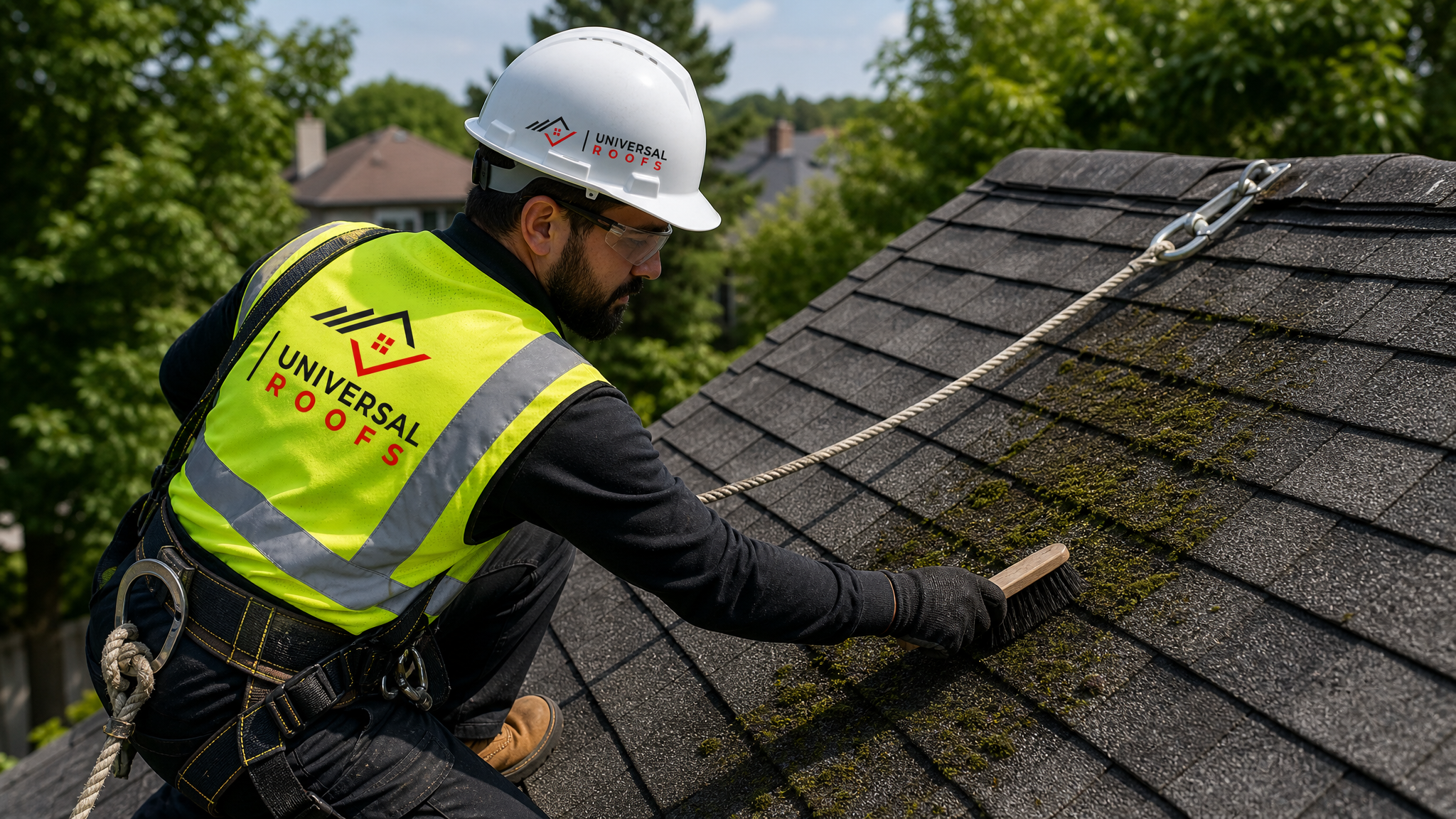
- Dry brushing first. Using a soft-bristle brush or roof rake, gently work moss loose while it is dry. Working from the ridge down (never up, which can lift shingles) minimizes granule loss.
- Low-pressure rinse. A garden hose or soft wash system at low pressure clears loosened debris without blasting granules off the shingle.
- Targeted treatment. A roof-safe moss and algae treatment, typically a diluted solution formulated not to harm surrounding plants or gutters, is applied to kill remaining spores and rhizoids.
- Debris clearing. Valleys, gutters, and the base of each slope are cleared of the dead moss and organic debris that fuelled the growth in the first place.
- Post-cleaning inspection. A trained technician checks for granule loss, lifted tabs, or soft spots that moss may have been masking, since these often only become visible once the moss is gone.
| Removal Method | Effectiveness | Risk to Shingles | Recommended For |
|---|---|---|---|
| Soft dry brushing + low-pressure rinse | High for light-to-moderate growth | Low, when done correctly | Most residential roofs |
| High-pressure power washing | High but destructive | Very high — strips granules, can drive water under shingles | Not recommended on asphalt shingles |
| Chemical moss killer (roof-safe) | High, kills spores at the root | Low, if product is pH-balanced for asphalt | Established or recurring moss |
| Wire brush or metal scraper | Moderate | Very high — tears granules and mat | Not recommended |
| Zinc or copper strip installation | Preventive, not a cure for existing moss | None | Long-term prevention after cleaning |
Preventing Moss From Coming Back
Removing existing moss is only half the job. Because spores are constantly present in the air, prevention is what actually keeps a roof clear season after season. The most effective long-term strategies include:
- Trim overhanging branches. Reducing shade and increasing sun exposure and airflow across the roof surface is one of the single most effective preventive steps a homeowner can take.
- Install zinc or copper control strips. When it rains, trace metal ions wash down the slope and create an environment moss and algae cannot tolerate. These strips are typically installed just below the ridge and last for many years.
- Keep gutters and valleys clear. Leaves and debris trap moisture right where moss loves to grow. A twice-yearly cleaning, ideally spring and fall, removes the fuel source.
- Improve attic ventilation. Poor attic ventilation causes warm, moist air to linger under the roof deck, which can keep the underside of shingles warmer and damper than they should be, especially in shoulder seasons. A well-balanced intake and exhaust system helps shingles dry out faster after rain or snowmelt.
- Choose algae-resistant shingles at replacement time. Many modern shingle lines include copper-infused granules specifically designed to resist moss and algae growth for the life of the product.
- Schedule annual inspections. Catching a small moss patch in its first season is far easier and cheaper than dealing with an established colony that has spread across an entire slope.
Moss Near Skylights, Valleys, and Flat Roof Sections
Moss does not distribute itself evenly across a roof. It concentrates wherever moisture lingers longest, and that usually means valleys, the low side of dormers, and the shaded perimeter of roof penetrations like skylights. Skylight curbs in particular can trap condensation and shade simultaneously, making the surrounding shingles a common hotspot for early moss growth. If your skylight seals or flashing are ageing, moisture intrusion around that penetration can make the problem worse; in those cases a skylight replacement paired with proper flashing detail solves both the leak risk and the moss magnet in one visit.
Homes with a mix of sloped and flat roofing sections face a related but distinct issue. Flat and low-slope membrane roofs do not typically grow moss the same way shingles do, since most membranes lack the granular texture moss needs to grip, but ponding water on a poorly drained flat section can still encourage algae and organic buildup nearby that migrates onto adjacent shingle slopes. Proper drainage and regular debris clearing address both problems at once.
When Moss Signals It Is Time for a New Roof
Not every moss patch means your roof is failing, but certain signs suggest cleaning alone will not solve the underlying problem. If you notice granules collecting heavily in your gutters, shingles that feel soft or spongy underfoot, tabs that are visibly curling or lifting across large sections, or moss that returns within a single season of professional removal, the shingles themselves may have already been compromised.
| Observation | Likely Meaning | Recommended Action |
|---|---|---|
| Light moss on one shaded slope, shingles otherwise firm | Early-stage growth, cosmetic | Cleaning + zinc strip prevention |
| Moss returns within months of cleaning | Underlying moisture or ventilation issue | Attic ventilation review + targeted repair |
| Heavy granule loss visible in gutters | Shingle mat exposed to UV, ageing accelerated | Inspection to assess remaining lifespan |
| Soft or spongy decking under moss patches | Water has penetrated the roof deck | Roof replacement likely required |
| Moss across most of the roof, shingles 15+ years old | Roof nearing end of service life | Full roof replacement recommended |
A trained eye can tell the difference between a roof that just needs a good cleaning and one where moss has been masking a deeper problem. If your shingles are already past the midpoint of their expected lifespan, a full roof replacement often makes more financial sense than repeated cleaning and repair cycles.
Seasonal Timing for Moss Removal in the GTA
Timing matters when it comes to moss removal. Summer, like right now, is actually one of the best windows for the work: shingles are dry, moss is easier to brush away without tearing, and any preventive treatments or zinc strips have the full remainder of the season to work before autumn rains and winter snow return. Attempting moss removal on a wet or frozen roof is both less effective and considerably more dangerous, which is why most professional crews avoid scheduling this work in late fall or winter unless it is addressing an active leak.
Spring is the second-best window, particularly for homeowners who want debris cleared before summer humidity gives any remaining spores a chance to take hold. Whatever the season, walking a roof yourself is never worth the risk. A trained technician with proper fall protection can assess and treat moss safely; a homeowner on a ladder with a pressure washer often cannot.
Frequently Asked Questions
What causes moss to grow on shingles in the first place?
Is moss on shingles actually harmful to my roof?
Can I remove moss from my shingles myself?
How do zinc or copper strips prevent moss regrowth?
Why does moss keep coming back after I clean my roof?
Does moss mean I need a new roof?
Need Help With What Causes Moss to?
Whether you have a stubborn patch of moss on a shaded north slope or want a full inspection to catch problems before they spread, Universal Roofs has the local experience to diagnose the cause and fix it correctly the first time.
Call us today at (416) 732-2421 or request a free inspection to get started.
Universal Roofs proudly serves Toronto, Mississauga, Brampton, Vaughan, Markham, Oakville and the GTA since 2005.