
Spray foam insulation has become one of the most talked-about upgrades for GTA homeowners looking to cut energy bills and stop attic moisture problems for good. It seals every gap the way batts and blown-in insulation simply cannot, but it also costs more upfront and requires a level of installation skill that not every contractor has. Before you commit thousands of dollars to a spray foam job on your roof or attic, it pays to understand exactly where this material shines and where it falls short.
At Universal Roofs, we’ve installed and repaired roofs across the GTA since 2005, and we’re regularly asked to weigh in on spray foam after a homeowner has already had a few quotes and doesn’t know who to believe. This guide breaks down the real spray foam roof insulation pros and cons in plain language, covers open-cell versus closed-cell foam, walks through costs, and explains how the material performs specifically in Toronto’s freeze-thaw climate.
We’ll also cover where spray foam tends to cause problems on roof repair calls we get in the GTA, because an honest look at the downsides is just as important as the marketing points every installer likes to lead with.
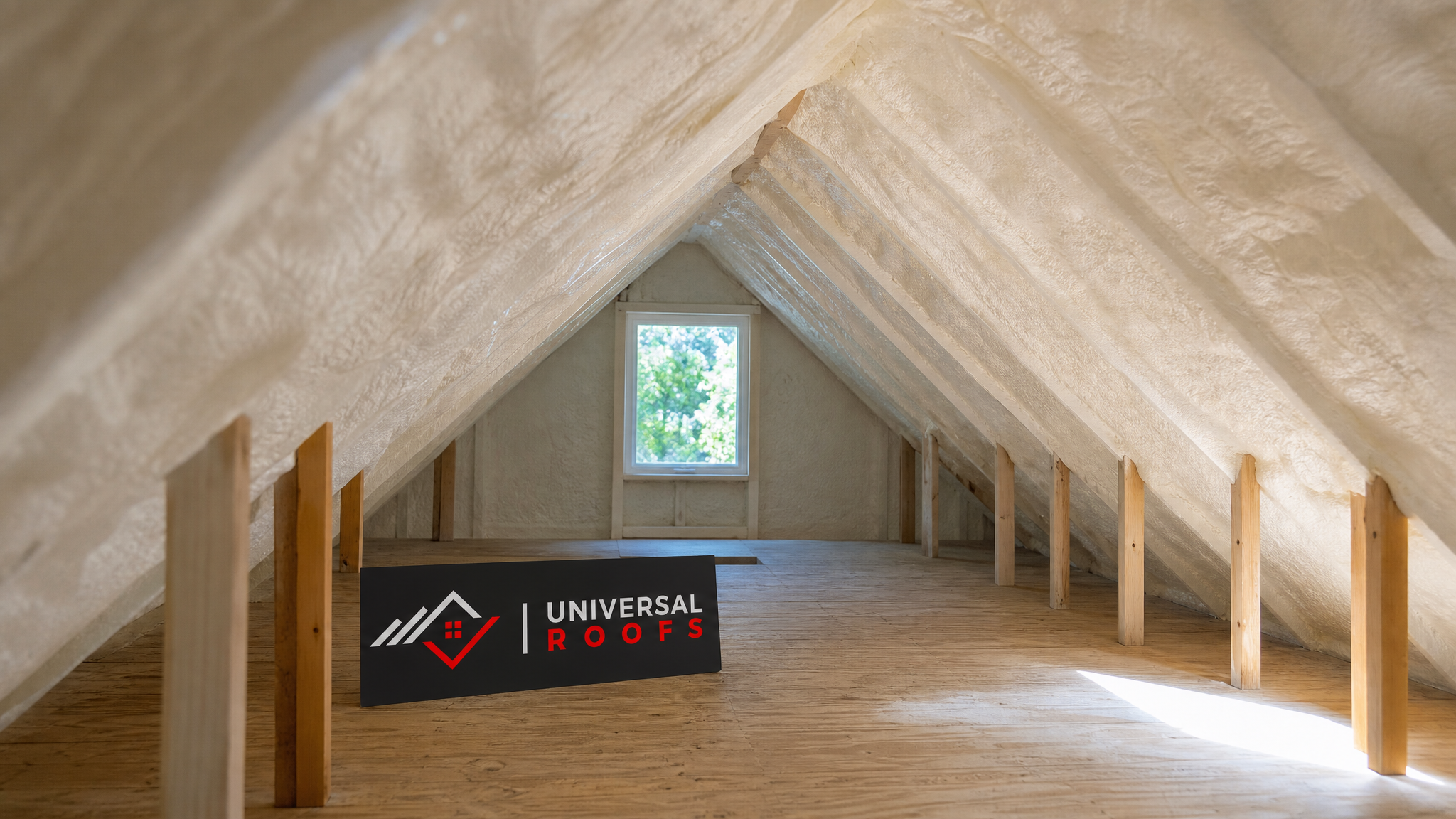
What Is Spray Foam Roof Insulation and How Does It Work?
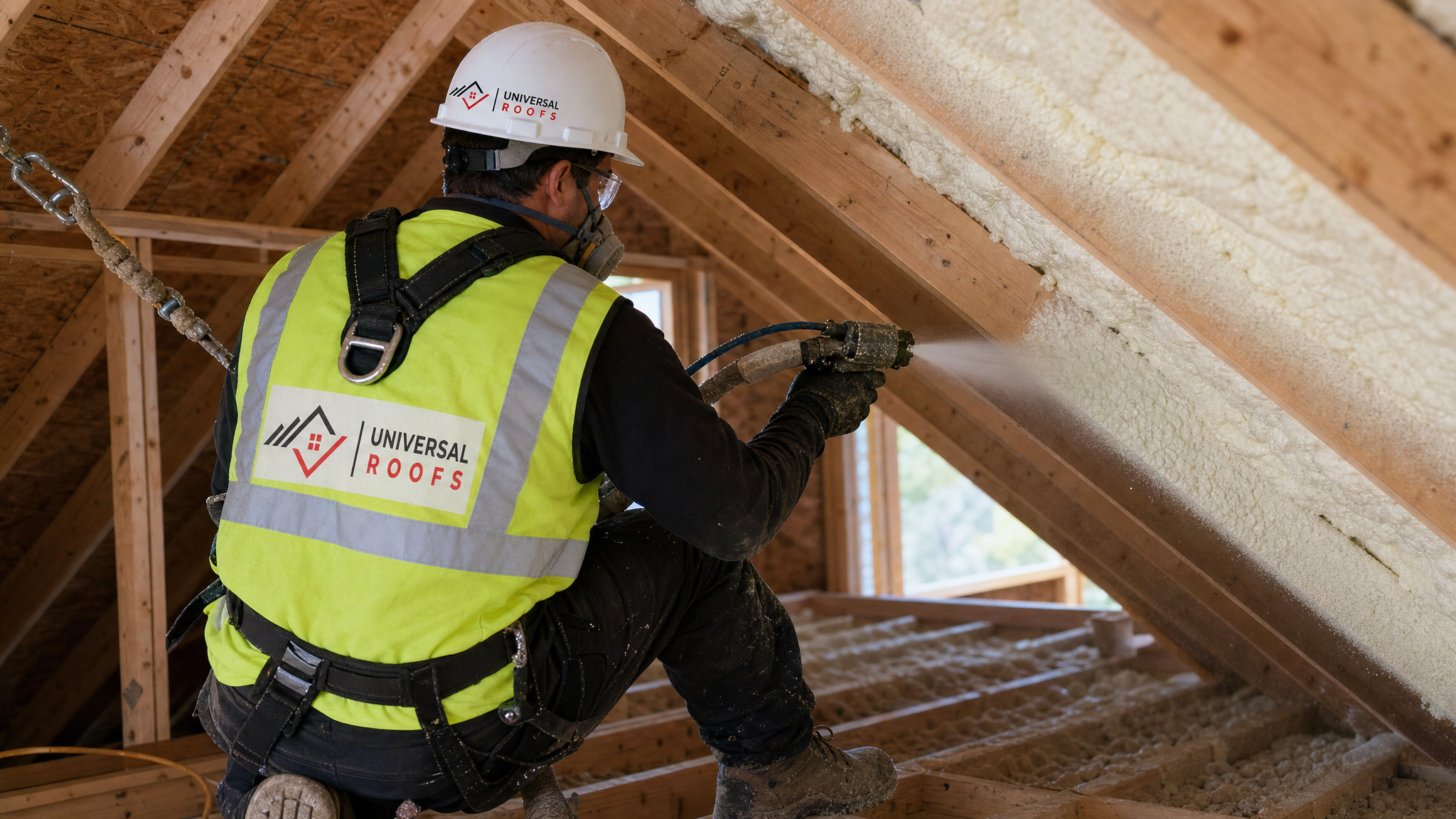
Spray foam roof insulation is a two-component liquid plastic (a polyol resin and an isocyanate) that gets mixed at the tip of a spray gun and expands on contact with the roof deck, rafters, or attic surface. Within seconds it foams up to many times its liquid volume, filling every crack, seam, and irregular gap before curing into a rigid or semi-rigid material within minutes.
Unlike fibreglass batts or cellulose, which are installed as a physical product cut to fit a space, spray foam is applied wet and conforms to the exact shape of the surface. That means it seals around wiring, plumbing stacks, pot lights, and framing members in a way that no other insulation method can match. This single property is the reason spray foam keeps coming up whenever homeowners search for a way to permanently solve attic air leakage.
There are two main types used on Ontario roofs and attics: open-cell and closed-cell. They look similar once cured, but they behave very differently, and mixing them up is one of the most common mistakes we see when we’re called out to assess a failed installation.
Open-Cell vs. Closed-Cell Spray Foam: Key Differences
Open-cell spray foam has small, unsealed cells that allow the foam to stay soft and spongy. It’s lighter, cheaper per board foot, and has a lower R-value per inch, but it also allows some vapour to pass through it, which matters for how your roof assembly is supposed to breathe.
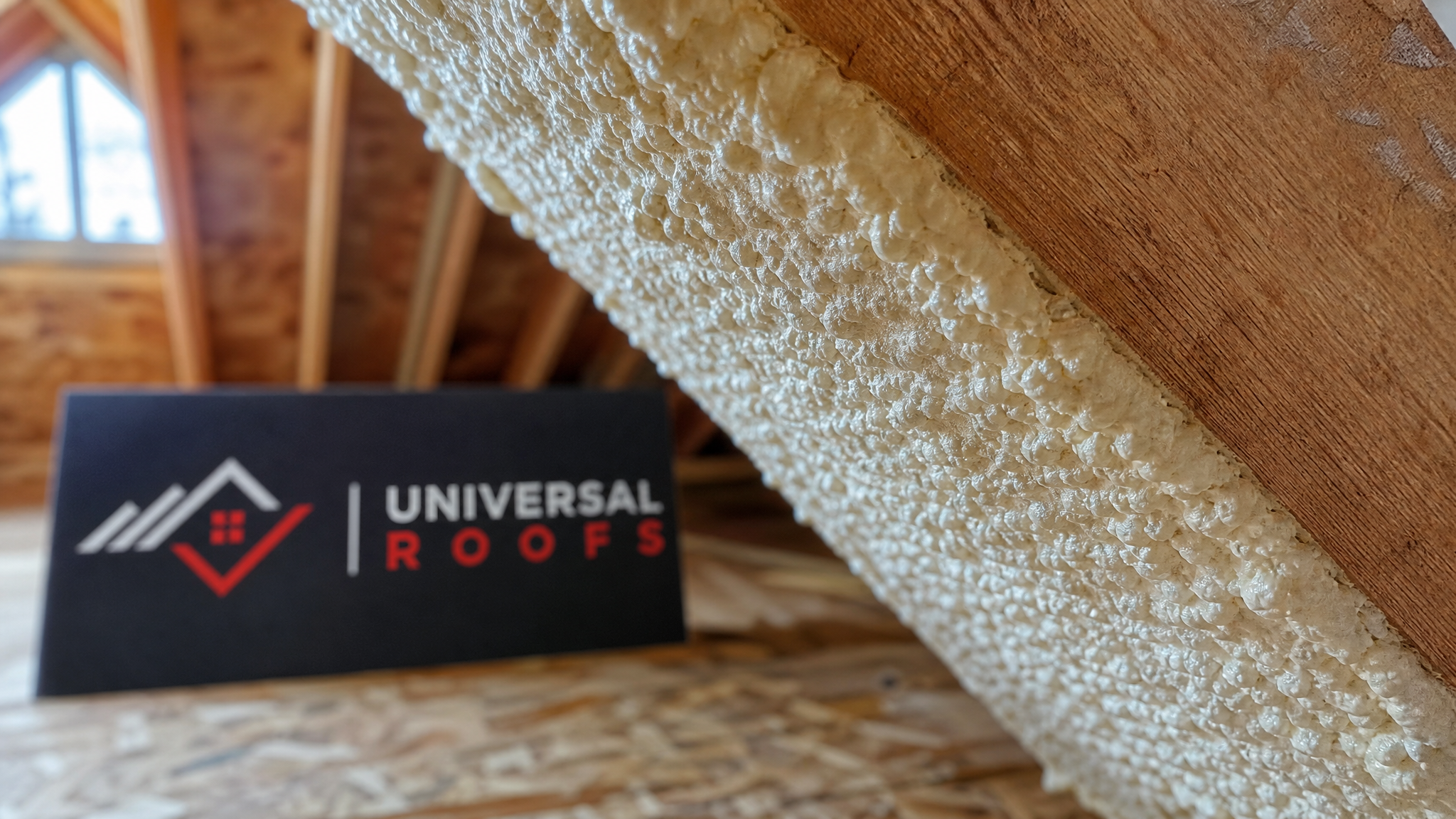
Closed-cell spray foam has tightly packed, sealed cells filled with a gas that boosts its insulating value. It’s rigid, dense, adds structural strength to the roof deck, and acts as its own vapour barrier and air barrier at the thicknesses typically installed on roofs. It costs roughly double per board foot compared to open-cell foam, but for roof deck applications in a cold Canadian climate, closed-cell is almost always the better long-term choice.
| Property | Open-Cell Foam | Closed-Cell Foam |
|---|---|---|
| R-value per inch | Approx. R-3.6 to R-3.9 | Approx. R-6.0 to R-6.5 |
| Density | 0.5 lb/ft³ (soft, spongy) | 2.0 lb/ft³ (rigid, dense) |
| Vapour barrier | Permeable, needs separate vapour barrier | Acts as its own vapour barrier at 2+ inches |
| Water resistance | Absorbs moisture if exposed | Resists water absorption |
| Structural contribution | Minimal | Adds racking strength to roof deck |
| Typical cost per board foot | $0.40 to $0.65 | $1.00 to $1.75 |
The Real Advantages of Spray Foam Roof Insulation
The pros of spray foam are well documented, and most of them hold up under real-world Toronto conditions. Here’s what homeowners actually notice after installation.
Air sealing performance is unmatched. Because it expands to fill every gap, spray foam eliminates the air leakage pathways that batts and loose-fill insulation always leave behind around wiring penetrations, top plates, and irregular framing. Air leakage, not just poor R-value, is responsible for a huge share of heat loss in older GTA homes, so this is often the single biggest factor in the energy savings homeowners report.
Higher R-value per inch means thinner assemblies. In attics or cathedral ceilings with limited depth, closed-cell foam can hit code-required insulation levels in less space than fibreglass or cellulose would need, which matters in older homes with shallow rafter bays.
It reduces ice damming risk when combined with proper ventilation. By sealing the attic floor or roof deck against warm air leakage from below, spray foam prevents the uneven roof surface temperatures that cause snow to melt and refreeze at the eaves. This is a genuinely valuable benefit for Toronto’s freeze-thaw winters, though it only works as part of a properly designed assembly — foam alone doesn’t replace good attic ventilation planning where ventilation is still required.
Moisture and mould resistance (closed-cell in particular). Closed-cell foam doesn’t wick or hold water the way fibreglass batts do, so in the event of a minor leak it’s less likely to become a breeding ground for mould compared to soggy batt insulation sitting against the deck.
Added structural rigidity. Closed-cell foam bonds tightly to the roof deck and rafters, adding real racking strength. Some engineers factor this in when evaluating older roof structures that have started to rack or twist slightly over decades of wind loading.
Noise dampening. The dense, gap-free nature of spray foam reduces sound transmission from rain, hail, and outside traffic noise more effectively than loose-fill insulation with air gaps.
The Real Drawbacks Homeowners Should Know
Spray foam is not the right answer for every roof, and the downsides matter just as much as the benefits when you’re deciding whether to spend the extra money.
Higher upfront cost. Spray foam typically costs two to four times more than fibreglass batt or blown-in cellulose insulation for the same square footage. For a typical GTA attic, that can mean a difference of several thousand dollars between a foam job and a conventional insulation upgrade.
Installation quality is everything, and mistakes are expensive to fix. Spray foam is mixed and applied on-site by a technician, and the ratio of the two chemical components, the ambient temperature, and the spray thickness all affect how well it cures. Poorly mixed foam can stay tacky, off-gas persistently, shrink away from the substrate, or fail to reach its rated R-value. Unlike a batt that’s simply wrong-sized and can be swapped out, cured spray foam that’s failed has to be mechanically scraped or ground off the deck, which is labour-intensive and costly.
It can trap moisture in the wrong assembly. If closed-cell foam is applied to a roof deck without accounting for existing moisture in the wood, or without addressing an active leak first, it can seal moisture inside the structure where it can’t dry out, leading to hidden rot. This is why a proper roof inspection and moisture check should always come before insulation work, not after.
It complicates future roof repairs. Once spray foam is bonded to the underside of a roof deck, locating and repairing a leak becomes more difficult because the foam obscures water staining that would normally show a contractor exactly where the problem is. Some roof replacement jobs on foam-insulated homes take longer simply because of the extra removal work needed to access the deck.
Off-gassing and odour during and after installation. Fresh spray foam releases chemical odours that can linger for days, and improperly cured foam can continue off-gassing for much longer. Homes need to be vacated during application and for a recommended re-entry period afterward.
Fire code and ignition barrier requirements. In many applications, exposed spray foam in an attic or basement must be covered with an approved thermal or ignition barrier (such as drywall or an intumescent coating) to meet Ontario Building Code requirements, which adds cost that some contractors leave out of their initial quote.
Not always reversible. Because closed-cell foam bonds so aggressively to wood, removing it later — for a roof deck replacement, for example — is far more labour-intensive than removing batt insulation, which simply lifts out.
| Factor | Spray Foam | Fibreglass Batt | Blown-In Cellulose |
|---|---|---|---|
| Air sealing | Excellent | Poor to fair | Fair |
| Cost per sq. ft. (installed) | $3.50–$7.00+ | $1.00–$2.00 | $1.20–$2.20 |
| Installer skill required | High, specialized equipment | Low to moderate | Moderate |
| Moisture tolerance | Good (closed-cell) | Poor when wet | Poor when wet |
| Ease of future removal | Difficult | Easy | Moderate |
| Adds structural rigidity | Yes (closed-cell) | No | No |
How Spray Foam Performs in Toronto’s Climate
Toronto and the surrounding GTA experience a demanding freeze-thaw cycle every winter, with temperatures swinging above and below freezing repeatedly between November and March. This climate is exactly where spray foam’s air-sealing strength earns its keep, but it also exposes any weaknesses in the installation.
When a roof deck is properly insulated with closed-cell foam and the assembly is designed correctly (either as a vented attic with foam at the attic floor, or an unvented “hot roof” assembly with foam directly under the deck), ice damming risk drops significantly because the roof surface stays at a more uniform temperature. Homeowners in neighbourhoods across Toronto, Peel Region, and York Region commonly ask us about ice dams specifically because their existing attic insulation is inconsistent or has settled, leaving cold spots that trigger uneven melting.
That said, an unvented hot roof assembly using spray foam is a specific design choice that needs to be executed correctly from the start — it isn’t simply a matter of spraying foam under an existing vented roof deck without changing the ventilation strategy. Get this wrong and you can end up trapping moisture instead of solving the problem, which is one of the most common issues we diagnose on inspection calls in Halton Region and Durham Region homes that had foam installed by a contractor unfamiliar with local building code requirements.
Cost Breakdown: What to Expect for a GTA Home
Pricing for spray foam varies by foam type, attic accessibility, and square footage, but homeowners should expect to budget significantly more than for traditional insulation. The table below reflects typical installed costs we see quoted across the GTA as of 2026.
| Project Scope | Open-Cell Cost Range | Closed-Cell Cost Range | Typical Timeline |
|---|---|---|---|
| Small attic (under 800 sq. ft.) | $2,800–$4,500 | $4,500–$7,500 | 1 day |
| Average attic (800–1,500 sq. ft.) | $4,500–$8,000 | $8,000–$13,000 | 1–2 days |
| Cathedral ceiling / vaulted roof | $6,000–$10,000 | $10,000–$18,000 | 2–3 days |
| Full roof deck (unvented hot roof) | Not recommended | $12,000–$25,000+ | 3–5 days |
These figures assume a professional crew with commercial-grade spray equipment, not a DIY kit. Cheaper DIY spray foam kits exist for small gap-filling jobs, but they are not suitable for whole-attic or roof deck insulation — the equipment can’t maintain the consistent temperature and pressure needed for a proper cure at scale, and mistakes at this size are far costlier than the money saved.
Signs Your Existing Spray Foam Was Installed Poorly
If your home already has spray foam insulation from a previous owner or an earlier renovation, it’s worth knowing the warning signs of a bad installation, since problems can take years to surface.
- A persistent chemical or “fishy” odour months after installation, which usually indicates an incorrect mixing ratio during application
- Foam that still feels tacky or soft to the touch rather than fully rigid (for closed-cell) weeks after curing
- Visible gaps, pinholes, or areas where the foam has pulled away from the wood substrate
- Discoloured or crumbling foam near roof penetrations, which can indicate long-term moisture intrusion underneath
- Roof deck rot discovered during a re-roofing project, hidden beneath foam that trapped moisture instead of sealing it out
- Uneven attic temperatures or new ice damming despite the foam installation, suggesting incomplete coverage or a design flaw in the assembly
If you notice any of these signs, it’s worth having a qualified roofing contractor inspect the deck before assuming the foam itself is the problem — sometimes the issue is a separate roofing defect that predates the insulation work, and sometimes it’s tied to a skylight or skylight replacement that wasn’t properly flashed before the foam went in.
How to Choose the Right Insulation Contractor
Because spray foam performance depends so heavily on correct application, choosing the right installer matters more here than with almost any other insulation type. A few questions worth asking before you sign a contract:
Ask whether the crew is certified by the foam manufacturer, since reputable manufacturers require installer training and periodic recertification. Ask how they plan to handle ventilation in your specific attic or roof assembly, since a generic answer that doesn’t reference your home’s construction is a red flag. Ask what ignition barrier or thermal barrier they’ll install to meet Ontario Building Code, and get it in writing as part of the scope. Ask for references from jobs completed at least two to three years ago, since foam that fails often does so gradually rather than immediately.
You can read what past GTA homeowners have said about our own roofing and insulation work on our reviews page, and we’ve answered many of these same questions in more detail on our FAQ page. We’d also encourage you to read more about our history and approach on our about page before deciding who handles a job this important.
Spray Foam vs. Traditional Insulation: Which Is Right for You?
Spray foam makes the most sense when air sealing is the primary problem, when attic space is limited, when a home has a history of ice damming tied to inconsistent attic temperatures, or when the roof assembly is being converted to an unvented hot roof design as part of a larger renovation or flat roofing conversion.
Traditional batt or blown-in insulation still makes sense for straightforward attic top-ups where air sealing has already been addressed separately, for homeowners on a tighter budget, or for situations where future accessibility to wiring and plumbing in the attic is a priority, since batts and loose-fill can be moved aside and replaced far more easily than cured foam.
There’s no universally “better” choice — it depends on your home’s specific construction, your budget, and what problem you’re actually trying to solve. A proper inspection before any insulation work begins is the only reliable way to know which approach fits your roof.
What are the main pros and cons of spray foam roof insulation?
Is spray foam roof insulation worth the extra cost compared to fibreglass?
Does spray foam roof insulation cause moisture or mould problems?
How long does spray foam roof insulation last?
Can spray foam roof insulation help prevent ice dams in Toronto homes?
Should I remove old spray foam insulation before a roof replacement?
Need Help With Spray Foam Roof Insulation?
Whether you’re weighing spray foam against traditional insulation or trying to diagnose a problem with an existing installation, the team at Universal Roofs can give you a straight answer based on what’s actually happening on your roof deck, not a one-size-fits-all sales pitch.
Call us today at (416) 732-2421 or request a free inspection to get started.
Universal Roofs proudly serves Toronto, Mississauga, Brampton, Vaughan, Markham, Oakville and the GTA since 2005.