
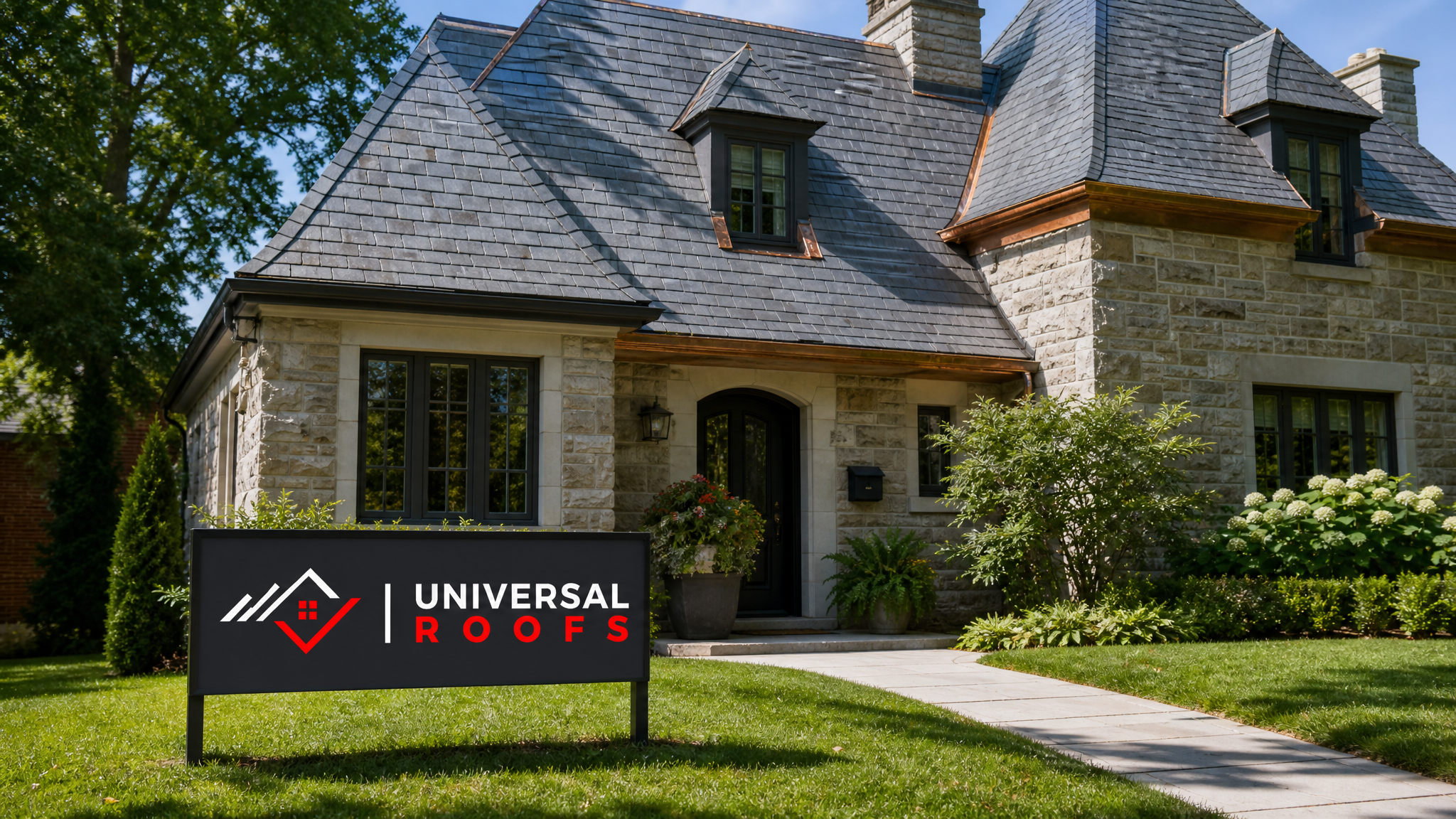
A century-old Cabbagetown Victorian, a 1930s Kingsway Tudor, an Annex heritage brick semi — Toronto is full of homes whose roofs are as much a part of their character as their façades. But historical roofing is not simply “old roofing.” It was built with different materials, different assumptions about ventilation, and often no vapour barrier or modern insulation at all, which means maintaining it well requires a different playbook than a standard asphalt shingle re-roof.
At Universal Roofs, we have spent nearly two decades working on heritage homes across the GTA, and the single biggest mistake we see is homeowners treating a century home’s roof like a modern one — patching with incompatible materials, stripping character-defining details, or ignoring the slow warning signs until a full replacement is unavoidable. Preserving historical roofing essential maintenance means protecting the original design intent while quietly modernizing what’s hidden from view: ventilation, flashing, and structural support.
This guide walks through what makes historical roofs different, the maintenance calendar that actually protects them, the materials and techniques that respect heritage designation rules, and the warning signs that mean it’s time to call a professional before a small problem becomes a structural one.
What Makes Historical Roofing Different From a Standard Re-Roof
Most GTA homes built before 1950 were roofed in one of a handful of materials: slate, cedar shakes, clay or concrete tile, or standing-seam metal. Some inner-city rowhouses and semis had built-up tar-and-gravel flat sections over rear additions. None of these systems behave like the asphalt shingle roofs that now cover roughly 80 percent of Toronto homes, and none of them were installed with today’s building science in mind.
Historical roof structures typically have wider rafter spacing, minimal or no soffit ventilation, solid wood plank decking instead of plywood or OSB, and roofing materials fastened directly with copper or iron nails rather than modern coated fasteners. The slate or tile itself can often outlast the home’s original owners by a century or more — it is the flashing, fasteners, decking, and underlayment around it that fail first. This is the central principle behind preserving historical roofing essential maintenance: the visible material is usually the most durable part of the system, and the hidden components are what actually need regular attention.
Heritage designation adds another layer. Many GTA municipalities, including Toronto, Mississauga, and Oakville, list individual properties or entire streetscapes under the Ontario Heritage Act. If your home carries a heritage easement or is on a municipal heritage register, replacing visible roofing materials — even with a “like-for-like” product — may require a heritage permit application before work begins. Skipping this step can mean stop-work orders or forced removal of non-compliant materials, so it is worth confirming your property’s status with the local heritage planning department before scheduling any exterior roof repair or roof replacement work.
Slate Roofs: Inspection, Repair, and Realistic Lifespan
Natural slate is the gold standard of historical roofing, and a well-installed slate roof can genuinely last 75 to 150 years depending on the quarry source. Hard, dense slates from Quebec and Vermont perform best in our freeze-thaw climate; softer slates degrade faster and delaminate in sheets. The maintenance reality, though, is that individual slates crack, slip, or lose their nail holes long before the whole roof needs replacing, and most “slate roof failures” homeowners report are actually flashing failures at valleys, chimneys, and dormers rather than slate failures at all.
A proper slate inspection walks the perimeter with binoculars from the ground first — climbing on a slate roof without the right footwear and technique cracks more slates than it finds — then moves to a ladder inspection of valleys, step flashing, and any penetrations. Individual cracked or slipped slates should be repaired with slate hooks or copper bib flashing rather than replaced with asphalt patches, which is the single most common mistake we correct on inherited heritage homes in the Annex and Rosedale.
Because matching slate can be difficult, many owners maintain a small stockpile of salvaged slates from the same quarry lot for future repairs — something worth asking about at the time of any major work.
Cedar Shake, Clay Tile, and Metal: Material-Specific Care
Cedar shake roofs, common on Kingsway and Bridle Path homes from the 1920s-40s, need very different care than slate. Untreated cedar in the GTA’s humid summers and freeze-thaw winters is prone to moss growth, splitting, and curling. Annual moss removal (by hand or soft-wash, never pressure washing, which drives water under the shakes), combined with a breathable wood preservative every three to five years, roughly doubles service life compared to shakes left untreated.
Clay and concrete tile, seen on some Etobicoke and North York character homes, is extremely durable against UV and moisture but brittle under impact — a single misstep during a satellite dish install or gutter clean can crack tiles that then leak for years before anyone notices. Standing-seam metal roofs, meanwhile, are usually the lowest-maintenance historical material but need seam sealant renewal and fastener checks every five to seven years, particularly at eaves where ice damming is worst.
| Historical Roofing Material | Typical Lifespan | Primary Maintenance Task | Recommended Inspection Frequency |
|---|---|---|---|
| Natural slate | 75-150 years | Flashing renewal, individual slate repair | Every 2 years, or after major storms |
| Cedar shake | 25-40 years | Moss removal, wood preservative treatment | Annually |
| Clay/concrete tile | 50-100 years | Crack repair, ridge mortar repointing | Every 2-3 years |
| Standing-seam metal | 50-75 years | Seam sealant, fastener tightening | Every 3-5 years |
| Built-up tar and gravel (flat sections) | 15-25 years | Membrane patching, drain clearing | Twice yearly (spring/fall) |
Where a historic home has a flat rear addition, it is often built-up tar and gravel or an early modified bitumen membrane rather than any of the pitched materials above. If that section is failing, our flat roofing team can assess whether a compatible repair is possible or whether a modern membrane can be installed without disturbing the visible historical roofline from the street.
The Seasonal Maintenance Calendar for Heritage Roofs
Preserving historical roofing essential maintenance is fundamentally a calendar discipline rather than a one-time fix. Toronto’s climate — heavy spring rain, humid summers, a short but intense autumn leaf drop, and long freeze-thaw winters — stresses old roofing assemblies in predictable, sequential ways, and each season has a specific job.
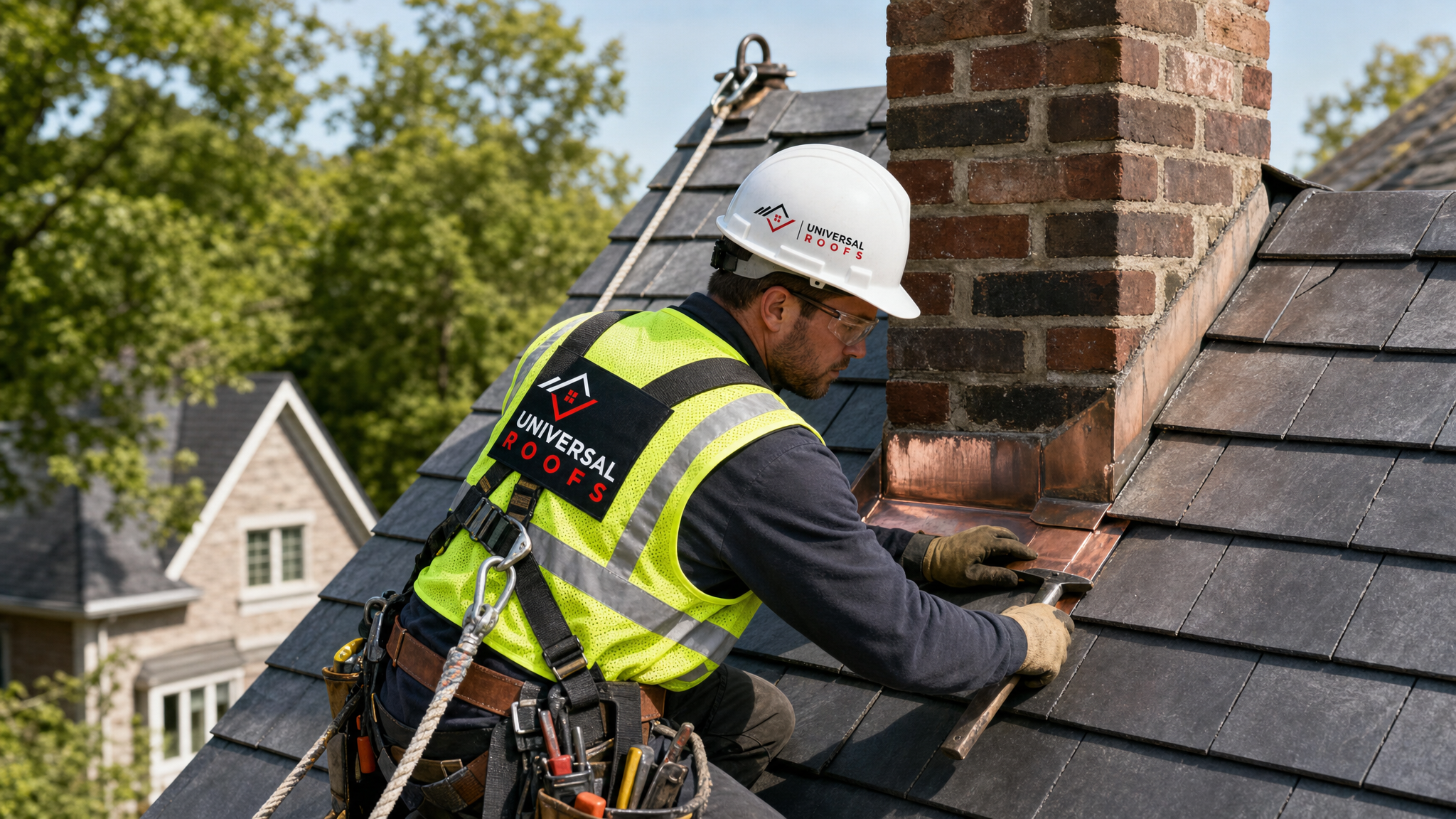
Spring, right after thaw, is when ice damming damage becomes visible: staining on plaster ceilings, lifted flashing at eaves, and granule loss washed into downspouts. This is the best window to schedule repairs before summer storms arrive. Summer — right now, in July — is ideal for slower work like moss treatment, ventilation upgrades, and any masonry repointing around chimneys, since dry, warm conditions let mortar and sealants cure properly. Autumn is about gutter and valley clearing before the first hard frost traps debris in place, and winter is primarily an observation season: watching for ice dams, icicles at eaves (a sign of heat loss through the attic), and interior staining after storms.
| Season | Priority Task | Why It Matters for Heritage Roofs |
|---|---|---|
| Spring | Post-thaw inspection, flashing repair | Reveals ice-dam damage while repairs are still simple |
| Summer | Moss/algae treatment, masonry repointing, ventilation work | Warm, dry conditions allow mortar and sealants to cure |
| Autumn | Gutter, valley, and downspout clearing | Prevents trapped debris from holding moisture through winter |
| Winter | Visual monitoring for ice dams and interior staining | Early detection prevents attic and structural damage |
Ventilation and Insulation: The Hidden Half of Heritage Roof Preservation
The single biggest difference between a historical roof that lasts another century and one that fails prematurely is almost never visible from the street: attic ventilation. Century homes were built with generous natural airflow through uninsulated masonry and loose construction, but decades of piecemeal insulation upgrades — often done without matching soffit or ridge ventilation — trap warm, moist air against the underside of the roof deck. That moisture rots plank decking from beneath, corrodes copper flashing and nails, and drives the ice damming that damages eaves every winter.
A proper heritage retrofit balances modern insulation levels with continuous intake ventilation at the soffits and exhaust at the ridge or gables, without altering the visible profile of the roof. This is delicate work on a historical home, since many heritage roofs have no soffit at all or have decorative cornices that can’t simply be cut into. Our attic assessment process measures existing airflow and moisture levels before recommending any change, because adding insulation without fixing ventilation is one of the fastest ways to shorten the life of an otherwise sound historical roof.
Skylights are another common retrofit point in older homes, especially where an attic has been converted to living space. If your heritage home has an aging or leaking skylight, our skylights and skylight replacement teams work specifically with the tighter curb dimensions and non-standard framing common in pre-war construction.
Repair Versus Replacement: Making the Right Call on an Original Roof
Homeowners often assume that once a historical roof starts showing problems, full replacement is inevitable. In our experience, the opposite is usually true — most heritage roofing problems are localized and repairable, provided they’re caught before water infiltration causes structural rot in the decking or rafters below. The decision comes down to three questions: how much of the original material remains sound, whether flashing and ventilation issues have been addressed, and whether a heritage designation restricts what can legally be changed.
| Condition Observed | Likely Cause | Recommended Action | Estimated Cost Range (CAD) |
|---|---|---|---|
| A few cracked or slipped slates | Age, fastener failure, foot traffic | Individual slate repair with copper hooks | $400-$1,200 |
| Recurring leaks at chimney or valley | Deteriorated flashing, not material failure | Flashing replacement, slate/tile left intact | $1,500-$4,500 |
| Widespread delamination or granule loss | Soft slate source, end of material life | Full re-roof with matched or salvaged material | $25,000-$70,000+ |
| Interior staining with no visible exterior damage | Ice damming, poor ventilation | Ventilation retrofit plus targeted flashing repair | $2,000-$6,000 |
| Sagging roofline or soft decking underfoot | Structural rot from long-term moisture | Structural repair before any re-roofing | Varies by extent; assessment required |
When full replacement genuinely is necessary — usually after 100-plus years of service or extensive storm damage — the goal shifts to matching, not modernizing. Salvaged slate yards, custom clay tile runs, and hand-split cedar shakes all exist specifically to serve heritage restoration, and a reputable contractor should be able to source materials that satisfy both heritage committee approval and long-term performance, rather than defaulting to asphalt because it’s faster to install.
Working With Heritage Committees and Municipal Permits
Across the GTA, heritage oversight varies significantly by municipality. In Toronto, properties on the Heritage Register or within a Heritage Conservation District require a heritage permit for any exterior alteration visible from a public street, including roofing material changes — even repairs that swap slate for an architectural asphalt shingle “slate look” product are frequently rejected. In parts of Peel Region and York Region, heritage committees maintain similar registers for older village cores like Streetsville, Unionville, and Markham Village. Halton Region communities such as Oakville and Milton have their own heritage advisory committees governing older downtown streetscapes, and Durham Region municipalities like Whitby and Port Perry apply similar rules to their historic cores.
Before any exterior work begins on a designated property, confirm with your municipal heritage planning office whether a permit is required, and budget extra lead time — committee review can add four to twelve weeks to a project timeline. A contractor experienced in heritage work will document existing conditions with photographs before starting and can often provide the material specifications heritage staff need to approve a like-for-like repair quickly.
Warning Signs You Shouldn’t Ignore
Because historical roofing materials fail slowly and often silently, homeowners tend to notice problems only once they’ve become expensive. Watch for granules or slate fragments collecting in gutters and downspouts, daylight visible through the attic decking, a sagging or wavy roofline when viewed from across the street, moss or plant growth concentrated in one area (a sign of a persistent damp spot), and interior ceiling stains that appear after specific storms rather than constantly. Any of these warrants a professional inspection rather than a wait-and-see approach, since heritage roofing damage that’s caught early is almost always a repair, while damage left unaddressed becomes a structural rebuild.
It’s also worth a periodic look at your neighbours’ rooflines if you’re on a heritage street — matched rows of homes were often built with identical roofing details, and seeing a neighbour’s recent repair or replacement can be a useful preview of what to expect and budget for on your own home.
Choosing a Contractor for Historical Roof Work
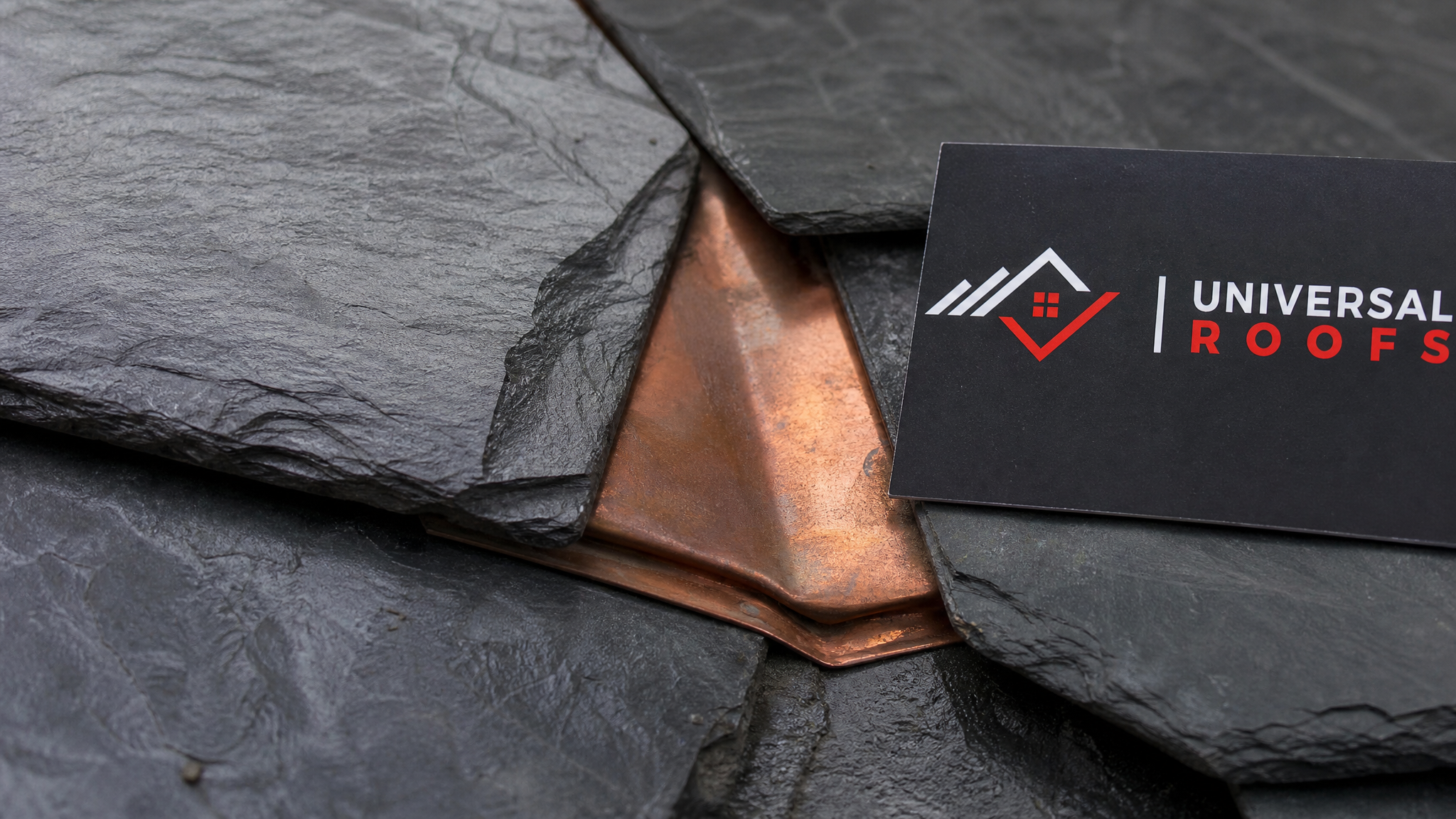
Not every roofing company is equipped to work on heritage buildings, and choosing the wrong one is how historical roofs lose their character. Ask prospective contractors directly about experience with your specific material — slate repair technique is fundamentally different from asphalt shingle installation, and a crew unfamiliar with historic flashing details can cause more damage during a “quick fix” than the original problem. Ask to see photos of comparable past projects, confirm they carry appropriate insurance for working at height on steep historic pitches, and ask specifically how they’d handle heritage permit documentation if your property is designated.
You can read verified reviews from GTA homeowners we’ve worked with, many on heritage and character properties, and our FAQ page answers common questions about timelines, materials, and permit support. You can also learn more about our history and approach on our about page.
What does preserving historical roofing essential maintenance actually involve?
How often should a heritage roof be inspected?
Do I need a heritage permit to repair my roof in Toronto?
Can a historical roof be repaired instead of replaced?
Why does my old house have ice dams every winter?
How much does historical roof restoration cost in the GTA?
Need Help With Preserving Historical Roofing Essential?
Whether you’re maintaining an intact slate roof or trying to catch a small flashing leak before it becomes a structural problem, Universal Roofs has the experience to work on your home’s original roofing the right way.
Call us today at (416) 732-2421 or request a free inspection to get started.
Universal Roofs proudly serves Toronto, Mississauga, Brampton, Vaughan, Markham, Oakville and the GTA since 2005.