
Tile roofing is one of the most durable and visually distinctive choices a Toronto-area homeowner can make, but when a tile cracks, slips, or starts leaking, most people have no idea what their options for tile roof repair or replacement actually are. Clay and concrete tiles can last 50 to 100 years, yet the flashing, underlayment, and fasteners beneath them rarely last that long, which means every tile roof eventually needs some form of intervention.
The trouble is that tile roofing behaves very differently from asphalt shingles. Walking on tiles incorrectly can crack dozens of them in an afternoon, matching discontinued profiles can be a genuine treasure hunt, and Toronto’s freeze-thaw winters put unique stress on underlayment that a homeowner in a milder climate never has to think about. Knowing which repair route fits your situation — and when it’s time to stop patching and plan a full replacement — can save thousands of dollars and years of roof life.
This guide walks through eight practical options for tile roof repair or replacement, from simple spot fixes to a complete tear-off, along with the cost ranges, timelines, and warning signs that tell you which path makes sense for your home.
How to Know Whether You Need a Repair or a Full Replacement
Before comparing individual fixes, it helps to understand the decision tree most contractors use when they inspect a tile roof. The goal isn’t to sell the biggest job possible — it’s to match the scope of work to the actual condition of the roof deck, underlayment, and tile field.
A qualified inspector will typically check four things: the percentage of cracked or displaced tiles, the age and condition of the underlayment (which is invisible from the ground), the state of the flashing around chimneys, vents, and valleys, and any signs of active water intrusion in the attic. If fewer than 10% of tiles are damaged and the underlayment is under 20 years old, a targeted repair almost always makes sense. If the underlayment has failed or more than 25-30% of tiles are cracked or spalling, replacement becomes the more cost-effective long-term choice, because labour to remove and reset tiles for a partial underlayment repair often costs nearly as much as doing the whole roof at once.
| Condition Observed | Likely Cause | Recommended Option |
|---|---|---|
| Fewer than 5-10% of tiles cracked, no leaks | Foot traffic, hail, or age-related brittleness | Individual tile replacement |
| Isolated staining on ceiling below valley or chimney | Failed flashing seal | Flashing repair or resealing |
| Slipped or missing tiles after a windstorm | Broken or corroded fasteners/nails | Refastening and tile resetting |
| Widespread leaks, underlayment visible and brittle | Underlayment failure (20+ years old) | Tile removal, underlayment replacement, tile reinstallation |
| 25%+ tiles cracked, spalled, or delaminating | End of service life, freeze-thaw damage | Full roof replacement |
| Sagging deck, soft spots underfoot | Structural rot beneath tiles | Full replacement with deck repair |
Option 1: Individual Tile Replacement
The most common and least expensive repair is swapping out individual cracked, chipped, or broken tiles. A single clay or concrete tile can crack from a fallen branch, a dropped tool, foot traffic during a satellite dish install, or simple thermal fatigue after decades of expansion and contraction through Toronto’s hot summers and cold winters.
The process sounds simple but requires real skill: the surrounding tiles have to be carefully lifted using a flat bar or tile hook without cracking the adjacent pieces, the broken tile slides out, and a matching replacement slides back in and is secured with a corrosion-resistant nail or clip. The challenge is almost never the labour — it’s sourcing a tile that matches the existing profile, colour, and manufacturer, especially on roofs installed more than 15 years ago when a product line may have been discontinued. Reputable contractors keep a stock of reclaimed and overrun tiles specifically for this reason.
Individual tile replacement typically costs $150-$400 per tile including labour when only a handful need swapping, though most contractors set a modest minimum service call fee. If you notice cracked tiles, it’s worth booking a roof repair assessment promptly, since a single broken tile left in place lets water track behind the coursing below it and can turn into a much larger underlayment problem.
Option 2: Flashing Repair and Resealing
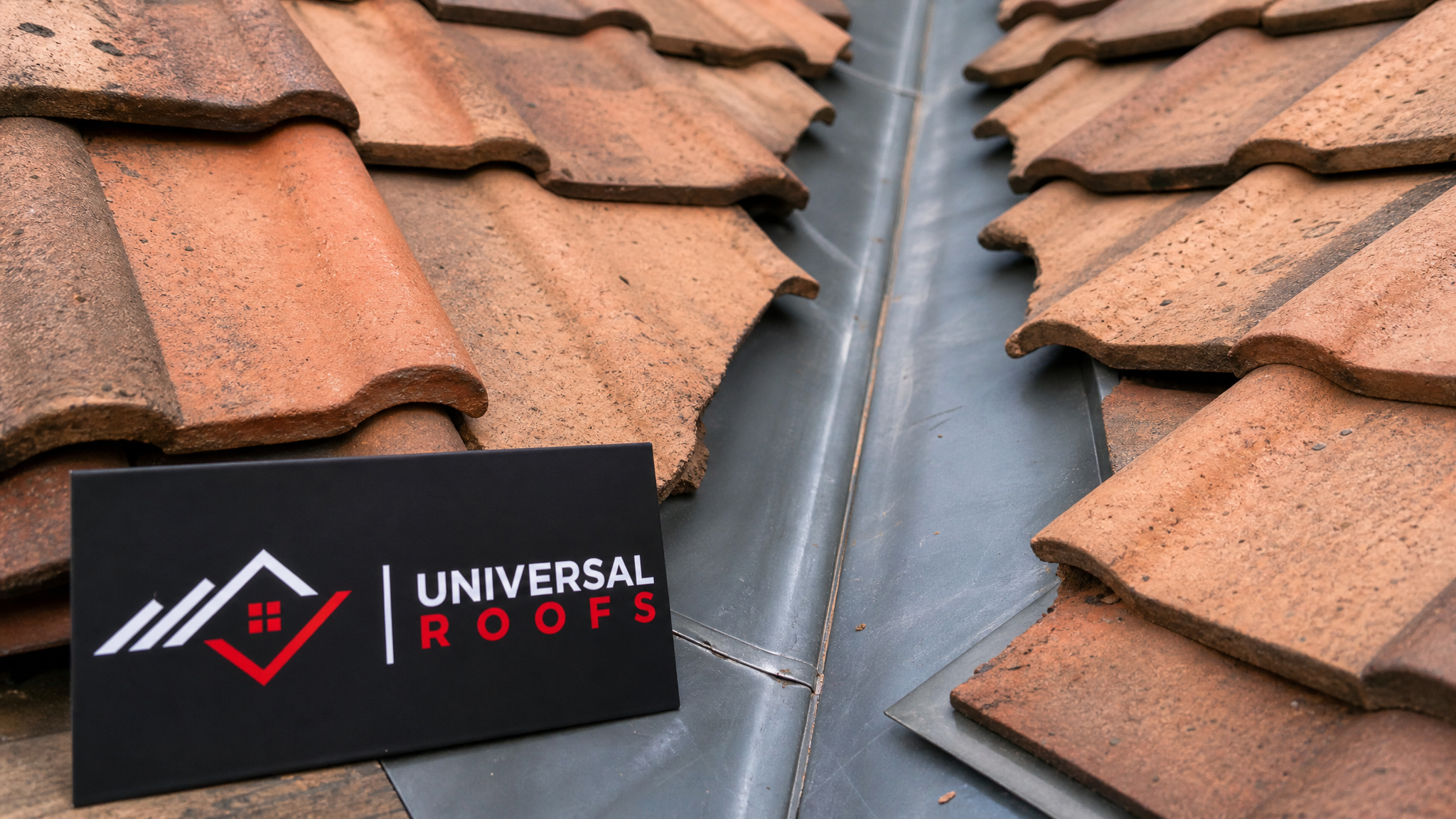
More tile roof leaks originate at the flashing than in the tile field itself. Flashing is the metal (or, in older installs, mortar) that seals transitions — around chimneys, skylights, sidewalls, valleys, and vent pipes — where a continuous tile course isn’t possible. Tile itself is essentially waterproof; flashing is where roofs actually fail.
Common flashing repairs include resealing lifted step flashing along a chimney or dormer, replacing corroded valley metal, and rebuilding failed mortar-bedded flashing (an older technique still found on many GTA tile roofs) with modern sheet metal and butyl sealant. Because flashing repairs require removing and resetting the tiles around the affected area, they’re best bundled together if you’re addressing more than one leak point at once.
Flashing work generally runs $300-$1,200 per penetration depending on complexity, with chimney flashing on the higher end due to the additional tile removal and mortar work involved. If your home also has a skylight integrated into the tile field, it’s worth having that flashing inspected at the same time — see our skylights and skylight replacement pages for how that interacts with a tile roof.
Option 3: Refastening and Resetting Slipped Tiles
After a strong windstorm, it’s common to find tiles that have slipped out of alignment or blown off entirely, even though the tiles themselves are undamaged. This usually points to corroded or failed fasteners — nails, hooks, or clips — rather than a problem with the tiles. Older tile roofs installed with untreated fasteners are especially prone to this after 20-30 years in Toronto’s freeze-thaw climate.
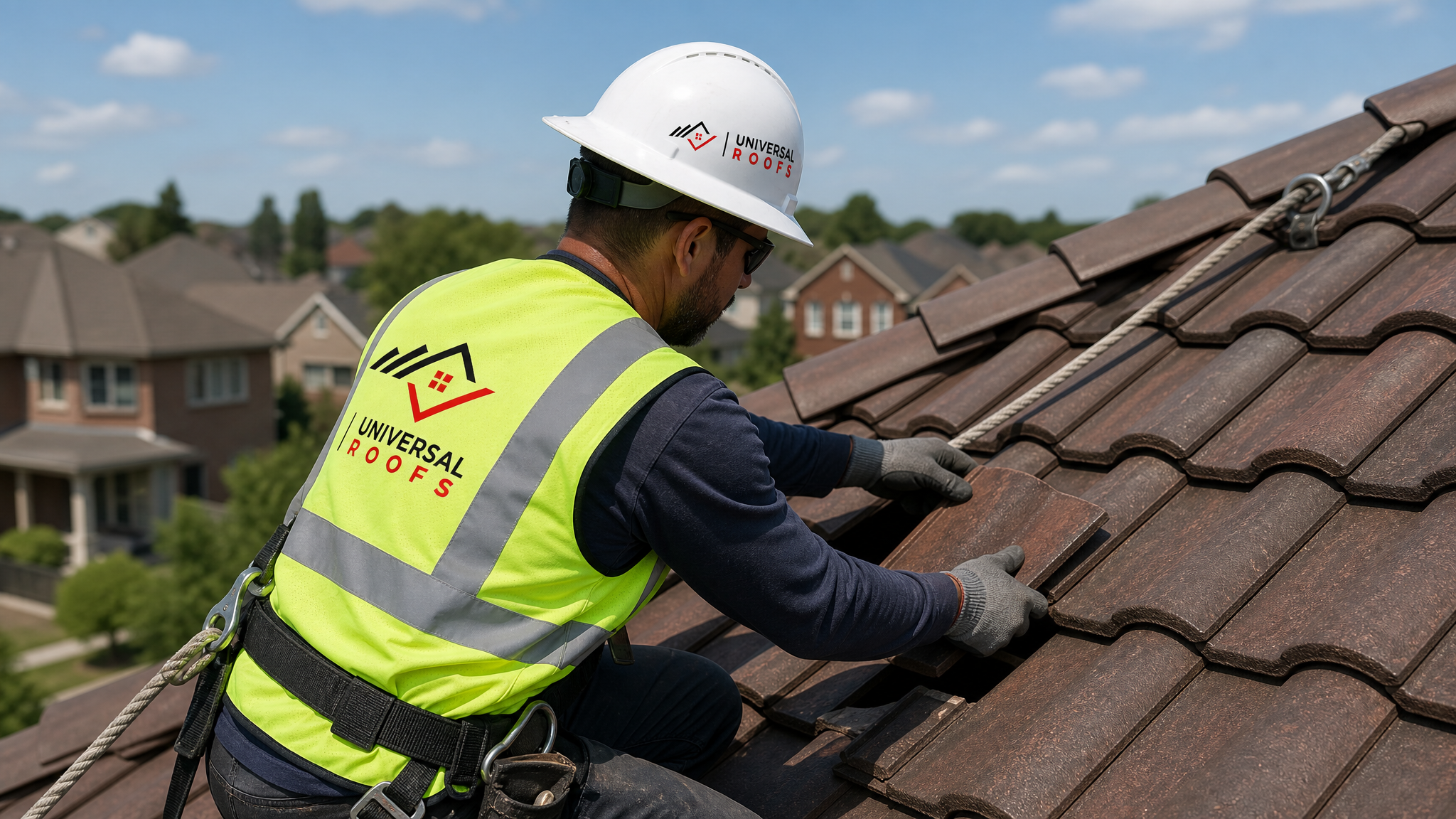
Refastening involves resetting each displaced tile onto its batten, securing it with a new corrosion-resistant nail or clip appropriate for the tile profile, and checking neighbouring tiles for hairline cracks that a storm impact may have caused without fully dislodging them. This is inexpensive on its own, but if a contractor finds that fasteners are failing across a wide area, it’s usually a sign the entire batten and fastening system is nearing the end of its service life, which points toward replacement rather than a spot fix.
Option 4: Underlayment Replacement (Tile Removal and Reinstallation)
This is the option most homeowners don’t realize exists, and it’s often the smartest financial move for a roof between 20 and 35 years old with tiles that are still in good physical condition. The underlayment — the waterproof membrane beneath the tiles — typically wears out decades before the tiles themselves, especially older felt-based products that dry out and crack under Toronto’s UV exposure and temperature swings.
In this process, a crew carefully removes and stacks the existing tiles by section, strips the old underlayment and battens down to the deck, installs new synthetic or self-adhered underlayment (often with ice-and-water shield reinforcement at eaves and valleys, which matters given our winters), then reinstalls the original tiles in their original pattern. It’s labour-intensive but preserves tiles that may otherwise be difficult or impossible to match if replaced individually later, and it can add another 20+ years of watertight performance without the cost of new tile material.
| Repair Option | Typical Cost Range (CAD) | Typical Timeline |
|---|---|---|
| Individual tile replacement (1-10 tiles) | $150 – $600 | Same day |
| Flashing repair (per penetration) | $300 – $1,200 | 1 day |
| Refastening slipped tiles (per section) | $400 – $1,500 | 1-2 days |
| Underlayment replacement (tiles reused) | $8,000 – $18,000 | 1-2 weeks |
| Partial re-tile (one slope or section) | $6,000 – $15,000 | 3-7 days |
| Full tile roof replacement (new tile) | $25,000 – $60,000+ | 2-4 weeks |
Option 5: Partial Re-Tiling of a Single Slope or Section
Sometimes damage is concentrated on one slope — a north-facing section that holds snow and ice longer, or an area beneath a large overhanging tree. When the rest of the roof is in solid condition, a partial re-tile lets you replace tiles, underlayment, and battens on just the affected section without touching the rest of the roof.
The main technical hurdle is matching the existing tile profile and colour closely enough that the repaired section doesn’t stand out, especially on a street-facing slope. Contractors will source reclaimed tile, a close modern equivalent, or in some cases recommend blending new tile into a less visible slope while moving weathered original tile to the front-facing section. This option makes the most sense when damage is genuinely localized rather than spread across the whole roof — if you’re seeing problems on multiple slopes, that’s usually a sign the roof as a whole is aging out and a fuller assessment is warranted.
Option 6: Coating or Sealing Concrete Tiles (Not Recommended for Clay)
Concrete tile roofs — as opposed to clay — can sometimes benefit from a breathable elastomeric sealant applied to restore colour and add a layer of water resistance, particularly on older concrete tile that has become porous and is absorbing water rather than shedding it. This is a maintenance step, not a repair for damaged tiles, and it should never be used to mask cracked or broken tiles, which still need to be physically replaced first.
Clay tile should generally not be coated: clay is naturally low-porosity and fired for durability, and sealants can trap moisture or peel unevenly, doing more harm than good. If you’re unsure whether your roof is clay or concrete, a quick way to check is weight and sound — concrete tiles are noticeably heavier and produce a duller sound when tapped, while clay tiles ring with a sharper, more ceramic tone. A professional inspection through our roof repair service will confirm this and recommend whether sealing is appropriate for your specific tile.
Option 7: Full Tile Roof Replacement (Like-for-Like)
When damage is widespread, the underlayment has failed across most of the roof, or the tiles themselves have reached the end of their functional life (spalling, delaminating, or so brittle they crack under normal foot traffic), full replacement is the only option that makes long-term financial sense. This involves a complete tear-off of the existing tile, batten, and underlayment system down to the deck, inspection and repair of any damaged decking or rafters, installation of new underlayment rated for the local climate, and installation of new tile matched to the original profile or a homeowner’s updated preference.
A full tile replacement is a significant investment, but tile roofs are also a multi-generational asset — a properly installed clay or concrete tile roof with quality underlayment can realistically outlast every asphalt shingle roof installed on the same street two or three times over. Homeowners who are already planning other exterior work sometimes coordinate a full re-tile with attic upgrades; see our attic page for how ventilation and insulation improvements pair naturally with a full roof replacement.
Option 8: Full Replacement With a Different Roofing Material
Not every homeowner wants to replace tile with tile. Tile is heavy — often 400-800 kg per square (100 sq ft) more than asphalt shingles — and older homes weren’t always framed with that load in mind if the tile was a later addition. In cases where the structure needs reinforcement anyway, or where a homeowner simply wants a lower-maintenance, lighter-weight roofing system, converting to architectural asphalt shingles, standing-seam metal, or a modified flat roofing membrane at points of the structure are all realistic paths.
This is the most disruptive option since it typically requires structural assessment (to confirm the roof deck and rafters can handle a different load profile or, on the flip side, don’t need the reinforcement tile demanded), full tear-off, and possibly rafter or decking upgrades. It’s usually reserved for roofs with structural concerns, homeowners planning a major renovation, or situations where matching tile is no longer commercially available at reasonable cost. If part of your roofline is low-slope, our flat roofing page covers how a mixed-material roof (tile on the main slopes, membrane on a lower addition) is often the most practical solution for homes with additions built at different times.
Toronto Climate Factors That Affect Which Option Is Right
The Greater Toronto Area’s climate plays a bigger role in tile roof decisions than many homeowners expect. Freeze-thaw cycling through the winter months is the single biggest factor in how quickly underlayment and fasteners degrade — water that gets beneath a tile and refreezes expands and gradually works joints and seals loose, even on tile that shows no visible surface damage. This is a major reason why underlayment tends to fail well before the tiles themselves in this region, unlike in milder, drier climates where tile roofs can go 40+ years without a full underlayment refresh.
Ice damming at eaves and valleys is another regional consideration: without proper attic ventilation and ice-and-water shield underlayment at vulnerable points, meltwater backing up under tiles is a common source of interior leaks each spring. Summer heat and UV exposure additionally accelerate the breakdown of older felt-based underlayments, which is why most reputable replacements in this market now specify synthetic or high-temperature self-adhered membranes rather than traditional felt.
| Symptom | Where to Look | Likely Fix |
|---|---|---|
| Ceiling stain near a chimney | Chimney flashing and mortar joints | Flashing repair/resealing |
| Ceiling stain in a straight line under a valley | Valley metal and adjacent tile courses | Valley flashing replacement |
| Missing tiles after a windstorm | Exposed battens where tiles blew off | Refastening and tile resetting |
| Musty attic smell, visible daylight through deck | Underlayment and deck condition | Underlayment replacement or full re-tile |
| Granular debris or tile fragments in gutters | Tile surface and edges | Individual tile replacement |
Choosing a Contractor for Tile Roof Work
Tile roofing is a specialty trade, and not every roofing contractor who handles asphalt shingles regularly works with clay or concrete tile. When getting quotes, ask specifically how many tile roofs the crew has repaired or replaced in the past two years, whether they stock or can source matching tile profiles, and how they handle foot traffic on the existing roof to avoid cracking tiles that aren’t part of the repair scope.
It’s also worth asking for references or checking recent reviews from homeowners with tile roofs specifically, since a contractor’s shingle work doesn’t necessarily translate to tile expertise. A written estimate should break out labour for tile removal/reinstallation separately from underlayment or flashing materials, so you can see exactly what you’re paying for and compare quotes on an apples-to-apples basis.
For homeowners across Toronto, Peel Region, York Region, Halton Region, and Durham Region, a proper tile roof assessment should always begin with a physical inspection of the attic from the inside as well as a walk of the roof itself, since underlayment condition simply isn’t visible from the ground or from photos.
What are the main options for tile roof repair or replacement?
How do I know if my tile roof needs repair or full replacement?
How much does tile roof repair typically cost in the Toronto area?
Why does tile roof underlayment fail before the tiles do?
Can I walk on a tile roof myself to inspect for damage?
Is it possible to replace a tile roof with a different material?
Need Help With 8 Best Options for?
Whichever option fits your roof — a single tile swap, a flashing reseal, or a full replacement — Universal Roofs has the tile-specific experience to diagnose the problem correctly and recommend the least disruptive fix that actually solves it long term.
Call us today at (416) 732-2421 or request a free inspection to get started.
Universal Roofs proudly serves Toronto, Mississauga, Brampton, Vaughan, Markham, Oakville and the GTA since 2005.