
When a metal roof reaches the end of its service life, homeowners across the Greater Toronto Area quickly discover that “metal roof replacement” isn’t a single decision — it’s a whole set of choices about panel type, gauge, coating, and installation method. Choosing correctly the first time protects your home from Toronto’s freeze-thaw cycles, spring downpours, and summer heat for decades, while choosing poorly can mean redoing the work within ten years.
This guide breaks down the 6 best metal roof replacement options available to GTA homeowners in 2026, comparing materials, installation methods, and costs so you can make an informed decision before you call a contractor. Whether you’re dealing with a failing standing seam roof, aging steel shingles, or a metal roof that’s simply outlived its warranty, the right replacement option depends on your home’s structure, your budget, and how long you plan to stay in the house.
At Universal Roofs, we’ve replaced metal roofing on homes throughout Toronto, Mississauga, Brampton, Vaughan, Markham, Oakville, and the surrounding GTA since 2005. Below, we walk through each replacement option, when it makes sense, and what it typically costs.
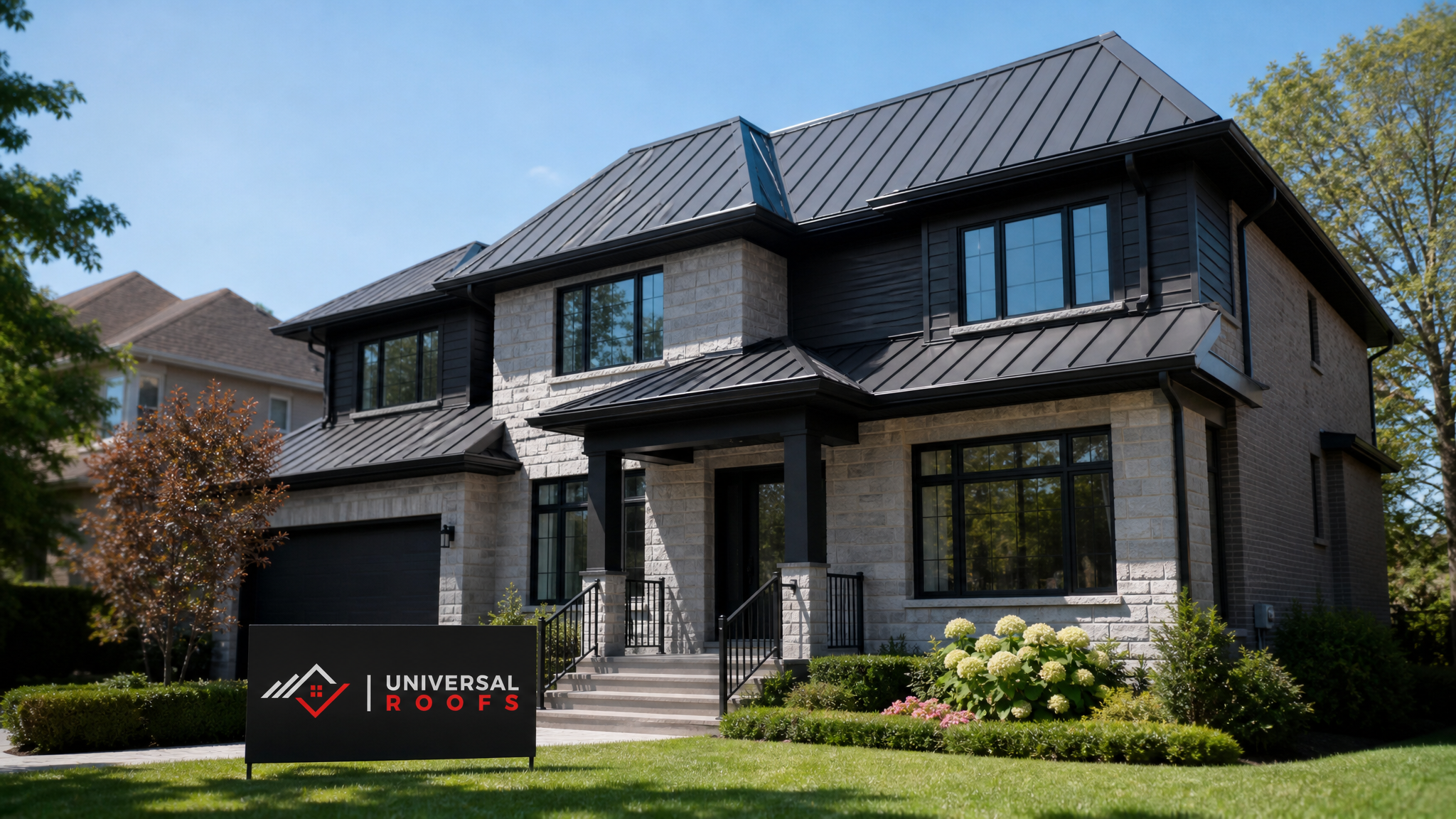
Why Metal Roof Replacement Becomes Necessary
Metal roofing is prized for longevity — many systems carry 40 to 70 year warranties — but no roof lasts forever, and metal roofs fail in specific, recognizable ways. Fastener backout is one of the most common issues on exposed-fastener panel systems, where screws work loose over repeated thermal expansion and contraction cycles, eventually stripping their pilot holes and allowing water infiltration. Seam separation on standing seam systems, coating degradation that exposes bare steel or aluminum to corrosion, and rust perforation near valleys, flashings, and fastener penetrations are the other major failure modes we see on roof repair calls across the GTA.
Toronto’s climate accelerates all of these issues. Winter freeze-thaw cycles — where meltwater seeps into micro-cracks in coatings or sealants, freezes, expands, and widens the damage — are especially hard on older metal roofing. Ice damming along eaves, wind-driven rain during spring storms, and UV degradation through long summer days all compound over 20 to 30 years. When a roof reaches the point where repeated repairs no longer make financial sense, full replacement becomes the smarter long-term investment.
The good news is that today’s metal roof replacement options are significantly more advanced than what was installed in the early 2000s. Better coatings, improved fastening systems, and concealed-fastener designs mean a modern replacement should easily outlast the roof it’s replacing — often by decades.
Option 1: Standing Seam Steel Replacement
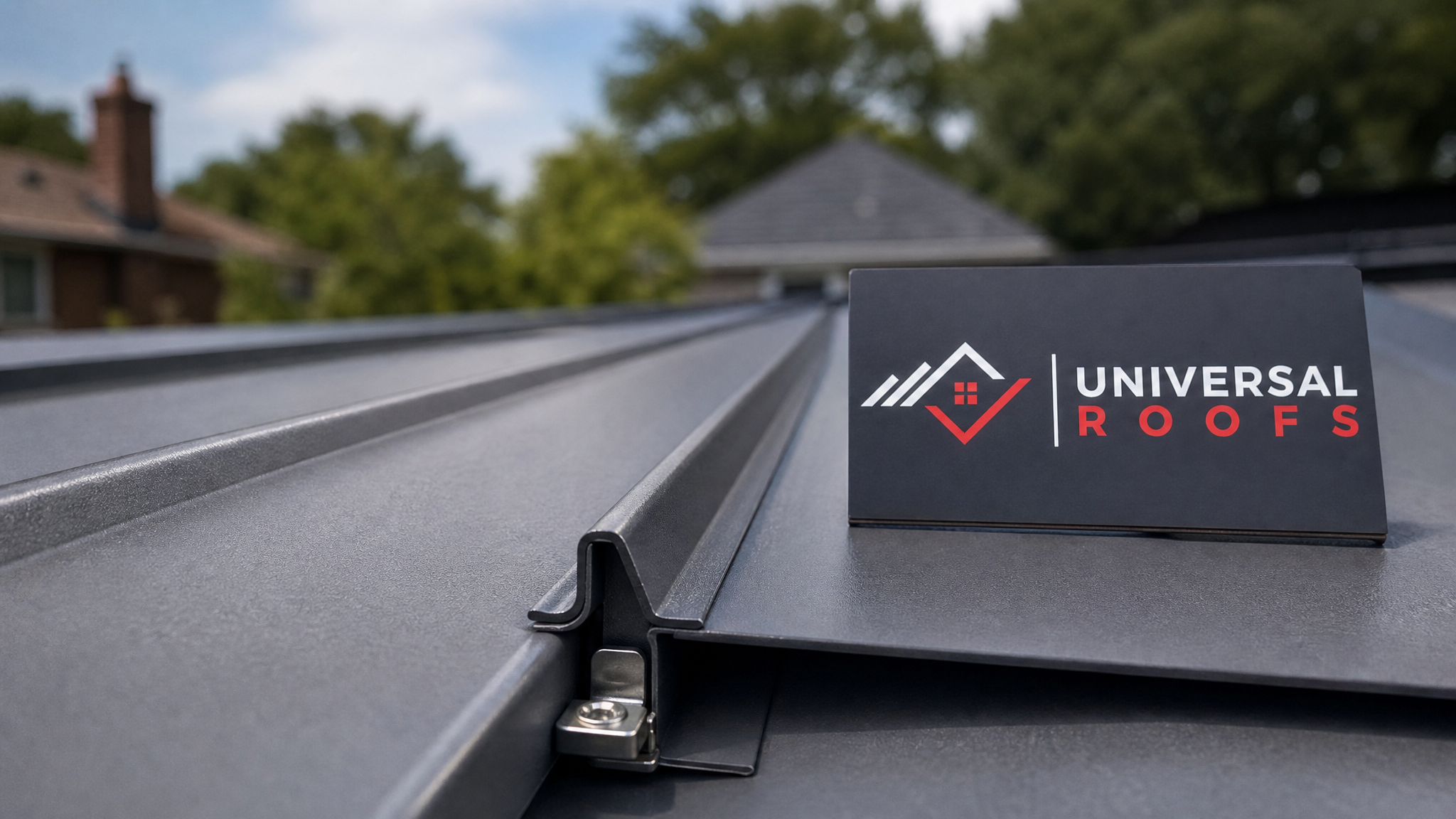
Standing seam is the gold standard for metal roof replacement on GTA homes, and it’s what we recommend most often when a full tear-off is already underway. The system uses vertical panels with raised, interlocking seams that run from ridge to eave, with fasteners concealed beneath the seam rather than exposed to the weather. This eliminates the single biggest failure point of older exposed-fastener systems.
Steel standing seam panels are typically galvanized or Galvalume-coated (a zinc-aluminum alloy coating) and finished with a baked-on paint system, most commonly PVDF (polyvinylidene fluoride, sold under names like Kynar 500) or the more affordable SMP (silicone-modified polyester). PVDF finishes resist fading and chalking far better over 25+ years and are worth the modest upfront premium on a home you plan to keep long-term.
Standing seam handles Toronto’s snow load and freeze-thaw cycles exceptionally well because the smooth vertical panels shed snow and ice quickly, reducing the ice-damming risk that plagues shingled and lower-slope roofs. It also pairs cleanly with proper attic ventilation, which is essential for preventing condensation buildup under any metal roofing system.
Option 2: Stone-Coated Steel Panels
Stone-coated steel is a popular replacement option for homeowners who want the durability of metal but the visual profile of shingles, shakes, or tile. The panels are formed steel with a textured stone-chip coating bonded with an acrylic film, giving a dimensional, textured appearance that blends into neighbourhoods where traditional shingle roofs predominate.
This option is particularly well suited to heritage and character homes across older Toronto neighbourhoods where a strict metal look might clash with the streetscape, but where homeowners still want metal’s longevity and impact resistance. Stone-coated panels carry excellent hail and wind ratings and typically come with 50-year warranties.
The tradeoff is a higher material cost than standard steel and a slightly more involved installation process, since the interlocking panel profiles require careful alignment at hips, valleys, and ridges. It’s a strong choice when curb appeal and neighbourhood fit matter as much as performance.
Option 3: Aluminum Panel Replacement
Aluminum is the preferred metal roof replacement option for homes near Lake Ontario or in areas with higher humidity exposure, because aluminum simply does not rust — it can only develop a light surface oxidation that doesn’t compromise structural integrity. This makes it an excellent long-term choice for coastal-adjacent properties and homes with a history of moisture issues.
Aluminum is roughly one-third the weight of steel, which reduces structural load on the roof deck and trusses — a meaningful advantage on older homes where the original framing wasn’t engineered for heavier roofing materials. It’s also naturally more resistant to the road salt and de-icing chemical exposure common in Toronto winters, since it won’t corrode the way uncoated or damaged steel can.
The main consideration with aluminum is upfront cost, which runs higher than steel per square, and it is a softer metal, meaning it can dent more easily under significant hail impact. For most GTA homes, steel remains more cost-effective, but aluminum is worth prioritizing on lakeside properties or homes with known corrosion history.
Option 4: Copper Roofing Replacement
Copper is the premium tier of metal roof replacement, typically reserved for architectural homes, dormers, bay windows, and accent roofing rather than full-home coverage, given its cost. What makes copper distinctive is its patina process: bright copper weathers to a brown tone within a few years and eventually develops the recognizable blue-green verdigris patina over 15 to 20 years, which is actually a protective oxide layer rather than corrosion damage.
Copper roofs regularly exceed 70 years of service life and require essentially no maintenance beyond periodic inspection of fasteners and flashings. It’s naturally resistant to Toronto’s freeze-thaw cycles and doesn’t require the painted coatings that steel and aluminum depend on for weather resistance, since copper’s own oxidation is the protective layer.
Because of material cost, most GTA homeowners choose copper for architectural accents — bay window roofs, entryway canopies, or dormers — while using steel or aluminum for the main roof field. This hybrid approach delivers the visual impact of copper where it’s most visible from the street, at a fraction of the cost of a full copper installation.
Option 5: Metal Shingle and Shake Replacement
Metal shingles and metal shake panels replicate the look of traditional asphalt shingles or cedar shakes while delivering metal’s durability. Individual panels interlock in overlapping courses, closely mimicking traditional roofing sightlines, which makes this option popular for homeowners who want to upgrade from asphalt without dramatically changing their home’s appearance.
These systems are typically steel or aluminum with a granular or textured coating and are engineered with concealed fastening at the overlap, keeping the weather-facing surface free of exposed screws. Metal shingles perform particularly well on steeper-pitched roofs common in older GTA housing stock, where the additional slope helps shed water and snow efficiently.
Installation requires careful attention to starter courses and flashing details around chimneys and valleys, since the interlocking profile is less forgiving of misalignment than flat standing seam panels. A qualified installer experienced specifically with metal shingle systems is essential here — this is not a system where a generalist crew should be learning on your roof.
Option 6: Metal Roof Retrofit Over Existing Structure (Recover System)
In specific situations — when the existing roof deck is structurally sound and local building code permits it — a metal recover system can be installed directly over existing shingles using a system of furring strips or a synthetic underlayment layer, rather than a full tear-off. This reduces landfill waste, shortens installation time, and can lower labour costs.
Recover systems are not appropriate for every home. They require an engineering assessment to confirm the roof deck can handle the additional weight and that ventilation won’t be compromised by trapping moisture between the old and new layers. Toronto’s building code also limits the number of roofing layers permitted, so this option only applies where the existing roof is a single layer in good structural condition.
When conditions allow it, a recover system is a cost-effective way to achieve metal roof replacement while minimizing disruption. However, if there’s any sign of deck rot, existing leaks, or ventilation issues, a full tear-off remains the safer, longer-lasting choice — cutting corners here risks trapping moisture against your new roof from day one.
Comparing the 6 Metal Roof Replacement Options
| Option | Typical Lifespan | Relative Cost | Best For |
|---|---|---|---|
| Standing seam steel | 40-60 years | Moderate | Most GTA homes, full tear-offs |
| Stone-coated steel | 50 years | Moderate-High | Heritage streetscapes, hail-prone areas |
| Aluminum panels | 50 years | High | Lakeside homes, corrosion-prone sites |
| Copper roofing | 70+ years | Very High | Architectural accents, dormers |
| Metal shingles/shakes | 40-50 years | Moderate-High | Steep-pitch homes, traditional aesthetics |
| Recover system | Varies by base | Lower | Sound single-layer roofs only |
What Drives Metal Roof Replacement Costs in the GTA
Metal roof replacement pricing depends on far more than square footage. Roof pitch and complexity — the number of valleys, dormers, chimneys, and skylights — significantly affects labour hours, since each penetration requires custom flashing work. Homes with existing skylights often need coordinated skylight replacement at the same time, since old flashing rarely integrates cleanly with new metal panel profiles.
Tear-off scope matters too: removing multiple layers of old shingles or a failing metal system adds disposal and labour costs compared to a straightforward single-layer tear-off. Panel gauge (thickness) and coating tier also swing pricing meaningfully — moving from a 26-gauge to a heavier 24-gauge panel, or upgrading from SMP to PVDF coating, adds cost but extends service life and colour retention substantially.
| Cost Factor | Low Impact | High Impact |
|---|---|---|
| Roof pitch/complexity | Simple gable | Multiple valleys, dormers |
| Panel gauge | 26-gauge | 24-gauge or heavier |
| Coating system | SMP | PVDF/Kynar 500 |
| Tear-off layers | Single layer | Multiple layers |
| Flashing/penetrations | Few vents | Chimneys, skylights, multiple vents |
The Metal Roof Replacement Process, Step by Step
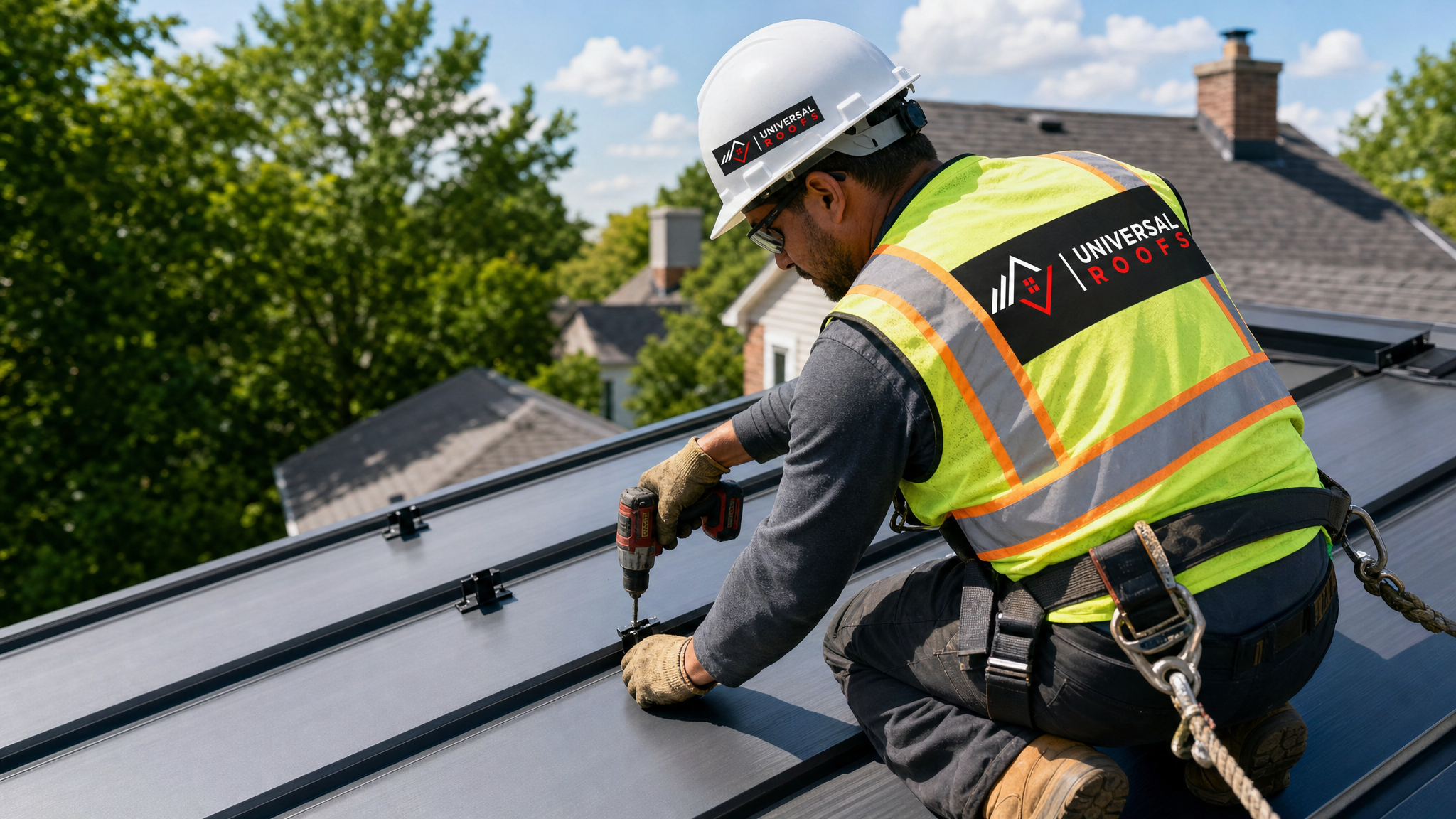
A properly executed metal roof replacement follows a consistent sequence regardless of which panel option you choose. First comes a full structural inspection of the roof deck, checking for rot, delamination, or sagging that needs correction before new material goes down. Next is complete tear-off of the old roofing material, followed by deck repair or replacement of any compromised sheathing.
From there, installers apply a synthetic or high-temperature underlayment (critical under metal roofing to manage condensation and provide a secondary water barrier), followed by ice-and-water shield membrane at eaves, valleys, and penetrations — a non-negotiable step given Toronto’s ice-damming risk. Panel installation follows, working from eave to ridge, with careful attention to seam alignment and fastener spacing per manufacturer specifications. Finally, ridge caps, flashing at all penetrations, and a full quality inspection close out the job.
| Step | What Happens | Why It Matters |
|---|---|---|
| 1. Inspection | Assess deck condition and structure | Prevents installing new roofing over hidden rot |
| 2. Tear-off | Remove existing roofing material | Ensures clean substrate for new system |
| 3. Deck repair | Replace damaged sheathing | New roof is only as good as the deck beneath it |
| 4. Underlayment/ice shield | Install moisture barrier layers | Protects against condensation and ice damming |
| 5. Panel installation | Install chosen metal system eave to ridge | Correct seam alignment prevents leaks |
| 6. Flashing/finishing | Seal all penetrations and ridges | Flashing failure is the top cause of leaks |
Choosing the Right Contractor for Your Metal Roof Replacement
Metal roofing installation is a specialized skill distinct from asphalt shingle work, and not every roofing contractor has the training or tooling for it. When evaluating contractors, ask specifically about their experience with the panel system you’re considering, request to see completed projects in your neighbourhood or a similar home style, and confirm they carry manufacturer certification where applicable, since many premium coating warranties require certified installation.
It’s also worth asking how the contractor handles attic ventilation as part of the replacement — inadequate ventilation is one of the most common causes of premature metal roof failure, since trapped moisture condenses on the underside of panels regardless of how good the coating is. A contractor who treats ventilation as an afterthought is more likely to leave you with problems down the road.
Homeowners considering a flat or low-slope section as part of a larger project — over a garage addition or rear extension, for example — should also ask whether the contractor handles both pitched metal systems and flat roofing, since many GTA homes have a mix of both roof types and benefit from a single contractor coordinating the transition details between them.
Maintaining Your New Metal Roof
Once your metal roof replacement is complete, a simple maintenance routine will help you get the full service life out of the investment. Schedule a visual inspection each spring and fall to check fasteners, flashing, and sealant at penetrations, since even concealed-fastener systems benefit from periodic verification. Clear debris from valleys promptly, as trapped leaves and pine needles hold moisture against panel seams and can accelerate coating wear.
After major storms — particularly hail events or high-wind days, which are becoming more frequent across the GTA — a quick inspection can catch minor damage before it becomes a larger repair. And if you do notice a loose panel, lifted flashing, or a small leak, addressing it promptly through roof repair service prevents a small issue from compounding into deck damage or interior water intrusion.
Homeowners throughout Toronto, Peel Region, York Region, Halton Region, and Durham Region can read more about common issues and solutions on our FAQ page, or see what past customers have said about their replacement projects on our reviews page.
What is the best option for metal roof replacement on a GTA home?
How much does metal roof replacement cost in Toronto?
Can I install a new metal roof over my old shingles?
How long does a metal roof replacement take?
Is aluminum or steel better for metal roof replacement?
How do I know if my metal roof needs replacement instead of repair?
Need Help With 6 Best Metal Roof?
Choosing among the 6 best metal roof replacement options doesn’t have to be overwhelming — the team at Universal Roofs can walk you through which system fits your home, budget, and long-term plans, then handle the installation from tear-off to final inspection.
Call us today at (416) 732-2421 or request a free inspection to get started.
Universal Roofs proudly serves Toronto, Mississauga, Brampton, Vaughan, Markham, Oakville and the GTA since 2005.