
Most homeowners think about weatherproofing in terms of shingles, flashing, and eavestroughs. Soffit and fascia rarely make the list, even though they form the last line of defence between the outside air and the wooden framework holding your roof up. When these two components fail, water does not simply run off the way it is supposed to — it finds the gap, sits against bare wood, and starts a slow rot cycle that can travel from the roof edge straight into your attic.
We get asked why weatherproofing with soffit and fascia repair matters so often that it is worth answering properly, in detail, rather than in a single paragraph on a service page. The short version is that soffit and fascia are not decorative trim — they are functional weatherproofing components that manage water, wind, and airflow at one of the most vulnerable points on the entire house: the roof edge. The long version, which covers how they actually protect your home, what happens when they fail, how repairs are done, what it costs, and when a patch is enough versus when you need full replacement, is below.
By the end of this guide you will understand exactly what soffit and fascia weatherproofing involves, how to recognize when yours is compromised, and what a proper repair looks like from start to finish — knowledge that will make any conversation with a contractor far more productive.
Why Weatherproofing With Soffit and Fascia Repair Actually Matters
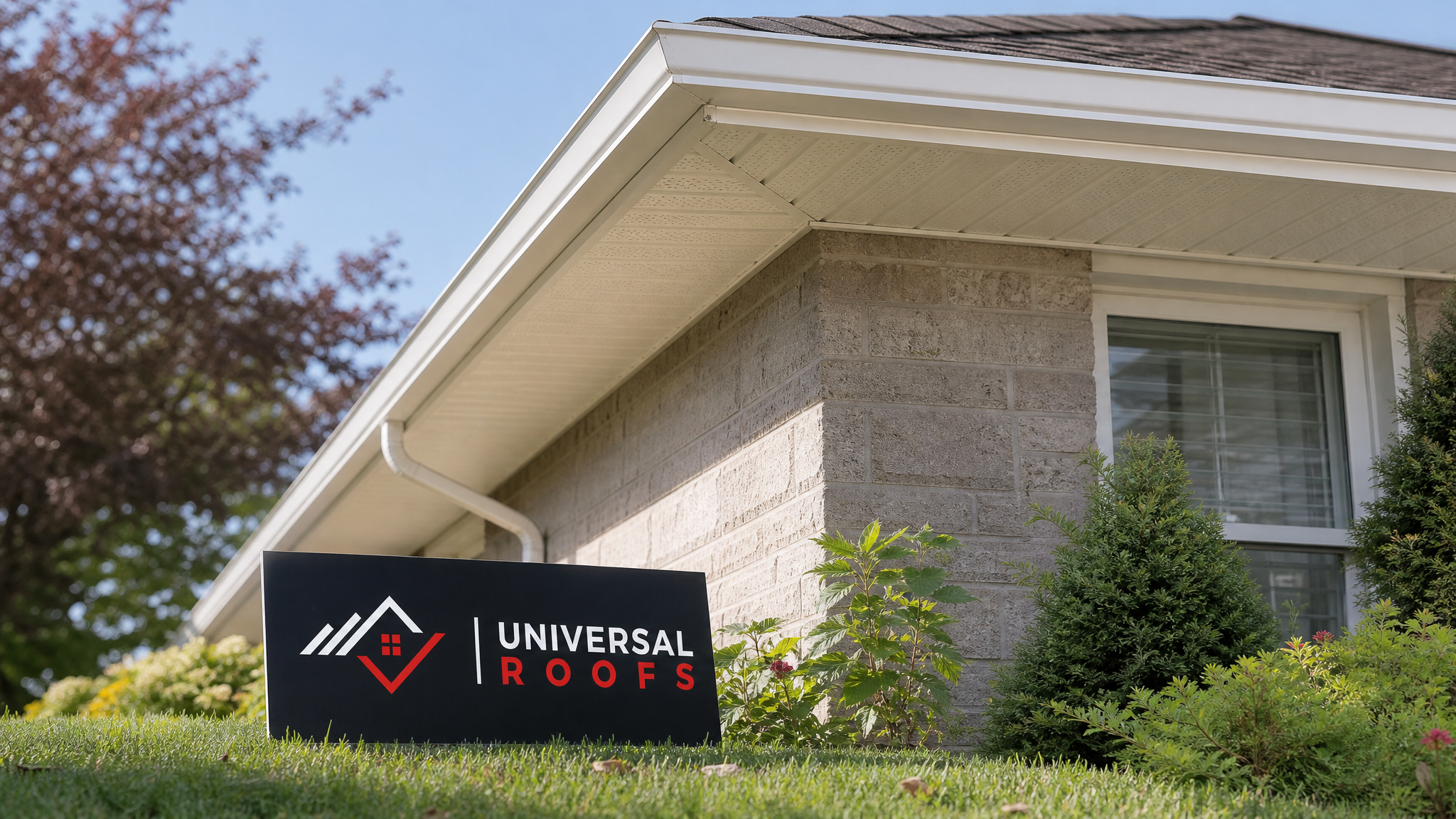
The roof edge is the single most exposed transition point on a house. It is where the roof deck, the rafter tails, the gutters, and the exterior wall all meet, and it takes the brunt of wind-driven rain, ice, and temperature swings all year long. Soffit and fascia are the components built specifically to weatherproof that transition.
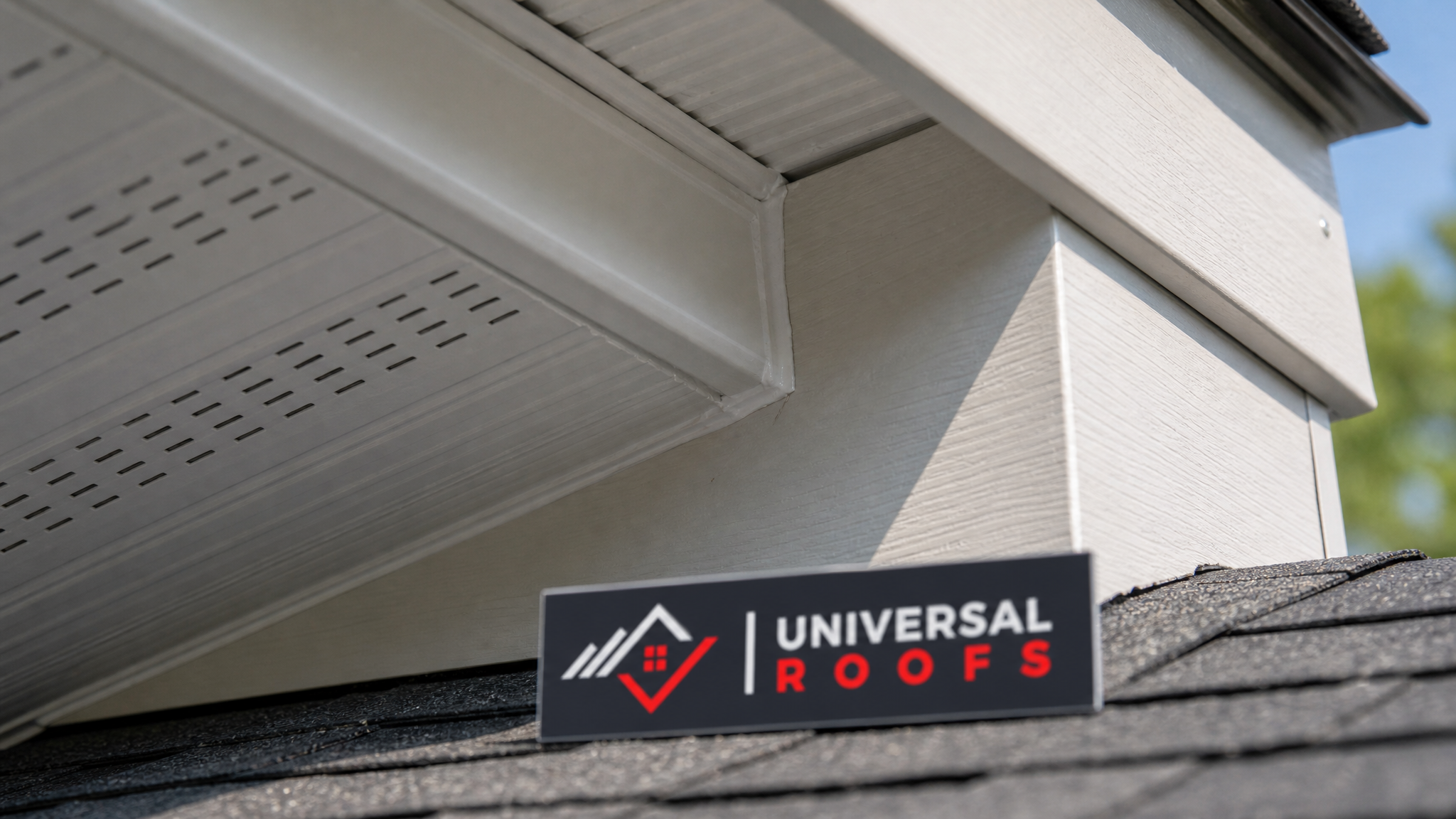
The fascia board runs vertically along the roof edge, capping the ends of the rafters or trusses and giving the eavestrough system something solid to mount to. The soffit is the panel underneath the overhang, closing the gap between the fascia and the exterior wall while still allowing air to move into the attic through vent slots. Together they form a continuous, sealed boundary that keeps weather out while letting air in — which is a more delicate balance than it sounds.
When either component is damaged, that balance breaks in one of two directions. Either water and pests find a way in through gaps and rot, or the intake ventilation gets blocked and the attic starts trapping moisture from the inside. Both failure modes are common across the GTA, and both are exactly what proper soffit and fascia weatherproofing is designed to prevent.
How Soffit and Fascia Function as a Weatherproofing System
It helps to think of soffit and fascia less as trim and more as a three-part weatherproofing system working together with your gutters and roof edge flashing:
- Physical water barrier. The fascia blocks wind-driven rain from reaching the rafter tails, while the soffit seals the underside of the overhang so water cannot be pushed upward into the attic by wind pressure.
- Controlled ventilation. Vented soffit panels are the primary intake point for fresh air moving into the attic, working with roof or ridge vents to flush out heat and moisture. Solid, unvented soffit starves that intake.
- Structural support for the gutter system. Eavestroughs hang from the fascia board. If the fascia is soft or rotted, the entire gutter system loses its anchor point, which compounds water problems rather than solving them.
- Pest exclusion. A tight, properly fastened soffit and fascia assembly denies squirrels, raccoons, wasps, and birds the gaps they look for at the roofline.
When we talk about “weatherproofing” a roofline, we mean restoring all four of these functions at once — not just making the panels look presentable again. A cosmetic patch that ignores ventilation balance or fastener condition is not really weatherproofing; it is a temporary cover-up.
Signs Your Soffit and Fascia Have Lost Their Weatherproofing
Soffit and fascia failures rarely happen all at once. They show up gradually, and homeowners often mistake the early signs for cosmetic wear rather than an active weatherproofing failure. Watch for:
- Peeling, bubbling, or blistering paint on the fascia board — almost always a sign that moisture is trapped behind the surface
- Soft, spongy wood when pressed with a screwdriver handle, indicating active rot beneath the surface
- Sagging or drooping soffit panels, particularly noticeable after heavy rain or during spring melt
- Visible gaps or daylight between soffit panels, or between the soffit and the fascia or wall
- Squirrel, wasp, or bird activity around the eaves, which signals an opening large enough to exploit
- Water staining below gutter joints on the fascia, often pointing to an overflow issue that is also degrading the board underneath
- Unusual ice buildup at the eaves in winter, which can indicate blocked soffit ventilation letting heat escape unevenly into the attic
Any one of these signs, caught early, usually means a straightforward repair will restore full weatherproofing. Ignored through another Toronto freeze-thaw cycle, minor rot spreads into the rafter tails and roof deck, turning what should have been a modest repair into a structural one.
What Happens When Soffit and Fascia Weatherproofing Fails
The consequences of a failed soffit or fascia rarely stay contained to that one component. Because the roof edge sits at the intersection of so many systems, a small gap tends to cascade into larger problems over a season or two.
| Initial Failure | Common Downstream Effect | Typical Timeline |
|---|---|---|
| Cracked or gapped fascia joint | Rafter tail moisture intrusion and localized rot | 1-3 wet seasons |
| Blocked or solid (unvented) soffit | Attic moisture buildup, premature shingle aging | 2-5 years |
| Sagging fascia from rot | Eavestrough pulling away, worsening water runoff | Ongoing, accelerates each season |
| Small pest entry gap | Nesting in soffit cavity, insulation damage | A single season, once discovered |
| Ice damming at unventilated soffit | Water backing up under shingles, interior ceiling staining | One severe winter can be enough |
This is why we treat soffit and fascia repair as weatherproofing work rather than cosmetic maintenance. A homeowner who calls about a single sagging panel is often, without realizing it, catching a problem before it becomes an attic ventilation issue or a full roof repair further into the field of the roof.
How a Professional Weatherproofing Repair Is Done
A repair that genuinely restores weatherproofing follows a specific sequence. Skipping steps is the most common reason a “repaired” soffit or fascia fails again within a year.
- Disconnect the eavestrough along the affected run, since the gutter hangers are almost always fastened directly into the fascia board.
- Remove damaged soffit panels to expose the fascia and rafter tails, checking each rafter tail for soft or discoloured wood.
- Replace or sister any compromised rafter tails before new fascia goes on. This is the step most often skipped by rushed repairs, and the most common reason for a repeat failure.
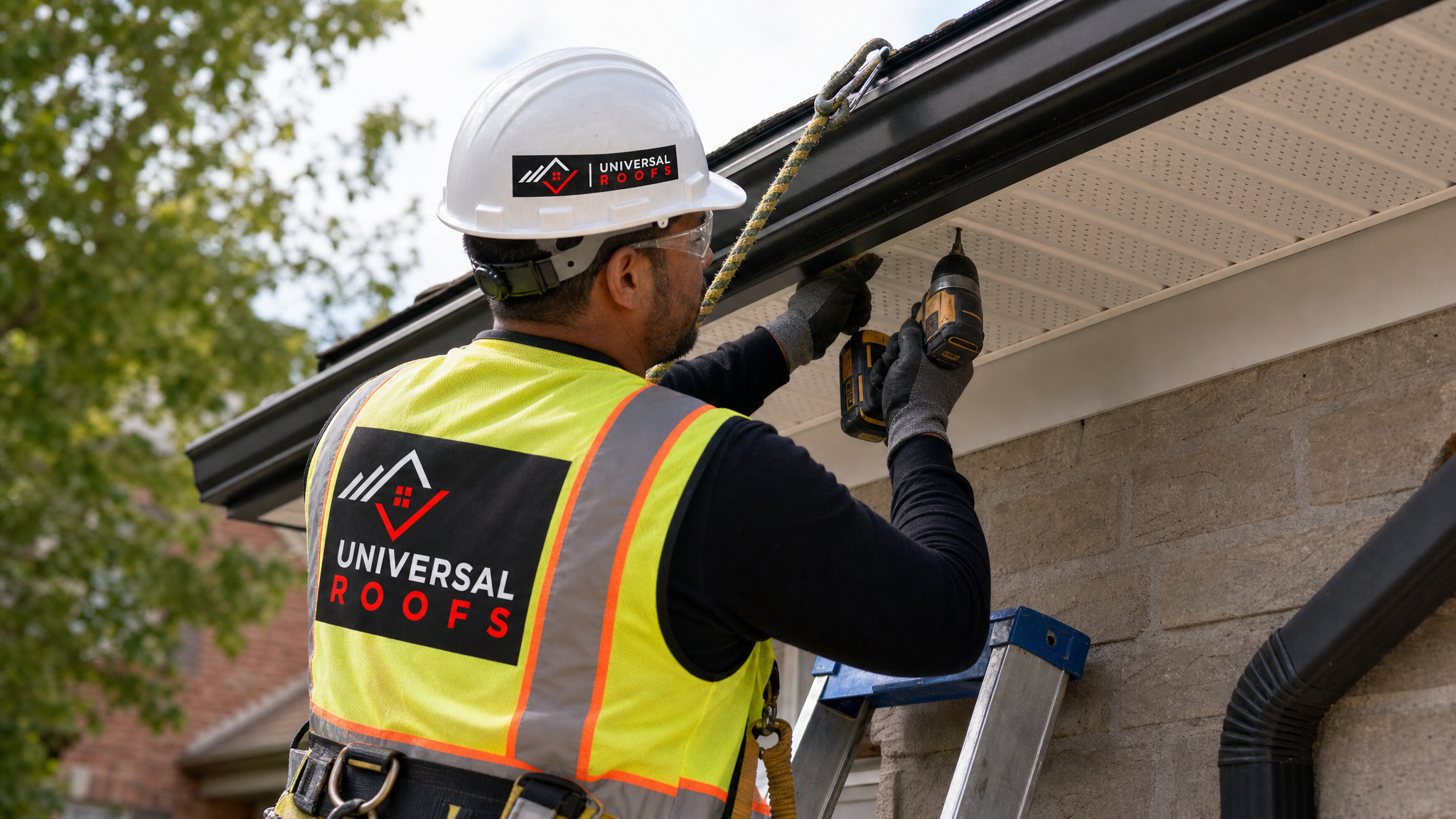
- Install new or repaired fascia board — typically aluminum-wrapped, engineered wood, or primed solid wood — fastened with corrosion-resistant hardware at proper spacing to withstand wind uplift.
- Fit new soffit panels, maintaining the correct ratio of vented to solid panel so attic intake airflow stays balanced.
- Rehang or upgrade the eavestrough, confirming the slope still drains cleanly toward the downspouts.
- Seal every joint and end cap with an exterior-grade sealant rated for Toronto’s temperature swings, closing off any gap a pest could exploit.
- Verify ventilation balance as a final check, confirming the new soffit intake is proportional to the exhaust ventilation at the ridge or roof vents.
That last step is the one that actually makes the difference between a cosmetic fix and true weatherproofing. We routinely find older repairs where a previous crew installed solid, unvented panels purely because they were on hand, quietly cutting off attic airflow for years without the homeowner ever knowing.
Weatherproofing Materials: What Actually Holds Up
The material chosen for soffit and fascia repair directly determines how long the weatherproofing lasts. The four options most commonly used across the GTA each have different trade-offs.
| Material | Weatherproofing Lifespan | Maintenance Needs | Best Suited For |
|---|---|---|---|
| Painted wood | 10-15 years | Repainting every 3-5 years; regular rot checks | Character or heritage homes matching original trim |
| Pre-finished aluminum | 30-40 years | Occasional cleaning; virtually no repainting | Most GTA homes; pairs with aluminum eavestroughs |
| Vinyl | 20-25 years | Low, but can crack in extreme cold | Budget-conscious repairs on newer builds |
| Engineered wood or fibre-cement | 25-30 years | Periodic sealant inspection at joints | Homes wanting a wood look with better rot resistance |
Aluminum is the material we install most often, because it shrugs off freeze-thaw cycling far better than painted wood without demanding a repainting schedule. For a home with original wood trim where only a small section needs repair, matching the existing material can still make sense — provided the replacement wood is properly primed on all sides before it goes up, not just on the exposed face.
What Weatherproofing Repair Costs in the GTA
Costs scale with linear footage, material choice, and how much hidden structural work the rafter tails need. Here is a realistic range based on typical residential jobs across the region.
| Job Type | Typical Scope | Estimated Cost Range (CAD) |
|---|---|---|
| Small spot repair | One panel or a few linear metres | $300 – $800 |
| Single-section replacement | 10-20 linear metres, aluminum | $1,200 – $2,800 |
| Fascia replacement with rafter tail repair | Structural rot, 5-10 linear metres | $1,800 – $4,500 |
| Whole-house soffit and fascia weatherproofing | Full roofline, average detached home | $4,500 – $12,000 |
| Combined with new eavestroughs | Full roofline plus gutters | $6,000 – $15,000 |
These figures assume the roof deck itself has not already been compromised. If prolonged water intrusion has softened the plywood deck as well, that scope needs to be identified during the same inspection rather than discovered partway through the job. When comparing quotes, always ask whether rafter tail repair and ventilation balancing are explicitly included — some lower bids quietly leave them out, which defeats the purpose of calling it weatherproofing at all.
Why Summer Is the Right Season for This Work
July through early October is genuinely the best window for soffit and fascia weatherproofing in the GTA. Warm, dry conditions let sealants and adhesives cure fully, and there is no risk of an active ice dam complicating the eavestrough disconnection step. Waiting until late fall means competing with roofers rushing to finish before frost, and winter work is rarely advisable since most exterior sealants will not cure properly in cold temperatures — which means a “repair” done in January may not actually be weatherproof until spring.
If you noticed sagging panels or gaps during spring melt, when snow sliding off the roof often makes damage obvious for the first time, summer is exactly the window to have it addressed before autumn rains put the repair to the test.
Soffit and Fascia Weatherproofing vs. DIY Approaches
Some soffit and fascia maintenance is reasonable for a confident homeowner to tackle — caulking a hairline gap, or repainting a fascia board that is structurally sound. Most weatherproofing repairs, though, are not good DIY candidates, for a few concrete reasons:
- Working height and fall risk. Soffit and fascia sit above what a standard extension ladder can safely reach without proper fall protection, and working near an unprotected roof edge carries real risk.
- Hidden rot. What looks like a cosmetic soffit issue frequently hides rafter tail rot that needs framing repair, not just a new panel.
- Ventilation math. Getting the vented-to-solid soffit ratio wrong can quietly create moisture problems in the attic that cost far more to fix than the soffit itself.
- Gutter coordination. Since eavestroughs are fastened to the fascia, disconnecting and rehanging them without damaging hangers or losing proper slope takes practice.
If your project is limited to “which paint colour matches the trim,” DIY is fine. Anything involving rafter tails, ventilation balance, or work more than a storey off the ground is worth having assessed professionally. Our reviews page has verified homeowner accounts of past soffit and fascia projects from first inspection through completion.
How Soffit and Fascia Weatherproofing Connects to the Rest of the Roof
Soffit and fascia problems rarely exist in isolation, because the roof edge is where several systems meet. A weatherproofing issue here often points to, or eventually causes, a problem elsewhere:
- Rotting fascia is frequently a symptom of a failing eavestrough rather than an independent problem on its own
- Poor soffit ventilation accelerates shingle aging and ice damming, tying directly back into overall attic health
- Homes with older flat roofing sections often show fascia damage concentrated near the parapet or roof edge transition
- Deteriorated flashing near a skylight can direct extra water toward the soffit below it — worth checking alongside a skylight replacement if one is overdue
This is exactly why we recommend a full roofline inspection rather than treating soffit and fascia as an isolated cosmetic fix. Addressing the visible symptom without tracing the underlying water path just means a repeat call the following season, and a full roof replacement project will typically include soffit and fascia as part of the same scope for exactly this reason.
Where We Provide Soffit and Fascia Weatherproofing Across the GTA
Universal Roofs has repaired and weatherproofed soffit and fascia on residential rooflines across the Greater Toronto Area since 2005. Our crews regularly work throughout Toronto, Peel Region communities including Mississauga and Brampton, York Region municipalities such as Markham and Vaughan, Halton Region towns like Oakville and Burlington, and across Durham Region. Local experience genuinely matters here, since housing stock, roofline styles, and wind exposure vary enough across the GTA that the right weatherproofing approach for an older Scarborough bungalow is not the same as for a newer two-storey in Vaughan.
If you are unsure whether your roofline needs a targeted repair or a fuller weatherproofing overhaul, our FAQ page covers many of the follow-up questions homeowners ask after an initial inspection, and our about page has more detail on how our crews are trained and equipped for this kind of work.
Why does weatherproofing with soffit and fascia repair matter so much?
What are the first signs that soffit and fascia weatherproofing has failed?
Does soffit ventilation actually affect weatherproofing?
How much does soffit and fascia weatherproofing cost in Toronto?
Can I weatherproof my own soffit and fascia?
What is the best time of year for soffit and fascia weatherproofing in the GTA?
Need Help With Why Weatherproofing with Soffit?
Every roofline weatherproofs a little differently depending on age, material, and exposure, and the only way to know for certain whether yours needs a targeted repair or a fuller rebuild is a proper inspection from Universal Roofs.
Call us today at (416) 732-2421 or request a free inspection to get started.
Universal Roofs proudly serves Toronto, Mississauga, Brampton, Vaughan, Markham, Oakville and the GTA since 2005.