
When a storm rips a shingle loose or a raccoon decides your soffit looks like a good entry point, you don’t always have the time or budget for a full roof replacement the same afternoon. What you need are some fast roof patching methods that stop the leak, protect the deck, and buy you time until a proper repair can be scheduled. The good news is that roof patching is one of the most well-understood corners of residential roofing, and homeowners across the Toronto area rely on it every single summer to get through storm season without water finding its way into the attic.
At Universal Roofs, we’ve been patching, repairing, and replacing roofs across the Greater Toronto Area since 2005, and fast patching calls are one of the most common services we get, especially after a wind event or hailstorm rolls through the GTA in late spring and summer. This guide walks through the fastest, most reliable roof patching methods available today, when each one is appropriate, what materials to use, and when a patch is genuinely enough versus when it’s a stopgap before a larger roof repair job.
We’ll cover asphalt shingle patches, flat roof membrane patches, flashing repairs, emergency tarping, sealant-based fixes, and the tools every homeowner should keep on hand. We’ll also look at how Toronto’s freeze-thaw winters and humid summers affect how long a patch will actually hold, and when it’s time to stop patching and start planning a full replacement.
Why Fast Roof Patching Matters in the GTA Climate
Toronto and the surrounding regions see a genuinely tough mix of weather extremes. Winters bring repeated freeze-thaw cycles that stress shingles, flashing, and sealants, while summer brings intense UV exposure, sudden thunderstorms, and the occasional hailstorm rolling off Lake Ontario. This combination means small roof damage rarely stays small for long. A missing shingle in July can let enough moisture into the deck that by the following winter you’re dealing with rot, mould, or even ice damming.
That’s why some fast roof patching methods exist in the first place: they’re designed to be applied in under an hour, using materials that are already weatherproof, so a homeowner or contractor can stop active water intrusion the same day damage is discovered. A same-day patch isn’t a substitute for a permanent fix in every case, but it is almost always the right first move, especially heading into a forecasted rain event.
Homeowners in older neighbourhoods across Toronto, Peel Region, York Region, Halton Region, and Durham Region tend to see the widest range of roof ages and materials, from 1960s tar-and-gravel flat roofs to newer architectural shingle installs, so the right fast patch method really does depend on what’s actually on your roof.
The Fastest Roof Patching Methods, Compared
There isn’t one single “fastest” method — the right choice depends on the roofing material, the size and location of the damage, and whether the repair needs to survive a season or just get you through a storm. The table below breaks down the most common fast patching methods used across the GTA, roughly ranked by how quickly they can be applied by an experienced roofer.
| Patching Method | Best For | Typical Time to Apply | Expected Lifespan |
|---|---|---|---|
| Roofing cement / trowel patch | Small holes, cracked flashing, nail pops | 15-30 minutes | 1-3 years |
| Peel-and-stick membrane patch | Flat and low-slope roofs, membrane tears | 20-40 minutes | 3-7 years |
| Emergency tarp installation | Large storm damage, awaiting full repair | 30-60 minutes | Days to weeks (temporary) |
| Single shingle replacement | One or two damaged or missing shingles | 20-30 minutes per shingle | Matches remaining roof life |
| Liquid rubber / elastomeric coating | Pinhole leaks, seam repairs on flat roofs | 30-45 minutes | 2-5 years |
| Flashing re-seal with butyl tape | Chimney, vent pipe, and skylight flashing leaks | 15-25 minutes | 2-4 years |
Notice that “fast” doesn’t automatically mean “temporary.” Several of these methods, applied correctly, can hold for years. What actually determines longevity is surface preparation, weather conditions during application, and matching the patch material to the existing roof system. A peel-and-stick patch on a dirty, wet membrane will fail in weeks, while the same patch applied to a clean, dry surface on a warm July afternoon can easily last five years or more.
Patching Asphalt Shingle Roofs Quickly
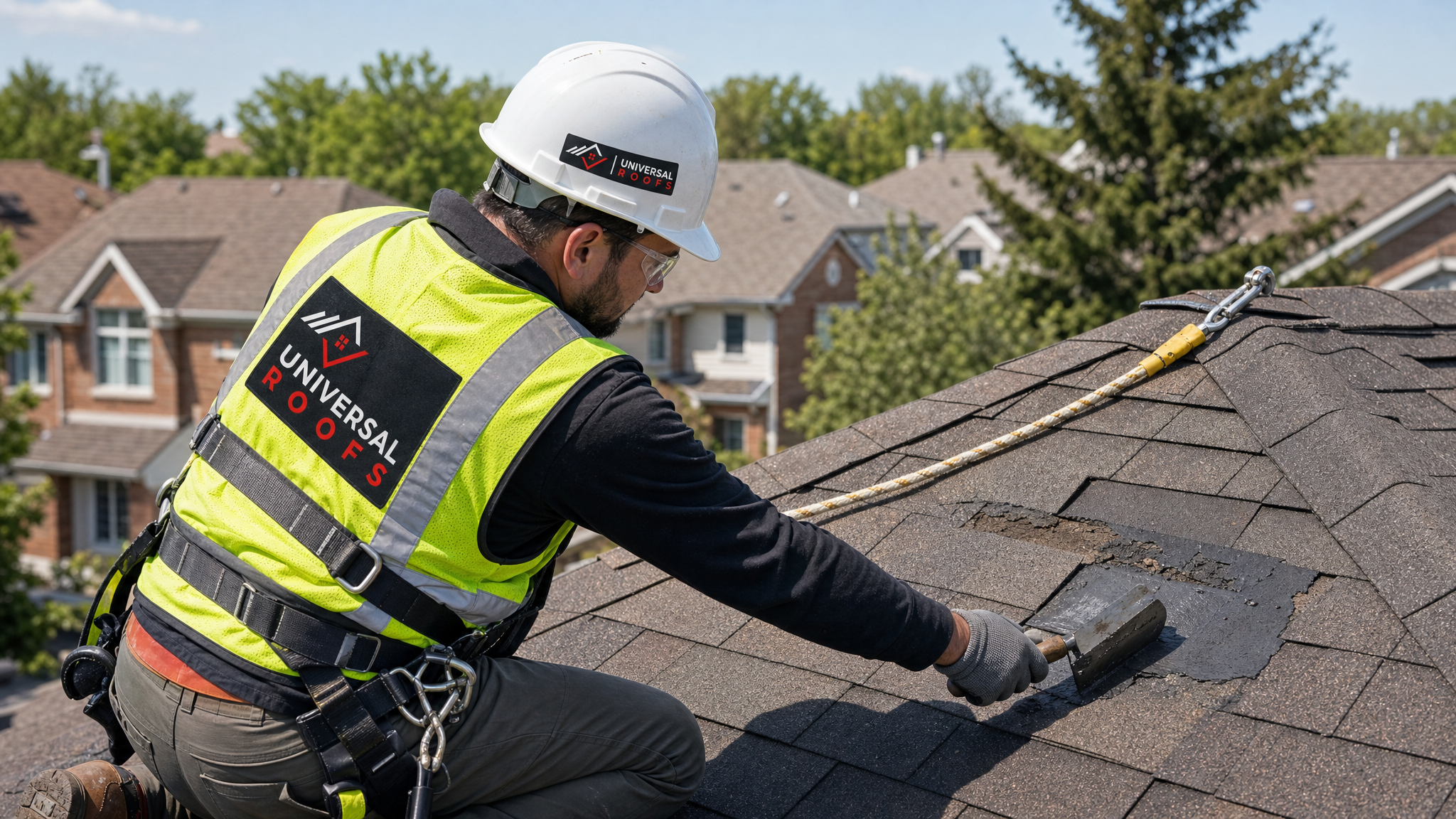
Asphalt shingles are still the most common roofing material on GTA homes, and they’re also among the easiest to patch quickly, provided you have matching or close-matching shingles on hand. The fastest approach for a single damaged shingle is a direct replacement: lift the surrounding shingles carefully with a flat pry bar, remove the nails holding the damaged shingle, slide the new shingle into place, and re-nail through the existing nail holes wherever possible. Finish by sealing the exposed nail heads and the shingle’s edges with a dab of roofing cement.
For cracked or curling shingles that aren’t fully missing, a cement-based patch is often faster than a full replacement. Lift the shingle edge, apply roofing cement generously underneath, press the shingle back down, and add a bead of cement along any visible cracks on top. This method works well as an emergency fix but should be considered a stopgap if more than a handful of shingles on a single slope show similar wear, since that’s usually a sign the whole section is nearing the end of its service life.
One thing we see often on emergency calls: homeowners use standard silicone caulk instead of roofing cement, thinking any sealant will do. Silicone doesn’t bond well to asphalt and tends to peel away within a season, especially once GTA winter temperatures start cycling through freeze-thaw. Always use a purpose-made roofing or plastic roof cement, ideally one rated for the temperature swings we get here.
Patching Flat and Low-Slope Roofs
Flat roofs are common on additions, garages, and older commercial-style GTA homes, and they behave very differently from sloped shingle roofs when it comes to patching. Because water sits on a flat roof rather than shedding off quickly, even a pinhole in the membrane can lead to a serious leak within hours of a heavy rain. That makes fast, correct patching especially important for flat roofing systems.
The quickest reliable fix for a small tear or puncture in a modified bitumen or EPDM membrane is a peel-and-stick membrane patch. Clean the damaged area thoroughly, let it dry completely (moisture is the number one reason flat roof patches fail), cut a patch that overlaps the damage by at least 10 centimetres on all sides, round the corners to prevent lifting, and press it firmly into place working from the centre outward to push out any trapped air.
For seam failures or small blistered areas, a liquid-applied elastomeric coating can be faster than cutting and fitting a membrane patch. Brush or roll the coating over the affected seam, embed a strip of polyester reinforcing fabric into the wet coating, then apply a second coat over top. This creates a fully bonded, monolithic patch that resists the ponding water flat roofs are prone to holding after a storm.
| Flat Roof Material | Recommended Fast Patch | Key Preparation Step | Avoid |
|---|---|---|---|
| EPDM rubber | EPDM-specific peel-and-stick patch | Clean with EPDM primer/cleaner, not solvents | Asphalt-based cements (incompatible) |
| Modified bitumen | Torch-down or self-adhesive bitumen patch | Ensure surface is fully dry, remove loose granules | Applying over standing water |
| TPO membrane | Heat-welded patch or TPO-approved tape | Use TPO-compatible cleaner before bonding | Generic silicone sealants |
| Built-up tar and gravel | Trowel-grade roofing cement with fabric mesh | Clear gravel away from the repair zone first | Thin patches without fabric reinforcement |
Emergency Tarping for Storm and Wind Damage
When a summer storm tears off a large section of shingles or opens a hole big enough to expose the roof deck, patching individual shingles isn’t fast enough — you need to cover the whole area immediately. This is where emergency tarping comes in, and it remains one of the fastest ways to stop water intrusion on a severely damaged roof section.
A proper emergency tarp job involves securing heavy-duty poly tarping over the damaged area, running it well past the edges of the damage onto sound roofing material, and anchoring it with wood furring strips screwed through the tarp into the roof deck rather than relying on cinder blocks or loose weights, which can blow off in the next windstorm. The furring strip method also avoids puncturing the tarp itself with exposed screw heads.
Tarping is explicitly a temporary measure. It buys time — typically days to a couple of weeks — while materials are sourced and a permanent repair or full roof replacement is scheduled. It should never be treated as a long-term fix, since UV exposure degrades most tarps within a month or two, and wind can work fasteners loose over time even when installed correctly.
Flashing, Vent Pipes, and Skylight Leak Patches
A surprising number of “roof leaks” aren’t actually shingle failures at all — they’re flashing failures around penetrations like chimneys, plumbing vent stacks, and skylights. These areas rely on metal flashing and sealant to stay watertight, and both degrade with age and thermal cycling.
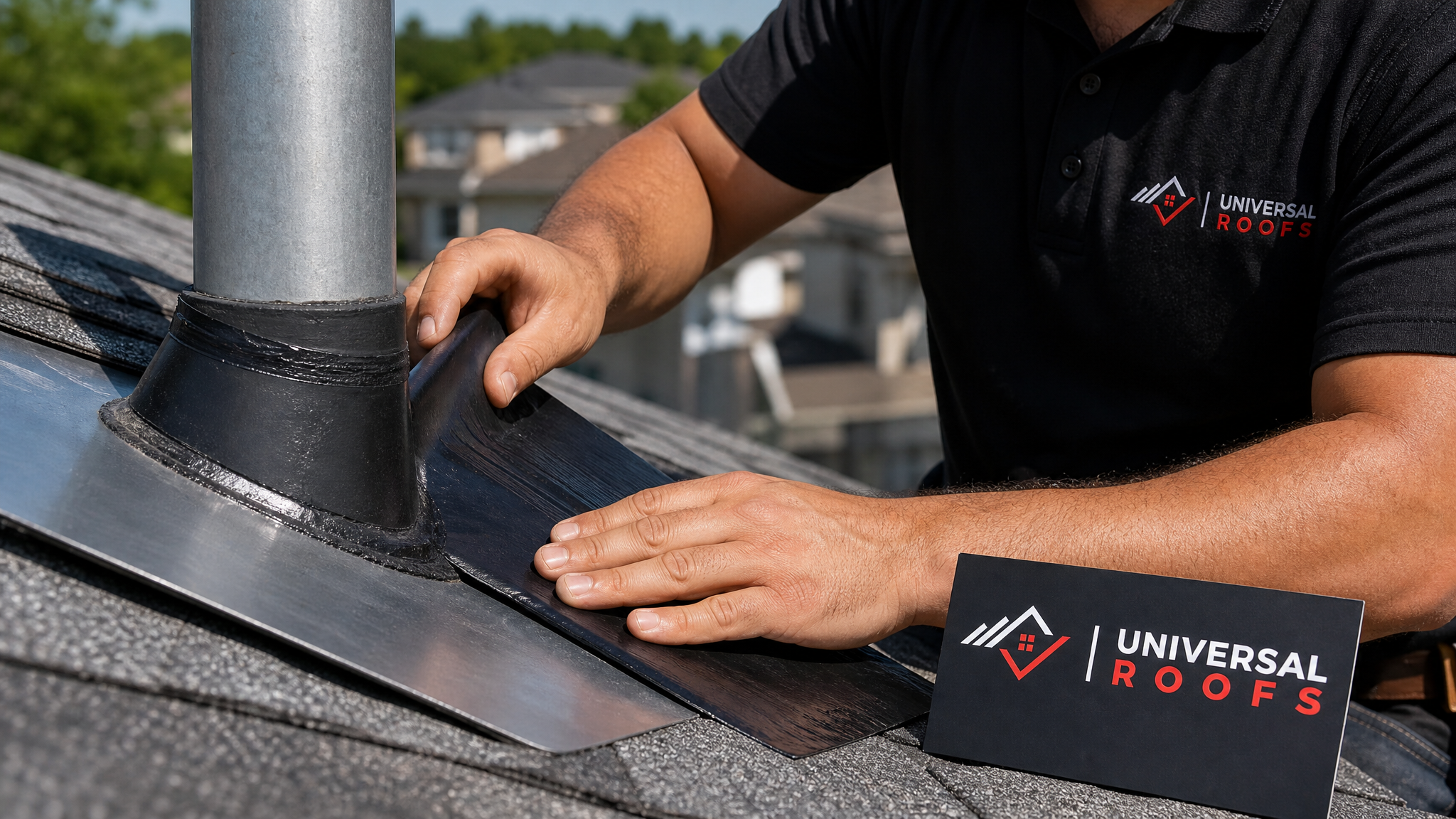
The fastest fix for a small flashing gap is butyl rubber tape, sometimes called flashing tape. It’s self-adhesive, sticks to metal, shingles, and most roofing membranes, and can be pressed into place in minutes without any tools beyond a utility knife. For larger flashing separations, a bead of high-grade roofing sealant applied along the entire seam, tooled smooth with a putty knife, is typically the next fastest option.
Skylights deserve special mention. Older skylight flashing kits are a common source of persistent, hard-to-diagnose leaks, and while a sealant patch can stop a drip for a season, chronically leaking skylight flashing is usually a sign the unit itself needs attention. If you’re dealing with recurring leaks around a skylight, it’s worth having it assessed alongside our skylights and skylight replacement services rather than patching the same spot every summer.
Materials and Tools for a Fast, Effective Patch
Having the right materials on hand before damage happens is what actually makes “fast” possible. A basic roof patching kit that covers most emergency situations should include a few key items, summarized below along with rough costs for GTA homeowners stocking up.
| Item | Purpose | Approx. Cost (CAD) | Shelf Life |
|---|---|---|---|
| Trowel-grade roofing cement (1 pail) | Shingle and small hole patches | $25-$45 | 1-2 years unopened |
| Butyl flashing tape (roll) | Flashing, vent, and seam repairs | $15-$30 | 2-3 years |
| Heavy-duty poly tarp (6x8m) | Emergency storm coverage | $40-$80 | Indefinite (unused) |
| Wood furring strips (bundle) | Securing tarps without puncturing them | $10-$20 | Indefinite |
| Elastomeric roof coating (small pail) | Flat roof seam and pinhole repair | $50-$90 | 1 year opened |
| Utility knife, pry bar, roofing nails | General patch prep and shingle work | $20-$40 total | Indefinite |
A note on safety before we go further: patching a roof, even a small one, means working at height on a potentially wet or storm-damaged surface. Professional roofers use fall-protection harnesses, anchor points, and non-slip footwear for a reason. If your roof pitch is steep, the deck feels soft anywhere, or the damage is on a second- or third-storey section, it’s genuinely safer to call in a professional than to attempt a DIY patch from a ladder.
When a Patch Isn’t Enough: Signs You Need a Full Repair
Fast patching methods are genuinely effective, but they have limits. Knowing when to stop patching and call for a proper assessment saves money in the long run, since repeated emergency patches on a failing roof often cost more cumulatively than one well-planned repair or replacement.
Watch for these warning signs that a patch is only masking a bigger problem: soft or spongy spots on the roof deck, patches that need to be redone in the same location more than once in a year, granule loss so severe that shingles look bald in patches, daylight visible through the roof deck from inside the attic, or water stains on ceilings that keep reappearing after a patch has supposedly sealed the leak. Any of these point to underlying deck damage, widespread material failure, or a roofing system that’s simply past its usable life.
If you’re seeing these signs, the smart move is a professional inspection rather than another round of patching. Our team can assess whether a targeted roof repair will hold or whether the roof has reached the point where replacement is the more cost-effective long-term choice.
Patch vs. Repair vs. Replacement: Making the Right Call
One of the most common questions we get on emergency calls is simply: “Is a patch actually going to fix this, or am I just delaying the inevitable?” The honest answer depends on the age of the roof, the extent of the damage, and how many previous patches already exist in the same area. The table below offers a general framework for deciding.
| Situation | Recommended Action | Reasoning |
|---|---|---|
| Roof under 10 years old, isolated storm damage | Fast patch | Remaining material is sound; patch will last |
| Roof 10-15 years old, single leak source | Patch now, plan repair inspection | Patch buys time, but material is aging |
| Roof 15-20 years old, multiple leak locations | Full repair assessment | Patching multiple spots signals systemic wear |
| Roof over 20 years old, or deck damage present | Replacement consultation | Patches will not hold on failing decking or membrane |
| Any age, active attic mould or soft decking | Immediate professional assessment | Structural and health concerns override cost of patching |
It’s also worth remembering that most home insurance policies in Ontario expect homeowners to take reasonable, timely steps to prevent further damage once a leak is discovered. A fast, documented patch (with photos and receipts) can actually support an insurance claim by showing you acted responsibly, whereas ignoring visible damage can complicate a claim later.
Seasonal Timing for Roof Patching in the GTA
Summer is genuinely one of the best times of year to have fast patching work done in Toronto and the surrounding region. Warm, dry conditions allow roofing cement, sealants, and adhesive membrane patches to cure properly, whereas patches applied in near-freezing temperatures often fail to bond correctly and need to be redone once the weather warms up. If you noticed roof damage over the winter and applied a rushed cold-weather patch just to get through until spring, July is a good time to have that patch properly redone before autumn rain and next winter’s freeze-thaw cycle arrive.
That said, storm damage doesn’t wait for convenient weather, and a same-day emergency patch is always the right call regardless of season when active leaking is occurring. The methods above work in a pinch in almost any weather; they simply perform and last best when applied in warm, dry conditions.
If you’re unsure whether your roof needs a quick patch or a more involved fix, our FAQ page covers many of the most common roofing questions we hear from GTA homeowners, and our reviews page reflects two decades of these calls handled across the region. You can also learn more about our team and history on our about page.
What are some fast roof patching methods homeowners can use safely?
How long does a fast roof patch actually last?
Can I patch a roof myself, or should I call a professional?
What is the fastest way to stop a roof leak during a storm?
Do fast roof patches work on flat roofs the same way as shingle roofs?
When should a roof patch be replaced with a full repair or new roof instead?
Need Help With What Are Some Fast?
Whether you’re dealing with a single missing shingle or a storm-torn section of roof, Universal Roofs has the experience to apply the right fast patching method the first time, so you’re not paying to fix the same spot twice.
Call us today at (416) 732-2421 or request a free inspection to get started.
Universal Roofs proudly serves Toronto, Mississauga, Brampton, Vaughan, Markham, Oakville and the GTA since 2005.