
When Toronto homeowners call about a roof repair, the conversation almost always starts with two questions: what’s wrong, and how much will it cost? But there’s a third question that trips up more people than you’d expect: what colour are the new shingles going to be, and does it actually matter? The honest answer is yes, shingle colour matters a great deal for roof repair, and not for reasons of curb appeal alone. Colour affects whether a patch blends in or stands out like a scar, how the roof performs thermally through GTA summers and winters, and even how long the repaired section lasts compared with the rest of the roof.
Many homeowners assume shingles are shingles, and that a repair crew can simply grab whatever is on the truck and staple it down. In reality, colour is one of the first things an experienced roof repair technician evaluates before a single shingle comes off the roof. Get it wrong and you end up with a roof that looks patched forever, ages unevenly, or develops recurring problems in the repaired zone. Get it right, and the repair disappears into the rest of the field, performs the way it should, and protects your resale value.
This guide walks through exactly why shingle colour matters for roof repair, how manufacturers and colour lots affect matching, what to do when an exact match isn’t possible, and how Toronto’s climate specifically factors into the decision. Whether you’re dealing with a storm-damaged section, a small leak repair, or planning ahead for when a full roof replacement eventually makes more sense than another patch, understanding the colour question will help you make a smarter call.
Why Does the Shingle Colour Matter for Roof Repair in the First Place?
At its core, why does the shingle colour matter for roof repair comes down to three overlapping issues: appearance, performance, and material compatibility. Homeowners tend to focus only on the first one, but the other two often matter more in the long run.
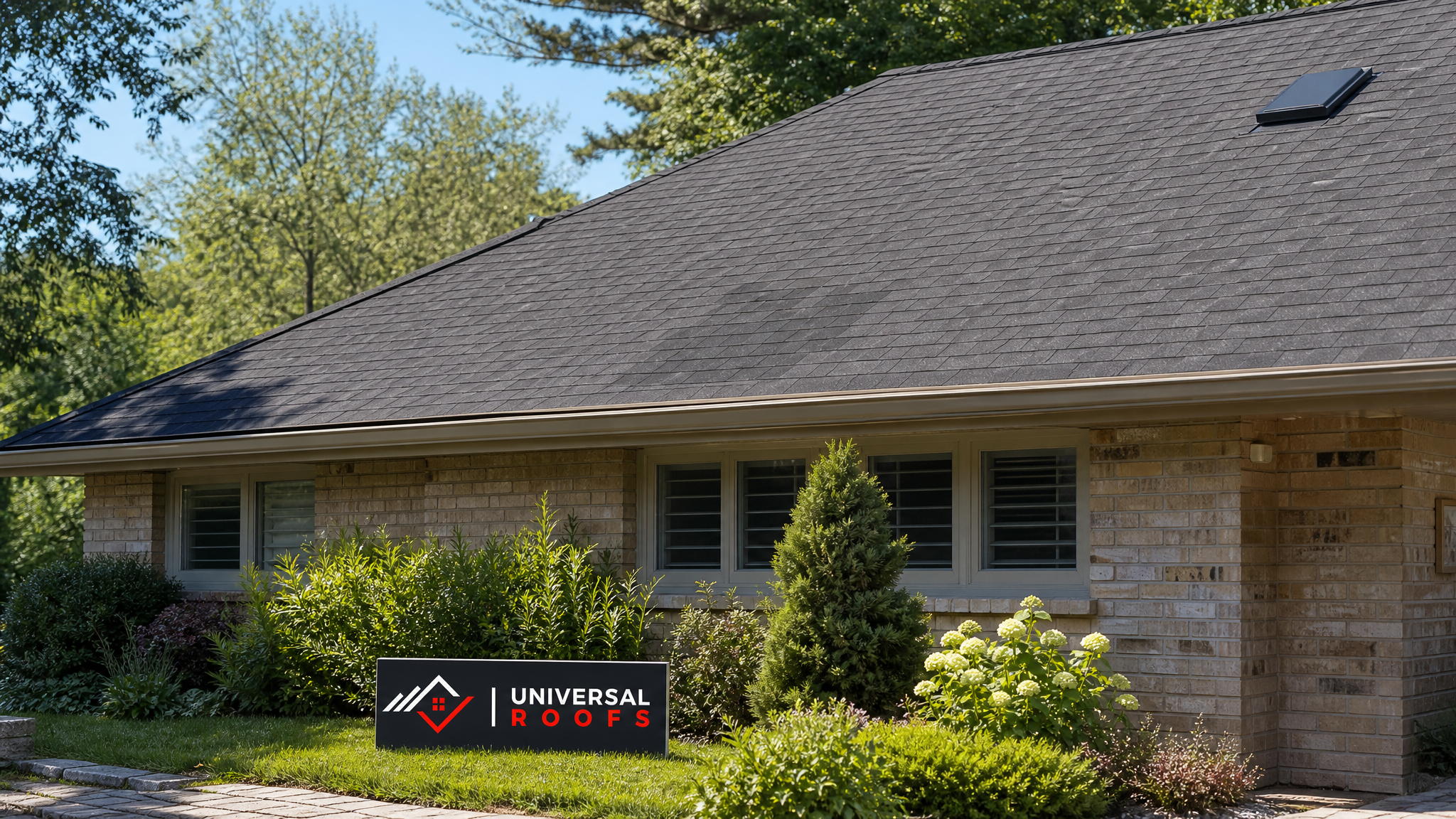
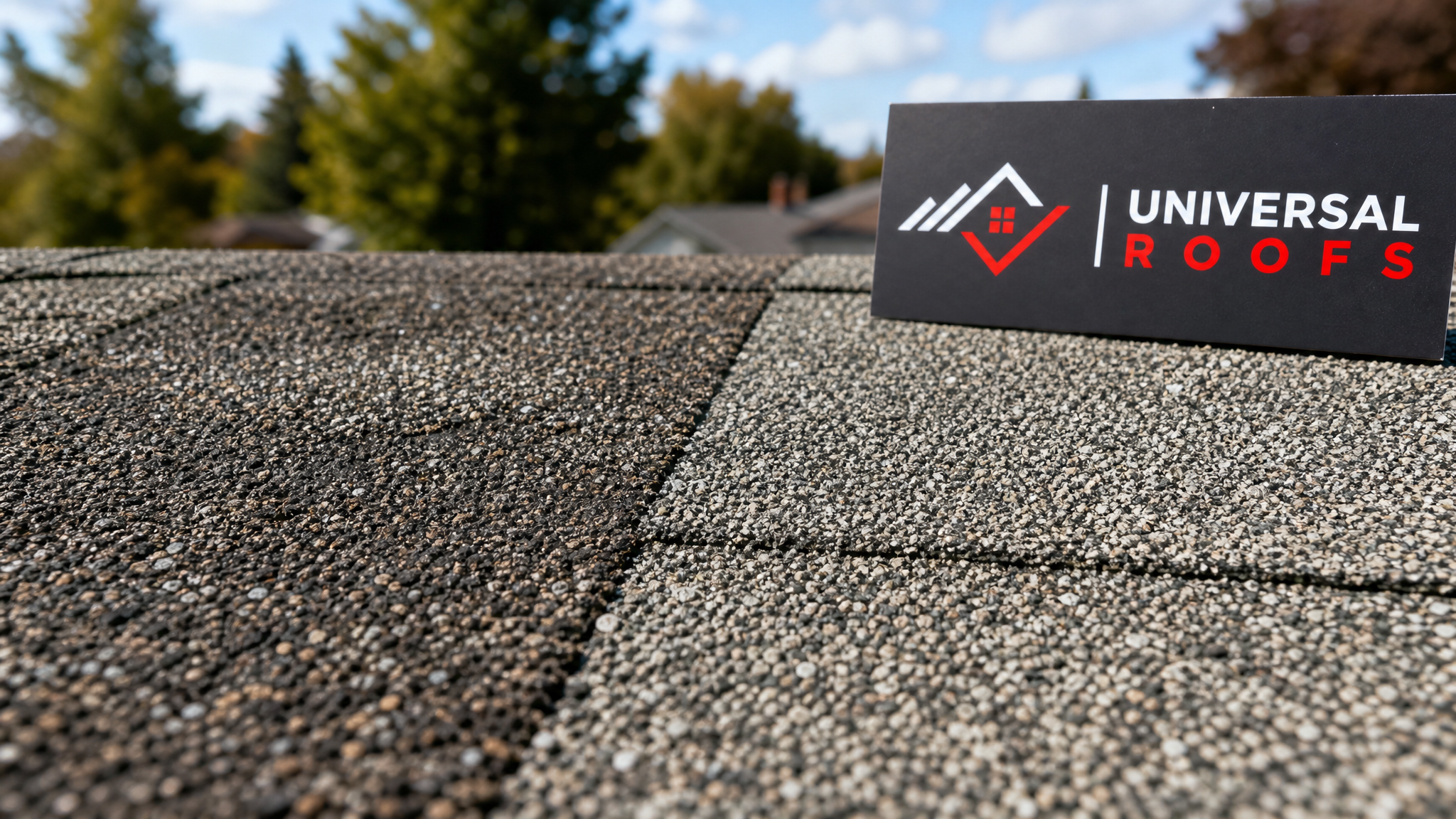
Appearance is the most obvious factor. Shingles are manufactured in dye lots, and even shingles labelled with the identical colour name from the same manufacturer can vary noticeably between production runs. Add in years of UV exposure, rain, and airborne pollen or algae staining on the existing roof, and a brand-new shingle straight from the factory will almost always look slightly different from shingles that have weathered outdoors for five, ten, or fifteen years. That contrast is most visible on a sunny July afternoon, which is exactly when most homeowners are outside noticing it.
Performance is the less obvious factor. Shingle colour changes how much solar radiation the roof surface absorbs versus reflects. Darker shingles absorb more heat and run hotter at the surface; lighter shingles reflect more and stay cooler. When a repair introduces a different shade into one section of the roof deck, that section can expand and contract at a slightly different rate than the surrounding shingles during Toronto’s freeze-thaw cycles, which in some cases contributes to premature granule loss or edge curling right at the boundary of the patch.
Material compatibility rounds out the picture. Older shingles were often made with different asphalt formulations, granule adhesives, and reinforcement mats than what’s sold today. A colour mismatch is frequently the visible symptom of a deeper compatibility mismatch: different product lines age differently, shed granules at different rates, and can even affect how well algae-resistant granules control the black streaking common on Toronto roofs.
How Manufacturers Create Shingle Colour and Why Matching Is Hard
Asphalt shingles get their colour from a layer of ceramic-coated mineral granules pressed into the hot asphalt during manufacturing. These granules are blended in specific ratios to create a named colour, such as “Weathered Wood,” “Charcoal Black,” or “Driftwood.” The blend ratio is proprietary to each manufacturer, and it is not perfectly identical from batch to batch.
Three factors make matching shingle colour for a repair genuinely difficult, and understanding them helps set realistic expectations before work begins.
| Factor | What It Means | Effect on Repair Colour Match |
|---|---|---|
| Dye lot variation | Granule blends shift slightly between manufacturing runs, even for the same product name | New shingles from the same “colour” may still look subtly different from the original batch |
| Discontinued colours | Manufacturers retire and replace colour names every few years | An exact match may no longer be manufactured at all, requiring a closest-available substitute |
| Weathering and fading | UV exposure gradually lightens granules and washes away surface oils over years | Even a perfect factory match will look brighter than the surrounding aged shingles at first |
| Algae and staining | Blue-green algae causes dark streaking on older roofs, common in humid Ontario summers | Staining on original shingles makes new shingles look mismatched even when the base colour is correct |
This is why an experienced crew doesn’t just order “the same colour” and move on. They physically inspect the existing shingles, check the manufacturer stamp on the underside of a spare shingle or in the attic if one is available, and photograph the roof in natural daylight to compare undertones before ordering material.
Colour Matching Strategies for a Localized Repair
When only a small section of roof needs repair, such as after wind damage, a fallen branch, or a localized leak, there are several practical strategies for handling the colour question. Which one makes sense depends on the age of the roof, the visibility of the repaired section from the street, and how much the homeowner is willing to spend.
| Strategy | Best For | Typical Cost Impact | Visual Result |
|---|---|---|---|
| Order exact colour/product match | Roofs under 5 years old, colour still in production | Low to moderate | Very close match, minor sheen difference until weathering evens out |
| Source reclaimed shingles from a less visible slope | Discontinued colours on otherwise sound roofs | Low (labour only, extra step) | Excellent match since shingles have weathered identically |
| Blend new shingles across multiple slopes | Repairs on the most visible front-facing slope | Moderate, more shingles used | Mismatch is distributed and far less noticeable than a single patch |
| Full slope or full roof replacement | Roofs over 12-15 years old, widespread wear, mismatch unavoidable | Highest | Uniform colour across the entire replaced area, no visible patch |
The “borrow from a less visible slope” approach is a trick many experienced Toronto roofers use: shingles from a rear or side slope that has weathered under similar sun exposure are moved to patch a highly visible front slope, and new shingles, which don’t need to match as closely, are installed on the less visible slope instead. It’s a smart way to protect the home’s curb appeal without paying for a full roof replacement before it’s actually necessary.
Why Colour Affects Roof Temperature and Long-Term Performance
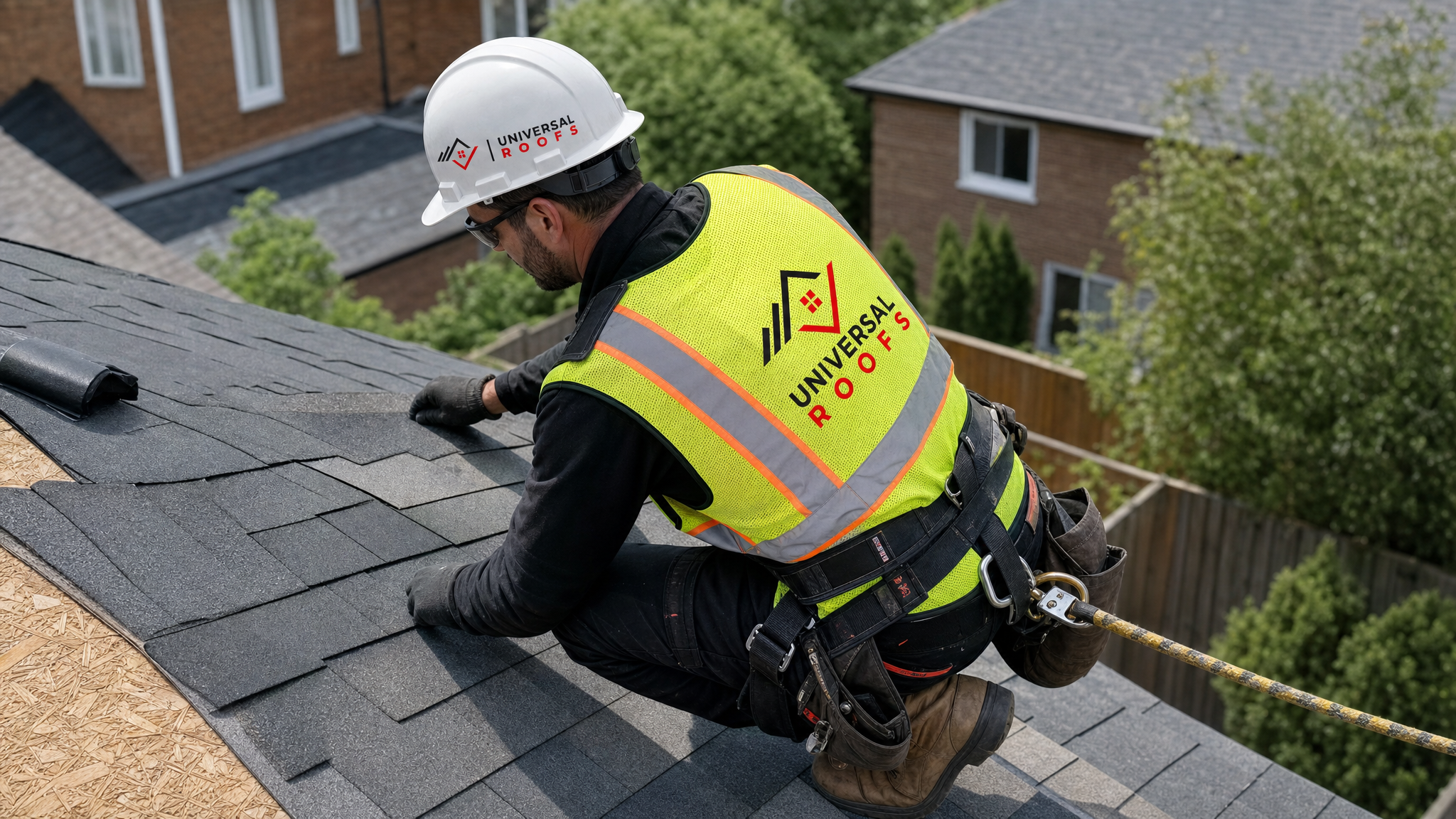
Colour isn’t only cosmetic. Asphalt shingle colour has a measurable effect on how much heat a roof surface absorbs, which is described as solar reflectance. Lighter shingles reflect more sunlight and stay cooler at the surface; darker shingles absorb more and run hotter, sometimes by 20 degrees Celsius or more on a clear July afternoon.
Why does this matter for a repair specifically? Because a patch of one colour surrounded by shingles of a different shade can create uneven thermal expansion across the roof deck. Asphalt shingles expand and contract daily with heat and overnight cooling, and again seasonally through Toronto’s freeze-thaw cycle each winter. When one section runs consistently hotter or cooler than its neighbours, the boundary between old and new material becomes a stress point where granule loss, sealant strip failure, or minor curling can start earlier than it would on a uniformly coloured roof.
There’s also an attic ventilation angle worth understanding. A roof surface running hotter due to darker shingle colour puts more heat load on the attic space below, which interacts with how well the attic is ventilated and insulated. If a repair introduces a noticeably darker patch on a home with marginal attic ventilation, that section may run hotter still, subtly accelerating wear exactly where the new shingles were installed. This is one more reason a qualified technician should assess the whole roof system, not just the damaged square metre, before ordering repair material.
| Shingle Colour Family | Relative Solar Reflectance | Typical Surface Temperature Impact | Common GTA Use Case |
|---|---|---|---|
| Charcoal / Black | Low | Highest surface heat gain | Traditional look, common on older Toronto subdivisions |
| Brown / Weathered Wood | Low to moderate | Moderate to high heat gain | Most popular neutral shade across the GTA |
| Grey / Slate | Moderate | Moderate heat gain | Increasingly popular for a modern, cooler-toned exterior |
| Cool-rated reflective shingles | High | Lowest surface heat gain | Homeowners prioritizing attic temperature and energy costs |
When a Colour Mismatch Signals It’s Time to Consider Replacement Instead
Sometimes the honest answer to a colour-matching problem is that a patch repair isn’t the right long-term move. If your roof is already 12 to 15 years old, if the original colour has been discontinued for years, or if a previous repair has already introduced a second mismatched patch, adding a third mismatched section rarely makes sense financially or visually.
In these situations, a licensed roofer should walk you through the honest trade-off: continue patching a roof that’s visibly showing its age in multiple shades, or move to a full roof replacement where every shingle is installed from the same dye lot and the colour question disappears entirely. This isn’t a sales tactic; it’s simply the point at which more patches stop protecting your home’s value and start drawing attention to how much the roof has aged.
A good rule of thumb: if a repair covers more than roughly 25-30% of a single visible slope, or if you’re on your second or third repair to the same roof, it’s worth getting a full inspection and replacement estimate alongside the repair quote so you can compare both honestly.
Special Considerations Around Skylights and Flashing Colour
Colour matching gets more complicated around roof penetrations like skylights, vents, and chimneys, where shingles butt up against flashing and trim. If a repair is being done near an existing skylight, it’s worth checking the condition of the surrounding flashing and the skylight unit itself at the same time, since flashing failures are a common source of leaks that get mistaken for shingle problems. In some cases what looks like a shingle repair is really a sign that skylight replacement is the more appropriate fix, particularly on units original to a home built before 2010.
Flashing is typically manufactured in a limited set of neutral tones (mill finish, black, brown, and sometimes grey), so it rarely matches shingle colour exactly, and that’s normal. What matters more around penetrations is that the flashing is properly integrated under the shingle courses in a shingle-over-flashing pattern that sheds water correctly, not that its colour is a perfect match to the roof field.
Flat Roof Sections and Colour Considerations
Many Toronto homes, especially additions, garages, and some older builds, combine a sloped shingled roof with a lower-slope or flat roofing section. These flat sections use an entirely different membrane material rather than asphalt shingles, so colour matching rules don’t carry over between the two systems. If your repair spans both a shingled slope and an adjoining flat section, expect two separate colour and material conversations, not one, and make sure whoever quotes the job is addressing both systems specifically.
What to Ask Your Roofer Before a Colour-Sensitive Repair
Homeowners can protect themselves from a disappointing colour mismatch by asking a few direct questions before work begins. A qualified contractor should be able to answer all of these clearly and confidently.
| Question to Ask | Why It Matters | Red Flag Answer |
|---|---|---|
| Can you identify the exact manufacturer and colour name of my current shingles? | Confirms they’re actually attempting a real match, not guessing | “We’ll just use whatever we have in stock” |
| Is this colour still in production? | Determines whether an exact match or closest substitute will be used | Vague answer or no attempt to check |
| Will you show me a sample before ordering? | Lets you approve the match visually in daylight before installation | Refusal to provide a physical sample |
| Would borrowing shingles from a rear slope improve the visible match? | A smart low-cost option on many homes | Contractor has never heard of or considered this approach |
| At what point would you recommend full replacement instead of another patch? | Tests whether they’re giving you honest long-term advice | Pushes patch repairs regardless of roof age or condition |
How Toronto’s Climate Specifically Affects Shingle Colour Decisions
The GTA’s climate adds a few local wrinkles to the colour question that homeowners in milder climates don’t need to think about as much. Freeze-thaw cycling through the winter months causes repeated expansion and contraction in asphalt shingles, and a colour-mismatched patch running at a different temperature than its neighbours experiences that stress unevenly. Humid summers, particularly July and August, also accelerate algae growth on north-facing slopes, which is why an otherwise well-matched repair can start to look mismatched again within a couple of summers if the rest of the roof develops staining the new section hasn’t caught up to yet.
Hail and wind events, which are increasingly common across Peel, York, Halton, and Durham regions, are one of the most frequent reasons for a localized shingle repair in the first place. When storm damage is isolated to one slope, getting the colour match right the first time avoids a second round of work and keeps the roof looking cohesive for the years between the repair and an eventual full replacement.
Homeowners across Toronto, Peel Region, York Region, Halton Region, and Durham Region face very similar roofing conditions, and our crews service all of these areas regularly. If you have questions about your specific situation, our FAQ page covers many of the most common homeowner questions, and our about page has more on our background and approach since 2005.
Frequently Asked Questions
Why does the shingle colour matter for roof repair if the patch is on the back of the house?
Can I get an exact shingle colour match for an older roof?
Does darker shingle colour make roof repairs wear out faster?
Should I replace my whole roof instead of doing a colour-matched repair?
Why does the shingle colour matter for roof repair around skylights and vents?
Can a roofer show me a shingle colour sample before starting the repair?
Need Help With Why Does the Shingle?
Getting shingle colour right on a repair takes more than grabbing a bundle off the shelf; it takes an eye for dye lots, weathering, and material compatibility, backed by real experience matching roofs across the GTA. Universal Roofs has been solving exactly this kind of problem for Toronto homeowners since 2005, and our crews always show you a sample before any repair work begins.
Call us today at (416) 732-2421 or request a free inspection to get started.
Universal Roofs proudly serves Toronto, Mississauga, Brampton, Vaughan, Markham, Oakville and the GTA since 2005.