
Every Toronto homeowner eventually asks the same question: when is the best time of year to actually get a roof cleaned? The answer matters more than most people realize. Clean a roof at the wrong time and you risk driving moisture into shingle mat, thawing ice into fresh cracks, or scrubbing away granules that were never loose in the first place. Clean it during the optimal roof cleaning season and you extend the life of the shingles, protect your attic ventilation, and catch small problems before they become expensive ones.
Our crews at Universal Roofs have been maintaining roofs across the Greater Toronto Area since 2005, and the timing question comes up on almost every consultation. Homeowners have heard conflicting advice — some contractors will clean a roof any month you’ll pay them, whether or not conditions actually favour the work. This guide lays out exactly when to schedule roof cleaning in the GTA, what methods work for which roof types, what it costs, and the seven expert tips that separate a job that adds years to your roof from one that quietly shortens its life.
We’ll also cover the signs that tell you cleaning is overdue, the difference between soft washing and pressure washing, and how our own roof repair and roof replacement teams factor cleaning into a roof’s full maintenance lifecycle.
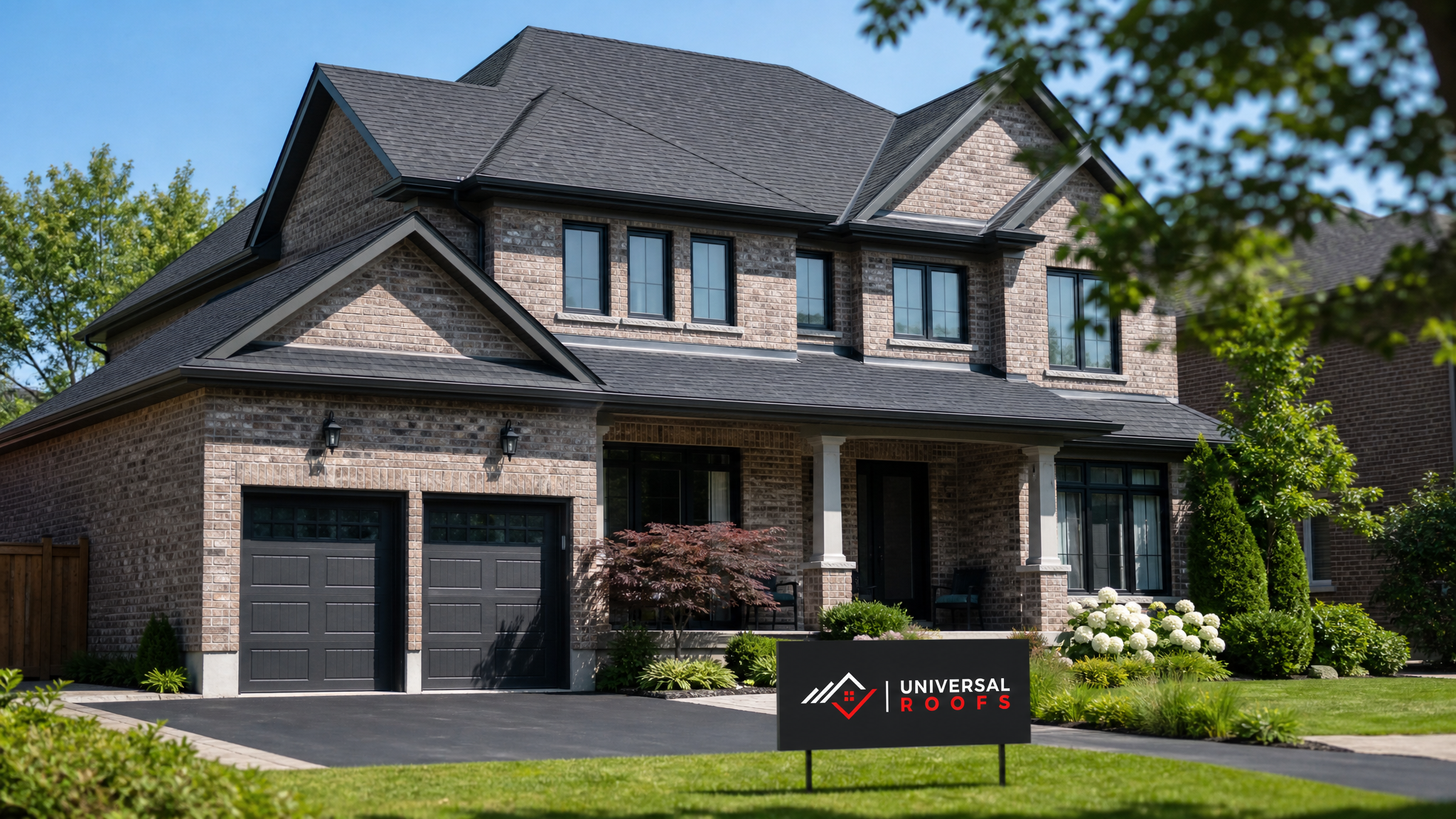
Why Timing Matters More Than the Cleaning Method Itself
Most homeowners focus on how a roof gets cleaned — soft wash versus pressure wash, chemical treatment versus manual brushing. Timing gets far less attention, yet it determines whether the cleaning actually helps or quietly causes damage. Three seasonal factors specific to the GTA climate drive this:
Freeze-thaw cycles. Toronto sees repeated freezing and thawing from November through March. Any moisture that gets trapped under shingle tabs, in flashing seams, or around vent boots during a winter cleaning can freeze, expand, and crack the material. This is one of the most common ways a well-intentioned cleaning turns into a repair call three weeks later.
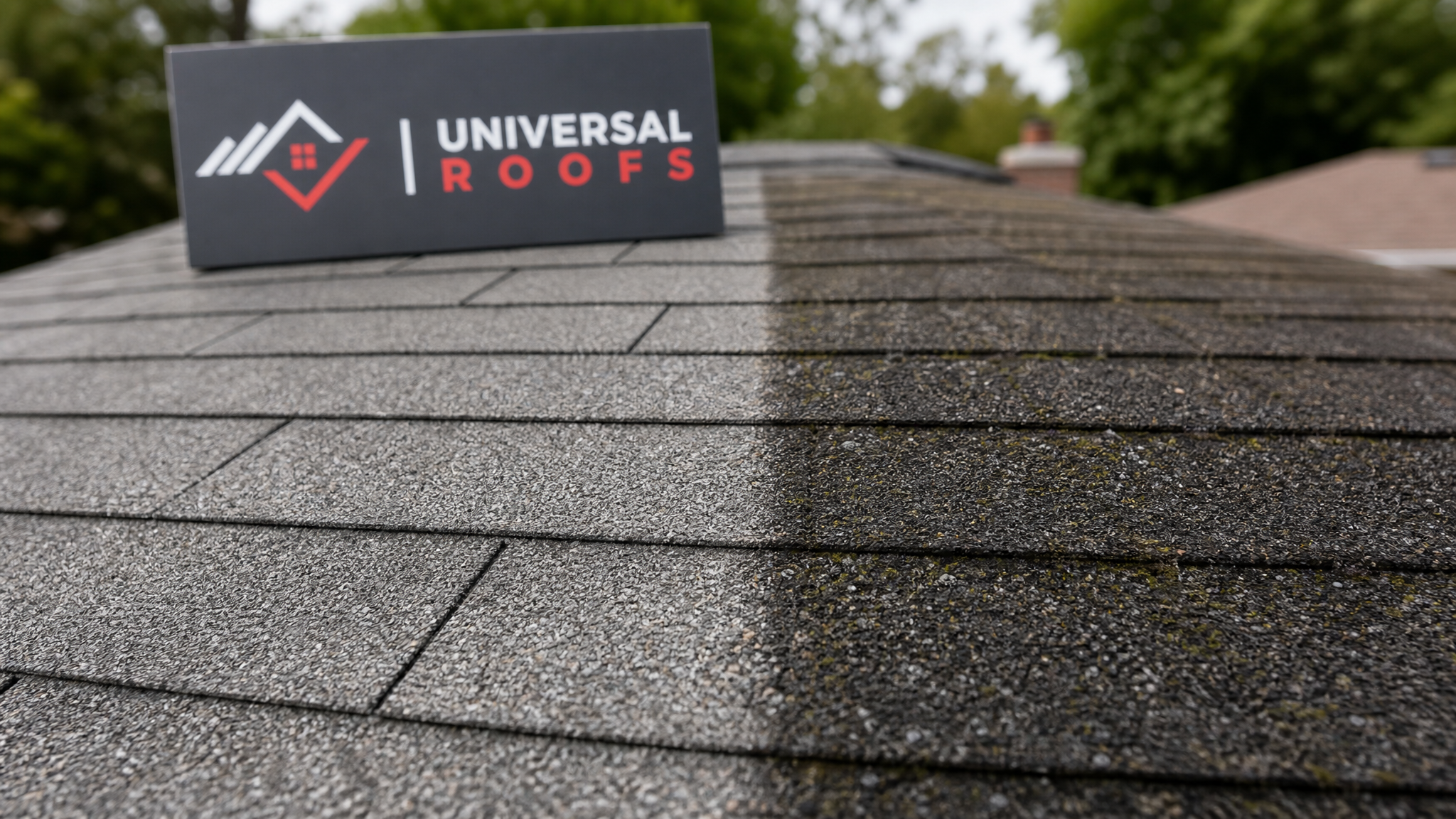
Algae and moss growth cycles. The black streaking you see on north-facing roof slopes is Gloeocapsa magma, a algae that thrives in humid, shaded conditions. It grows most aggressively in late spring and summer when temperatures and humidity both rise. Cleaning too early in the season means the streaking simply returns within weeks; cleaning at the point of peak growth (but before it colonizes deeply into the granule surface) gives the longest-lasting result.
Worker and equipment safety. Roof pitch combined with frost, dew, or ice makes a roof surface dangerously slick. Reputable roofing contractors will not send crews onto a sloped roof before the surface has fully dried and warmed, which naturally rules out early morning cleanings and most of the winter months entirely.
The Optimal Roof Cleaning Season for the GTA
For Toronto, Mississauga, Vaughan, Markham, Oakville, and the surrounding regions, the optimal roof cleaning season runs from late May through early October, with two windows standing out as the genuine sweet spots.
Late spring (late May to June): This is the ideal window for most homes. Winter moisture has fully evaporated, algae and moss haven’t yet reached peak density, and daytime temperatures are warm enough for cleaning solutions to work without freezing overnight. Scheduling here also gets ahead of the summer service rush.
Early fall (September to early October): The second-best window. Summer humidity has driven algae growth to its peak, so cleaning now removes the maximum accumulated growth while there’s still enough warm, dry weather left before winter to let the roof fully dry and any minor repairs cure properly.
Mid-summer (July–August) cleaning is workable but not ideal — extreme heat can cause cleaning solutions to evaporate too quickly for proper dwell time, and asphalt shingles become softer and more susceptible to foot-traffic damage in high heat. If your roof desperately needs cleaning in July, as it is now, it can absolutely still be done safely — it simply calls for early morning starts, lighter foot traffic, and a contractor experienced with heat-softened shingles.
| Season | Suitability | Why | Ideal For |
|---|---|---|---|
| Late Spring (May–June) | Best | Dry surface, mild heat, algae not yet peaked | Most GTA homes, first cleaning of the year |
| Summer (July–Aug) | Good, with care | Peak algae visibility but shingles soften in heat | Homes with heavy black streaking, early morning jobs |
| Early Fall (Sept–Oct) | Best | Maximum growth removed, still time to dry/cure | Annual maintenance cleanings, pre-winter prep |
| Late Fall (Nov) | Poor | Falling temperatures, risk of trapped moisture freezing | Emergency cleaning only, gutter clearing |
| Winter (Dec–Feb) | Not recommended | Ice, frost, and worker safety risk on sloped surfaces | Avoid; snow/ice removal only, not cleaning |
Tip 1: Match the Cleaning Method to Your Roof Material
Not every roof should be cleaned the same way, and this is where a surprising number of DIY attempts and even some inexperienced contractors go wrong. Asphalt shingles, the material on the vast majority of GTA homes, have a granule layer that protects the underlying asphalt from UV degradation. Aggressive pressure washing strips those granules away permanently, which shortens the life of the shingle far more than the algae ever would have.
The safe standard for asphalt shingles is soft washing: a low-pressure application of a cleaning solution (typically a diluted bleach-and-water or specialized algaecide mixture) that kills the organic growth without blasting the surface. The solution sits, does the chemical work, and rinses off with low-pressure water — no scrubbing, no high-pressure spray gun.
Flat and low-slope roofs, common on additions and older Toronto homes, need a different approach entirely. Membrane materials like TPO, EPDM, and modified bitumen respond well to gentler cleaning and inspection for ponding water or seam separation at the same time. If your home has a flat roof section, our flat roofing team can advise on the right cleaning and maintenance schedule specific to that membrane type.
| Roof Material | Recommended Method | Avoid | Typical Frequency |
|---|---|---|---|
| Asphalt shingles | Soft washing (low-pressure chemical treatment) | High-pressure washing, wire brushing | Every 2–3 years |
| Metal roofing | Low-pressure rinse with mild detergent | Abrasive scrubbing, acidic cleaners | Every 1–2 years |
| Flat/membrane roofing | Manual debris removal, gentle rinse, seam inspection | Pressure washing directly on seams | Twice yearly (spring/fall) |
| Clay or concrete tile | Soft washing, careful foot placement | Walking directly on tile without support boards | Every 2–4 years |
| Cedar shake | Specialized low-pressure cleaning by a certified applicator | Any pressure washing | Every 2–3 years |
Tip 2: Inspect Before and After — Not Just During
Roof cleaning should never be a standalone task. It’s an opportunity to catch problems while a professional is already up there looking closely at the surface. Before any cleaning begins, a thorough inspection should check for cracked or curling shingles, exposed nail heads, deteriorated flashing around chimneys and vents, and soft spots that suggest underlying deck damage.
This pre-cleaning inspection matters because cleaning solutions can make minor issues worse if they’re not addressed first. A cracked shingle that gets soft-washed may absorb more moisture into the crack before it has a chance to dry. After cleaning, a second walk-through confirms the roof dried evenly, no granules were dislodged in unusual patterns, and flashing seals remain intact. If anything looks questionable, it’s worth having it evaluated through a proper roof repair assessment rather than leaving it for next season.
Tip 3: Understand What’s Actually Growing on Your Roof
Homeowners often lump every roof discolouration into “dirt,” but the growth on a roof surface generally falls into three distinct categories, and each responds differently to cleaning:
Algae (black/green streaking): The most common issue on GTA roofs, especially on north-facing slopes that stay shaded and damp longer. Algae feeds on the limestone filler in asphalt shingles and spreads via airborne spores from neighbouring roofs — which is why entire streets sometimes show the same streaking pattern.
Moss: Thicker and more damaging than algae, moss retains moisture directly against the shingle surface, which accelerates granule loss and can lift shingle edges over time, allowing water infiltration. Moss favours roofs with heavy tree cover, poor sun exposure, and clogged gutters that keep the roof edge perpetually damp.
Lichen: Less common but harder to remove, lichen forms a crusty, root-like attachment to the shingle surface itself. Aggressive lichen removal can pull away granules along with it, so this generally calls for a specialized treatment rather than standard soft washing.
Tip 4: Don’t Neglect Gutters, Valleys, and Skylight Perimeters
A roof cleaning that only addresses the visible field of shingles misses some of the highest-risk areas for moisture damage. Gutters clogged with granules, leaf debris, and moss fragments prevent proper water drainage, which backs water up under the shingle edge exactly where ice dams form in winter. Valleys — the V-shaped channels where two roof planes meet — collect the same debris and are often the first place a roof develops a leak.
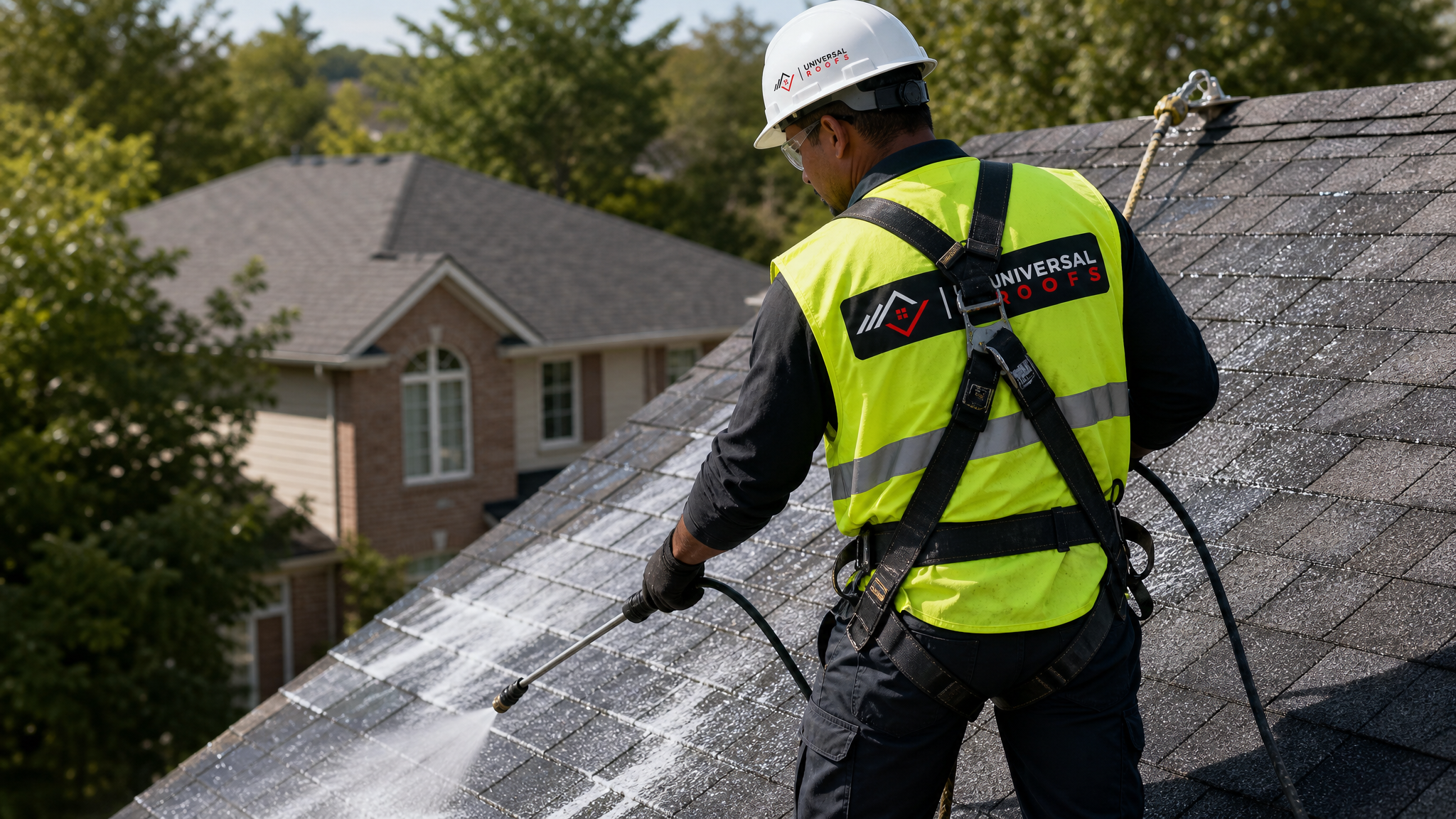
Skylight perimeters deserve particular attention during any roof cleaning. Algae and debris buildup around the flashing can mask early signs of seal failure, and pressure washing too close to a skylight frame can force water under flashing that’s otherwise intact. If your home has skylights, it’s worth having them checked alongside the roof cleaning — our skylights team frequently finds early flashing wear during combined inspections, and if a unit is nearing the end of its service life, our skylight replacement specialists can advise on timing that pairs naturally with a broader roof service.
Tip 5: Factor In Attic Ventilation Before You Clean
It’s easy to think of roof cleaning as an exterior-only task, but the condition of your attic directly affects how quickly algae and moss return after a cleaning. Poor attic ventilation traps warm, moist air against the underside of the roof deck, which raises the shingle surface temperature and humidity — conditions that accelerate organic growth from below as well as above.
Homes with undersized soffit vents, blocked ridge vents, or insufficient insulation often see algae and moss return within a single season, even after a thorough professional cleaning, simply because the underlying moisture problem was never addressed. If your roof seems to need cleaning more often than the 2–3 year average, it’s worth having your attic ventilation assessed rather than just scheduling more frequent cleanings to treat the symptom.
Tip 6: Budget Realistically and Compare Quotes Carefully
Roof cleaning costs in the GTA vary based on roof size, pitch, material, and how much growth has accumulated. A straightforward soft wash on a single-storey home with light streaking will cost considerably less than a moss-heavy job on a steep, multi-level roof that requires extended dwell time and careful hand removal.
| Job Type | Typical GTA Price Range | Time on Site | Notes |
|---|---|---|---|
| Light algae soft wash, single-storey | $350–$550 | 2–3 hours | Most common annual maintenance job |
| Moderate algae/moss, two-storey | $550–$900 | 3–5 hours | May include gutter clearing |
| Heavy moss removal, steep pitch | $900–$1,500+ | Full day | Often paired with a repair assessment |
| Flat/membrane roof cleaning | $300–$700 | 2–4 hours | Includes ponding water and seam check |
| Combined cleaning + gutter + inspection | $600–$1,200 | Half to full day | Most cost-effective bundled option |
Be cautious of quotes that come in dramatically below these ranges — they often indicate high-pressure washing with no chemical treatment, which strips granules and shortens shingle life instead of protecting it. A properly documented quote should specify the cleaning method, whether soft washing chemicals are used, how runoff near landscaping is managed, and whether an inspection is included.
Tip 7: Know When Cleaning Isn’t Enough
Cleaning restores appearance and slows organic growth, but it cannot reverse structural aging. If your roof is showing granule loss down to bare asphalt in patches, shingles that are curling or cupping at the edges, or soft, spongy sections of decking, cleaning will not fix the underlying problem — and in some cases can accelerate failure by removing the last protective granule layer holding a worn shingle together.
A useful rule of thumb: if your asphalt shingle roof is past 15–18 years old and showing heavy staining alongside brittleness or curling, get a full inspection before booking a cleaning. Our roof repair team can tell you honestly whether cleaning will help or whether you’re better served putting that budget toward a targeted repair or eventual roof replacement. We’d rather tell a homeowner that cleaning is the wrong move than take the job and have the roof fail within a year regardless.
Building a Long-Term Roof Maintenance Schedule
The homeowners who get the most value from roof cleaning treat it as one part of an ongoing maintenance rhythm rather than a one-time fix. A sensible schedule for most GTA homes looks like: an annual visual inspection every spring, gutter clearing twice a year (late spring and late fall), a professional soft-wash cleaning every 2–3 years depending on tree cover and roof orientation, and a full structural inspection every 5 years or after any major storm.
Homes in heavily treed neighbourhoods across Toronto, Peel Region, and York Region often need cleaning on the shorter end of that range, while homes in more open, sun-exposed areas of Halton Region and Durham Region may comfortably stretch to every 3 years. Local microclimate — proximity to the lake, tree canopy, and prevailing shade — matters more than a generic calendar rule.
Keeping a simple record of when your roof was last cleaned, inspected, or repaired makes it far easier to plan ahead financially instead of reacting to a leak. Many of our long-term clients keep photos from each visit specifically so we can compare granule condition and algae regrowth rate year over year — it’s a small habit that pays off significantly at renewal or resale time.
What Toronto Homeowners Say About Timing Their Roof Care
We hear from clients regularly that scheduling cleaning proactively, in the recommended late-spring or early-fall windows, costs less and causes far less disruption than waiting until visible streaking or a leak forces the issue. You can read more first-hand experiences from GTA homeowners on our reviews page, and if you have specific questions about your roof’s material, age, or condition, our FAQ page covers many of the most common concerns we field. You can also learn more about our approach and history serving the region since 2005 on our about page.
What is the optimal roof cleaning season in Toronto?
Can you clean a roof in the middle of summer?
Why should you avoid pressure washing an asphalt shingle roof?
How often does a GTA roof actually need cleaning?
Does roof cleaning fix black streaks permanently?
When is roof cleaning not the right solution?
Need Help With Optimal Roof Cleaning Season?
Getting the timing, method, and inspection right takes experience, and that’s exactly what Universal Roofs brings to every job across the GTA. Whether you need a straightforward soft wash or a full assessment of your roof’s condition, our team will recommend the honest, correct approach for your specific roof.
Call us today at (416) 732-2421 or request a free inspection to get started.
Universal Roofs proudly serves Toronto, Mississauga, Brampton, Vaughan, Markham, Oakville and the GTA since 2005.