
A tile roof is one of the longest-lasting roofing systems available to Toronto-area homeowners, with individual tiles routinely outliving the underlayment, battens, and flashing beneath them by decades. That durability is exactly why tile roof replacement a comprehensive plan matters so much: when a tile roof finally does need replacing, the job is rarely as simple as swapping old tiles for new ones. Most of the roof’s real waterproofing work happens in layers you cannot see from the ground, and those layers wear out long before the tiles themselves show any damage.
This guide walks through everything a GTA homeowner should understand before starting a tile roof replacement — how to tell it is actually time, what the process involves from tear-off to final inspection, how tile materials compare, what realistic costs and timelines look like in the Toronto climate, and the mistakes that turn a straightforward project into an expensive one. We have organized this around the questions we hear most often from homeowners in Toronto, Mississauga, Brampton, Vaughan, Markham, Oakville, and across the wider GTA.
If you already know your roof needs attention and want a professional assessment, you can schedule an assessment at any point while reading. Otherwise, read on — by the end of this guide you will understand the full scope of a tile roof replacement and be able to ask any contractor the right questions.
Signs Your Tile Roof Needs Replacing, Not Just Repairing
Tile itself — clay or concrete — can last 50 to 100 years with basic maintenance. What fails first is almost always the underlayment: the waterproof membrane installed beneath the tiles that actually keeps water out of your attic. In Toronto’s climate, with dozens of freeze-thaw cycles every winter, underlayment typically reaches the end of its service life around the 20 to 30 year mark, long before most of the tiles are cracked or missing.
Here are the signs that point toward full replacement rather than a patch repair:
- Widespread underlayment failure. If a contractor lifts a few tiles and finds brittle, cracked, or disintegrating felt or synthetic underlayment across multiple sections of the roof, patch repairs will only buy a season or two.
- Recurring leaks in different spots. One leak is usually a repair. Leaks that keep appearing in new locations each year signal the underlayment is failing broadly, not just at one flashing detail.
- Extensive tile cracking or granule loss from age. Concrete tiles that are chalking, spalling, or cracking in large numbers (not just a few storm-damaged pieces) usually mean the whole batch is near end of life.
- Sagging roof deck. Any visible sag from the ground or in the attic suggests structural moisture damage, which requires deck repair or replacement as part of the project — a repair alone will not fix it.
- Roof age near or past 30 years combined with rising repair frequency. At that point, the economics tip toward replacement, since you are paying for individual repairs on a system that needs a full underlayment refresh anyway.
If you are unsure which category your roof falls into, our roof repair team can inspect and tell you honestly whether a repair will hold or whether you are better served by planning a full roof replacement.
What a Full Tile Roof Replacement Actually Involves
A proper tile roof replacement is a multi-stage process, and skipping or rushing any stage is where most long-term failures come from. Here is the sequence we follow on a typical GTA tile roof replacement:
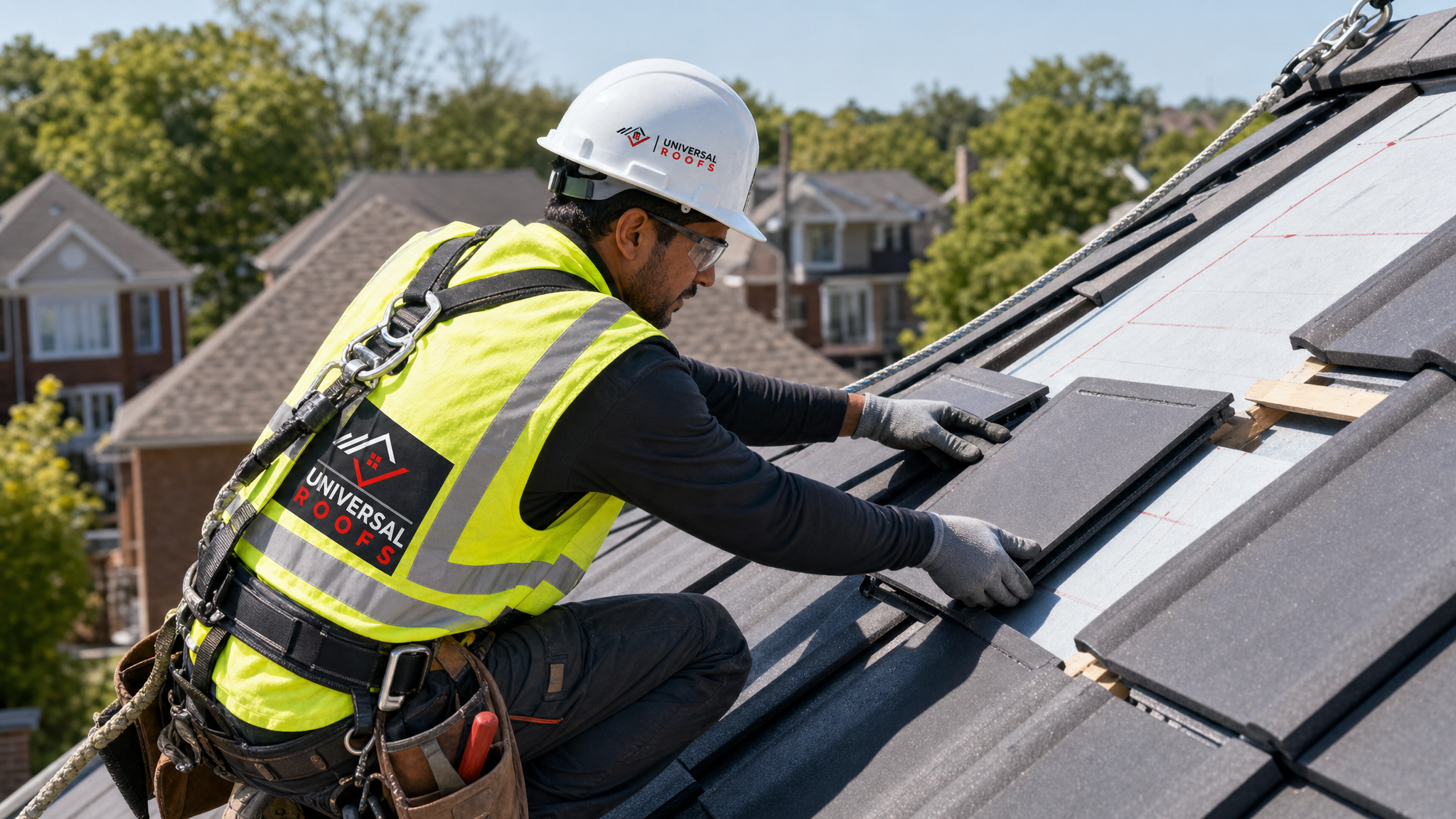
- Tile removal and salvage sorting. Existing tiles are carefully removed and set aside. Undamaged tiles in good structural condition can often be reinstalled, which reduces material cost and keeps the roof’s original appearance if the tile is discontinued or hard to match.
- Deck inspection and repair. With the tiles and underlayment gone, the wood deck is inspected board by board for rot, delamination, or soft spots, particularly around valleys, chimneys, and skylight curbs. Damaged sections are cut out and replaced before anything new goes down.
- New underlayment installation. A synthetic or modified-bitumen underlayment is installed across the full deck, with self-adhered ice-and-water membrane at eaves, valleys, and penetrations — the details most exposed to Toronto’s winter ice damming.
- Flashing replacement. All flashing around chimneys, walls, vents, and skylights is replaced with new metal, properly stepped and counter-flashed rather than simply caulked over old flashing.
- Batten installation (if applicable). Many tile systems are installed over horizontal battens that create an airflow gap and give each tile course a consistent, level fastening point.
- Tile installation. Salvaged and new tiles are installed course by course, starting at the eave and working toward the ridge, with proper overlap and fastening for wind resistance.
- Ridge and hip capping. Ridge and hip tiles are mortared or mechanically fastened, finishing the weatherproof seal at the roof’s highest points.
- Final inspection and cleanup. The completed roof is inspected for proper alignment, fastening, and flashing detail, and the property is cleared of debris, including a magnetic sweep for stray nails.
If your tile roof includes a skylight, that unit typically needs its own flashing kit replaced at the same time — trying to reuse old skylight flashing under new tile is one of the most common causes of a “new roof” leak within the first year. If the skylight itself is aging, this is also the ideal time to consider skylight replacement rather than reinstalling an old unit under a brand-new roof.
Comparing Tile Materials: Clay vs. Concrete vs. Synthetic
Not all “tile” roofs use the same material, and the choice affects weight, cost, lifespan, and how well the roof handles Toronto’s climate. Concrete tiles dominate the GTA market because they are more affordable and slightly more freeze-thaw tolerant than clay, but each option has tradeoffs worth weighing before you commit.
| Tile Material | Typical Lifespan | Weight (per square) | Relative Cost | Best Suited For |
|---|---|---|---|---|
| Clay tile | 75-100 years | 900-1,100 lbs | Highest | Character homes, heritage restorations |
| Concrete tile | 50-75 years | 850-1,100 lbs | Mid-range | Most GTA homes, freeze-thaw climates |
| Synthetic/composite tile | 40-50 years | 150-300 lbs | Mid to high | Older homes with structural weight limits |
| Lightweight concrete tile | 50 years | 500-650 lbs | Mid-range | Renovations needing reduced roof load |
Every tile option is significantly heavier than asphalt shingles, which is why structural verification is a mandatory step before any tile roof replacement, not an optional upsell. If your home’s trusses were engineered for shingles and you are switching material types, an engineer needs to confirm the roof structure can support the new load.
Typical Costs for Tile Roof Replacement in the GTA
Costs vary by tile type, roof complexity, deck condition, and accessibility, but the table below reflects the general ranges we see across Toronto, Peel Region, York Region, Halton Region, and Durham Region projects.
| Cost Factor | Typical Range (CAD) | Notes |
|---|---|---|
| Concrete tile, straightforward gable roof | $18,000 – $32,000 | Assumes sound deck, standard pitch and access |
| Clay tile, straightforward gable roof | $28,000 – $48,000 | Material and shipping premium over concrete |
| Complex roof (multiple valleys, dormers, chimneys) | +15% – 30% | Added flashing, cutting, and labour time |
| Deck repair or replacement (per damaged section) | $3 – $8 per sq. ft. | Cost depends on extent of rot found under old tiles |
| Underlayment upgrade (ice-and-water shield, full deck) | $2,500 – $6,000 | Strongly recommended for Toronto winters |
These figures are general guidance, not a quote. The only way to get an accurate number for your specific roof is a physical inspection, since deck condition and salvageable tile percentage swing the final price significantly. You can request a free inspection to get an itemized estimate for your home.
How Long Does a Tile Roof Replacement Take?
Tile roofing is more labour-intensive than asphalt shingle work because each tile is handled individually and the underlying layers require careful sequencing. Weather is also a bigger factor here than with most roofing projects, since tile installation should not proceed during rain or high wind.
| Roof Size / Complexity | Estimated Duration | Key Timeline Factors |
|---|---|---|
| Small roof (under 1,500 sq. ft.), simple layout | 3-5 working days | Deck condition, weather windows |
| Average GTA home (1,500-2,500 sq. ft.) | 5-8 working days | Tile salvage sorting adds time upfront |
| Large or complex roof (multiple pitches, dormers) | 8-14 working days | Extra flashing and cutting around penetrations |
| Clay tile projects | +1-3 days vs. concrete | More fragile handling, custom cutting |
Summer is generally the best season for tile roof replacement in the GTA — the July weather we are in now offers long dry stretches, which keeps a project on schedule and avoids the delays that late-autumn rain or early winter freeze can cause. Booking during peak summer months does mean scheduling further in advance, since demand is highest.
Underlayment and Flashing: The Details That Actually Determine Longevity
Homeowners often focus on the visible tile when really the underlayment and flashing decide how long a tile roof replacement will actually perform. This is the part of the job that is invisible once complete, which unfortunately makes it the easiest place for a corner-cutting contractor to save money at your expense.
A few specifics worth confirming with any contractor before work begins:
- Ice-and-water shield at eaves and valleys. Toronto’s freeze-thaw cycles create ice dams that push water backward under tiles. A self-adhered membrane at these vulnerable points is not optional in this climate.
- Synthetic underlayment across the full deck rather than older felt paper, which degrades faster under tile’s weight and heat retention.
- New step flashing and counter-flashing at every wall and chimney intersection — reused or caulked-over flashing is one of the most common causes of “new roof, same old leak” complaints.
- Proper batten spacing and fastening matched to the specific tile profile being installed, since incorrect spacing causes uneven coursing and premature cracking.
- Attic ventilation review. A tile roof replacement is also the right time to check that your attic ventilation is adequate — poor airflow shortens underlayment life regardless of how well it was installed.
Tile Roof Replacement vs. Other Roofing Options
Some homeowners use a tile roof replacement project as an opportunity to reconsider the roofing system entirely, particularly if the original tile installation was never quite right for the home’s structure or if long-term maintenance costs have become a burden. It is worth understanding how tile stacks up against alternatives before committing to like-for-like replacement.
| Roofing System | Lifespan | Maintenance Level | Structural Weight Concern |
|---|---|---|---|
| Clay/concrete tile | 50-100 years | Low (occasional tile replacement) | High — requires engineered support |
| Asphalt shingle | 20-30 years | Low to moderate | Low |
| Synthetic tile | 40-50 years | Low | Low to moderate |
| Flat/low-slope membrane | 20-30 years | Moderate (inspections recommended) | Low |
If your home has sections of low-slope roof alongside the main tile roof — over a garage, addition, or porch — those areas typically should not be tiled at all. Our flat roofing team handles those sections with membrane systems designed specifically for low-slope drainage, which keeps the whole roof system performing as intended rather than forcing tile onto a pitch it was never designed for.
Choosing the Right Contractor for Tile Roof Replacement
Tile roofing is a specialty trade, and not every roofing contractor who handles asphalt shingles regularly also has deep tile experience. Because so much of the critical work happens beneath the tiles, the quality difference between an experienced tile crew and a generalist crew often only shows up years later, when it is expensive to fix.
Questions worth asking any contractor bidding on your project:
- How many tile roof replacements has your crew completed in the past two years, specifically in this climate?
- What underlayment and ice-and-water shield products do you use, and where specifically are they installed?
- Will you salvage and reuse existing tiles where possible, and how is that priced?
- What is your process if deck rot is discovered once tiles are removed?
- What warranty covers labour versus material, and for how long?
You can read how past clients answer these same questions about our crews on our reviews page, and general answers to common homeowner questions on our FAQ page. We have served the Toronto, Peel Region, York Region, Halton Region, and Durham Region areas since 2005, and tile roof replacement has been a consistent part of that work throughout.
Maintaining a Tile Roof After Replacement
A properly installed tile roof needs relatively little upkeep, but a few habits will help you get the full expected lifespan out of the investment:
- Avoid foot traffic on the tiles whenever possible. Concrete and clay tiles can crack under direct weight, especially in cold weather when they become more brittle.
- Have gutters cleaned each fall before winter, since clogged gutters contribute directly to the ice damming that stresses eave flashing and underlayment.
- Schedule a visual inspection every two to three years, ideally after a harsh winter, to catch cracked or shifted tiles before water finds its way underneath.
- Trim overhanging branches that could drop debris or scrape tile surfaces during storms.
- Address any visible cracked tile promptly. A single cracked tile is a simple repair; left alone through a winter, it can allow enough water infiltration to damage the underlayment beneath it.
If you notice any signs of trouble between scheduled inspections, our roof repair team can typically address isolated tile issues quickly, before they become larger underlayment problems. You can also learn more about our full range of services on our about page.
What does a tile roof replacement a comprehensive process typically include?
How much does tile roof replacement cost in the Toronto area?
Can existing tiles be reused during a tile roof replacement?
How long does a full tile roof replacement take to complete?
Is my home’s structure strong enough for a tile roof replacement?
How do I know if I need a repair or a full tile roof replacement?
Need Help With Tile Roof Replacement a?
A tile roof replacement is a significant investment, and getting the underlayment, flashing, and tile installation right the first time is what protects that investment for the next 50 years or more. Universal Roofs has handled tile roof replacements across the GTA since 2005, and we are happy to walk you through exactly what your roof needs before any work begins.
Call us today at (416) 732-2421 or request a free inspection to get started.
Universal Roofs proudly serves Toronto, Mississauga, Brampton, Vaughan, Markham, Oakville and the GTA since 2005.