
If your energy bills climb every winter and again every summer, your roof is very likely part of the problem. Homeowners across the GTA often assume energy loss comes from windows and doors, but the roof and attic system is typically the single largest source of wasted heating and cooling energy in a house. Understanding the ways to improve roof energy efficiency can mean the difference between a home that fights the climate and one that works with it.
At Universal Roofs, we have spent almost two decades inspecting, repairing, and replacing roofs across the Greater Toronto Area, and the pattern is consistent: poor attic ventilation, inadequate insulation, ageing shingles, and neglected flashing are behind the majority of energy-efficiency complaints we hear from homeowners. The good news is that most of these issues are fixable, and many upgrades pay for themselves within a few years through lower utility bills.
This guide walks through the most effective, field-tested strategies for improving roof energy efficiency, with practical guidance suited to Toronto’s climate of humid summers, cold winters, and repeated freeze-thaw cycles. Whether you are planning a full roof replacement or simply want to tighten up an existing roof before the next heating season, the steps below will help you prioritize the upgrades that actually move the needle.
Why Roof Energy Efficiency Matters for GTA Homeowners
Toronto’s climate puts real stress on a home’s building envelope. Winters bring extended stretches below freezing, punctuated by thaws that create the freeze-thaw cycling responsible for ice damming and shingle deterioration. Summers bring humidity and direct sun that can push attic temperatures well above 60 degrees Celsius if ventilation is poor. A roof system that is not optimized for these swings forces your furnace and air conditioner to work harder, shortens the lifespan of your shingles, and increases the risk of moisture damage.
According to Natural Resources Canada, a poorly insulated and ventilated attic can account for a significant share of a home’s total heat loss in winter, and an equally large share of unwanted heat gain in summer. Because the roof is the largest surface area exposed to the sun and sky, even modest upgrades to insulation, ventilation, and roofing materials tend to produce outsized returns compared to other home-efficiency projects.
There is also a durability argument. A roof that runs too hot in summer accelerates the aging of asphalt shingles, while a roof that leaks warm air in winter contributes to ice damming that can force water back under the shingles. In other words, energy efficiency and roof longevity are not separate goals — they reinforce each other. A well-insulated, well-ventilated roof usually lasts longer and needs less roof repair over its service life.
Start With Attic Insulation Levels
Insulation is the foundation of an energy-efficient roof system, and it is usually the most cost-effective upgrade available. In the GTA’s climate zone, the Ontario Building Code and most energy-efficiency programs recommend an attic insulation level of at least R-50 to R-60 for optimal performance, though many older homes in Toronto neighbourhoods sit at R-20 or lower.
Insufficient insulation allows conditioned air to escape through the ceiling into the attic, where it either leaks out through the roof deck or, worse, warms the underside of the roof sheathing enough to melt snow and create ice dams at the eaves. Adding insulation is one of the simplest ways to improve roof energy efficiency because it directly reduces the amount of heat your furnace has to generate in winter and keeps summer heat from radiating down into living spaces.
| Insulation Material | Typical R-Value per Inch | Best Use | Approximate Cost Range |
|---|---|---|---|
| Blown-in fibreglass | R-2.2 to R-2.7 | Topping up existing attic insulation | $1.50–$2.50 per sq ft |
| Blown-in cellulose | R-3.2 to R-3.8 | Retrofits in irregular attic spaces | $1.75–$2.75 per sq ft |
| Spray foam (closed-cell) | R-6.0 to R-6.5 | Air sealing plus insulating in one step | $4.50–$7.50 per sq ft |
| Rigid foam board | R-4.0 to R-6.5 | Cathedral ceilings and roof decks | $2.50–$4.00 per sq ft |
Before adding new insulation, it is worth having an attic assessment done. An inspector can identify existing insulation depth, check for compressed or wet insulation (which loses most of its R-value), and confirm there is no blocking of soffit vents. Our attic services team frequently finds that homeowners who complain about high energy bills have insulation that was adequate decades ago but has since settled, been disturbed by past repairs, or simply never met current recommended levels.
Improve Attic Ventilation to Balance Temperature and Moisture
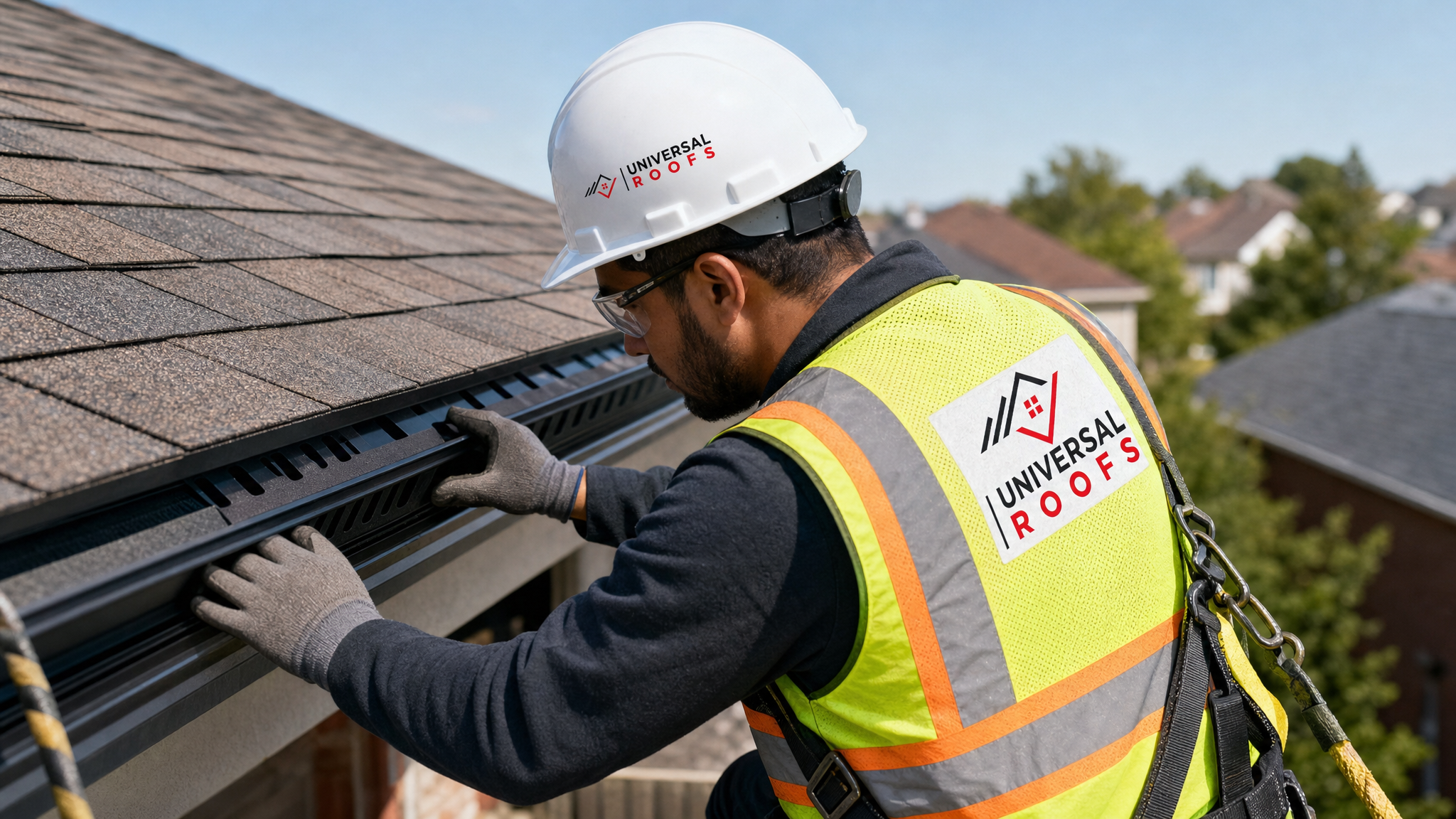
Insulation alone is not enough — a roof also needs balanced intake and exhaust ventilation to work efficiently. Proper ventilation moves outside air in through soffit vents and out through ridge or roof vents, which keeps the attic close to outdoor temperature year-round. This matters for two reasons: it prevents summer heat buildup that radiates into living spaces, and it prevents warm, moist indoor air from condensing on the underside of the roof deck in winter, which can lead to mould and wood rot.
A common mistake homeowners make is insulating the attic floor heavily without checking that soffit vents remain clear. If insulation blocks the soffits, intake airflow stops, and the whole ventilation system becomes ineffective no matter how much exhaust venting exists at the ridge. Baffles (also called vent chutes) installed at the eaves keep insulation from smothering the intake vents while still allowing a full depth of insulation elsewhere in the attic.
The ideal ratio recommended by most Canadian building standards is roughly 1 square foot of net free ventilation area for every 300 square feet of attic floor space, split evenly between intake and exhaust. Homes with poorly balanced systems — too much exhaust and not enough intake, for example — can actually depressurize the attic and pull conditioned air up from the living space, undermining efficiency rather than improving it.
Choose Roofing Materials That Reflect and Insulate Better
The shingles and underlying materials you choose during a roof replacement have a direct effect on how much heat your roof absorbs and radiates into the home below. Lighter-coloured shingles reflect more solar radiation than dark shingles, which can measurably reduce attic temperatures during Toronto’s hot, humid summer months. Some manufacturers now offer “cool roof” shingle lines with reflective granules designed specifically to lower surface temperatures without sacrificing the traditional asphalt shingle look.
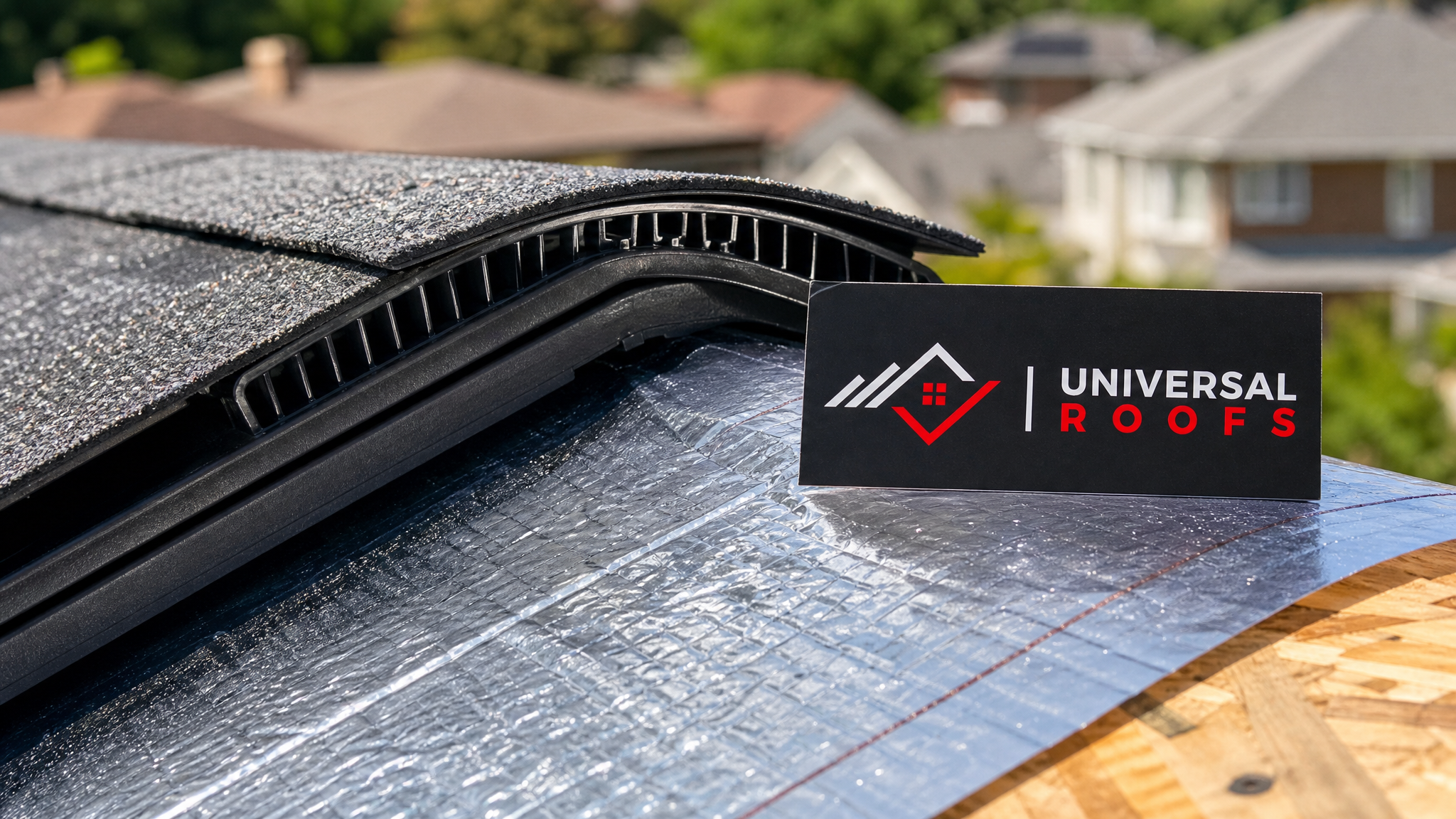
Underlayment choice also matters. A synthetic underlayment with a reflective or radiant barrier facing can reduce heat transfer through the roof deck, which is particularly useful on roofs with limited insulation depth, such as older homes with shallow rafter cavities. For flat and low-slope sections, which are common on additions, garages, and porch roofs across the GTA, a reflective membrane on a flat roofing system can significantly cut down on solar heat gain compared to a traditional dark bitumen surface.
| Roofing Upgrade | Primary Efficiency Benefit | Typical Lifespan Added Benefit | Relative Cost Premium |
|---|---|---|---|
| Reflective (“cool roof”) shingles | Reduced summer attic heat gain | Slower shingle aging from heat | Low to moderate |
| Radiant barrier underlayment | Blocks radiant heat transfer to deck | Protects sheathing from heat stress | Moderate |
| Reflective flat roof membrane | Lower rooftop surface temperature | Reduced membrane thermal cycling | Moderate |
| Upgraded ridge and soffit vents | Balanced year-round airflow | Reduced moisture-related deck damage | Low |
Seal Air Leaks Before You Insulate
Insulation slows heat transfer, but it does not stop air movement on its own. Many attics have gaps around plumbing stacks, electrical wiring penetrations, bathroom exhaust fan housings, chimney chases, and the attic hatch itself. These small gaps, added together, can account for a surprising amount of heat loss — often compared to leaving a window cracked open all winter.
Air sealing should always come before adding new insulation. Common sealing methods include caulking around wiring and plumbing penetrations, weatherstripping the attic access hatch, and using fire-rated foam around chimney chases. Bathroom and kitchen exhaust fans should vent fully to the exterior through a dedicated roof or wall vent, not just dump moist air into the attic space, since that moisture will condense on cold roof sheathing and can lead to rot over time.
This is also the point in the process where flashing deserves a close look. Flashing around chimneys, vent pipes, and skylights is a frequent source of both air leakage and water infiltration. If you have a skylight in your home, confirm the flashing kit is properly sealed and, if the unit is older, consider whether a skylight replacement with a modern, better-insulated frame would reduce both drafts and condensation around the opening.
Address Ice Damming and Winter Heat Loss
Ice damming is one of the clearest visible symptoms of a roof that is losing too much heat in winter. When warm air escapes into the attic and warms the roof deck unevenly, snow melts on the upper roof, runs down, and refreezes at the colder eaves, building up ridges of ice that can back water up under the shingles. This is not just an energy-efficiency issue — it is a leading cause of winter roof leaks and interior water damage across the GTA.
The long-term fix for ice damming is the combination already discussed: adequate attic insulation to keep the roof deck cold and consistent, balanced ventilation to move any residual heat out before it melts snow, and thorough air sealing to stop warm air from bypassing the insulation altogether. Ice and water shield membrane installed along the eaves during a roof replacement adds a critical layer of protection against the water that does find its way under the shingles, even on a well-insulated roof.
Don’t Overlook Skylights, Chimneys, and Roof Penetrations
Every penetration through the roof plane is a potential weak point for both air leakage and heat transfer. Older single-glazed or poorly sealed skylights can lose a disproportionate amount of heat relative to their size, and condensation around an aging skylight frame is often a sign that its seals and insulation have degraded. Upgrading to a double- or triple-glazed unit through skylight replacement can noticeably improve comfort in the room below while cutting the heat loss associated with that opening.
Chimneys present a similar challenge, since masonry conducts heat readily and the chase around a chimney is a common gap in both insulation and air sealing. Properly insulating and sealing the chimney chase, while maintaining required clearances for fire safety, closes one more pathway for energy loss. Roof vents, plumbing stacks, and any other penetrations should be checked for intact flashing and boot seals during routine maintenance, ideally as part of a broader roof repair inspection rather than waiting for a visible leak to appear.
Plan Efficiency Upgrades Around a Roof Replacement
If your roof is approaching the end of its service life, a full roof replacement is the single best opportunity to address energy efficiency comprehensively. Attempting to retrofit insulation, ventilation, and reflective materials piecemeal is possible, but doing it all at once during a replacement avoids redundant labour and lets every component work together as a system.
During a replacement, this is the ideal time to add or upgrade ridge and soffit ventilation, install a radiant barrier underlayment, add ice and water shield at eaves and valleys, and select a shingle product with better reflective properties. It is also the easiest time to correct insulation gaps discovered once the old roofing material is removed and the deck is exposed, since sheathing damage or gaps around penetrations become fully visible.
| Project Timing | Recommended Efficiency Actions | Relative Effort | Best For |
|---|---|---|---|
| Routine seasonal maintenance | Air sealing, hatch weatherstripping, vent clearing | Low | Homes with roofs under 10 years old |
| Mid-life roof tune-up | Top-up insulation, flashing recheck, add baffles | Moderate | Roofs 10–15 years old showing rising bills |
| Pre-replacement assessment | Full attic and ventilation audit, skylight review | Moderate | Roofs nearing end of shingle warranty |
| Full roof replacement | New insulation, reflective materials, balanced venting, ice/water shield | High | Roofs 20+ years old or with existing leaks |
Maintain What You Have: Seasonal Roof Care Habits
Energy efficiency is not a one-time project; it depends on ongoing maintenance. Debris in gutters and on the roof surface traps moisture and can block proper drainage, which in turn affects how well ice and water membranes perform at the eaves. Clearing gutters each fall, before the first hard freeze, reduces the risk of ice damming forming at clogged downspouts and drip edges.
A quick visual inspection twice a year, in spring and fall, can catch small issues before they become efficiency or moisture problems. Look for missing or curling shingles, gaps around flashing, and signs of daylight or staining in the attic that suggest a leak or heat-loss point. Homeowners who are not comfortable getting on a ladder can request a professional inspection instead; our teams regularly perform these visual and thermal checks as part of routine roof repair service calls.
It is also worth checking bathroom and kitchen exhaust fan terminations at least once a year to confirm they are not blocked by debris, bird nests, or ice, since a blocked exhaust vent forces moist air back into the attic where it can undermine both insulation performance and long-term wood durability.
How Universal Roofs Approaches Energy-Efficiency Assessments
When our technicians evaluate a roof for energy efficiency, we look at the whole system rather than a single component. That means checking attic insulation depth and condition, confirming soffit and ridge ventilation is balanced and unobstructed, inspecting flashing around chimneys, skylights, and vent penetrations, and assessing whether the existing shingle or membrane surface is contributing to excess heat gain.
We also factor in regional variation across the GTA. Homes in Toronto often have older attic construction that predates current insulation standards, while newer builds in Peel Region, York Region, Halton Region, and Durham Region may have adequate insulation but poorly balanced ventilation due to additions or renovations that altered airflow paths without anyone accounting for the change. A proper assessment accounts for the age, construction style, and history of the specific home rather than applying a generic checklist.
You can see how past clients have experienced this process on our reviews page, and general questions about our inspection and repair process are answered on our FAQ page. For homeowners who want to understand our background and approach before booking a visit, our about page outlines the experience our team brings to every roofing project since 2005.
Prioritizing Your Next Steps
If you are trying to decide where to start, the order of operations generally follows a logical path: seal obvious air leaks first, bring attic insulation up to recommended levels, confirm ventilation is balanced between intake and exhaust, and then consider material upgrades such as reflective shingles or underlayment at your next roof replacement. Skylights, chimneys, and other penetrations should be checked alongside these steps rather than treated separately, since a leak or gap at any one of them can undercut the benefit of everything else.
Every home is different, and the most effective combination of upgrades depends on the age of your roof, the construction of your attic, and how the home has been renovated over the years. A professional assessment is the fastest way to identify which of these ways to improve roof energy efficiency will deliver the biggest return for your specific property, rather than guessing based on general advice alone.
What are the most effective ways to improve roof energy efficiency?
How much attic insulation do I need for an energy-efficient roof in Toronto?
Does roof colour actually affect energy efficiency?
Can poor roof ventilation cause higher energy bills?
Is ice damming related to roof energy efficiency?
When is the best time to upgrade roof energy efficiency features?
Need Help With What Are Effective Ways?
Improving your roof’s energy efficiency starts with an accurate picture of where your current system is falling short, and that is exactly what our team at Universal Roofs is set up to provide. From attic insulation and ventilation balancing to reflective roofing materials and skylight upgrades, we help GTA homeowners turn their roof into an asset for comfort and savings rather than a source of rising energy bills.
Call us today at (416) 732-2421 or request a free inspection to get started.
Universal Roofs proudly serves Toronto, Mississauga, Brampton, Vaughan, Markham, Oakville and the GTA since 2005.