
A cracked chimney crown, spalling bricks, or a rusted flashing joint rarely stays a small problem for long in the Greater Toronto Area. Between freeze-thaw cycles every winter and heavy spring rain, a neglected chimney can quietly damage the surrounding roof deck, attic insulation, and interior ceilings long before a homeowner notices a leak. That is why estimating chimney repair costs for damaged roofs a how to approach matters: getting an accurate number early lets you budget properly, compare quotes intelligently, and avoid paying for repairs you don’t actually need.
This guide walks through the entire estimating process step by step. We will cover how to inspect a damaged chimney safely, what actually drives the price up or down, typical cost ranges for the GTA market in 2026, and how to tell the difference between a $350 tuckpointing job and a $6,000 rebuild. Whether you are a homeowner in Toronto, Mississauga, Vaughan, or Oakville, the framework below will help you walk into any contractor conversation with realistic expectations.
We will also explain when chimney damage is actually a symptom of a larger roofing problem, because in many older GTA homes, the chimney is not the only thing that needs attention. A proper estimate always looks at the chimney in the context of the whole roof system, not in isolation.
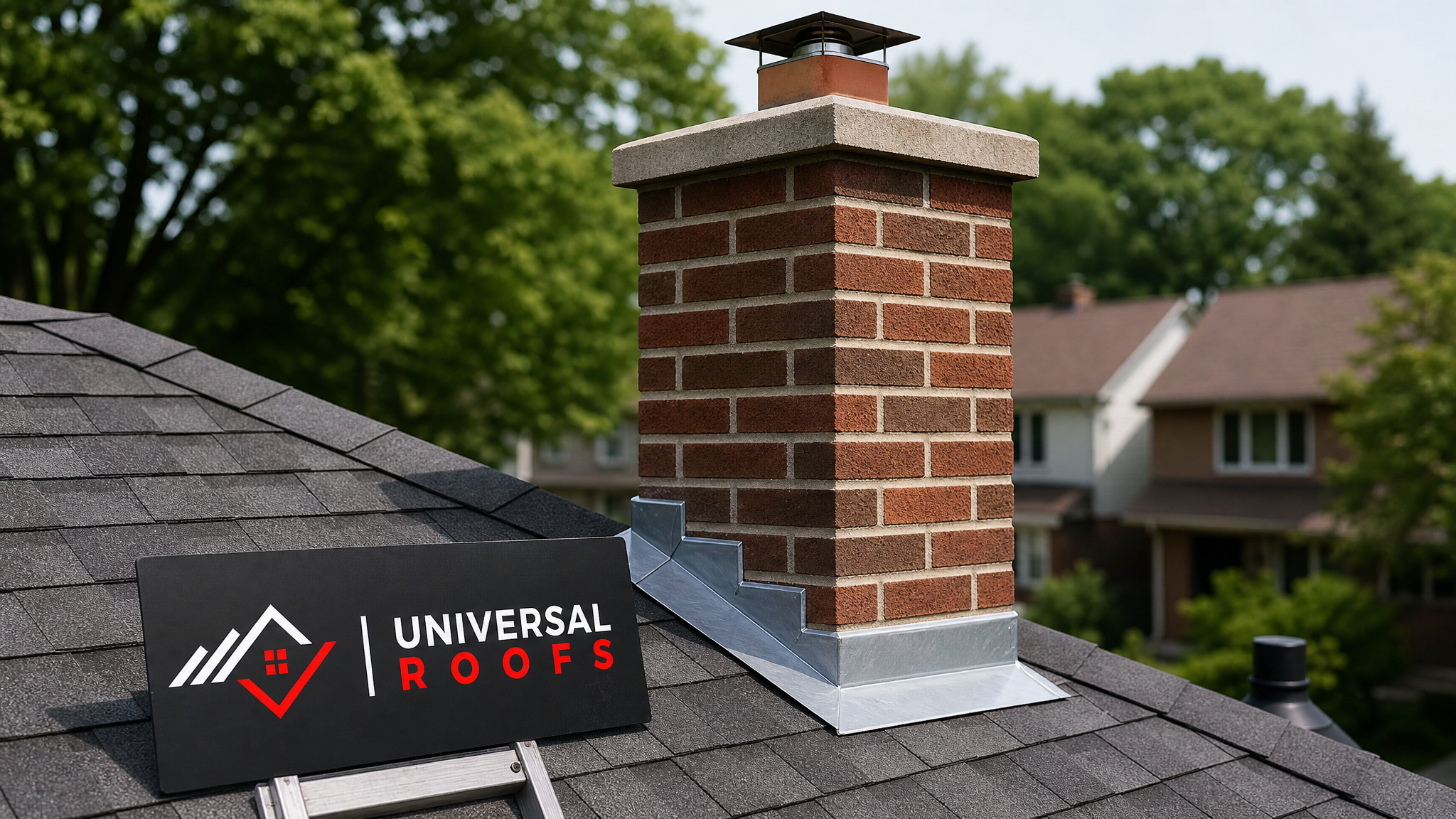
Why Estimating Chimney Repair Costs for Damaged Roofs Starts With a Proper Inspection
You cannot generate a reliable estimate without first understanding exactly what is wrong. Too many homeowners get a number over the phone based on a vague description (“there’s a crack near the top”) and are later surprised when the final invoice is triple the verbal quote. A proper estimate always starts with a visual and, where needed, a hands-on inspection.
A qualified inspector will check the chimney crown (the concrete cap on top), the flashing where the chimney meets the roofline, the mortar joints between bricks (a process called repointing when they need attention), the chimney liner if accessible, and the condition of the roof shingles or membrane immediately surrounding the chimney base. Because so much chimney damage in the GTA originates from water infiltration rather than structural failure, the inspector should also check the attic directly beneath the chimney for staining, damp insulation, or mould, since this tells you whether the damage has already spread past the exterior.
If your chimney sits on a roof that is also aging or showing granule loss, it is worth having the inspector evaluate the full roof repair scope at the same time. Bundling the chimney assessment with a broader roof inspection often saves money on labour and scaffolding costs, since much of the setup work overlaps.
The Core Cost Drivers Behind Any Chimney Repair Estimate
Once the inspection identifies the specific damage, the estimate is really just a function of five variables: the type of repair needed, the materials required, the height and pitch of the roof, accessibility, and the extent of any secondary damage to the roof deck or attic. Understanding each of these lets you sanity-check any quote you receive.
Type of repair is the biggest factor. Repointing a few damaged mortar joints is a half-day job. Rebuilding the top few courses of brick, replacing a full crown, or re-flashing the entire chimney base are multi-day jobs requiring more material and labour. A full chimney rebuild from the roofline up is the most expensive category and can approach the cost of a small addition.
Materials matter because chimney flashing can be done in aluminum, galvanized steel, or copper, with copper costing significantly more but lasting decades longer. Crown repairs can use a simple sealant coating for minor cracks or a full concrete crown rebuild for severe deterioration. Brick and mortar type also affects cost, particularly on older heritage homes in central Toronto where matching original brick colour and mortar composition requires sourcing specialty materials.
Height and pitch drive labour and safety costs. A two-storey home with a steep pitch requires more scaffolding, harness anchoring, and time than a bungalow with a low-slope roof. This is one of the most underestimated cost factors homeowners overlook when comparing a neighbour’s quote to their own.
Accessibility includes things like whether equipment can reach the back of the house, whether there are overhead wires near the chimney, and whether the property has room for a ladder truck or requires manual staging. Downtown Toronto rowhouses with narrow side yards often cost more to service than suburban homes in Markham or Ajax with open driveways.
Secondary damage is the wildcard. If water has been getting past damaged flashing for a season or two, the roof deck plywood beneath may be soft or rotted, and attic insulation may need replacement. This is discovered during inspection and can add substantially to the original estimate, which is why a thorough upfront inspection is worth the time.
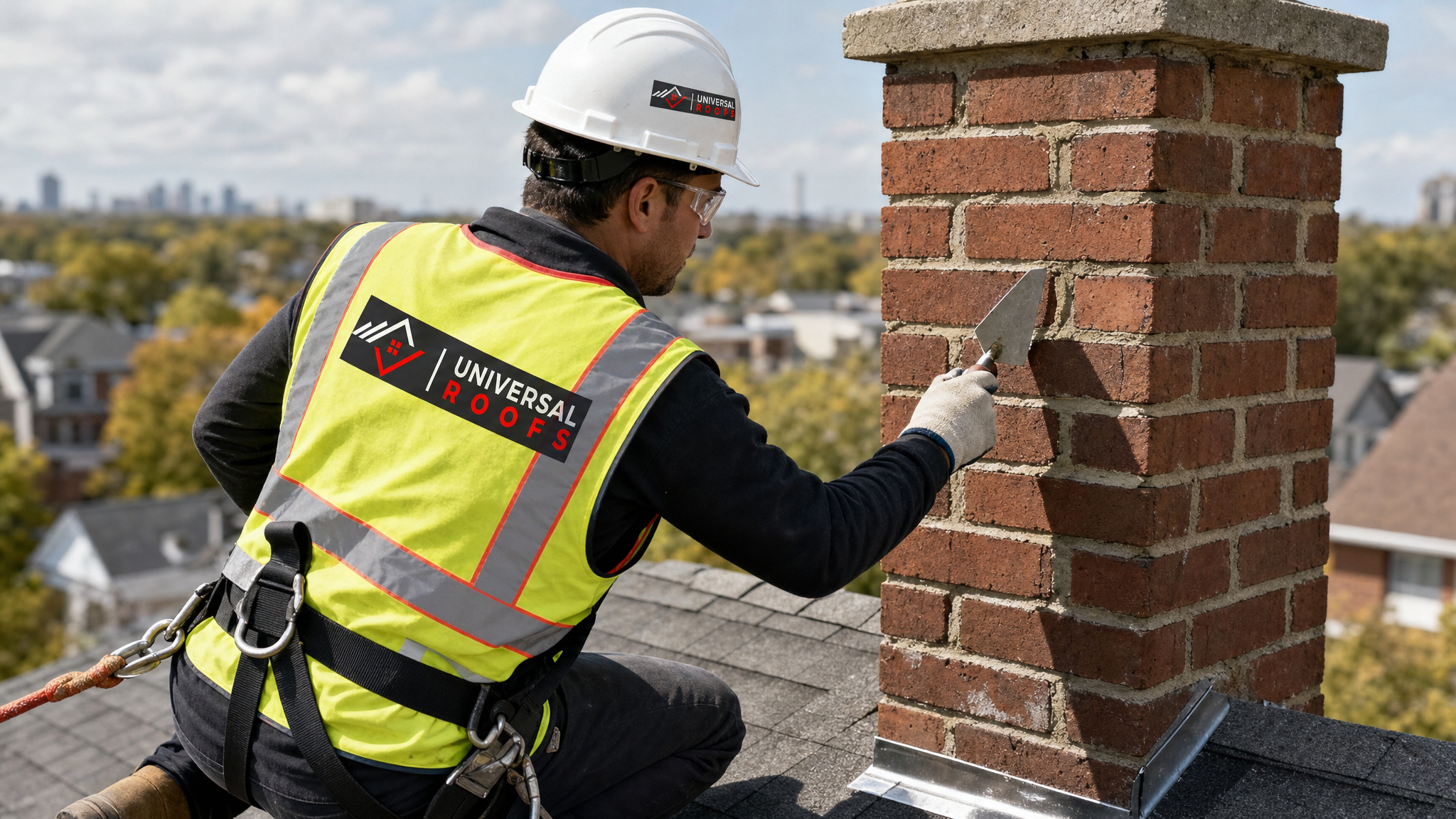
Typical Chimney Repair Cost Ranges in the GTA (2026)
Prices vary by contractor, materials, and site conditions, but the table below reflects realistic 2026 GTA market ranges for the most common chimney repairs. Use it as a benchmark when reviewing quotes, not as a fixed price, since your specific home’s height, pitch, and access will move you up or down within each range.
| Repair Type | Typical Cost Range (CAD) | Typical Duration | When It’s Needed |
|---|---|---|---|
| Mortar repointing (partial) | $350 – $900 | Half day | Crumbling or missing mortar between bricks, minor gaps |
| Chimney crown repair/recoat | $400 – $1,200 | Half to full day | Hairline cracks or minor spalling on the concrete cap |
| Full crown rebuild | $1,000 – $2,500 | 1–2 days | Severe cracking, crumbling, or missing crown sections |
| Flashing replacement | $600 – $2,000 | 1 day | Rusted, lifted, or improperly installed flashing causing leaks |
| Brick/masonry rebuild (upper courses) | $1,500 – $4,500 | 2–4 days | Spalling brick, leaning stack, visible structural movement |
| Chimney liner replacement | $1,800 – $4,500 | 1–2 days | Cracked or deteriorated flue liner, often flagged by a WETT inspection |
| Full chimney rebuild (roofline up) | $5,000 – $9,500 | 3–5 days | Extensive structural failure or long-term water damage |
Note that these figures assume a standard two-storey home with reasonable access. Downtown Toronto heritage properties, homes with steep or complex rooflines, and chimneys taller than two storeys should expect quotes at the higher end or slightly above these ranges. If your chimney damage is severe enough to also compromise the surrounding roof, be sure the estimate accounts for both scopes rather than treating them as unrelated line items.
How Roof Damage Around the Chimney Changes the Estimate
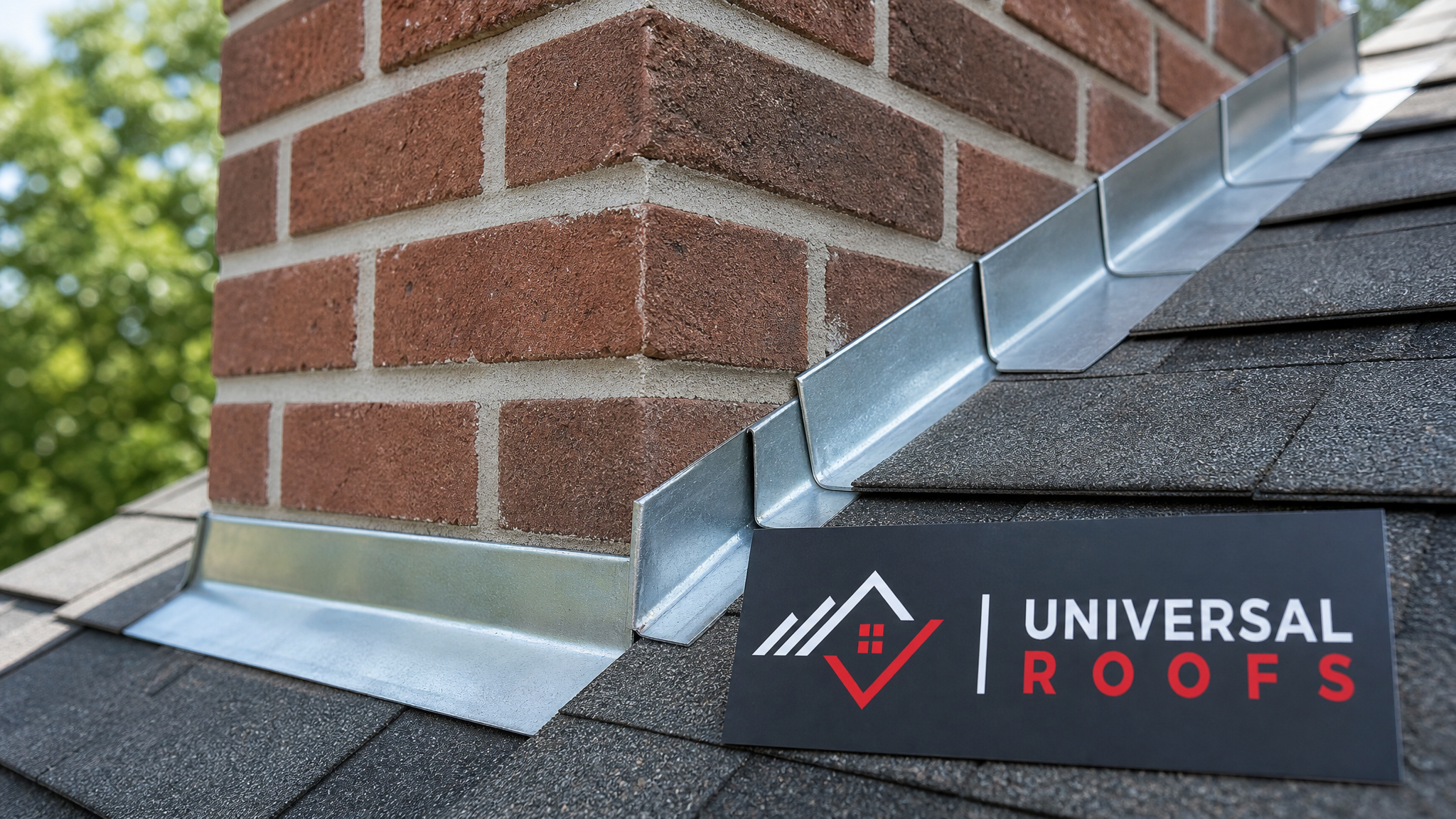
One of the most common mistakes homeowners make is estimating chimney repair in isolation from the roof itself. In practice, the two are deeply connected. Chimney flashing is installed by weaving it into the surrounding shingle courses, so any flashing replacement necessarily disturbs nearby shingles. If those shingles are already brittle from age or sun exposure, a contractor may recommend replacing a wider section of roofing around the chimney rather than risk cracking old shingles during the flashing work.
Similarly, if water has tracked down past a chimney’s step flashing for an extended period, the plywood decking beneath that section can rot. This is not something you can always see from the ground or even from a ladder; it typically requires removing a portion of the shingles to check the deck condition directly. When this happens, the estimate needs to include deck replacement (measured in sheets of plywood plus labour), which can add several hundred dollars per damaged section.
This is also where the age and condition of the broader roof factor into the decision. If your roof is more than 15 years old and already showing granule loss or curling shingles elsewhere, it may make more financial sense to combine the chimney work with a full roof replacement rather than pay for a standalone chimney repair now and a full roof job again in two or three years. A good contractor will walk you through this trade-off honestly rather than upselling unnecessarily.
Flat-roofed additions and garages in the GTA present a slightly different scenario, since chimneys penetrating a flat roofing membrane require different flashing details (typically a pitch pan or a rubber boot system) than sloped asphalt shingle roofs. If your chimney passes through a flat roof section, make sure whoever is estimating the job has specific flat roof penetration experience, since a standard sloped-roof flashing detail will fail on a membrane roof.
Step-by-Step: How to Build Your Own Preliminary Estimate
Before calling a contractor, you can build a rough preliminary estimate yourself using the following steps. This will not replace a professional quote, but it will help you evaluate whether the number you’re given is reasonable.
| Step | What to Do | What You’re Looking For |
|---|---|---|
| 1. Ground-level visual scan | Walk around the exterior and view the chimney with binoculars | Leaning stack, missing crown pieces, visible daylight through mortar joints |
| 2. Attic check | Inspect the attic directly below the chimney with a flashlight | Water staining, damp insulation, daylight gaps around the chimney chase |
| 3. Interior wall/ceiling check | Look at walls and ceilings near the fireplace or chimney chase | Bubbling paint, brown stains, soft drywall |
| 4. Match symptoms to repair type | Use the cost table above to identify likely repair category | A rough price band before contacting a contractor |
| 5. Book 2–3 professional inspections | Compare in-person quotes against your preliminary range | Consistency between quotes; large outliers deserve questions |
The goal of this exercise is not to diagnose the problem yourself and skip a professional, but to arrive at the estimate conversation informed. Contractors respect homeowners who understand the basics, and it makes it much easier to spot a lowball quote that will balloon later, or an inflated one that assumes worse damage than what you observed.
Red Flags That Increase Your Estimate (and How to Verify Them)
Several conditions push a chimney repair estimate significantly higher, and it’s worth knowing what they look like so a contractor can’t simply claim they exist without evidence.
Efflorescence, the white chalky residue sometimes seen on brick chimneys, indicates water is moving through the masonry and depositing mineral salts as it evaporates. This alone doesn’t necessarily mean a full rebuild, but it does confirm active water infiltration that needs addressing before cosmetic repairs are done.
Spalling brick, where the face of the brick has cracked off or flaked away, is a classic sign of freeze-thaw damage common across the GTA. A handful of spalled bricks can be individually replaced (“brick swap”), but widespread spalling across many courses usually points toward a partial or full rebuild.
Leaning or separated chimney stacks, where the chimney has visibly tilted away from the house or separated at the roofline, indicate a structural issue rather than a cosmetic one. This is the most serious red flag and should always be verified in person, since it may point to foundation movement, not just chimney deterioration, and should never be estimated over the phone.
Rusted or missing flashing with visible daylight gaps is easy to verify by looking closely at the joint where the chimney meets the roof. If a contractor tells you flashing needs replacing, ask them to show you photos of the specific damage rather than taking the recommendation on faith.
Homes with older or deteriorating skylights nearby sometimes show similar water staining patterns in the attic, and it’s worth distinguishing which penetration is actually the source. A proper attic inspection from the inside can trace stain patterns back to their true origin point, which prevents you from paying to fix the chimney when a nearby skylight seal was the actual culprit, or vice versa. If a skylight replacement is also warranted, that’s a separate line item worth understanding on its own via a skylight replacement quote.
Timing Your Repair: Why Summer Estimates Look Different Than Winter Ones
July is one of the better months in the GTA to get a chimney repair estimate and to complete the work. Masonry repairs, particularly repointing and crown work, require the mortar and sealants to cure properly, and that curing process is far more reliable in warm, dry summer conditions than in the freeze-thaw window of late fall or winter. Contractors are also generally not scrambling to catch up on storm damage in July the way they might be after a spring windstorm, so scheduling tends to be more flexible and estimates can be scheduled for in-person review sooner.
That said, summer is also a popular season for roofing work generally, so booking early in the season rather than waiting until late August will usually get you a faster inspection slot and a firmer estimate before contractor calendars fill up for the fall. If your chimney issue was first noticed during spring rains, it is worth getting it addressed before autumn, since repairs postponed into winter often have to wait until temperatures rise again the following spring, during which time minor damage can become bigger due to another season of freeze-thaw cycling.
Comparing Multiple Quotes: What Should (and Shouldn’t) Differ
When homeowners collect multiple quotes for the same chimney repair, it’s common to see a wide spread in pricing, sometimes two or three times between the lowest and highest bid. Understanding what legitimately drives that spread, versus what should be roughly consistent, helps you make a sound decision rather than simply picking the cheapest number.
| Quote Element | Should Be Similar Across Quotes | Can Legitimately Vary |
|---|---|---|
| Diagnosis of the problem | Yes — all inspectors should identify the same visible damage | Minor differences in severity assessment are normal |
| Scope of work | Should match the diagnosis | Some contractors bundle extra preventive work; ask why |
| Materials specified | Should be named explicitly (e.g., galvanized vs. copper flashing) | Higher-grade materials justify a higher price |
| Warranty terms | Should be clearly stated in writing | Longer warranties often reflect higher material/labour quality |
| Total price | Should fall within the general market range for the scope | Access, scheduling, and overhead differences shift the final number |
A quote that is dramatically lower than the others often means a smaller scope of work than what’s actually needed, cheaper materials not disclosed upfront, or a contractor without proper insurance cutting corners on labour costs. A quote that is dramatically higher isn’t automatically wrong, but it deserves a clear explanation of what’s driving the difference before you accept it. Always ask for an itemized breakdown rather than a single lump-sum number, since that makes it far easier to compare like-for-like across contractors.
Working With a Contractor Across the GTA: What to Expect Regionally
Chimney repair estimates can vary modestly by region within the Greater Toronto Area, mostly due to differences in home age, roof style, and typical access conditions. Older housing stock in Toronto proper, particularly in neighbourhoods with brick semis and rowhouses built before the 1960s, often has chimneys with original masonry that requires more careful, labour-intensive repair work to match historic materials. In contrast, newer subdivisions across Peel Region, York Region, Halton Region, and Durham Region tend to have simpler chimney profiles with more standardized brick veneer or prefabricated chimney chase covers, which are typically faster and less expensive to repair.
Regardless of location, always confirm that a contractor is licensed, carries liability insurance, and is comfortable working at height with proper fall protection, since chimney work always involves working near a roof edge. Ask to see recent examples of similar chimney repairs they’ve completed in your specific municipality, since building permit requirements and inspection expectations can differ slightly between municipalities within the GTA.
Putting It All Together: A Realistic Estimating Checklist
To summarize the process into something you can actually use, here is the checklist worth following before committing to any chimney repair contract:
Confirm the specific type of damage through a visual inspection, ideally paired with an attic check from the inside. Match that damage to the appropriate repair category using realistic 2026 GTA cost ranges rather than assuming the worst or the best case. Ask whether the surrounding roof shingles, decking, or flashing are also compromised, since a chimney repair estimate that ignores the roof context is incomplete. Get at least two, ideally three, itemized quotes so you can compare scope and materials rather than just a bottom-line number. Factor in the season, since booking in summer generally means faster scheduling and better curing conditions for masonry work. Finally, verify the contractor’s licensing, insurance, and safety practices before signing anything, since chimney work at height carries real risk if done by an unqualified crew.
Following this process consistently turns “estimating chimney repair costs for damaged roofs” from a guessing game into a straightforward, defensible budgeting exercise. You’ll walk away from every quote conversation understanding exactly what you’re paying for and why.
What is the average cost of estimating chimney repair costs for damaged roofs in the GTA?
How do I know if my chimney damage is also affecting my roof?
Why do chimney repair quotes vary so much between contractors?
Is summer a good time to get a chimney repair estimate for a damaged roof?
What are the biggest red flags that increase a chimney repair estimate?
Should I repair my chimney separately from my roof, or combine the work?
Need Help With Estimating Chimney Repair Costs?
Getting an accurate, itemized estimate is the single best way to protect your budget and your roof. The team at Universal Roofs has been inspecting and repairing chimneys and roofs across the GTA since 2005, and we always assess the chimney in the context of your full roof system before quoting a number.
Call us today at (416) 732-2421 or request a free inspection to get started.
Universal Roofs proudly serves Toronto, Mississauga, Brampton, Vaughan, Markham, Oakville and the GTA since 2005.