
Commercial metal roofs are built to last decades, but even the toughest standing seam or corrugated steel system develops problems over time: leaking seams, failing fasteners, rusted panels, and punctures from rooftop equipment traffic. When a metal roof starts to fail, property managers and business owners need to know exactly which repair method fits the damage, the budget, and the timeline — because the wrong fix on a commercial building can mean lost tenants, damaged inventory, or a much bigger bill down the road.
At Universal Roofs, we have repaired metal roofs on warehouses, plazas, and industrial buildings across the Greater Toronto Area since 2005, and the same question comes up on almost every site visit: what are the best solutions for commercial metal roof repair, and how do you know which one your building actually needs? This guide walks through the full range of repair options — from spot sealant fixes to full panel replacement — so you can make an informed decision before you call a contractor.
We will cover how to diagnose the problem correctly, compare the leading repair methods side by side, break down realistic costs and timelines for the GTA market, and explain when a repair is smart versus when it is time to consider a full roof replacement. Toronto’s freeze-thaw winters and humid summers put unique stress on metal roofing, so we have built this guide specifically around what actually works on commercial buildings in this climate.
Diagnosing the Problem Before Choosing a Repair Method
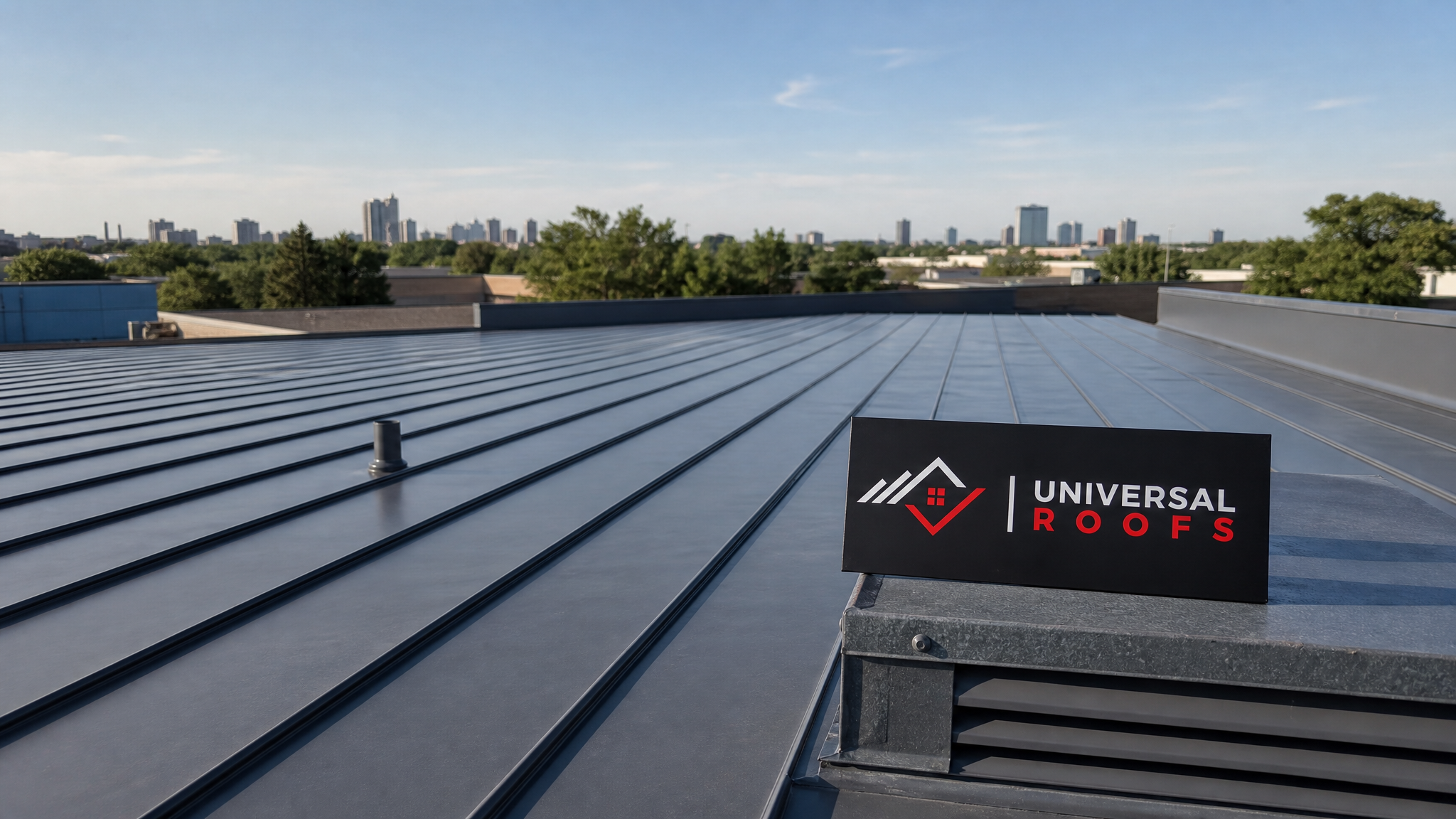
Every effective repair starts with an accurate diagnosis. Metal roofs fail in fairly predictable ways, and the fix that solves one type of problem can be completely wrong for another. Before your roofing contractor picks up a caulking gun or a screw gun, they should walk the entire roof, check the attic or ceiling from below for water staining, and document every point of concern with photos.
The most common failure points on commercial metal roofs in the GTA include seam separation from thermal expansion and contraction, corroded or backed-out fasteners, pinhole rust on exposed fastener heads, deteriorated sealant at penetrations (vents, HVAC curbs, pipe boots), hail or debris punctures, and ponding water at low slope transitions. Each of these has a specific, proven repair method, and mixing them up wastes money and shortens the life of the fix.
A thorough inspection should also assess the substrate underneath the panels. If the underlying decking or insulation has absorbed moisture, surface repairs alone will not solve the problem — the roof will keep leaking from a different spot next season. This is where an experienced eye matters: a contractor who only patches the visible symptom, without checking for moisture migration, is not giving you a lasting solution.
Comparing the Main Commercial Metal Roof Repair Methods
There is no single “best” repair for every metal roof problem — the right method depends on the type and extent of damage, the roof’s age, and how long you plan to own or lease the building. The table below compares the primary repair methods we use on commercial metal roofs across Toronto, Mississauga, Brampton, and the surrounding regions.
| Repair Method | Best For | Typical Lifespan Added | Relative Cost |
|---|---|---|---|
| Seam and fastener resealing | Minor leaks at seams and screw heads | 3-5 years | Low |
| Fastener replacement (re-fastening) | Backed-out or stripped screws, panel flutter | 5-8 years | Low to moderate |
| Patch and panel splice | Localized punctures, small rust holes | 5-10 years | Moderate |
| Silicone or acrylic roof coating | Widespread minor corrosion, chalking, small pinholes | 10-15 years | Moderate |
| Section panel replacement | Significant corrosion or storm damage in one area | 15-20 years | Moderate to high |
| Full roof replacement | Widespread failure, structural concerns, roof past useful life | 30-50 years | High |
For most buildings with isolated leaks and a roof that is otherwise structurally sound, resealing, re-fastening, or a targeted patch will solve the problem for a fraction of the cost of replacement. When the damage is spread across a large portion of the roof, though, a coating system or section replacement often makes more financial sense than chasing dozens of individual leaks one at a time.
Seam and Fastener Resealing
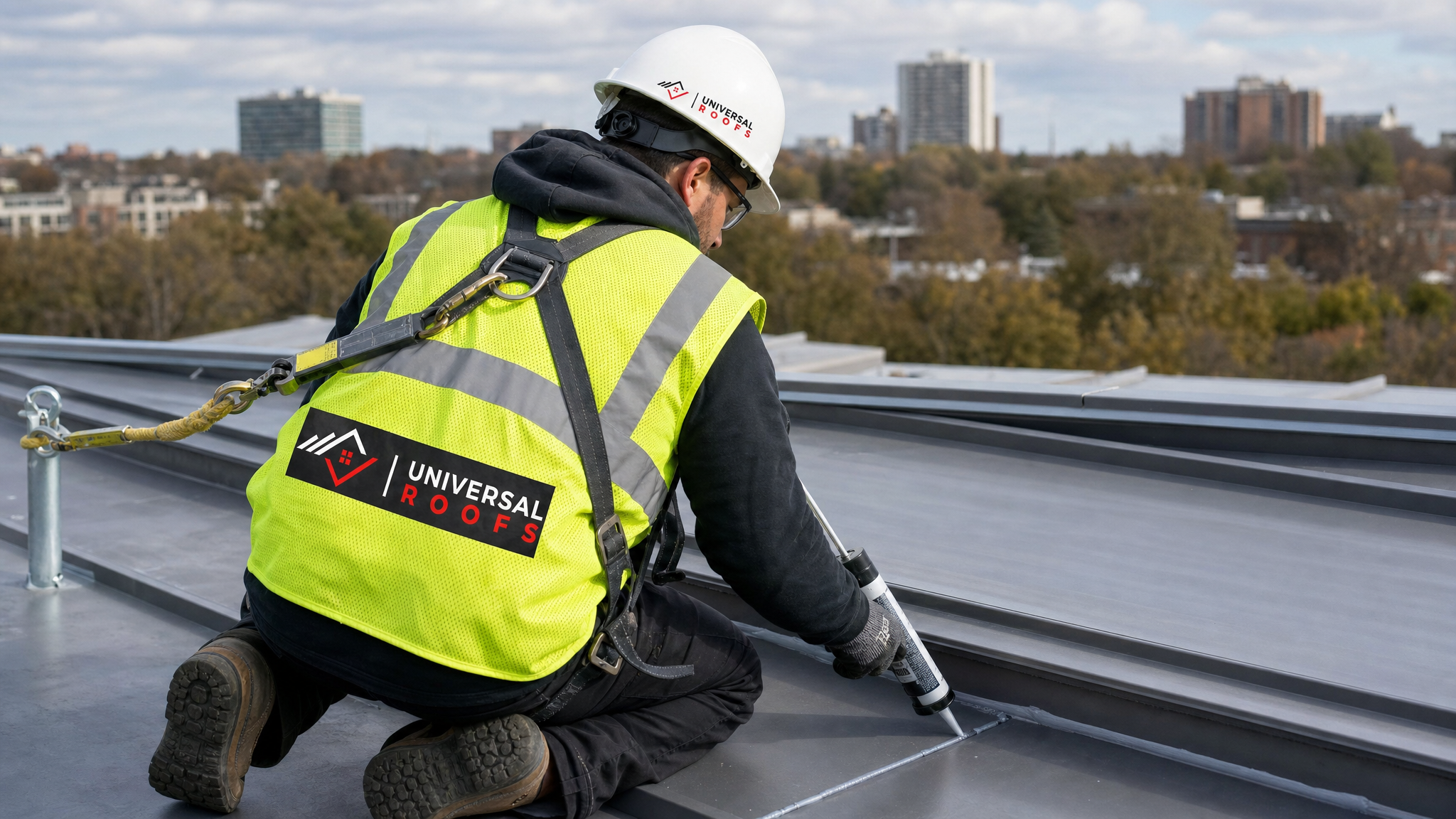
Standing seam and screw-down metal panels rely on sealant at the laps, ridges, and fastener penetrations. Over 10 to 15 years of Toronto’s temperature swings, that sealant dries out, cracks, and shrinks away from the metal. Resealing involves cutting out the old, failed sealant, cleaning the substrate, and applying a fresh bead of high-grade polyurethane or butyl sealant rated for exterior metal use. This is one of the most cost-effective repairs available and is often the first line of defence for buildings under active maintenance contracts.
Fastener Replacement
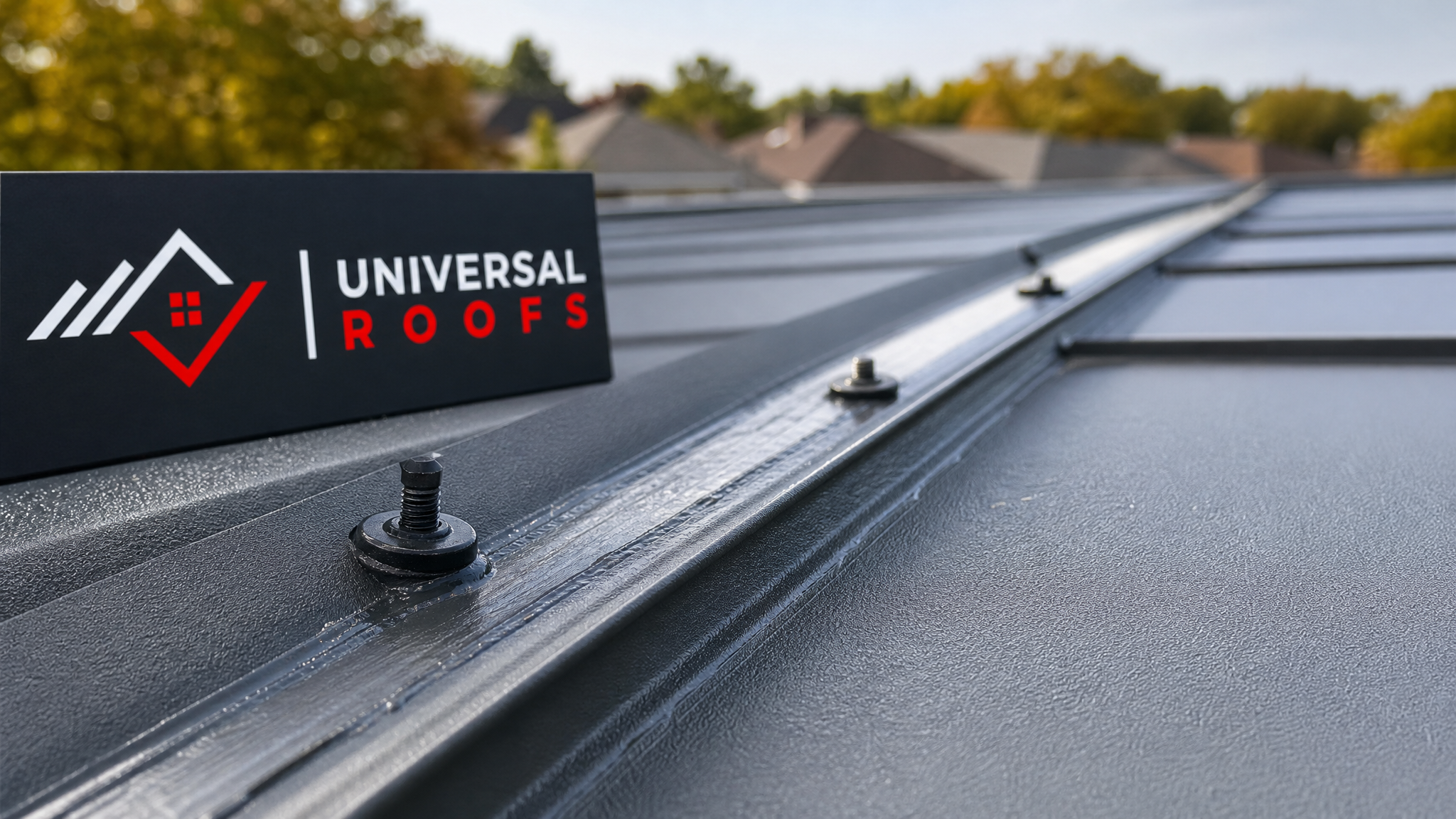
Exposed-fastener metal roofs use thousands of screws with rubber washers that compress against the panel. Those washers harden and crack with age and UV exposure, and the screws themselves can back out slightly as the metal expands and contracts. Replacing failed fasteners with oversized, corrosion-resistant screws and fresh EPDM washers restores the watertight seal at every penetration point. On a typical commercial roof, this can mean re-driving several thousand fasteners — labour-intensive, but far cheaper than a full roof repair involving new panels.
Patch and Panel Splice Repairs
For punctures caused by falling branches, hail, or foot traffic from rooftop mechanical work, a patch repair uses a matching metal flashing piece, properly lapped and sealed over the damaged area, or a full panel splice if the hole is large. This method restores structural and weatherproofing integrity without replacing the entire panel run.
Roof Coatings for Widespread Corrosion
When a metal roof shows surface rust and chalking across large areas but the panels are still structurally sound, a silicone or acrylic elastomeric coating can add a decade or more of service life at a fraction of replacement cost. The coating is applied after the roof is cleaned, rust-treated, and primed, forming a seamless, UV-reflective membrane over the entire surface. This approach works particularly well on flat-slope commercial roofs where ponding water accelerates corrosion.
How Toronto’s Climate Affects Metal Roof Repair Decisions
The GTA’s climate is genuinely tough on metal roofing. Winter freeze-thaw cycles force water into any tiny gap at a seam or fastener, where it expands as ice and widens the opening. Summer heat then causes the metal to expand again, stressing those same weak points. This cycle repeats dozens of times per year, which is why sealant and fastener failures are the single most common repair call we get on commercial metal roofs in Toronto, Mississauga, and Brampton.
Humidity is another factor. Summer humidity combined with poor attic or roof deck ventilation can trap moisture against the underside of metal panels, accelerating corrosion from below — a problem that is often invisible from the roof surface until it becomes serious. This is why we always recommend checking ventilation and insulation as part of any metal roof repair scope; a proper attic assessment can catch a moisture problem long before it causes structural damage.
Because of these seasonal stresses, late spring through early autumn is the ideal repair window in the GTA. Sealants and coatings cure properly in warm, dry conditions, and completing repairs before winter ensures the roof is fully sealed before the freeze-thaw cycle begins again. If you are reading this in July, you are in the best possible window to get commercial metal roof repairs done before the fall rains and winter freeze arrive.
Repair Timelines and Cost Ranges for Commercial Buildings
Commercial property owners need to plan around downtime, tenant disruption, and budget cycles, so understanding realistic timelines and cost ranges is essential before choosing a repair method. The figures below reflect typical ranges for mid-sized commercial buildings across the Toronto area; every roof is different, and an on-site assessment is the only way to get an accurate quote.
| Repair Type | Typical Project Duration | Cost Range (CAD) | Disruption Level |
|---|---|---|---|
| Spot seam/fastener resealing | 1 day | $800 – $2,500 | Minimal |
| Fastener replacement (full roof) | 2-4 days | $3,000 – $9,000 | Low |
| Patch/panel splice repair | 1-2 days | $1,200 – $4,000 | Minimal |
| Full roof coating application | 3-7 days | $4 – $8 per sq. ft. | Low to moderate |
| Section panel replacement | 3-6 days | $10,000 – $30,000 | Moderate |
| Full roof replacement | 1-3 weeks | $12 – $22 per sq. ft. | Moderate to high |
These ranges assume standard building access and typical roof pitch. Steep-slope, high-rise, or heavily obstructed rooftops (with extensive HVAC equipment or solar arrays) will trend toward the higher end of each range. We always recommend getting a detailed, written scope of work before approving any commercial roofing project, since vague quotes are the most common source of budget overruns on repair jobs.
Repair vs. Replacement: Making the Right Call
One of the hardest decisions a property manager faces is whether to keep repairing an aging metal roof or commit to full replacement. There is a useful rule of thumb in commercial roofing: if repair costs over a five-year period are projected to exceed 40 to 50 percent of a full replacement cost, replacement is usually the smarter long-term investment. But cost is only part of the equation.
Consider the age of the roof relative to its expected lifespan. A well-installed commercial metal roof can last 40 to 60 years, but the fasteners, sealants, and coatings typically need attention well before that. If your roof is 10 to 20 years old and showing isolated issues, repair is almost always the right call. If it is approaching 30 years and showing widespread corrosion, recurring leaks in multiple locations, or structural sagging, it is time to have a serious conversation about roof replacement rather than continuing to chase individual failures.
Also factor in your building’s use. A warehouse storing sensitive inventory or a retail plaza with paying tenants cannot tolerate the same leak risk as a low-traffic storage building. In those cases, even a moderate repair bill may justify moving to replacement sooner, simply to eliminate the risk of water damage claims and tenant disputes.
Special Considerations for Flat and Low-Slope Metal Roofs
Many commercial buildings in the GTA use low-slope or flat metal roof systems, which face additional challenges beyond standard sloped installations. Ponding water is the biggest concern — even a properly installed low-slope metal roof can develop shallow ponds after heavy rain if drainage slopes were not built correctly, and standing water dramatically accelerates corrosion and seam failure.
If your building has a low-slope metal roof and you are seeing recurring ponding, the repair conversation often needs to include drainage improvements alongside the metal repair itself — adding tapered insulation, additional drains, or scuppers to move water off the roof faster. In some cases, transitioning problem areas to a dedicated flat roofing membrane system at drainage-critical zones can outperform trying to keep a flat metal section watertight indefinitely.
Roof penetrations are also more common on low-slope commercial roofs — HVAC curbs, exhaust vents, and often skylights for natural lighting in warehouse and retail spaces. Every one of these penetrations is a potential leak point, and a proper repair plan should inspect and reseal flashing at each one, not just the panel seams. If your building’s skylights are original to the roof and showing their own signs of wear, it is worth having them assessed at the same time — our skylight replacement team frequently works alongside metal roof repair crews on combined projects to avoid opening the roof twice.
Choosing the Right Materials for a Lasting Repair
Not all sealants, fasteners, and coatings are created equal, and using the wrong material is one of the most common reasons commercial metal roof repairs fail early. The table below outlines the materials we specify for different repair scenarios and why they hold up in the GTA’s climate.
| Material | Used For | Why It Works in the GTA Climate | Expected Service Life |
|---|---|---|---|
| Polyurethane sealant | Seam and lap joint resealing | Flexible through freeze-thaw cycling, strong adhesion to painted metal | 8-12 years |
| Butyl tape/sealant | Under-panel lap seals | Remains pliable in cold temperatures, will not crack | 15-20 years |
| Stainless steel fasteners with EPDM washers | Fastener replacement | Corrosion-resistant, washer holds seal through thermal movement | 15-25 years |
| Silicone roof coating | Full-surface corrosion protection | UV-stable, reflects summer heat, bridges hairline cracks | 10-15 years |
| Galvalume/matched panel steel | Patch and section replacement | Matches existing panel corrosion resistance and profile | 30-40 years |
Cutting corners on materials — using a general-purpose caulk instead of a proper roofing-grade polyurethane, for example — is a false economy. The labour cost to apply a repair is often the same regardless of material quality, so spending slightly more on the right sealant, fastener, or coating dramatically extends the time before you need to call a contractor back out.
Maintenance Steps That Prevent Repeat Repairs
The best commercial metal roof repair is the one you never have to do twice. A simple, consistent maintenance routine catches small problems before they become expensive ones. We recommend the following for any commercial building with a metal roof in the GTA:
- Schedule a professional inspection twice a year — once in spring after winter thaw, and once in fall before freeze-up.
- Clear debris, leaves, and standing snow from valleys, drains, and low-slope areas regularly.
- Check and reseal sealant at penetrations (vents, curbs, skylights) every 3 to 5 years, even if no leak is visible yet.
- Inspect exposed fasteners annually for backed-out screws or cracked washers.
- Keep gutters, downspouts, and scuppers clear to prevent water backing up under panel edges.
- Address minor rust spots immediately with spot treatment before they spread.
Buildings on a documented maintenance schedule consistently need fewer emergency repairs and get significantly more useful life out of their metal roofing system. If your building has never had a formal roof maintenance plan, a full inspection is the logical first step — check our FAQ page for answers to common questions about scheduling and scope, or reach out directly for a walkthrough.
Working With a Qualified Commercial Roofing Contractor
Commercial metal roof repair is not a DIY project, and it is not a job for a residential-only roofing crew either. The panel profiles, fastening systems, and code requirements for commercial buildings differ significantly from residential roofing, and working at height on a commercial rooftop — often with rooftop mechanical units, parapet walls, and skylights to navigate around — requires proper fall protection training and equipment.
When evaluating a contractor for a commercial metal roof repair, ask about their specific experience with metal systems (not just asphalt shingles), request references from similar commercial properties, and insist on a written scope of work that specifies materials, fastener types, and warranty terms. A contractor who cannot explain why they are recommending resealing versus a coating versus panel replacement for your specific situation has not done a proper diagnosis.
Universal Roofs has served commercial and residential properties across the Toronto, Peel Region, York Region, Halton Region, and Durham Region since 2005, and metal roof diagnostics and repair are among our most frequent commercial calls. You can read what other property owners and managers have said about working with us on our reviews page, or learn more about our company and the team behind these projects.
Building a Long-Term Repair and Capital Planning Strategy
For property managers overseeing multiple buildings or a portfolio, it pays to think about metal roof repair as part of a longer-term capital planning strategy rather than a series of one-off emergency calls. Documenting every repair, the materials used, and the date completed builds a maintenance history that helps forecast when a section will need replacement versus continued repair.
We recommend budgeting an annual roof maintenance line item — even a modest amount for inspections and minor sealant touch-ups — rather than waiting for a major leak to force a large, unplanned capital expense. This approach consistently produces better outcomes: buildings on a proactive plan spend less overall over a 10-year period than buildings that only address roofing reactively after a leak has already caused interior damage.
It is also worth reviewing your roof’s warranty documentation. Many commercial metal roofing systems carry material warranties of 20 to 40 years, but those warranties often have maintenance requirements attached — failing to address minor sealant or fastener issues promptly can void coverage for a much larger failure later. A qualified contractor can review your warranty terms alongside the physical inspection to make sure any repair work keeps that coverage intact.
What are the best solutions for commercial metal roof repair?
How much does commercial metal roof repair cost in Toronto?
Can a leaking commercial metal roof be repaired instead of replaced?
How long do metal roof repairs typically last?
What causes most commercial metal roof leaks in the GTA?
When is the best time of year to schedule commercial metal roof repair?
Need Help With What Are the Best?
Whatever stage your commercial metal roof is at — a single leaking seam or widespread corrosion across the whole surface — Universal Roofs can diagnose the problem accurately and recommend the right fix for your budget and timeline.
Call us today at (416) 732-2421 or request a free inspection to get started.
Universal Roofs proudly serves Toronto, Mississauga, Brampton, Vaughan, Markham, Oakville and the GTA since 2005.