
Older buildings across Toronto, Mississauga, and the surrounding GTA carry a charm that newer construction rarely matches — solid masonry walls, deep foundations, and rooflines built to last generations. But that same age is exactly why waterproofing important for older buildings has become such a pressing question for homeowners and building managers alike. Materials that were state-of-the-art in 1955 or 1975 were never designed to withstand today’s freeze-thaw cycles, heavier rainfall events, and decades of thermal movement.
At Universal Roofs, we have spent nearly two decades inspecting and repairing older properties throughout the GTA, and the pattern is remarkably consistent: buildings that skip proactive waterproofing end up paying far more later in structural repairs, mould remediation, and emergency roof work. This guide explains exactly why waterproofing matters so much for aging structures, what parts of an older building are most vulnerable, and how to build a practical, budget-conscious waterproofing plan for a property that has already stood for 40, 60, or even 100 years.
Whether you own a century home in Cabbagetown, a 1960s bungalow in Etobicoke, or manage a mid-rise walk-up in Scarborough, the underlying principles are the same. We will walk through the science of water intrusion in aging materials, compare waterproofing methods and materials, break down realistic costs and timelines, and answer the most common questions we hear from owners of older buildings.
Why Waterproofing Is Especially Critical for Older Buildings
Every building envelope is designed to keep water out, but the materials and standards used decades ago were built around very different expectations. Understanding why waterproofing important for older buildings is not just a marketing phrase requires looking at how these structures were actually built and how they have aged since.
Older masonry buildings, common throughout Toronto’s established neighbourhoods, often rely on lime mortar or early Portland cement mixes that are more porous than modern equivalents. That porosity was originally intentional — it let the wall “breathe” and release moisture naturally. Problems arise when later renovations seal these walls with modern, less permeable materials, trapping moisture inside instead of letting it escape. The result is accelerated spalling, efflorescence, and eventually structural deterioration of brick and stone.
Roofing systems on older homes present a parallel issue. Original roof decking, often full 1-inch board sheathing rather than plywood or OSB, expands and contracts with humidity in ways modern materials do not anticipate. Combined with roofing underlayments that have simply outlived their functional lifespan — asphalt-saturated felt from the 1980s is a common culprit — older roofs frequently fail quietly, allowing water to seep into attic spaces and wall cavities long before a visible leak appears indoors.
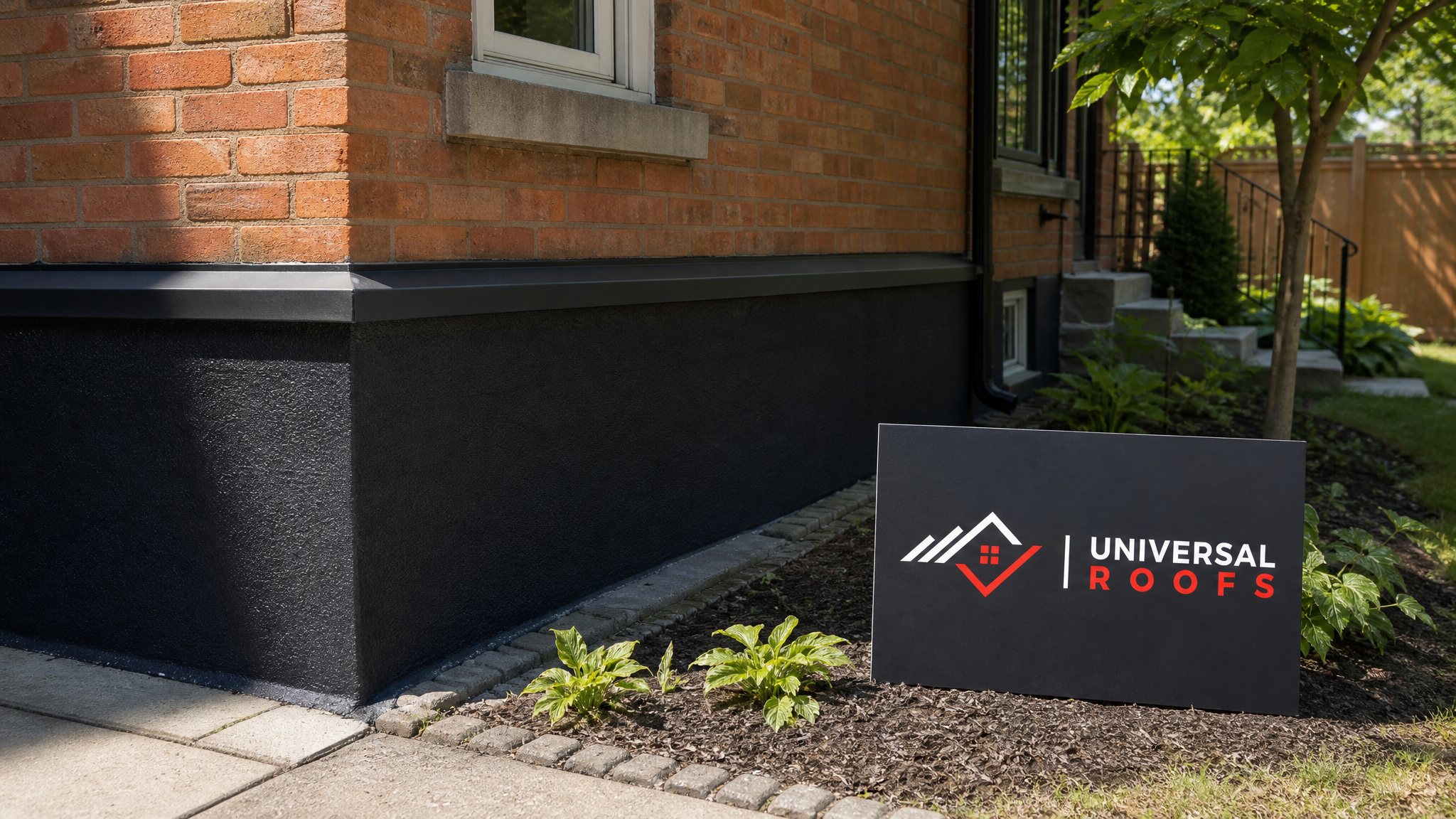
Foundations built before the 1970s in the GTA typically used minimal or no exterior damp-proofing membrane, relying instead on parging or simple tar coatings that have long since cracked and degraded. Combined with clay soils common across much of Toronto and Peel Region, hydrostatic pressure against these aging foundation walls is a leading cause of basement water infiltration in older homes.
Finally, decades of settling create hairline cracks in mortar joints, foundation walls, and around penetrations like chimneys and vent stacks. Individually, these cracks seem minor. Collectively, across a 60- or 80-year-old structure, they represent dozens of potential entry points for water, especially during the freeze-thaw cycles that define a Toronto winter and early spring.
How Water Damages Aging Structural Materials
To understand why waterproofing older buildings deserves priority over cosmetic repairs, it helps to analyse exactly how water attacks aging materials at a molecular level.
Water that penetrates masonry does not just sit passively. During Toronto’s winter, that moisture freezes and expands by roughly nine percent in volume. In a modern, well-sealed wall this is rarely an issue because water is kept out entirely. In an older wall with existing micro-cracks or porous mortar, repeated freeze-thaw cycles progressively widen those cracks — a phenomenon engineers call frost-jacking or freeze-thaw spalling. Each winter compounds the damage from the year before, meaning deterioration accelerates rather than staying constant.
Wood-framed structures suffer differently. Persistent moisture in wall cavities, attics, or roof decking creates ideal conditions for wood-rotting fungi, which need only moisture, oxygen, and a food source (the wood itself) above roughly 20 percent moisture content to establish. Once fungal decay begins in an older roof truss or floor joist, the structural capacity of that member can be compromised well before visible sagging occurs.
Steel components — including older lintels, ties, and reinforcing bar in early concrete — corrode when exposed to persistent moisture, and corroding steel expands, exerting outward pressure that cracks surrounding masonry or concrete from the inside out. This is a particularly serious concern in older mid-rise buildings with exposed concrete balconies or parapets.
Beyond structural harm, chronic moisture intrusion in older buildings is one of the leading contributors to indoor mould growth, which is both a health hazard and an expensive remediation problem. Because older buildings often have less effective ventilation than current building code requires, trapped moisture has fewer ways to dissipate once it gets in, making the initial waterproofing barrier even more important than in newer construction.
| Material | Common Age Range | Primary Water-Related Failure | Typical Warning Sign |
|---|---|---|---|
| Lime or early Portland mortar | Pre-1960 | Spalling and joint erosion | Crumbling, powdery mortar joints |
| Asphalt-saturated felt underlayment | 1970s-1990s | Brittle cracking, loss of water resistance | Attic staining, granule loss |
| Tar-based foundation damp-proofing | Pre-1980 | Cracking and delamination from concrete | Damp basement walls, efflorescence |
| Cast iron or galvanized plumbing | Pre-1970 | Internal corrosion and pinhole leaks | Rust-coloured stains, low water pressure |
| Original wood roof decking | Pre-1960 | Rot from trapped attic moisture | Sagging roof plane, musty attic odour |
Key Vulnerable Areas on an Older Home or Building
Not every part of an older building carries equal risk. Based on the hundreds of inspections our team has completed across Toronto, Mississauga, Brampton, and Markham, a handful of specific areas consistently show up as the source of water intrusion.
The roof-to-wall intersection, chimneys, and any place where a vertical surface meets a horizontal roof plane are the single most common failure points. Flashing installed decades ago was often simple lead or galvanized steel without modern sealants, and it corrodes or separates from mortar joints over time. If your chimney flashing has not been inspected in the last five years, it is worth having a professional assess your roof repair needs before the next heavy rain season.
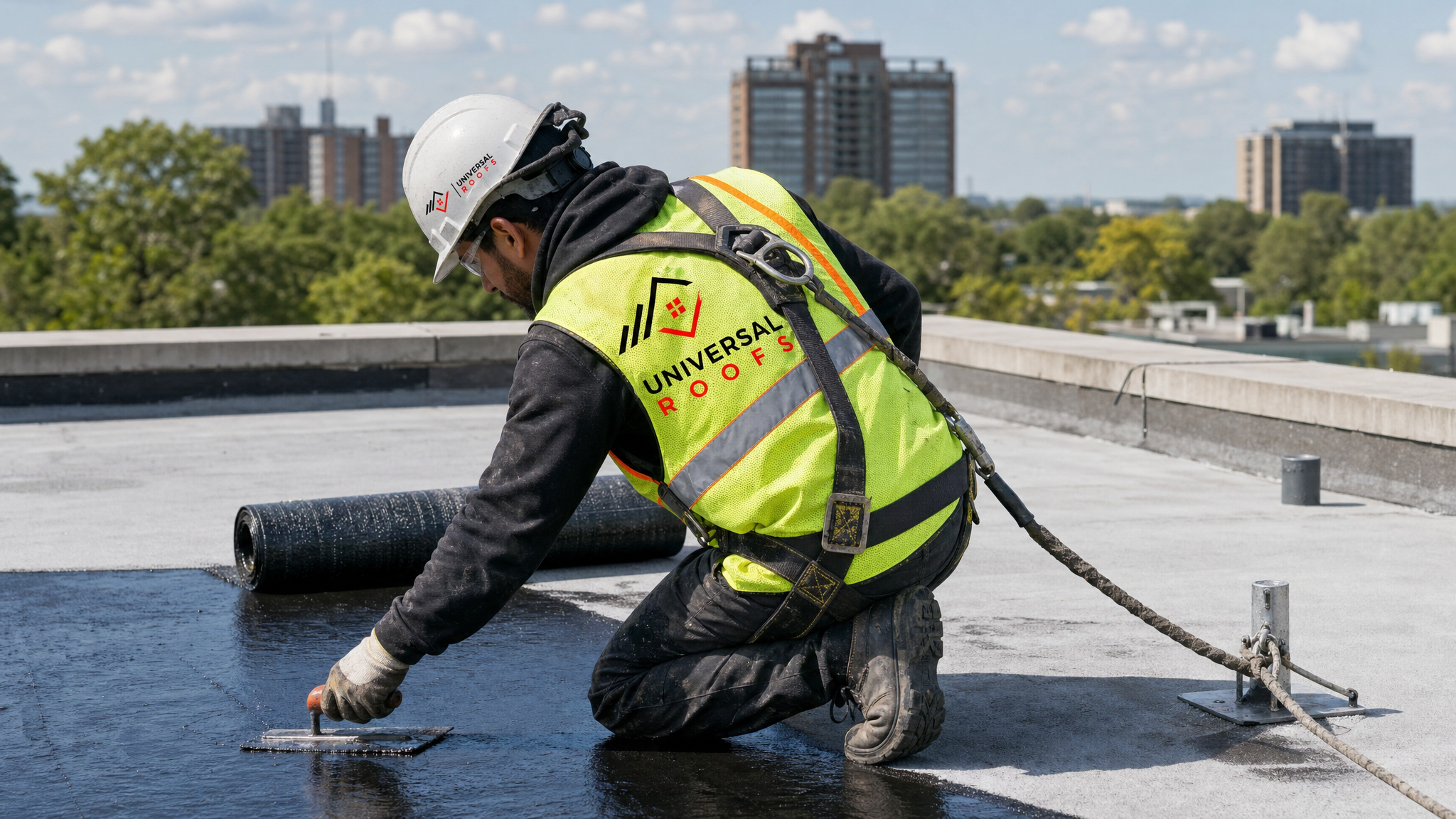
Flat or low-slope roof sections — common additions on older homes and standard on many older commercial and mixed-use buildings — are especially vulnerable because they rely entirely on membrane waterproofing rather than gravity and shingle overlap. Aging built-up roofing or old modified bitumen membranes on these sections often reach the end of their service life well before owners realize it. If your property has any flat-roofed additions, garages, or porches, our flat roofing team can evaluate whether the existing membrane still provides adequate protection.
Basements and foundation walls in older homes rarely have a functioning weeping tile system or exterior membrane, making them the single most common source of water complaints we hear from owners of pre-1970s homes. Grading changes over decades, tree root growth, and settling soil frequently redirect water toward the foundation rather than away from it.
Older skylights, particularly original single-pane units installed before energy codes required insulated glazing, are another frequent culprit. Failed seals and outdated flashing details around these units let water track into ceiling cavities. If your home has an ageing skylight, it is worth having our skylights specialists assess whether repair or full skylight replacement makes more financial sense.
Finally, attics in older homes frequently have inadequate ventilation by today’s standards, which traps moisture from everyday household humidity and accelerates decking and truss deterioration from the inside. Our attic assessment service specifically checks ventilation balance and insulation condition, both of which directly affect how much moisture accumulates against the underside of an ageing roof deck.
Comparing Waterproofing Methods for Aging Structures
Not all waterproofing approaches suit every part of an older building, and choosing the wrong method can actually trap moisture rather than release it — a mistake we see often on heritage masonry where a modern, non-breathable coating was applied over historic brick. The table below compares the most common methods used on older GTA properties.
| Method | Best Suited For | Typical Lifespan | Relative Cost |
|---|---|---|---|
| Breathable silicate or mineral masonry sealer | Historic brick and stone walls | 8-12 years | Low to moderate |
| Modified bitumen roof membrane | Flat or low-slope roof sections | 15-20 years | Moderate |
| Liquid-applied polyurethane roof coating | Flat roofs, awkward penetrations, older detailing | 10-15 years | Moderate to high |
| Exterior foundation membrane with weeping tile | Basements with active leaks or high water table | 25+ years | High |
| Interior crystalline waterproof coating | Basements where exterior excavation is impractical | 10-20 years | Low to moderate |
For most older homes, an effective waterproofing plan combines two or three of these methods rather than relying on a single fix. A typical scope might include a breathable masonry sealer on exterior brick, a new membrane on any flat roof sections, and targeted foundation waterproofing where basement moisture has already been observed. Trying to solve everything with a single interior product, like a basement waterproof paint, addresses symptoms without stopping water from reaching the wall in the first place.
It is also worth noting that DIY consumer waterproofing paints and caulks, while inexpensive, are rarely adequate as a standalone fix for a structure with genuine age-related vulnerabilities. These products can mask early symptoms for a season or two while the underlying deterioration continues, which is why a professional assessment before purchasing materials will usually save money over the life of the building.
Signs Your Older Building Needs Waterproofing Now
Recognizing the early symptoms of water intrusion lets you address a small, affordable repair before it becomes a large, expensive one. Based on our inspection history across the GTA, these are the clearest warning signs that waterproofing has become urgent rather than optional.
- Efflorescence — the white, chalky mineral deposit left behind as water evaporates from brick or concrete — appearing on exterior walls or basement surfaces
- Musty odours in basements or attics, even without visible standing water, which usually indicates persistent low-level dampness
- Peeling paint or bubbling plaster on interior walls that back onto an exterior wall or roofline
- Visible cracking in foundation walls wider than about 3 millimetres, or cracks that appear to be actively growing
- Rusty streaking below flashing, gutters, or roof penetrations, indicating corroding fasteners or hardware
- A noticeable increase in humidity or condensation on interior windows during colder months
- Soft or spongy roof decking felt underfoot in the attic, a strong indicator of hidden rot
If any of these symptoms sound familiar, it is worth scheduling a professional assessment rather than waiting for the next heavy rainfall to confirm the problem. Our team can typically identify the source of intrusion, along with a prioritized repair plan, within a single site visit.
Cost and Timeline Expectations for Older Building Waterproofing
Owners of older homes and buildings understandably want a realistic sense of budget and timeline before committing to a project. While every property is different, the ranges below reflect typical GTA pricing for common waterproofing scopes as of 2026.
| Project Scope | Typical Cost Range (CAD) | Typical Timeline | Best Season to Complete |
|---|---|---|---|
| Masonry sealer application (single-family exterior) | $2,500 – $6,000 | 2-4 days | Late spring through early autumn |
| Flat roof membrane replacement (small section) | $4,000 – $12,000 | 2-5 days | Late spring through early autumn |
| Exterior foundation waterproofing with weeping tile | $10,000 – $25,000+ | 1-3 weeks | Spring through early autumn, before ground freezes |
| Interior basement waterproofing coating | $1,500 – $4,000 | 1-2 days | Year-round, weather-independent |
| Chimney and roof flashing rehabilitation | $1,200 – $3,500 | 1-2 days | Late spring through early autumn |
Timing matters more with older buildings than newer ones because many exterior waterproofing products require above-freezing temperatures to cure properly, and excavation-based foundation work becomes impractical once the ground freezes. Summer, like right now in July, is genuinely one of the best windows for exterior masonry sealing and flat roof membrane work in the GTA, since materials cure quickly in warm, dry conditions and contractors are not racing the first frost.
A Practical Waterproofing Maintenance Plan for Older Properties
Waterproofing an older building is rarely a single event — it works best as an ongoing maintenance rhythm that catches small problems before they become structural ones. We recommend the following approach to owners of pre-1980s properties throughout Toronto, Peel Region, York Region, Halton Region, and Durham Region.
Start with a full building envelope inspection covering the roof, flashing details, foundation, grading, and attic ventilation. This baseline assessment identifies which vulnerable areas discussed earlier actually apply to your specific property, rather than guessing based on the building’s age alone.
Address roofing and flashing issues first. Water entering through the roof plane or flashing details tends to cause the most rapid structural damage because it often travels invisibly through wall cavities and attic spaces before surfacing as a visible stain. A thorough roof repair or, where the existing roof has genuinely reached the end of its service life, a full roof replacement should take priority over cosmetic exterior work.
Correct exterior grading and drainage before investing in foundation membrane work. In many older neighbourhoods, decades of landscaping changes have left soil sloping toward the foundation rather than away from it. This is an inexpensive fix that dramatically reduces hydrostatic pressure and can sometimes eliminate the need for more invasive foundation excavation.
Schedule masonry and foundation waterproofing next, prioritizing any area where efflorescence, cracking, or dampness has already been observed. Because these repairs cure best in warm weather, plan this work for spring through early autumn whenever possible.
Finally, build a recurring inspection schedule — every two to three years for most components, annually for flat roof sections and chimney flashing — so that new deterioration is caught while it is still a minor repair. Reading through verified customer experiences on our reviews page can give a useful sense of how this staged approach has worked for other older GTA properties.
Common Mistakes Owners Make With Older Building Waterproofing
Even well-intentioned owners make predictable mistakes when waterproofing an aging property, often because advice designed for new construction does not translate directly to older materials.
The most common error is applying a non-breathable modern sealant or paint directly over historic lime-mortared brick. Because these older walls were designed to release trapped moisture outward, sealing the exterior surface can force that same moisture to migrate inward instead, sometimes accelerating interior damage rather than preventing it. Always confirm mortar type and wall composition before selecting a masonry sealer.
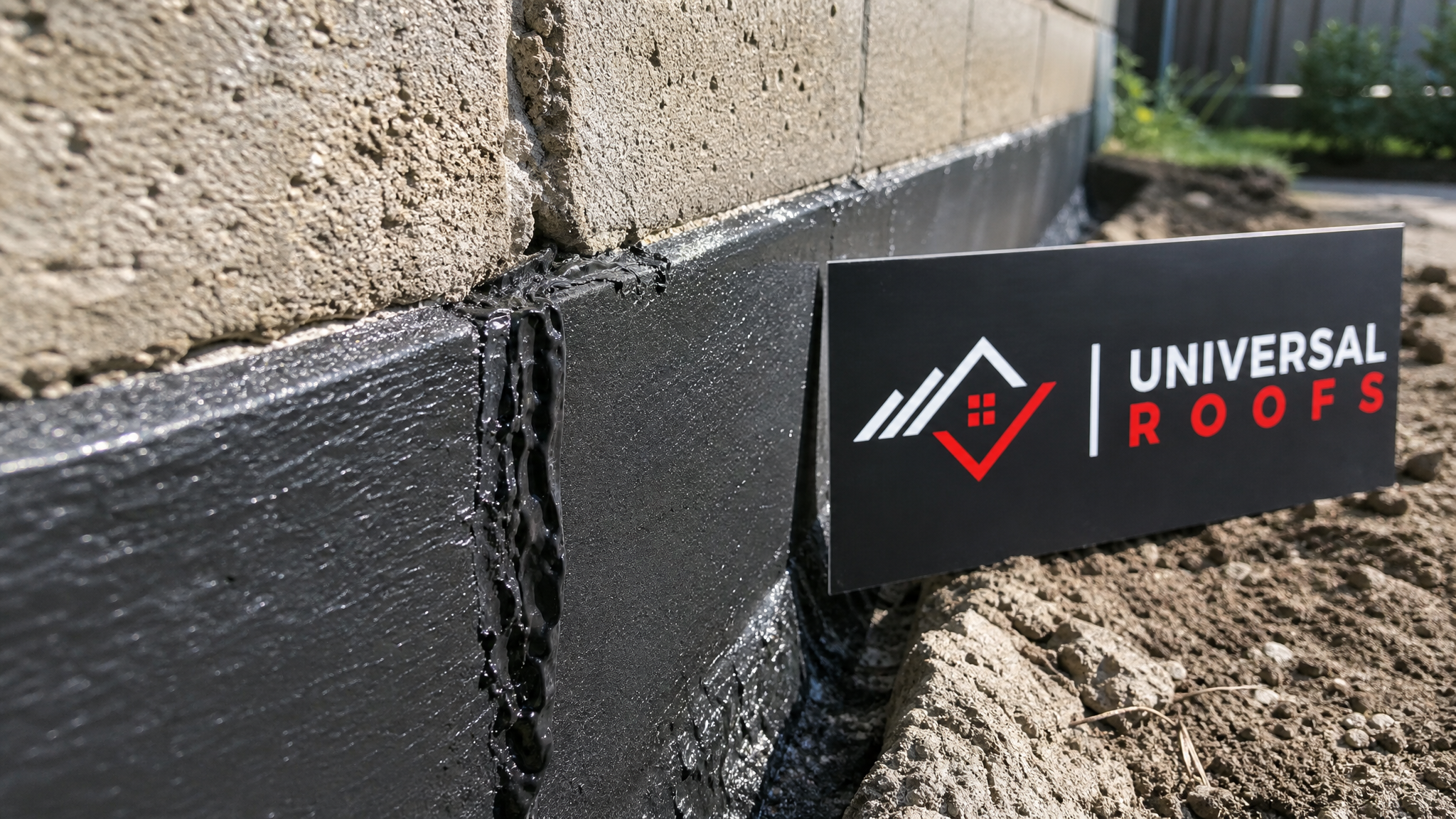
Another frequent mistake is treating a basement leak with an interior coating alone when the actual source is exterior — a common misdiagnosis that provides only temporary relief. Interior coatings can hold back minor dampness, but if hydrostatic pressure against the foundation wall is significant, water will eventually find another path, sometimes damaging the interior finish in a new location.
Owners also frequently delay flashing repairs because the visible symptoms, like a small ceiling stain, seem minor compared to the perceived cost of “roof work.” In reality, flashing repairs are typically one of the least expensive waterproofing interventions and often prevent much larger repairs to decking, insulation, or drywall down the line.
Finally, many owners skip the attic ventilation assessment entirely, assuming waterproofing only concerns the exterior envelope. Poor attic ventilation traps humidity from everyday living against the underside of the roof deck, meaning even a perfectly sealed exterior can still develop rot from the inside if moisture has no way to escape.
Choosing a Qualified Waterproofing Contractor for an Older Property
Waterproofing an older building requires a different skill set than a typical new-construction project. Contractors need to understand historic masonry composition, be comfortable diagnosing hidden structural issues, and know how to sequence repairs so that one fix does not inadvertently create a new problem elsewhere.
Ask any prospective contractor how many older or heritage-adjacent properties they have worked on in the past few years, and request to see examples of similar projects. A contractor experienced only in new-build waterproofing may default to modern products that are not appropriate for older wall assemblies.
Confirm that any quote includes a written scope covering material specifications, warranty terms, and an inspection of adjacent systems like flashing, gutters, and attic ventilation — not just the specific symptom you called about. Piecemeal repairs that ignore the broader building envelope tend to resurface as new leaks within a year or two.
Our team has answered detailed questions from GTA homeowners for nearly twenty years, and many common concerns are already covered on our FAQ page. You can also learn more about our history and approach on our about page before booking an assessment.
We proudly serve older properties throughout Toronto, Peel Region, York Region, Halton Region, and Durham Region, and our familiarity with the specific building stock in each of these areas helps us diagnose age-related waterproofing issues faster and more accurately than a generalist contractor unfamiliar with local construction history.
Why is waterproofing important for older buildings specifically, compared to new construction?
How do I know if my older home actually needs waterproofing?
What is the best waterproofing method for a heritage brick building?
How much does waterproofing an older building typically cost in the GTA?
Is summer a good time to waterproof an older building in Toronto?
Can I waterproof an older basement from the inside only, without exterior excavation?
Need Help With Why Is Waterproofing Important?
If your older home or building in the GTA is showing any signs of water intrusion, the safest next step is a professional assessment rather than a temporary DIY fix. The team at Universal Roofs has spent nearly two decades diagnosing and solving exactly these kinds of age-related waterproofing challenges across the region.
Call us today at (416) 732-2421 or request a free inspection to get started.
Universal Roofs proudly serves Toronto, Mississauga, Brampton, Vaughan, Markham, Oakville and the GTA since 2005.