
When a metal roof starts leaking, loosening at the seams, or showing rust along the fasteners, every GTA homeowner faces the same question: is it worth patching the problem, or is it time to replace the whole roof? Comparing costs of metal roof repair vs replacement is one of the most common calls we get at Universal Roofs, and the honest answer is that it depends on the age of the roof, the extent of the damage, and how much longer you plan to own the home. This guide breaks down real Toronto-area pricing, the decision factors that matter most, and how to avoid throwing good money after bad on a roof that is already past its useful life.
Metal roofing has become increasingly popular across Toronto, Mississauga, Vaughan, and the wider GTA because of its durability and long lifespan, but that doesn’t mean it’s maintenance-free. Standing seam panels, exposed-fastener metal roofing, and metal shingles all age differently, and each has its own repair economics. Below, we’ll walk through cost ranges for common repairs, full replacement pricing, the break-even calculations that determine which option makes financial sense, and the warning signs that tell you a patch job won’t hold.
Whether you’re dealing with a single storm-damaged panel or a roof that’s nearing the end of its service life after 25+ Toronto winters, understanding the real numbers behind roof repair versus roof replacement will help you make a confident, informed decision.
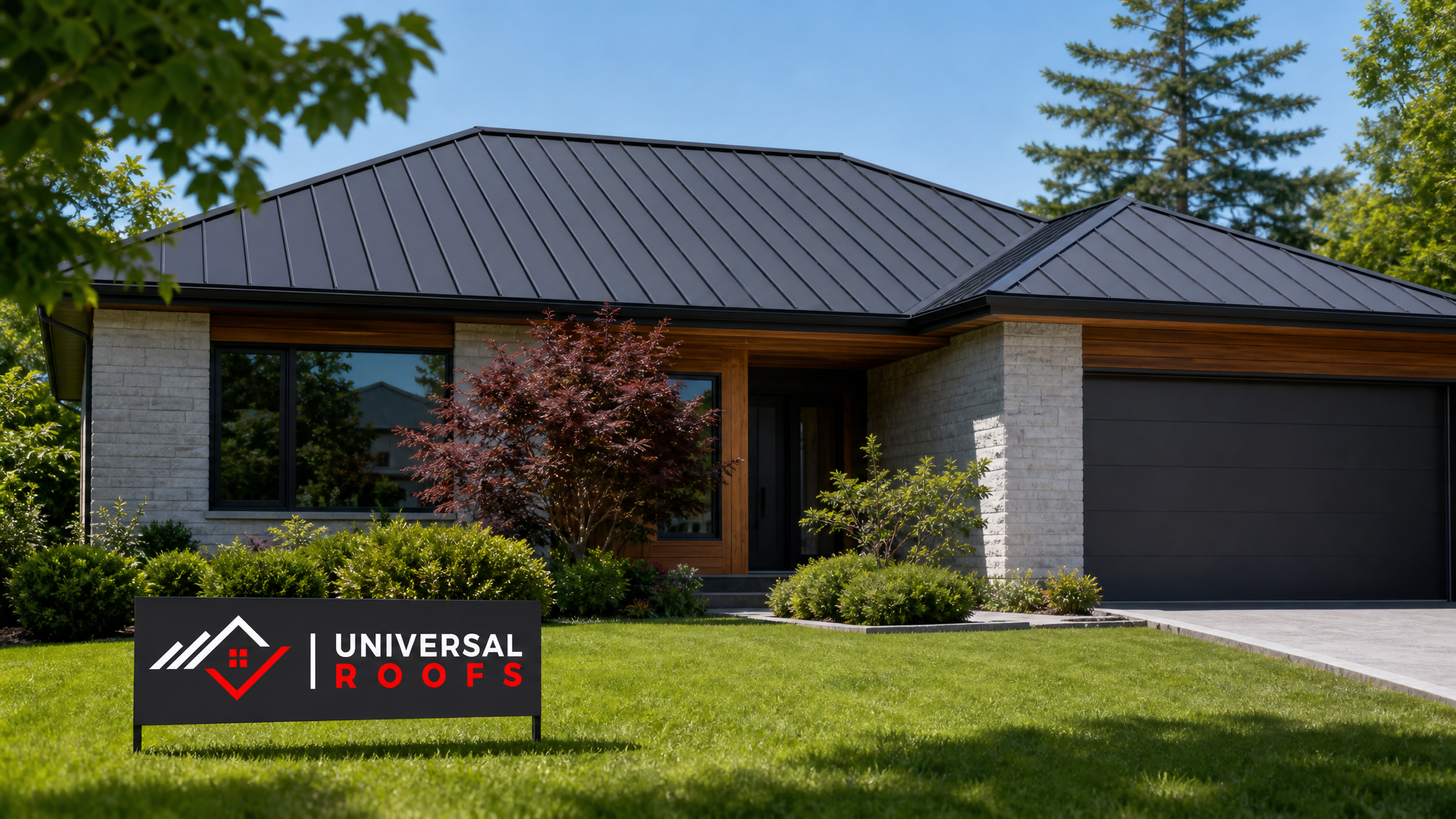
Comparing Costs: Metal Roof Repair vs Replacement at a Glance
Before diving into specifics, it helps to see the full cost picture side by side. Repair costs for metal roofing in the GTA typically range from a few hundred dollars for a simple fastener or sealant fix to several thousand dollars for larger sections of panel replacement or structural repair. Full replacement, by comparison, is a much larger investment but resets the clock on the roof’s lifespan and often comes with a transferable warranty.
| Repair Type | Typical GTA Cost Range | Time to Complete | Expected Lifespan Added |
|---|---|---|---|
| Fastener/screw replacement (per section) | $300 – $800 | Half day | 3-5 years |
| Seam and sealant repair | $500 – $1,500 | Half day to 1 day | 2-5 years |
| Single panel replacement | $800 – $2,500 | 1 day | 10-15 years (localized) |
| Flashing repair/replacement | $600 – $2,000 | 1 day | 10-20 years |
| Rust treatment and recoating | $1,500 – $4,500 | 2-3 days | 5-10 years |
| Multiple panel/section repair (storm damage) | $3,000 – $8,000 | 2-4 days | 10-15 years (localized) |
Full metal roof replacement runs considerably higher, but it is priced per square foot rather than per repair, and it includes tear-off, new underlayment, new panels or shingles, flashing, and often upgraded ventilation. On a typical GTA detached home, that puts total project costs well into five figures, though the exact number depends heavily on roof size, pitch, and material choice.
| Metal Roof Type | Cost Per Square Foot (Installed) | Typical Full Roof Cost (1,800-2,200 sq ft) | Expected Lifespan |
|---|---|---|---|
| Exposed-fastener steel panels | $8 – $12 | $14,400 – $26,400 | 25-40 years |
| Standing seam steel | $12 – $18 | $21,600 – $39,600 | 40-60 years |
| Standing seam aluminum | $14 – $20 | $25,200 – $44,000 | 50+ years |
| Metal shingles (stone-coated steel) | $10 – $16 | $18,000 – $35,200 | 30-50 years |
| Copper standing seam | $25 – $40+ | $45,000 – $88,000+ | 60-100 years |
These figures assume typical GTA labour rates and mid-range material costs. Complex rooflines with multiple valleys, dormers, or steep pitches will push costs toward the higher end of each range, while simple gable roofs on smaller homes will land near the lower end.
When Repair Makes Financial Sense
Repair is almost always the right call when the damage is isolated and the roof is under 20 years old. A single lifted panel from a windstorm, a few loose fasteners causing minor leaks, or a section of failed sealant around a chimney flashing are textbook repair scenarios. In these cases, the roof’s overall structure and remaining panels are still sound, and a targeted repair extends the life of the whole system without the expense of a full tear-off.
We generally recommend repair when:
- The roof is less than 20 years old and otherwise well-maintained
- Damage is confined to one area (a single slope, one valley, or a small section near a vent)
- There is no widespread rust, corrosion, or panel delamination
- The underlying decking and structure show no signs of rot or sagging
- You plan to sell or move within the next 5-10 years and want to preserve resale value cost-effectively
A good rule of thumb we use when comparing costs of metal roof repair vs replacement: if the repair cost is under 20-25% of a full replacement, and the roof still has more than half its expected lifespan remaining, repair is almost always the more sensible investment. Our roof repair team can typically diagnose and fix these issues in a single visit.
When Replacement Is the Smarter Long-Term Investment
Replacement becomes the better financial decision once a roof starts requiring repeat repairs, when rust has spread across multiple panels, or when the roof has already passed 30-40 years of age depending on the metal type. At that point, you’re often paying for temporary fixes on a system that is fundamentally at the end of its service life, and each new repair simply delays an inevitable, larger expense.
Signs that point toward full replacement rather than another round of repairs:
- Rust or corrosion has spread beyond isolated spots and is visible across multiple panels
- You’ve had two or more repair calls in the past 24 months for different leaks
- Fasteners are failing broadly, not just in one section, indicating widespread thermal cycling fatigue
- The decking beneath the metal shows soft spots, staining, or mould from long-term moisture intrusion
- The roof is near or past its expected lifespan for its material type (see the table above)
- You’re planning major renovations, additions, or a long-term hold on the property and want a warrantied system
In these situations, a full roof replacement is more cost-effective over a 10-year horizon than continuing to pour money into a roof that keeps failing. It also gives you the opportunity to upgrade insulation, improve attic ventilation, and address any flashing or skylight integration issues at the same time, rather than treating each as a separate emergency call.
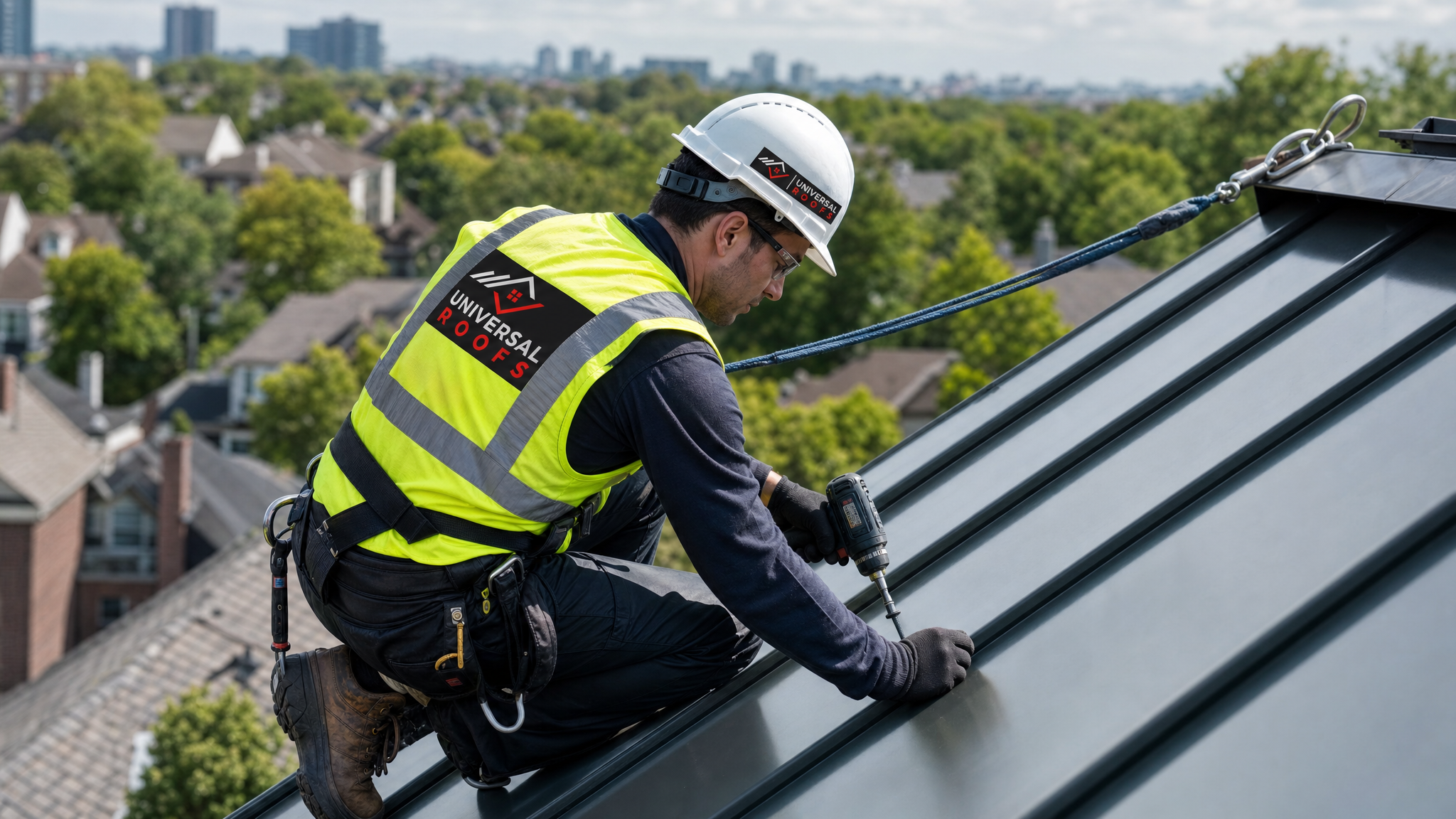
The Break-Even Math: How to Decide
The clearest way to compare costs of metal roof repair vs replacement is to run a simple break-even calculation. Divide the repair cost by the number of years it’s realistically expected to last, then compare that to the replacement cost divided by its much longer expected lifespan.
| Scenario | Cost | Lifespan Added | Annualized Cost |
|---|---|---|---|
| Seam repair on 15-year-old steel roof | $1,200 | 4 years | $300/year |
| Panel replacement on 22-year-old steel roof | $2,200 | 10 years | $220/year |
| Rust recoating on 28-year-old roof | $3,500 | 6 years | $583/year |
| Full standing seam replacement | $28,000 | 45 years | $622/year |
Note how the annualized cost of a rust recoating on an ageing roof can actually approach the annualized cost of full replacement, once you factor in the shorter runway it buys you. This is the tipping point most homeowners miss: an individual repair invoice looks small next to a replacement quote, but if you’re paying for that same repair every few years on a roof that’s already 25+ years old, the math often favours starting fresh, especially since a new roof comes with a manufacturer and workmanship warranty that a patched-up older roof cannot offer.
Toronto Climate Factors That Affect the Decision
The GTA’s freeze-thaw cycle plays a significant role in how quickly metal roofing ages and how often repairs are needed. Winter temperature swings cause metal panels to expand and contract repeatedly, which loosens fasteners, stresses sealant at seams and penetrations, and can accelerate rust formation wherever the protective coating has been compromised. Homes in Toronto, Mississauga, and across the Peel Region, York Region, Halton Region, and Durham Region all experience this same cyclical stress, though homes closer to Lake Ontario can see slightly different humidity and salt-air exposure that affects corrosion rates near the shoreline.
Ice damming is another factor unique to our climate. When attic heat escapes unevenly and melts snow that then refreezes at the eaves, it can back water up under panel seams and flashing, leading to interior leaks that mimic panel failure but are actually a ventilation and insulation problem. This is why we always inspect the attic space and insulation levels when diagnosing a metal roof leak; sometimes the real fix isn’t a roof repair at all but improved attic ventilation to prevent ice damming from recurring next winter.
Summer brings its own considerations. July heat causes significant thermal expansion in metal panels, and this is actually one of the better times of year to schedule an inspection, since expansion-related gaps, loosened fasteners, and sealant failures are often more visible and easier to access safely than during icy winter conditions.
Repair and Replacement Timelines
Project timelines differ substantially between the two options, and this matters if you’re trying to schedule work around a busy household, an upcoming sale, or seasonal weather windows.
| Project Type | Assessment/Quote | Material Lead Time | On-Site Work | Total Timeline |
|---|---|---|---|---|
| Minor repair (fasteners, sealant) | Same day to 2 days | None (stock parts) | Half day | 2-4 days |
| Panel or flashing replacement | 1-3 days | 3-7 days (colour match) | 1 day | 1-2 weeks |
| Storm damage multi-panel repair | Same day (priority) | 3-10 days | 2-4 days | 1-3 weeks |
| Full roof replacement | 3-5 days | 2-4 weeks | 3-5 days | 4-6 weeks |
If a leak is active and causing interior damage, don’t wait for the “ideal” timeline; a temporary tarp or emergency patch can stop water intrusion within hours while you evaluate the full repair-versus-replace decision properly rather than rushing into a permanent fix under pressure.
Other Roof Systems Worth Comparing
Metal isn’t the only roofing system homeowners are weighing costs on, and if your metal roof sits over a lower-slope addition, garage, or porch, it’s worth understanding how those sections compare. Many GTA homes have a mix of steep-slope metal and low-slope sections that actually call for flat roofing membrane systems, which have entirely different repair and replacement economics. If your metal roof also integrates skylights, leaks are sometimes misattributed to the panels themselves when the real culprit is failed skylight flashing or seals; in those cases, skylight replacement may resolve the leak far more affordably than any roof-level repair.
A thorough inspection should always identify exactly where water is entering, since metal roof panels themselves rarely fail outright; it’s almost always the fasteners, seams, flashing, or roof penetrations (vents, chimneys, skylights) that create the vulnerable points. Getting this diagnosis right the first time prevents paying for a repair that doesn’t actually address the source of the leak.
What Drives Repair and Replacement Costs Higher
Several factors push both repair and replacement quotes above the baseline ranges listed earlier, and it’s worth understanding these before you get a quote so the number doesn’t come as a surprise.
- Roof pitch and access: Steep roofs require additional fall-protection setup and slow down every stage of the work, adding labour cost to both repairs and full replacements.
- Panel discontinuation: Older standing seam profiles or discontinued colour finishes can be difficult to match, sometimes requiring a full slope replacement rather than a single panel swap.
- Decking condition: If plywood or board decking underneath has rotted from long-term moisture, it must be replaced before any new panels go down, adding materials and labour that a straightforward repair estimate wouldn’t include.
- Number of penetrations: Chimneys, vents, and skylights each need custom flashing work, and roofs with many penetrations cost more to repair and replace than a simple, unbroken roof plane.
- Permit and code upgrades: A full replacement may trigger current building code requirements for underlayment, ventilation, or ice-and-water shield that weren’t required when the original roof was installed, which a repair would not touch.
A detailed, itemized quote should always separate these variables so you can see exactly why one project costs more than a comparable one down the street.
Getting an Accurate Comparison for Your Roof
Cost ranges are useful for planning purposes, but every roof is different, and the only way to know for certain whether repair or replacement makes sense for your specific situation is a hands-on inspection. A qualified roofer will check fastener condition across the whole roof (not just the leaking area), assess rust penetration depth, examine the decking from the attic side, and confirm whether flashing and seams elsewhere are showing early warning signs that a visible leak hasn’t revealed yet.
We always recommend getting a written, itemized estimate for both options, repair and full replacement, before deciding. This lets you compare the annualized cost math directly rather than guessing, and a reputable contractor should be transparent about which option they genuinely believe offers better value for your roof’s age and condition, not just which one is more profitable for them to sell. You can see how we’ve helped other GTA homeowners work through this exact decision on our reviews page, and our FAQ page covers additional common questions about warranties, financing, and insurance claims for storm damage.
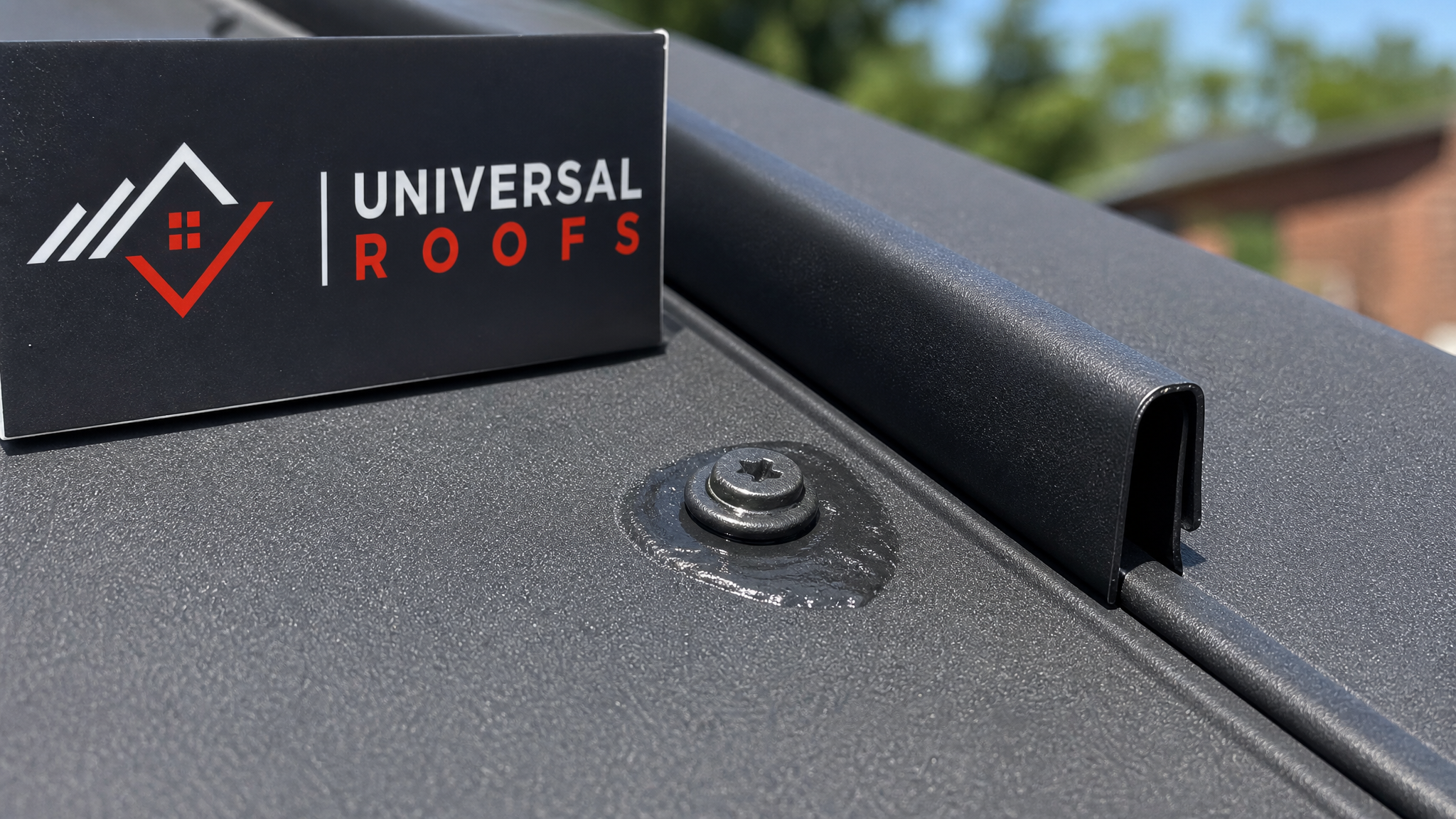
Making the Right Call for Your Budget and Timeline
Comparing costs of metal roof repair vs replacement ultimately comes down to three questions: how old is the roof, how widespread is the damage, and how long do you plan to stay in the home. A young roof with isolated damage almost always favours repair. An older roof with recurring issues, spreading rust, or decking damage almost always favours replacement, even though the upfront number is larger, because the annualized cost and the peace of mind of a warrantied system usually win out.
Universal Roofs has been serving homeowners across Toronto and the GTA since 2005, and we’ve walked thousands of homeowners through exactly this decision. We provide honest, itemized assessments for both repair and replacement so you can make the choice that fits your roof’s actual condition and your household’s budget and plans, not a one-size-fits-all recommendation. You can learn more about our approach and team on our about page, or explore coverage across the Toronto area and beyond.
When comparing costs, is metal roof repair or replacement usually cheaper upfront?
How do I know if my metal roof needs repair or full replacement?
What is the average cost difference between metal roof repair and full replacement in Toronto?
Can rust on a metal roof always be repaired, or does it mean I need a replacement?
Does a metal roof repair affect the warranty on a full roof replacement later?
How much does it cost to get a professional inspection before comparing repair and replacement quotes?
Need Help With Comparing Costs Metal Roof?
Whether your metal roof needs a targeted repair or it’s time to consider a full replacement, the team at Universal Roofs can give you a clear, honest assessment based on your roof’s actual condition, not a one-size-fits-all sales pitch.
Call us today at (416) 732-2421 or request a free inspection to get started.
Universal Roofs proudly serves Toronto, Mississauga, Brampton, Vaughan, Markham, Oakville and the GTA since 2005.