
When heavy snow piles up on a roof after a Toronto winter storm, it is tempting to assume the roof can simply carry the load until spring. In reality, the benefits of timely roof snow removal go far beyond curb appeal — prompt snow clearing protects the structural integrity of your home, prevents costly ice damming, and can add years to the life of your roofing system. Homeowners across the GTA who wait too long often discover leaks, sagging decking, or damaged shingles once the thaw arrives.
At Universal Roofs, we have been inspecting and repairing snow-related roof damage across the Greater Toronto Area since 2005. Every winter, our crews respond to emergency calls from homeowners who postponed snow removal by a week or two and ended up with a collapsed soffit, a stained ceiling, or a full roof repair bill they could have avoided. This guide explains exactly why timely roof snow removal matters, how to recognize the warning signs of an overloaded roof, and what a proper removal process looks like.
Even though we are publishing this in the summer months, now is actually the ideal time to think about snow removal planning. Summer is when roofing contractors have the availability to assess your roof’s condition, address any underlying weaknesses, and get you set up with a snow management plan well before the first snowfall — rather than scrambling once the freeze-thaw cycle has already begun.
Why Roof Snow Load Becomes a Serious Problem
Ontario building codes size residential roof structures to handle a specific “ground snow load,” but that figure assumes dry, freshly fallen snow. Once snow compacts, absorbs meltwater, and refreezes over several weeks, its weight can climb dramatically. A metre of fresh powder might weigh as little as 100 kilograms per cubic metre, but the same depth of wet, compacted late-season snow can weigh three to five times more. This is the core reason the benefits of timely roof snow removal are so significant in the GTA climate, where thaw-refreeze cycles are common throughout the winter rather than a single steady freeze.
Flat and low-slope roofs are particularly vulnerable because snow has nowhere to slide off naturally. If you have a flat roofing system on a garage, addition, or commercial building, accumulated snow can pond as it partially melts, adding hydrostatic weight on top of the existing snow load. Sloped asphalt shingle roofs shed snow more readily, but ice damming at the eaves can trap metres of snow above the dam, effectively turning a sloped roof into a flat-roof snow load problem at the roofline.
Warning signs that a roof is under excessive snow load include:
- Doors and windows that suddenly stick or no longer close properly
- Visible sagging in the roofline when viewed from the street
- Cracking or popping sounds from the attic or ceiling
- New cracks appearing in interior drywall, especially near the ceiling
- Sagging or bowing in interior ceiling tiles or drywall
- Doors on outbuildings or sheds that become difficult to open
If you notice any of these signs, this is not a “wait and see” situation. Contact a professional immediately for an emergency assessment rather than climbing onto the roof yourself.
The Structural Benefits of Timely Roof Snow Removal
The single greatest benefit of timely roof snow removal is avoiding catastrophic structural failure. Roof collapses are rare, but they are not unheard of in the GTA after major snow events, particularly on older homes, garages, carports, and flat-roofed additions that were not built to current snow load standards. Removing snow before it compounds keeps the total load well within your roof’s safe carrying capacity.
Beyond outright collapse, chronic overloading causes slower, more insidious damage. Roof trusses and rafters can develop micro-fractures from repeated seasonal overloading that are invisible from the attic floor but weaken the structure over years. Roof sheathing can delaminate under sustained moisture exposure from slowly melting snow. Fasteners can work loose as the roof deck flexes under load, creating small gaps where water intrusion begins. None of these issues show up as an emergency in year one, but by year five or six, a homeowner who never removed snow promptly may be facing a full roof replacement years ahead of schedule.
| Roof Type | Typical Safe Snow Load Threshold | Risk Level Without Removal | Recommended Action |
|---|---|---|---|
| Steep-slope asphalt shingle (6/12 pitch or greater) | Sheds most snow naturally | Low, except at eaves/valleys | Monitor for ice damming; clear valleys after major storms |
| Low-slope shingle (under 4/12 pitch) | 60-90 cm of compacted snow | Moderate to high | Remove snow after every 30+ cm accumulation |
| Flat/membrane roof (residential or commercial) | 60 cm compacted or 30 cm wet/icy | High | Professional removal after every major snowfall |
| Older garage or shed roof (pre-2000 construction) | Often 40-50 cm compacted | Very high | Remove promptly; consider structural assessment |
| Roof with existing valleys or additions | Reduced due to drift accumulation | High at valley/junction points | Prioritize these areas first during removal |
Preventing Ice Dams and Water Infiltration
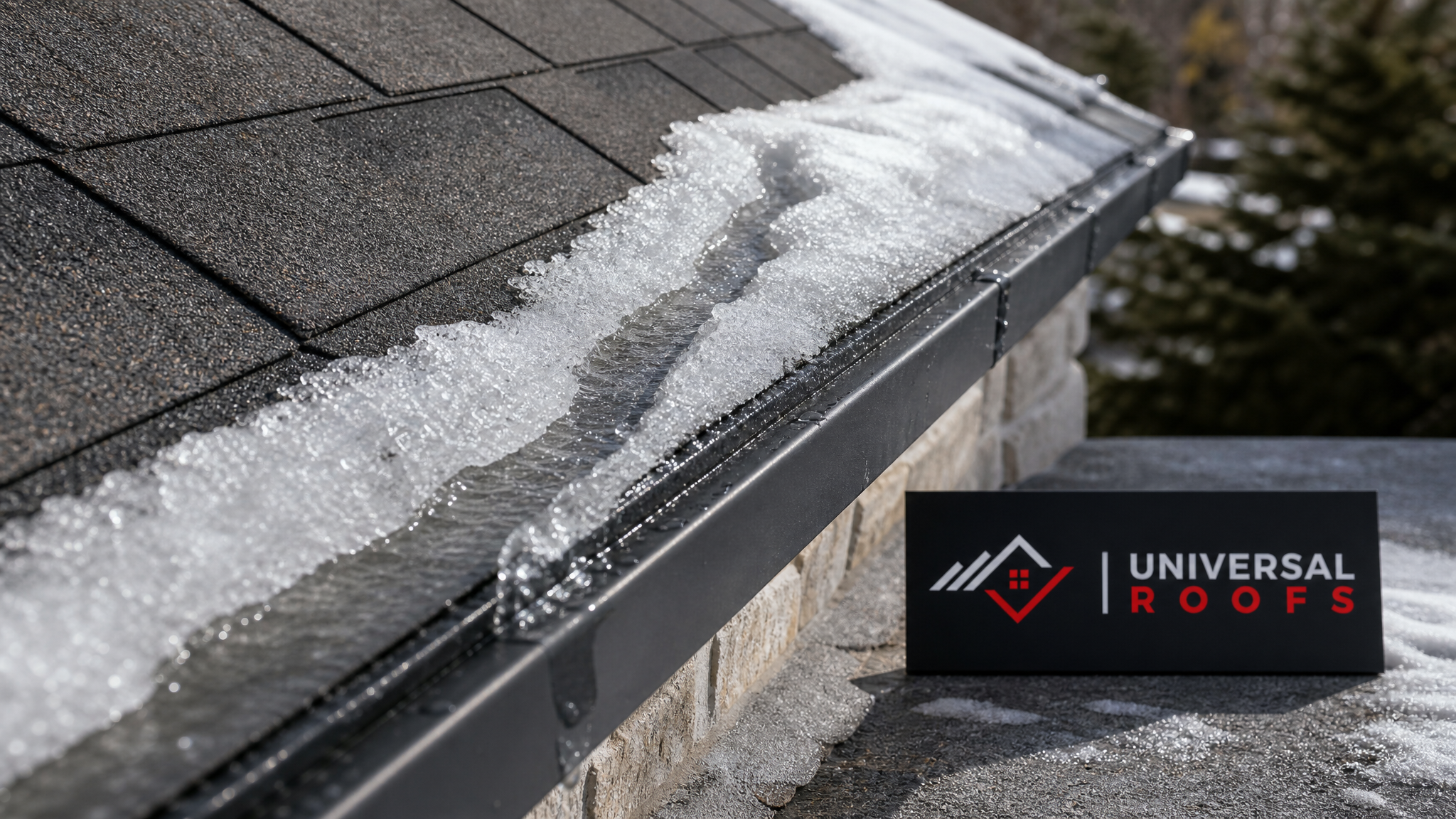
One of the most common and expensive consequences of delayed snow removal is ice damming. When snow sits on a roof and warm air escaping from the attic melts the underside of the snowpack, meltwater trickles down the roof slope until it reaches the colder overhang past the exterior wall line. There, it refreezes into a ridge of ice — the ice dam — which then traps additional meltwater behind it. That trapped water has nowhere to go but backward, under the shingles, and eventually into the attic insulation, ceiling drywall, and walls.
Timely roof snow removal interrupts this cycle before it starts. Without a deep, insulating layer of snow sitting on the roof deck for weeks, there is far less meltwater generated in the first place, and what does melt drains away before it can refreeze at the eaves. This is one of the most immediate and tangible benefits of timely roof snow removal for GTA homeowners, since our climate produces frequent thaw-refreeze cycles rather than one long deep freeze.
Proper attic insulation and ventilation play a supporting role here as well. A poorly insulated attic loses heat rapidly into the roof deck, accelerating snowmelt and ice dam formation even when the roof itself is in good condition. If you notice icicles forming along your eaves every winter, or you have had ice dam damage in the past, it is worth having your attic’s insulation and ventilation assessed alongside your snow removal plan.
Protecting Skylights and Roof Penetrations
Skylights, vents, and other roof penetrations are especially sensitive to sustained snow load. The seals and flashing around a skylight are engineered to shed water quickly, not to sit beneath standing snow and meltwater for extended periods. When snow accumulates around a skylight curb, meltwater can pool against the flashing and slowly work its way through seams that would otherwise stay watertight.
If you already have older or aging skylights installed, prolonged snow exposure accelerates wear on the seals and can lead to interior leaks around the frame. Homeowners who have delayed skylight replacement on an ageing unit are at particular risk, since older flashing and glazing seals are less able to tolerate repeated freeze-thaw pressure from snow sitting against them. Clearing snow away from skylight curbs and other penetrations during routine roof snow removal significantly reduces this risk.
What a Professional Roof Snow Removal Process Looks Like
Removing snow from a roof safely is not a simple matter of shovelling it off the way you would a driveway. A professional roof snow removal process typically follows these steps:
- Assessment — A technician evaluates snow depth, ice dam presence, roof pitch, and any visible signs of stress before starting work.
- Safety setup — Fall protection anchors, harnesses, and ladder stabilization are set up according to Ontario workplace safety requirements.
- Snow raking from the ground — For accessible eave areas, a long-handled roof rake removes snow from the ground without anyone needing to get on the roof.
- Manual removal from the roof surface — For steeper accumulation or flat roofs, technicians use plastic shovels and soft-edged tools to avoid damaging shingles or membranes.
- Ice dam mitigation — Calcium chloride or steam equipment may be used to safely melt channels through existing ice dams so trapped water can drain.
- Final inspection — The roof surface, flashing, and drainage points are checked to confirm no damage occurred during removal and that water can now flow freely.
Homeowners sometimes attempt to remove snow themselves using metal shovels or by climbing onto the roof directly. Both practices are common causes of new roof damage — metal shovels gouge shingles and membranes, while foot traffic on a snow-covered roof can crack shingles that have become brittle in cold temperatures. Ladders on snow-covered or icy ground are also a leading cause of fall injuries during DIY snow removal attempts.
| Removal Method | Best For | Risk Level | Professional Tools Used |
|---|---|---|---|
| Ground-level roof raking | Accessible eaves on single-storey homes | Low | Telescoping roof rake with rolling edge |
| Manual roof-surface removal | Steep accumulation, flat/low-slope roofs | Moderate (professional only) | Plastic shovels, roof-safe scrapers, harnesses |
| Ice dam steaming | Established ice dams at eaves | Low with proper equipment | Low-pressure steam generators |
| Calcium chloride channeling | Minor ice dams, drainage assistance | Low | Ice melt socks/channels |
| DIY metal shovel removal (not recommended) | Not recommended for any roof | High — damage and fall risk | None; commonly causes shingle/membrane damage |
Cost Comparison: Timely Removal vs. Delayed Damage
The financial case for timely roof snow removal is one of the clearest arguments homeowners respond to. A scheduled snow removal visit is a modest, predictable expense. The repairs that follow a neglected snow load — a collapsed section of roof deck, water-damaged insulation, ruined drywall and flooring, or mould remediation — are dramatically more expensive and often are not fully covered by home insurance if the damage is attributed to lack of maintenance.
| Scenario | Typical Cost Range (CAD) | Timeline | Insurance Considerations |
|---|---|---|---|
| Scheduled professional snow removal (per visit) | Modest, varies by roof size | Same day | Not applicable — preventive maintenance |
| Ice dam removal and minor flashing repair | Moderate | 1 day | Sometimes covered if sudden and accidental |
| Water-damaged ceiling and insulation repair | Significant | 1-2 weeks | May be denied if attributed to deferred maintenance |
| Partial roof deck replacement from structural strain | Substantial | Several weeks | Often requires engineering assessment |
| Full roof collapse (garage, flat roof, or addition) | Major, comparable to full roof replacement | Weeks to months | Coverage disputes are common; structural failure claims are heavily scrutinized |
This is why we encourage homeowners across Toronto, Peel Region, York Region, Halton Region, and Durham Region to think of snow removal as preventive maintenance rather than an optional expense. The modest cost of a removal visit is almost always smaller than even one of the smaller repair scenarios above.
How Often Should You Schedule Roof Snow Removal?
There is no single answer that fits every roof, but a few general guidelines help homeowners plan:
- After any single snowfall exceeding 30 centimetres, flat and low-slope roofs should be assessed and cleared if load is a concern.
- After repeated snowfalls without a full thaw between them, even steep-slope roofs can benefit from a clearing, particularly at valleys and behind chimneys where drifting occurs.
- Whenever icicles longer than 15-20 centimetres form along the eaves, this is an early warning sign of ice dam formation and should prompt an inspection.
- At least once mid-winter as a proactive measure, even without visible warning signs, particularly for older roofs or those with a history of leaks.
- Immediately if you notice any of the structural warning signs described earlier in this article — sagging, sticking doors, or cracking sounds.
Homeowners who set up a standing snow removal plan in the autumn — rather than waiting to react to the first major storm — consistently fare better through the winter. A pre-arranged plan means a contractor can respond within a day or two of a major snowfall rather than homeowners scrambling to find availability during the busiest time of the roofing season.
Long-Term Benefits Beyond the Current Winter
While the immediate benefits of timely roof snow removal are about preventing this winter’s damage, the long-term benefits compound year after year. A roofing system that is never allowed to sit under sustained excessive snow load ages more predictably and reaches its full expected service life. Shingles retain their granule coating better when they are not repeatedly stressed by heavy, wet snow. Flashing and sealants last longer when they are not subjected to years of trapped moisture at the eaves and penetrations.
There is also a financial planning benefit. Homeowners who maintain their roof properly, including consistent snow management, typically face fewer surprise repair bills and can plan roof replacement on a predictable timeline rather than being forced into an emergency replacement after storm damage. If you are unsure how your current roof is holding up after several winters, it is worth reading through our FAQ page or reviewing feedback from other homeowners on our reviews page before your next major snowfall arrives.
Choosing a Professional for Roof Snow Removal
Not every roofing company offers dedicated snow removal services, and not every snow removal company understands roofing systems well enough to clear snow without causing damage. When selecting a contractor for roof snow removal in the GTA, look for a few key qualifications:
- Demonstrated experience with your specific roof type (flat, low-slope, or steep-slope)
- Proper fall protection equipment and adherence to Ontario safety regulations
- Use of plastic or roof-safe tools rather than metal shovels
- Willingness to inspect for underlying damage during the visit, not just clear snow
- Local knowledge of GTA freeze-thaw patterns and typical problem areas
- Clear communication about pricing and response times before a storm hits
Learn more about Universal Roofs and how our GTA-based crews have approached winter roof maintenance since 2005. We combine snow removal with a broader inspection so that any developing issues — loose flashing, worn sealant, or early ice dam formation — are caught and addressed before they become expensive repairs.
| Contractor Quality Indicator | Why It Matters | Questions to Ask |
|---|---|---|
| Roofing-specific experience | Generic snow clearing crews may not understand roofing materials | “Do you specialize in roof snow removal specifically?” |
| Fall protection compliance | Protects workers and reduces liability exposure for homeowners | “What safety equipment do your technicians use?” |
| Tool selection | Metal tools and improper technique cause shingle/membrane damage | “What tools do you use on shingle vs. flat roofs?” |
| Post-removal inspection | Identifies hidden damage before it worsens | “Do you inspect the roof during the same visit?” |
| Response time guarantees | Ice dams and load issues worsen the longer they are left | “How quickly can you respond after a major snowfall?” |
Building a Seasonal Roof Maintenance Plan
The best time to plan for winter snow removal is actually during the warmer months. A summer roof inspection can identify weak flashing, ageing shingles, or ventilation issues that would make a roof more vulnerable to snow and ice damage later in the year. Addressing these issues now — while contractors have full availability and weather is not a factor — means your roof enters the winter season in the best possible condition.
A sound seasonal plan typically includes a late-summer or early-autumn inspection, confirmation that gutters and downspouts are clear and functioning, verification that attic insulation and ventilation meet current standards, and a standing agreement with a roofing contractor for snow removal response once winter arrives. Homeowners who follow this kind of plan consistently report fewer winter emergencies and lower cumulative repair costs over the life of their roof.
What are the benefits of timely roof snow removal?
How much snow on a roof is considered dangerous?
Can I remove roof snow myself instead of hiring a professional?
How does timely roof snow removal prevent ice dams?
How often should roof snow removal be scheduled during a GTA winter?
Does delaying roof snow removal affect insurance claims?
Need Help With What Are the Benefits?
Understanding the benefits of timely roof snow removal is only useful if you actually have a plan in place before the next storm. Universal Roofs has helped GTA homeowners protect their roofs through nearly two decades of Ontario winters, and our team can set up a snow management plan tailored to your specific roof type before the season starts.
Call us today at (416) 732-2421 or request a free inspection to get started.
Universal Roofs proudly serves Toronto, Mississauga, Brampton, Vaughan, Markham, Oakville and the GTA since 2005.