
If you own or manage a commercial property in Toronto, it is easy to treat the roof as an afterthought until water starts dripping onto inventory or office equipment. Yet roof maintenance is important for commercial properties in ways that go far beyond avoiding an obvious leak. A commercial roof is one of the largest single assets in a building’s envelope, and neglecting it quietly erodes energy efficiency, tenant safety, insurance standing, and the long-term value of the property itself.
At Universal Roofs, we have been maintaining, repairing, and replacing commercial roofs across the Greater Toronto Area since 2005. In that time we have seen the same pattern play out again and again: property managers who schedule regular inspections spend a fraction of what reactive owners spend on emergency repairs, premature replacements, and tenant disputes. This guide explains exactly why commercial roof maintenance matters, what a proper maintenance programme includes, how much it costs compared to reactive repairs, and how to build a maintenance schedule that fits Toronto’s climate.
Whether you manage a single retail plaza or a portfolio of industrial buildings across the GTA, the fundamentals are the same. A roof that is inspected and serviced on a schedule will consistently outlast, outperform, and out-save a roof that is only addressed when something goes visibly wrong.
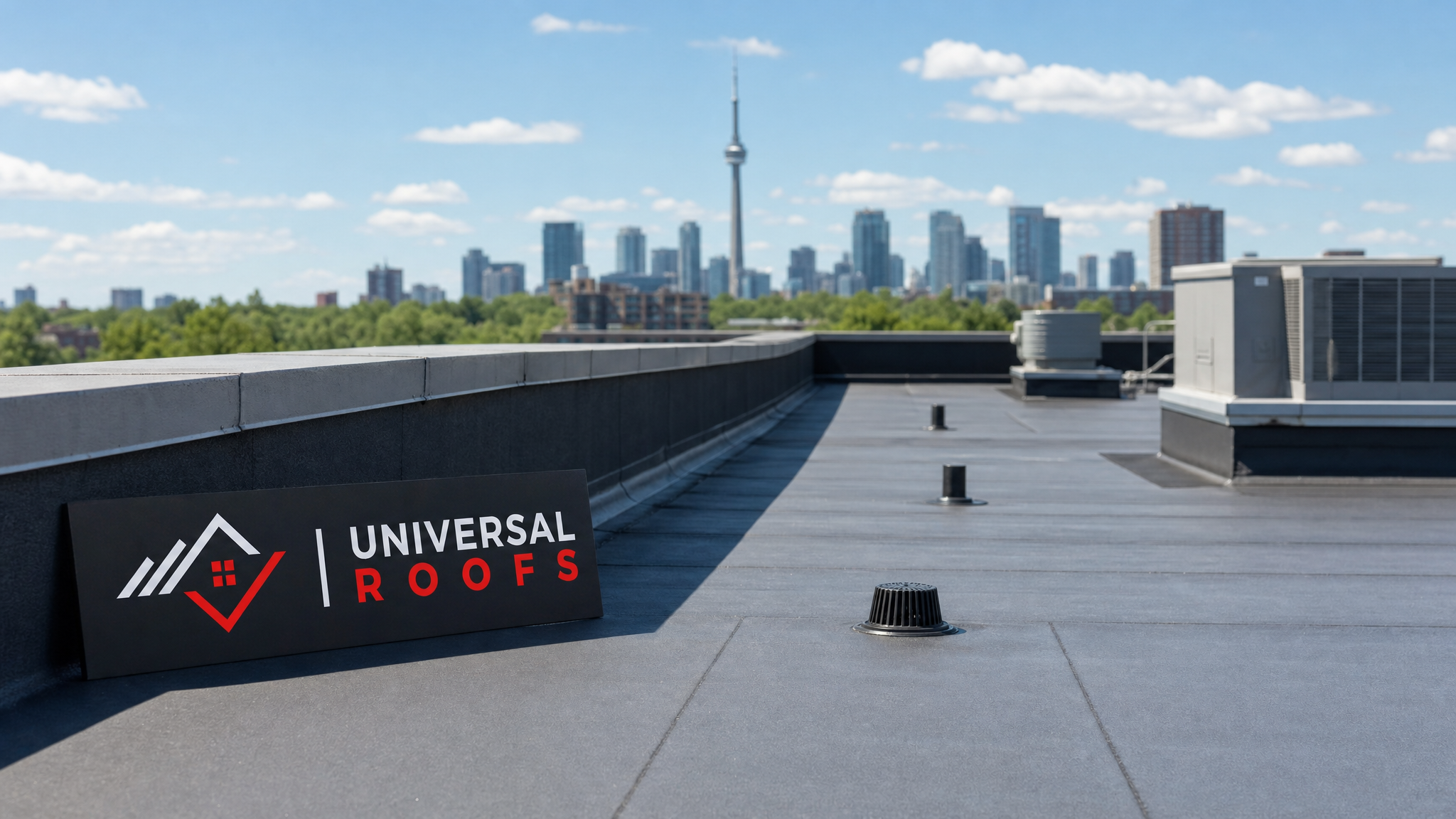
Why Roof Maintenance Is Important for Commercial Properties in the First Place
Commercial roofs are larger, flatter, and more heavily loaded with equipment than residential roofs, which means they fail differently and often more expensively. A single rooftop unit, satellite dish, or awkwardly flashed vent penetration can become the source of a slow leak that goes undetected for months inside a warehouse, office, or retail space. Because commercial roofs are typically low-slope or flat, water does not run off quickly the way it does on a sloped residential roof — instead it pools, seeps, and finds the weakest seam.
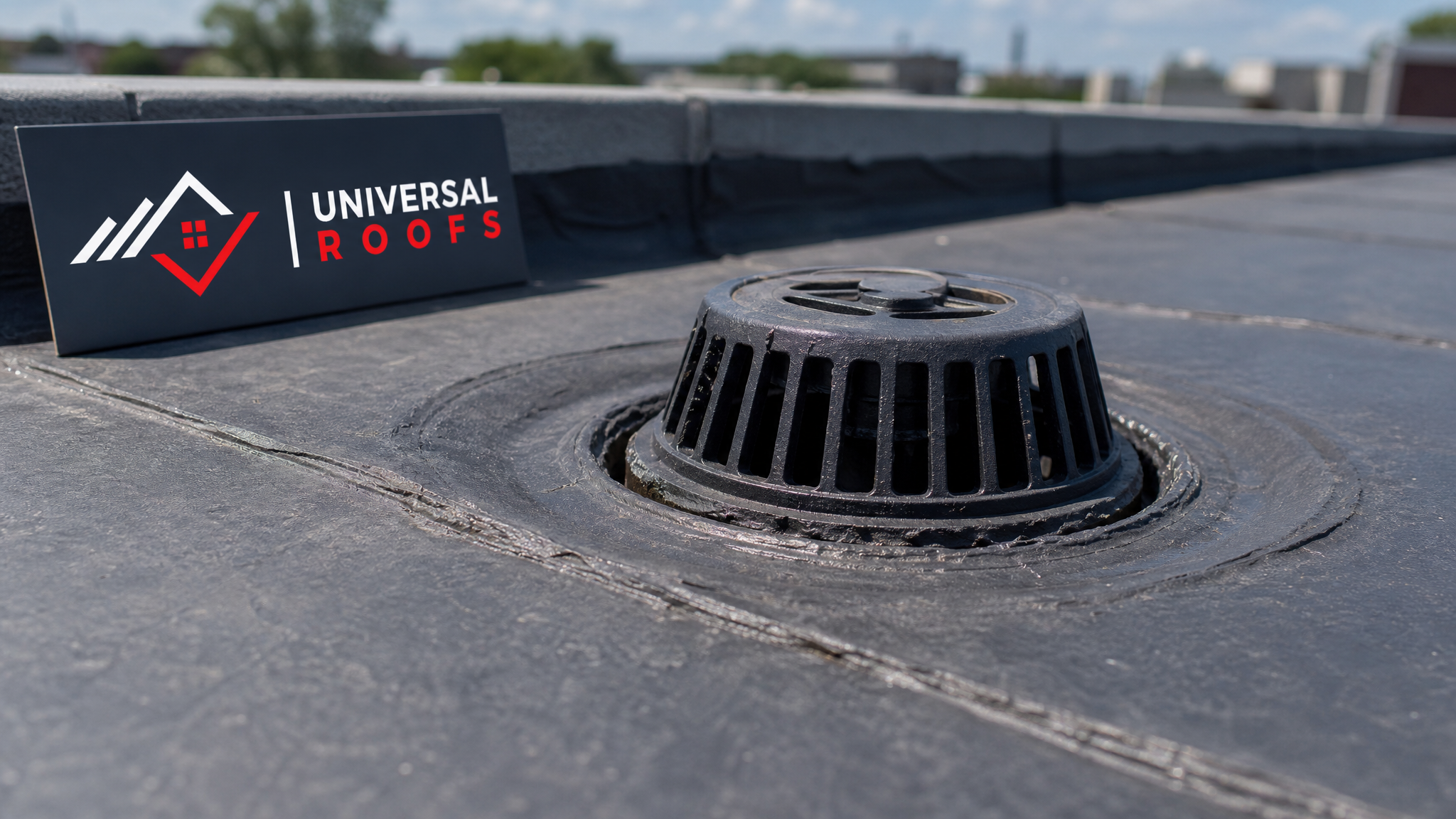
This is precisely why roof maintenance is important for commercial properties: it catches these weak points before they become active leaks. A maintenance visit identifies membrane blistering, cracked flashing, clogged drains, and deteriorating sealant while they are still cosmetic problems rather than structural ones. The difference in cost between a $400 sealant repair caught during an inspection and a $40,000 emergency membrane replacement after a ceiling collapse is not an exaggeration — it is the everyday reality of commercial roof management in Toronto.
Beyond the roof itself, maintenance protects everything underneath it: inventory, server rooms, retail merchandise, manufacturing equipment, and the people who work in the building every day. A well-maintained roof is also a quieter, more predictable line item in an annual operating budget, which matters enormously to property managers and asset owners who need to forecast capital expenditures accurately.
The Financial Case: Maintenance Cost vs. Reactive Repair Cost
Every property manager eventually asks the same question: is it actually cheaper to maintain a roof proactively, or to simply fix things as they break? The numbers consistently favour proactive maintenance, and the gap widens the longer a roof goes unchecked.
| Approach | Typical Annual Cost (Mid-Size Commercial Roof) | Average Roof Lifespan Achieved | Risk of Emergency Repair |
|---|---|---|---|
| Scheduled maintenance (2x/year) | $800 – $2,200 | 20–30 years | Low |
| Reactive repairs only | $3,500 – $9,000+ (variable spikes) | 12–18 years | High |
| No maintenance, no repairs | $0 until failure, then $25,000+ | 8–14 years | Very high |
| Full maintenance program with warranty | $1,200 – $2,800 | 25–35 years | Very low |
| Post-storm inspection only | $300 – $600 per visit | Varies widely | Moderate |
Scheduled maintenance programs cost more upfront on paper, but they consistently extend the usable life of a commercial roof by 8 to 15 years compared to a reactive-only approach. That difference alone can delay a full roof replacement by over a decade, which is a substantial capital deferral for any building owner. If a full replacement is inevitable due to age or damage, our team can walk you through the process and timeline for a properly documented, code-compliant project.
What a Proper Commercial Roof Maintenance Visit Actually Includes
Not all “roof checks” are created equal. A thorough commercial maintenance visit is systematic, documented, and covers every component of the roof assembly, not just a quick visual scan from the edge of the parapet.
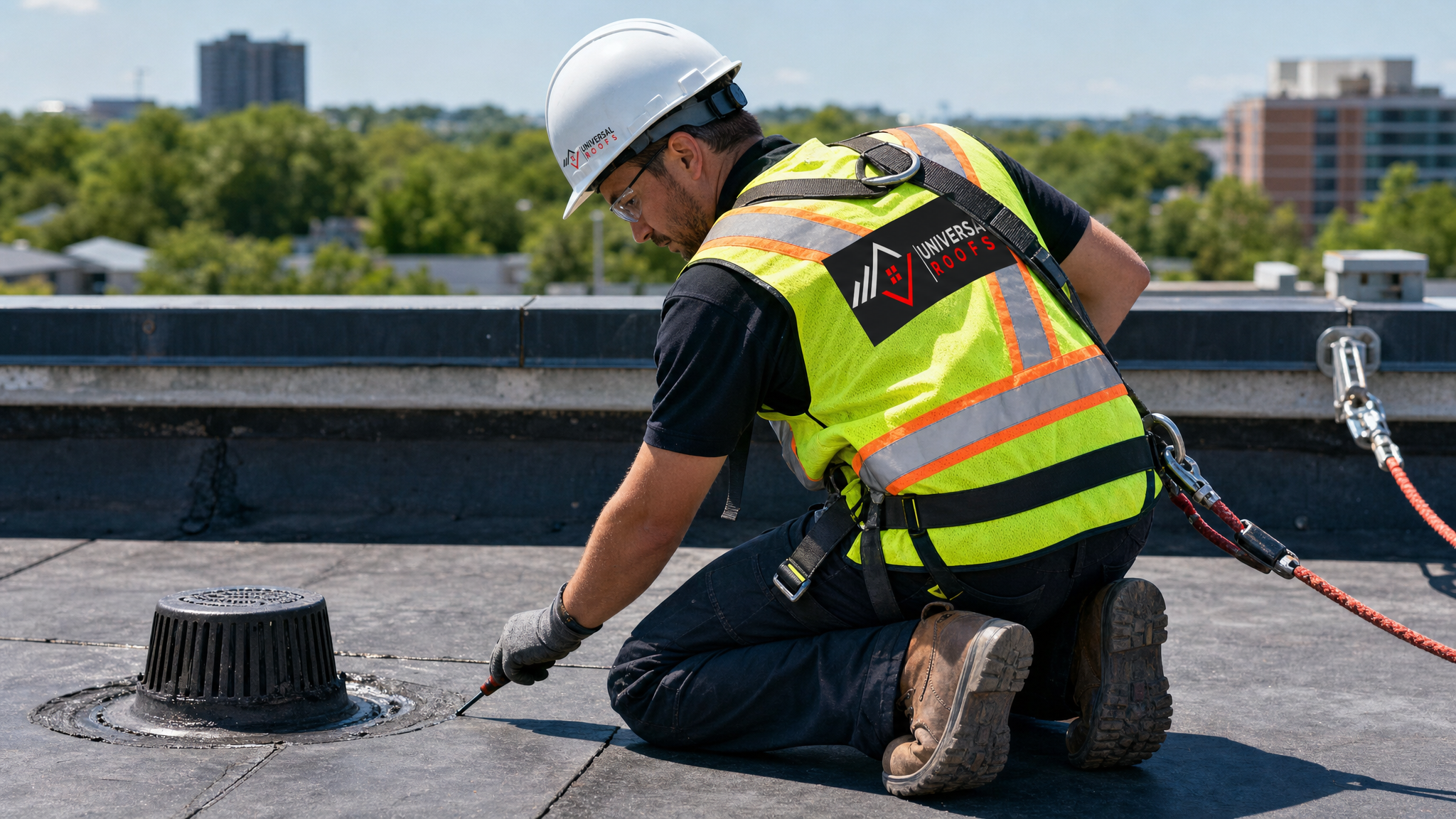
A proper visit typically includes: clearing debris from drains, scuppers, and gutters; checking membrane seams and laps for separation; inspecting flashing around every penetration including HVAC curbs, vent stacks, and skylights; examining parapet walls and coping caps for water intrusion points; testing for ponding water after rain; checking sealant and caulking around rooftop equipment; and photographing any areas of concern for the property’s maintenance file. On buildings with flat or low-slope assemblies, our team pays particular attention to the flat roofing membrane’s condition, since these systems rely entirely on an intact surface to shed water rather than gravity and slope.
Interior inspection matters just as much as the exterior walkthrough. Staining on ceiling tiles, musty odours, or elevated humidity readings in the attic or roof deck space often reveal problems long before they are visible from the roof surface itself. Any competent commercial maintenance provider should check both sides of the assembly on every visit.
How Toronto’s Climate Makes Maintenance Non-Negotiable
The GTA’s climate is uniquely hard on commercial roofs. Every winter, freeze-thaw cycles force water that has infiltrated even a small crack to expand and contract repeatedly, widening membrane splits and flashing gaps far faster than in milder climates. Heavy spring rain then finds those enlarged openings, and summer heat accelerates membrane aging through UV exposure and thermal cycling between hot days and cool nights.
Ice damming is less of a factor on flat commercial roofs than on sloped residential ones, but snow load and ice accumulation around drains and scuppers is a serious concern across Toronto, Mississauga, Brampton, Vaughan, Markham, and Oakville. A drain that was 80 percent clogged with leaves in October becomes a fully blocked ice plug by February, and a blocked drain during a spring melt is one of the most common causes of commercial roof leaks and even structural ponding-related deflection.
This seasonal pattern is exactly why we recommend at minimum a spring inspection (to catch winter damage before summer heat makes it worse) and a fall inspection (to clear drains and prepare the roof for snow load) for every commercial property we service across the Toronto, Peel Region, York Region, Halton Region, and Durham Region service areas.
Recommended Maintenance Schedule by Season
Consistency matters more than frequency. A property that gets two well-executed inspections a year will outperform one that gets four rushed, superficial checks. Here is the schedule we recommend for most commercial roof types in the GTA.
| Season | Primary Focus | Typical Duration | Priority Level |
|---|---|---|---|
| Spring (April–May) | Winter damage assessment, drain clearing, membrane check | 2–4 hours | High |
| Summer (June–August) | UV/heat damage check, sealant condition, rooftop equipment | 1–3 hours | Medium |
| Fall (September–October) | Debris clearing, drain and scupper prep for winter | 2–4 hours | High |
| Post-storm (as needed) | Wind, hail, or heavy rain damage assessment | 1–2 hours | Urgent |
| Annual (any season) | Full roof audit with photo documentation and report | 3–6 hours | High |
Buildings with older roofs, flat membrane systems, or a history of leaks may benefit from quarterly checks rather than the standard biannual schedule. Every commercial property is different, which is why we tailor maintenance frequency to roof age, material, and past performance rather than applying a one-size-fits-all calendar.
Insurance, Liability, and Warranty Reasons Maintenance Matters
Beyond the physical condition of the roof, there are three business-critical reasons commercial property owners cannot afford to skip maintenance: insurance, liability, and warranty compliance.
Most commercial property insurance policies now include maintenance clauses, and insurers increasingly request documented inspection records when a claim is filed. An owner who cannot produce evidence of regular roof maintenance may find a leak-related claim reduced, delayed, or denied outright on the grounds of “lack of reasonable upkeep.” Liability exposure compounds this risk: a tenant slipping on water pooled from a roof leak, or stock damaged by an undetected drip, can expose an owner to a claim that a documented maintenance program would have prevented or defended against.
Manufacturer warranties on commercial membrane systems are just as strict. Nearly every major membrane manufacturer requires proof of regular maintenance to keep a 15, 20, or 25-year warranty valid. Skipping inspections can void that warranty entirely, meaning an owner pays full price for a roof repair or replacement that should have been partially or fully covered.
Common Problems Maintenance Catches Before They Become Emergencies
The value of a maintenance program is best illustrated by the specific problems it catches early. The following issues are the ones our technicians flag most often during routine commercial visits, along with what happens if they go unaddressed.
| Issue Found During Inspection | Cost to Fix Early | Cost If Left Unaddressed | Time to Failure If Ignored |
|---|---|---|---|
| Clogged roof drain | $150 – $350 | $5,000+ (ponding, deck damage) | 1–2 seasons |
| Cracked flashing seal | $200 – $600 | $8,000+ (interior leak, mould) | 1 winter cycle |
| Membrane blister or split | $400 – $1,200 | $15,000+ (deck saturation, replacement) | 1–3 seasons |
| Deteriorated sealant at penetrations | $150 – $500 | $6,000+ (equipment/interior damage) | 1–2 seasons |
| Ponding water beyond 48 hours | $500 – $1,800 (drainage correction) | $20,000+ (structural deflection) | 2–4 seasons |
Every one of these issues is inexpensive to correct when caught early and dramatically more expensive once it progresses to interior damage. This is the single clearest illustration of why roof maintenance is important for commercial properties: the cost of prevention is a small fraction of the cost of repair.
DIY Checks vs. Professional Commercial Inspections
Property managers can and should perform basic visual checks between professional visits, but there is a meaningful gap between what an untrained eye can spot and what a trained roofing technician identifies. Walking the roof after a storm to check for obvious debris or standing water is reasonable. Diagnosing membrane fatigue, subsurface moisture, or flashing failure requires training, moisture meters, and often thermal imaging that most in-house maintenance staff simply do not have access to.
We recommend property managers handle simple housekeeping — keeping rooftop access clear, reporting any interior staining immediately, and doing a quick visual check after major storms — while leaving the technical inspection, moisture testing, and repair work to a licensed commercial roofing contractor. This division of labour keeps costs down without sacrificing the thoroughness that actually protects the building.
Building a Maintenance Program That Protects Your Investment
A commercial roof is not a one-time purchase; it is a long-term asset that needs ongoing management like any other piece of critical building infrastructure. The property owners who get the best return on their roofing investment are the ones who treat maintenance as a scheduled operating expense rather than an emergency reaction. That means setting a biannual or quarterly inspection calendar, keeping documented records with photos and dates, budgeting a modest annual amount for minor repairs identified during inspections, and choosing a contractor who understands the specific demands of Toronto’s climate.
It also means thinking about the roof holistically. A maintenance visit that only checks the membrane but ignores the skylight seals, rooftop drainage, and attic ventilation is only doing half the job. Every component of the roof assembly affects the others, and a comprehensive program treats the roof as a single connected system rather than a collection of unrelated parts.
If you want to see how other property owners in the GTA have benefited from a structured maintenance relationship, take a look at our reviews page, or browse our FAQ for answers to more specific technical questions about commercial roofing in Toronto.
Why is roof maintenance important for commercial properties specifically, compared to residential roofs?
How often should a commercial property schedule roof maintenance?
What does a commercial roof maintenance inspection actually check?
Can skipping roof maintenance void a commercial roofing warranty?
How much does commercial roof maintenance typically cost in the GTA?
What happens if commercial roof maintenance is ignored for several years?
Need Help With Why Is Roof Maintenance?
Protecting your building starts with a roof that is inspected on a schedule, not one that only gets attention after something fails. Universal Roofs has been helping commercial property owners across the GTA avoid costly emergency repairs through structured maintenance programs since 2005.
Call us today at (416) 732-2421 or request a free inspection to get started.
Universal Roofs proudly serves Toronto, Mississauga, Brampton, Vaughan, Markham, Oakville and the GTA since 2005.