
A well-maintained skylight can flood a room with natural light for 20 years or more, but neglect it for a few seasons and you will be looking at fogged glass, stained drywall, and a repair bill that could have been avoided. Skylight maintenance is one of those homeowner responsibilities that gets overlooked until something drips onto the floor below, and by then the fix is usually bigger and more expensive than it needed to be. In the Greater Toronto Area, where winters bring deep freeze-thaw cycles and summers bring sudden thunderstorms, skylights work harder than almost any other feature of the roof.
This guide walks through the best skylight maintenance tips for GTA homeowners, covering what to check each season, how to clean glass and frames safely, how to spot early warning signs of seal or flashing failure, and when a repair is enough versus when full skylight replacement is the smarter long-term investment. Whether you have a single fixed skylight over a stairwell or a bank of units lighting up a great room, the same core principles apply.
We have been maintaining, repairing, and replacing skylights across the region since 2005, and the patterns are consistent: the homeowners who do a little bit of upkeep twice a year almost never call us for an emergency leak. The ones who ignore their skylights for five or six years usually end up needing both a full roof repair and a skylight replacement at the same time, which costs far more than either job on its own.
Why Skylight Maintenance Matters More in the GTA
Toronto and the surrounding regions see some of the widest temperature swings in the country over a single year, from humid, 30-degree summer afternoons to weeks of sub-zero cold snaps. That range puts constant stress on the seals, flashing, and glazing of every skylight in the region. Materials expand and contract, ice forms and melts along the roofline, and wind-driven rain tests every joint in the assembly multiple times a season.
A skylight is fundamentally a hole cut into your roof with glass and a frame installed to keep water out. That means the quality of the original installation, the condition of the flashing, and the ongoing care the unit receives all matter more here than they would in a milder climate. Neglected skylight maintenance in this region tends to show up as one of three problems: condensation building up between panes, water staining on the ceiling below, or granule and debris buildup that traps moisture against the frame.
The good news is that most of these issues are preventable with a simple maintenance routine, and most early warning signs are easy to catch from the ground or with a quick visual check from inside the home. You do not need to get on the roof every month to keep a skylight healthy.
Seasonal Skylight Maintenance Checklist
Skylight care in the GTA breaks down neatly into four seasonal routines. Each season presents a different risk, and each calls for a slightly different focus.
| Season | Primary Risk | Recommended Maintenance Task | Frequency |
|---|---|---|---|
| Spring | Winter debris, loosened flashing, thawed ice damage | Full inspection of flashing, clean gutters and wells, check interior ceiling for stains | Once, after last frost |
| Summer | UV degradation, dust and pollen buildup, heat expansion | Clean glass inside and out, check seals, inspect shading or blinds | Once mid-season |
| Fall | Leaf and debris accumulation, early frost | Clear wells and surrounding roof of leaves, verify weep holes are clear | Once before first snowfall |
| Winter | Ice damming, condensation, snow load | Monitor for interior condensation, check for icicles near the unit, avoid removing snow yourself | Ongoing visual checks |
Spring is the most important of the four because it is when you assess whatever damage the winter caused. Ice damming near a skylight is one of the most common causes of leaks in this region, and a spring inspection catches problems before the next rainy season arrives. If your home has a bank of skylights or a larger flat roofing section with a skylight built in, this is also the time to check that the surrounding membrane has not lifted or cracked near the curb.
Cleaning Skylight Glass the Right Way
Cleaning is the most frequent maintenance task and also the one most homeowners get slightly wrong. Skylight glass is usually tempered or laminated and coated with a low-emissivity finish, so the wrong cleaning product can dull the coating or leave streaks that are hard to remove.
For the interior pane, a simple mixture of warm water and a small amount of dish soap applied with a soft microfibre cloth is enough for most routine cleaning. Avoid ammonia-based glass cleaners on coated glass, as they can break down the coating over time. Dry the glass with a second clean cloth to avoid streaking, and check the frame and seal for any softness, cracking, or discolouration while you are up there.
Exterior cleaning is where most people run into trouble, because it usually means working at height on a sloped or flat roof. This is one of the tasks where hiring a professional makes sense rather than climbing a ladder yourself, particularly on steep-slope roofs or anything above a single storey. A soft-bristle brush, a hose with moderate pressure, and a mild non-abrasive cleaner will remove most dust, pollen, and grime without damaging the glazing or scratching a protective coating.
| Cleaning Method | Best For | Avoid Using On | Recommended Frequency |
|---|---|---|---|
| Warm water + mild dish soap | Interior and exterior glass, all coatings | N/A — safe for most glazing | 2-3 times per year |
| Soft microfibre cloth | Final drying, streak-free finish | Rough or abrasive frames | Every cleaning session |
| Ammonia-based glass cleaner | Uncoated, older single-pane units only | Low-E coated or tinted glass | Not recommended for modern units |
| Pressure washer | Never recommended for skylight glass or frames | All skylight glass and seals | Do not use |
| Soft-bristle brush + hose | Exterior debris removal, roof-level cleaning | Frozen or icy surfaces | Spring and fall |
Never use a pressure washer near a skylight. The force of the water can drive moisture past the seals and directly into the frame or the surrounding roof structure, creating the exact leak you were trying to prevent by cleaning in the first place.
Checking Seals, Flashing, and Weatherproofing
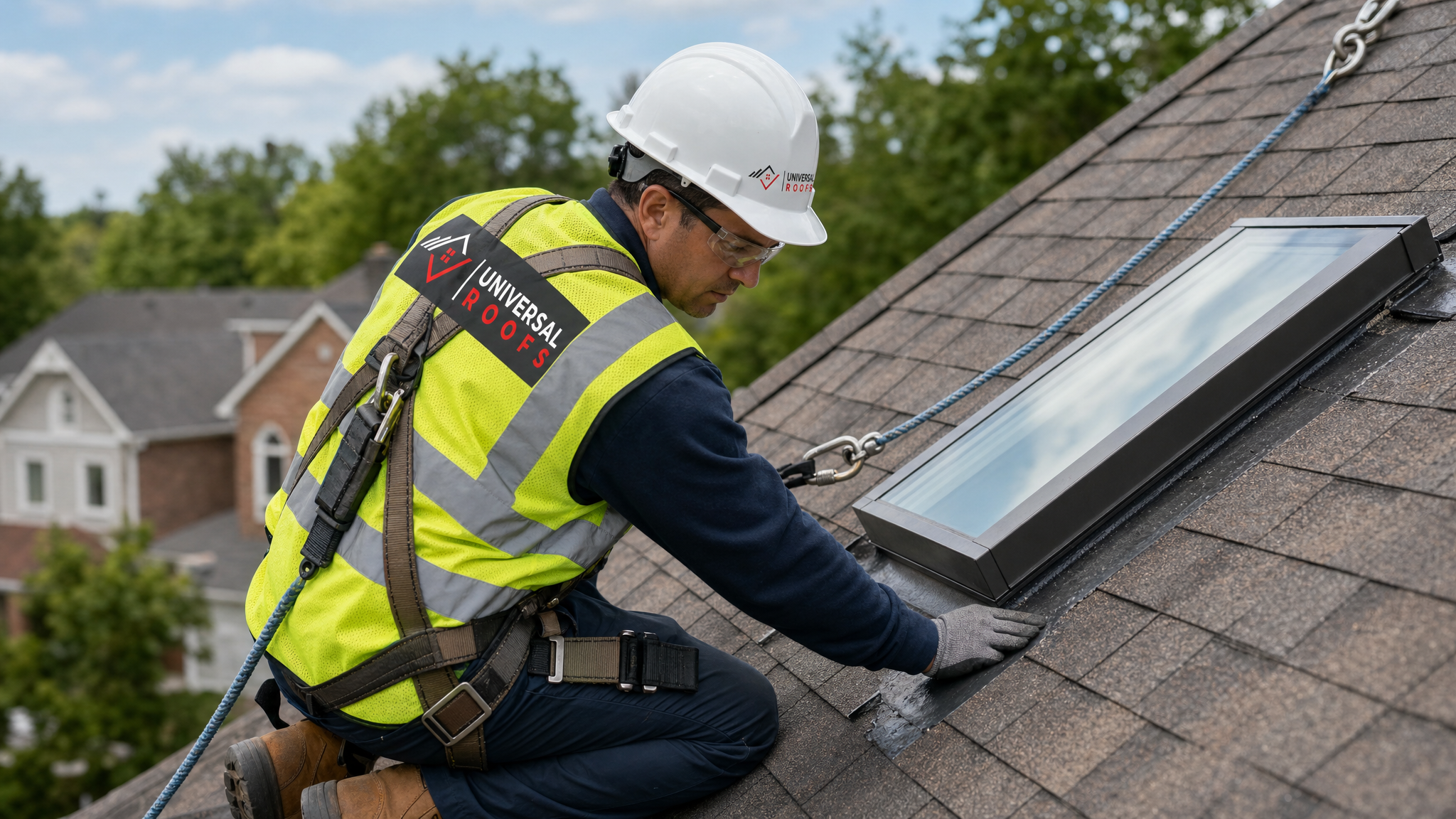
The glass gets all the attention, but the flashing and seals around a skylight do the actual work of keeping water out. Flashing is the metal or membrane barrier installed around the base of the skylight curb where it meets the roofing material, and it is the single most common point of failure on any skylight installation.
From the ground or an attic space, look for these warning signs at least twice a year:
- Water stains, streaking, or a musty smell on the ceiling or drywall directly below the skylight
- Visible daylight gaps between the skylight frame and the roofing material
- Cracked, curling, or missing caulking around the exterior frame
- Rust spots or corrosion on metal flashing
- Condensation forming between double-pane glass, which usually means a failed seal
- Soft or discoloured drywall near the skylight opening
Condensation between the panes is a particularly important one to catch early. It means the gas fill or vacuum seal between the panes has failed, and once that happens the insulating performance of the unit drops sharply. Fogging between panes cannot be cleaned away because it is trapped inside a sealed unit, and it is a strong signal that the glass package needs to be replaced even if the frame itself is still sound.
Managing Condensation and Attic Ventilation
A surprising number of skylight “leaks” are not leaks at all — they are condensation forming on the inside of the glass because warm, moist household air is meeting a cold surface. This is especially common in winter in bathrooms, kitchens, and any room with a skylight and poor ventilation.
Skylight condensation is closely tied to overall attic and roof ventilation. If your attic is not properly ventilated, warm air gets trapped near the underside of the roof deck and skylight shaft, which increases the temperature differential that causes condensation, and in worse cases contributes to ice damming right at the skylight curb. Improving attic insulation and airflow often resolves what looks like a skylight problem without touching the unit itself.
If you notice condensation only during cold snaps and it clears up once the house warms slightly, that is typically a humidity and ventilation issue rather than a seal failure. If condensation appears between the panes of glass themselves rather than on the interior surface, that is a sealed-unit failure and a maintenance routine will not fix it — the glass package needs replacement.
Skylight Blinds, Shades, and Sun Damage
UV exposure over many summers can degrade seals, gaskets, and even interior trim faster than most homeowners expect. If your skylight has manual or motorized shades, using them during the hottest parts of summer days reduces thermal stress on the unit and protects flooring and furniture from fading.
For homes without shading, a simple habit of checking the interior frame for any brittleness or cracking each summer goes a long way. Manufacturers rate most residential skylight seals for 10 to 20 years of service, but consistent, unmitigated sun exposure at the high end of the GTA’s summer heat can shorten that lifespan if the unit is never checked.
Repair Versus Replacement: Making the Right Call
Not every issue calls for a full replacement, but some do. Understanding the difference saves money and prevents a small problem from becoming a bigger one.
| Symptom | Likely Cause | Recommended Action | Typical Timeline |
|---|---|---|---|
| Minor drip during heavy rain only | Deteriorated caulking or minor flashing gap | Reseal and inspect flashing | Same day to 1 day |
| Fogging between glass panes | Failed seal on insulated glass unit | Glass unit replacement | 1-2 days |
| Persistent leak in multiple weather conditions | Flashing failure or curb rot | Full skylight replacement | 1-2 days |
| Cracked or shattered outer pane | Impact damage or thermal stress | Emergency glass or unit replacement | Same day where possible |
| Unit is 20+ years old with recurring issues | End of expected service life | Full skylight replacement | 1-3 days |
As a general rule, if a skylight is under 10 years old and the problem is isolated to caulking, flashing, or a single failed seal, a targeted repair through our roof repair service is usually the right call. If the unit is older, has recurring leaks across different types of weather, or the frame itself shows rot or corrosion, replacement tends to be more cost-effective over a five-year horizon than repeated patch repairs. Our skylights team can assess the specific unit and give a straight recommendation either way.
DIY Maintenance Versus Calling a Professional
Plenty of skylight maintenance is safe and reasonable for a homeowner to do without help — interior glass cleaning, checking for ceiling stains, and monitoring for condensation are all things you can do from inside the home with no risk. Anything that requires getting onto the roof itself, especially a steep-slope roof, is a different story.
Roof work carries real fall risk, and diagnosing flashing issues correctly takes experience most homeowners simply do not have. A technician who inspects skylights regularly can often spot a developing problem in minutes that would take a homeowner much longer to notice, if they noticed it at all before it became a leak. It is also worth noting that improper DIY sealant application is one of the most common causes of skylights failing earlier than they should, since the wrong sealant type or a poor application can trap moisture rather than keep it out.
If your home is due for an inspection, or if you have noticed any of the warning signs above, it is far cheaper to have a professional take a look now than to wait for a ceiling stain to appear. Our team covers Toronto, the Peel Region, York Region, Halton Region, and the Durham Region, so wherever your home is located across the GTA, a proper inspection is easy to arrange.
Building a Simple Annual Maintenance Routine
The homeowners who never have skylight problems tend to follow a version of this simple routine, without overcomplicating it:
- Clean interior glass two to three times per year with mild soap and water
- Do a visual check of the ceiling and drywall around the skylight monthly
- Book a professional flashing and seal inspection once a year, ideally in spring
- Clear leaves and debris from the skylight well each fall
- Watch for condensation patterns and address ventilation issues promptly
- Address any caulking or sealant cracks the moment they are spotted, rather than waiting
This routine takes very little time across a full year, and it is the single best way to protect what is often a meaningful investment in natural light and home value. It is also far cheaper than the alternative: an emergency call after a storm, water damage to drywall or flooring, and a rushed replacement under less-than-ideal conditions.
Common Mistakes That Shorten Skylight Lifespan
A few habits show up again and again in the skylights we are called out to repair, and most are easy to avoid once a homeowner knows to look for them.
Using harsh chemical cleaners on coated glass is one of the most frequent, since it slowly degrades the coating and increases glare and UV transmission over time. Ignoring small ceiling stains is another — a faint yellow ring on drywall is almost always the first visible sign of a slow leak, and it rarely resolves on its own. Ice and snow removal directly on or around a skylight by an untrained homeowner is a third, since it is easy to crack glass or damage flashing with a shovel or ice pick, and it is genuinely dangerous work at height in winter conditions.
Finally, skipping the annual inspection because “nothing looks wrong” is the mistake that costs the most in the long run. Flashing and seal failures develop gradually and are often invisible from inside the home until a leak actually appears. A short annual check from a professional catches these issues while they are still inexpensive to fix.
Signs It Is Time to Call for an Inspection
If you notice any of the following, it is worth booking an inspection rather than waiting for the next scheduled maintenance window:
- Any water stain, no matter how small, appearing on the ceiling near a skylight
- A musty or damp smell in the room below the skylight
- Visible fogging or moisture between the glass panes
- Daylight visible through a gap at the frame
- Cracked, missing, or curling caulking on the exterior frame
- The skylight is original to a home built more than 15-20 years ago and has never been inspected
Catching any of these early is almost always the difference between a same-day fix and a project that involves replacing drywall, insulation, and the skylight itself. If you have questions about your specific situation, our FAQ page covers many of the most common skylight and roofing questions we hear from homeowners across the region.
How often should skylight maintenance be done?
What is the biggest cause of skylight leaks in Toronto homes?
Can I clean my skylight glass with regular window cleaner?
Is condensation between skylight panes a sign I need a repair?
How long do skylights typically last with good maintenance?
Should I attempt skylight maintenance on the roof myself?
Need Help With Skylight Maintenance in the GTA?
Whether your skylight needs a routine inspection, a flashing repair, or has reached the point where full skylight replacement makes more sense, the team at Universal Roofs can assess it and give you a straightforward recommendation. Read what homeowners across the region have said about our work on our reviews page, or learn more about our team on our about page.
Call us today at (416) 732-2421 or request a free inspection to get started.
Universal Roofs proudly serves Toronto, Mississauga, Brampton, Vaughan, Markham, Oakville and the GTA since 2005.