
If your flat roof has started leaking, blistering, or bubbling, the culprit is almost always damage to the membrane — the single-ply or built-up waterproofing layer that keeps water out of your building. Understanding what causes membrane damage in flat roof repair situations is the first step toward stopping small problems before they become five-figure emergencies. Toronto’s freeze-thaw winters, intense summer UV exposure, and heavy roof traffic all take a toll on membranes in ways that sloped shingle roofs simply don’t experience.
At Universal Roofs, we’ve been diagnosing and repairing flat roof membranes across the Greater Toronto Area since 2005. In that time, we’ve traced membrane failures back to a fairly consistent list of causes — some avoidable, some just the reality of owning a flat roof in a climate like ours. This guide walks through exactly what breaks membranes down, how to spot the early warning signs, and what your realistic repair options are once damage has set in.
Whether you’re a homeowner staring at a soft spot on your garage roof or a property manager dealing with recurring leaks on a commercial building, this article will help you understand the mechanics of membrane failure so you can make an informed decision about roof repair versus full replacement.
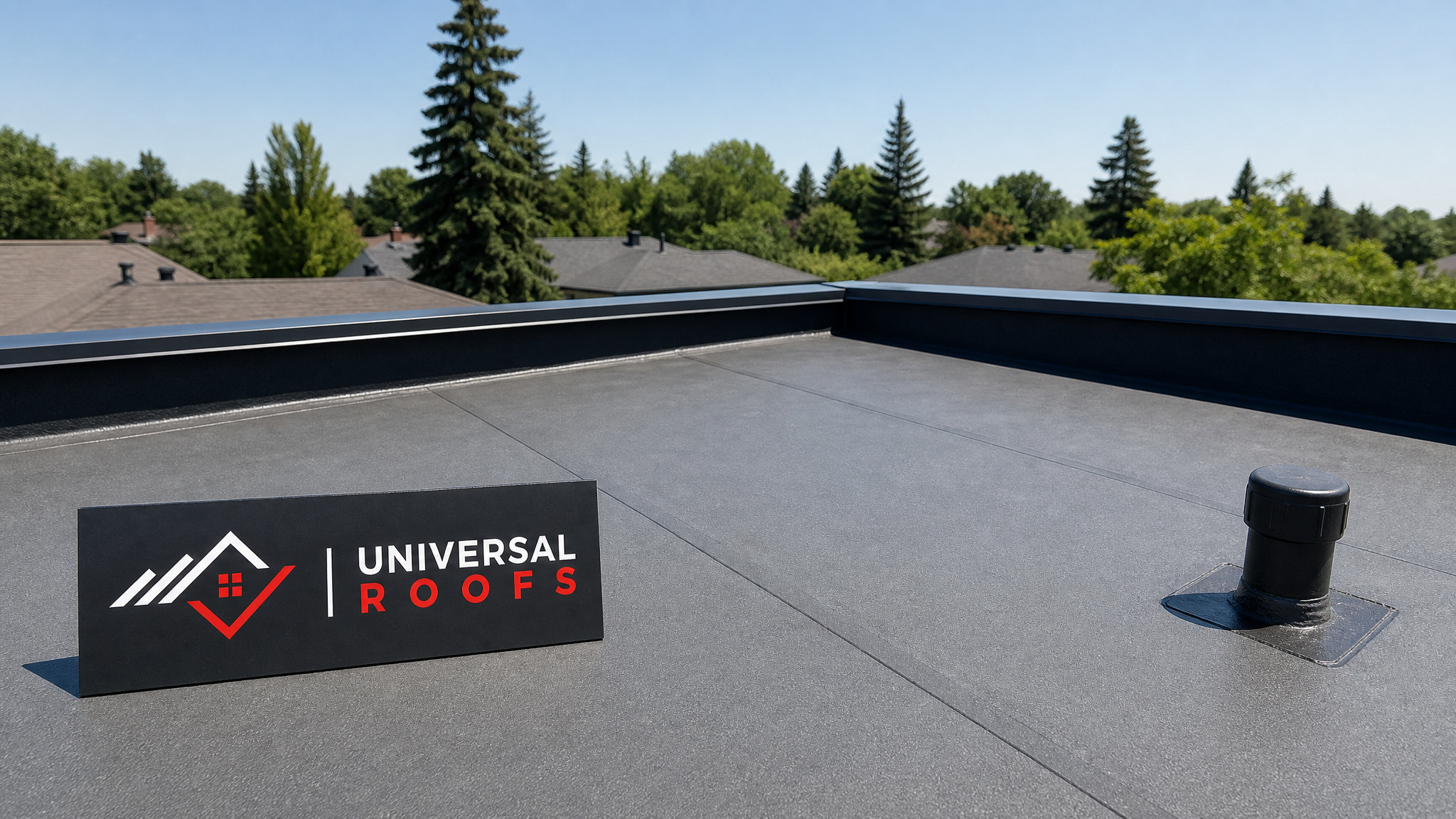
The Most Common Causes of Flat Roof Membrane Damage
Flat roof membranes — whether TPO, EPDM rubber, PVC, or modified bitumen — are engineered to last 15 to 25 years. But that lifespan assumes normal conditions. In practice, several factors accelerate wear and create the tears, blisters, and seam failures that lead to leaks. Here’s what we see most often on GTA roofs.
1. UV Radiation and Thermal Cycling
Flat roofs absorb direct sunlight all day with nowhere for heat to escape. Over years of exposure, ultraviolet radiation breaks down the plasticizers and polymer chains in the membrane, making it brittle. Add in Toronto’s dramatic seasonal swings — from -20°C in January to 35°C in July — and the membrane is constantly expanding and contracting. This thermal cycling stresses seams and fasteners, eventually causing cracking, splitting, and separation at the joints.
2. Ponding Water
Flat roofs are never perfectly flat; they’re built with a slight slope toward drains. When that slope is inadequate, or drains become clogged with leaves and debris, water pools and sits for 48 hours or longer — the technical threshold engineers use to define “ponding.” Standing water accelerates membrane degradation through prolonged saturation, algae and moss growth, and added structural weight. Over time, ponding is one of the single biggest predictors of premature membrane failure.
3. Foot Traffic and Mechanical Damage
Every time an HVAC technician, satellite installer, or maintenance worker walks across a flat roof without proper walk pads, they compress and abrade the membrane surface. Dropped tools, dragged equipment, and sharp-edged debris left behind after storms all puncture or scuff the waterproofing layer. On commercial roofs with frequent rooftop equipment servicing, this is consistently one of the top causes of localized membrane damage.
4. Poor Installation or Seam Bonding
Membrane seams are only as good as the adhesive, heat-welding, or tape bonding used to join the sheets. If a previous installer rushed the seaming process, used the wrong primer, or worked in unsuitable weather conditions, the bond can fail years earlier than expected. Seam failure is the number one cause of flat roof leaks industry-wide, which is why we always inspect seam integrity first during any roof repair assessment.
5. Ice Damming and Freeze-Thaw Cycles
Toronto winters bring repeated freeze-thaw cycles that are particularly hard on flat roofs. Meltwater that gets trapped under snow or ice can seep into small cracks, then refreeze and expand, widening the damage with each cycle. Ice damming at drains and roof edges also forces water backward under the membrane edge, undermining flashing and membrane adhesion from below.
6. Chemical Exposure and Rooftop Contaminants
Grease vapour from restaurant kitchen exhaust fans, oil residue from rooftop mechanical equipment, and even some cleaning chemicals can degrade certain membrane types, particularly EPDM rubber. Commercial buildings with rooftop restaurant venting are especially prone to this kind of chemical-driven membrane breakdown.
7. Age and Natural Material Fatigue
Even a flawlessly installed membrane eventually reaches the end of its service life. Polymers lose flexibility, adhesives dry out, and fasteners work loose from decades of thermal movement. Once a membrane is past 18-20 years old, repairs become a temporary patch on a system that is fundamentally due for roof replacement.
| Cause of Damage | Typical Warning Sign | Speed of Progression | Best Response |
|---|---|---|---|
| UV/thermal cycling | Brittleness, surface cracking, chalking | Slow (years) | Reflective coating, scheduled inspections |
| Ponding water | Discoloured pooling areas, algae growth | Moderate (1-3 years) | Improve drainage slope, clear drains |
| Foot traffic damage | Scuffs, punctures near equipment paths | Fast (immediate) | Install walk pads, patch punctures |
| Poor seam bonding | Visible seam lifting, active leaks | Fast to moderate | Re-weld or re-tape seams professionally |
| Freeze-thaw/ice damming | Cracks widening after winter | Seasonal, cumulative | Improve insulation, clear ice buildup |
| Chemical exposure | Soft, swollen, or discoloured membrane | Moderate to fast | Chemical-resistant membrane upgrade |
How to Tell If Your Membrane Is Already Failing
Membrane damage rarely announces itself with a single obvious sign — it usually shows up as a combination of small clues that add up. Here’s what our inspectors look for on every service call:
- Interior water stains on ceilings, especially ones that appear after rain rather than immediately during it (a sign water is travelling before it drips)
- Blisters or bubbles in the membrane surface, which indicate trapped moisture or air beneath the sheet
- Cracking or alligatoring texture, particularly on older modified bitumen roofs
- Soft or spongy spots underfoot, suggesting the insulation board beneath has absorbed water
- Visible seam separation where two membrane sheets meet
- Standing water that hasn’t drained 48 hours after rainfall
- Granule loss or exposed scrim on modified bitumen membranes
- Rust streaks or deteriorated flashing around vents, drains, and roof edges
If you notice any of these signs, don’t wait. Small membrane punctures that would take an hour to patch can become full deck replacements if water reaches the plywood or insulation underneath. We always recommend a professional inspection through our flat roofing team at the first sign of trouble.
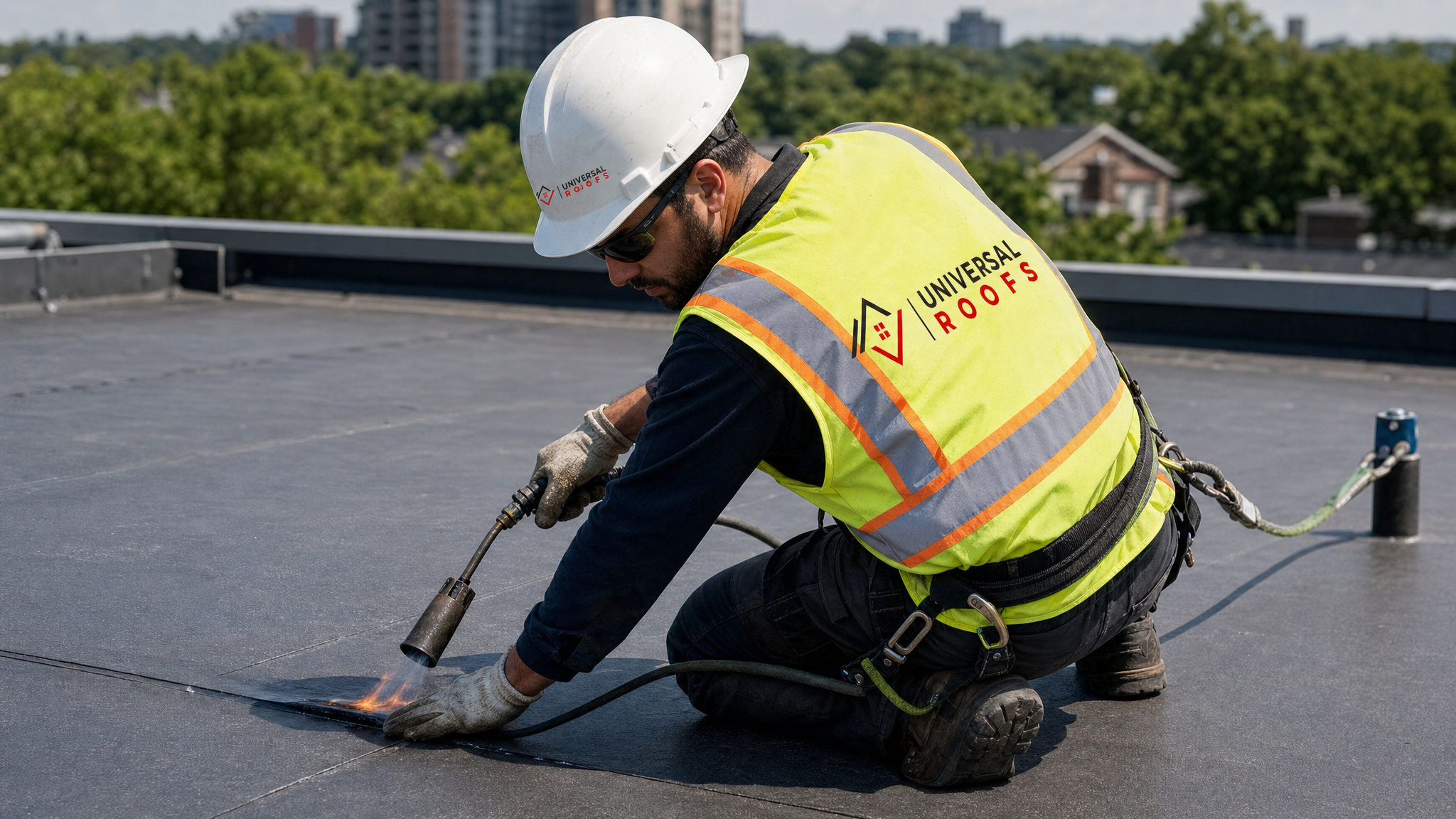
Membrane Types and How Each One Fails Differently
Not all flat roof membranes fail the same way. The material installed on your roof determines which damage mechanisms are most likely to affect it, and that shapes the right repair approach.
| Membrane Type | Typical Lifespan | Most Common Failure Mode | Repairability |
|---|---|---|---|
| EPDM (rubber) | 20-25 years | Seam adhesive failure, shrinkage | Good — patchable with EPDM primer and tape |
| TPO (thermoplastic) | 15-20 years | Heat-weld seam failure, UV chalking | Good — heat-welded patches bond well |
| PVC | 20-25 years | Plasticizer loss causing brittleness | Moderate — older PVC harder to weld cleanly |
| Modified bitumen | 15-20 years | Granule loss, cracking, blistering | Good — torch or cold-applied patching |
| Built-up roofing (BUR) | 20-30 years | Ply separation, gravel displacement | Moderate — labour-intensive to patch properly |
Knowing your membrane type matters because a repair method that works beautifully on TPO can actually damage EPDM, and vice versa. This is one of the most common mistakes we see from inexperienced contractors or well-meaning DIY attempts — using the wrong adhesive or patch material for the membrane in question.
Why Toronto’s Climate Is Especially Hard on Flat Roof Membranes
Flat roofs in warmer, drier climates simply don’t face the same stress that GTA roofs endure. Toronto sees roughly 40-plus freeze-thaw cycles per winter, combined with heavy spring rain and intense mid-summer UV exposure that regularly pushes rooftop surface temperatures above 70°C on black membranes. That combination of extremes accelerates every failure mode described above.
Snow load is another factor unique to our region. Wet, heavy snow sitting on a flat roof for weeks adds significant weight, and as it melts and refreezes near drains and roof edges, it creates ice dams that force water backward under the membrane. We factor all of this into every inspection and repair plan across Toronto, Peel Region, York Region, Halton Region, and Durham Region.
Summer, like right now, is actually the best season to address membrane damage. Warm, dry conditions allow adhesives and heat-welds to cure properly, and there’s no risk of the repair being compromised by an unexpected frost before it fully sets.
Repair Options: Patch, Coat, or Replace?
Once membrane damage is confirmed, the right fix depends on the extent and location of the damage, the membrane’s remaining service life, and your budget. Here’s how we approach the decision with clients.
Localized Patch Repair
For isolated punctures, small seam failures, or minor blistering on a membrane that’s otherwise in good condition, a targeted patch is the most cost-effective solution. This involves cleaning the area, cutting back damaged material, and bonding a properly sized patch using the manufacturer-approved method for that membrane type — heat-welding for TPO, adhesive and seam tape for EPDM, or torch-applied patching for modified bitumen.
Reflective Roof Coating
If the membrane is showing early UV degradation across a wide area but hasn’t yet developed active leaks, a silicone or acrylic reflective coating can extend its life by several years. Coatings reduce surface temperature, slow further UV breakdown, and provide a renewed waterproof layer — though they won’t fix existing structural damage or ponding issues on their own.
Full Membrane Replacement
When damage is widespread, the membrane is past 18-20 years old, or repeated patch repairs haven’t stopped recurring leaks, replacement is the more economical long-term choice. A full roof replacement also gives us the opportunity to correct underlying drainage slope problems that caused ponding in the first place — something a patch repair can never fix.
| Repair Option | Best For | Typical Cost Range (CAD) | Expected Added Lifespan |
|---|---|---|---|
| Localized patch | Small punctures, isolated seam failure | $400 – $1,200 | 2-5 years |
| Multiple patch repairs | Scattered damage across an aging roof | $1,200 – $3,500 | 3-6 years |
| Reflective coating | Widespread UV wear, no active leaks | $3 – $6 per sq. ft. | 5-10 years |
| Full membrane replacement | End-of-life membrane, chronic leaks | $8 – $14 per sq. ft. | 15-25 years |
Costs vary based on roof size, accessibility, existing insulation condition, and drainage upgrades needed. We provide exact pricing only after an on-site inspection, since photos and descriptions alone can’t reveal what’s happening beneath the surface membrane.
How to Slow Down Future Membrane Damage
Whether you repair or replace, a few maintenance habits significantly extend membrane life afterward:
- Schedule bi-annual inspections — spring and fall checkups catch small issues before winter or summer stress makes them worse
- Clear drains and scuppers every season, especially after autumn leaf drop
- Install walk pads along any path technicians regularly use to access rooftop equipment
- Address ponding water promptly rather than assuming it will evaporate on its own
- Check attic ventilation — poor airflow trapped beneath the roof deck accelerates both ice damming and interior condensation. Our attic assessments often reveal ventilation gaps that are quietly shortening membrane life
- Inspect flashing around skylights and vents annually, since flashing failure is one of the most common entry points for water even when the membrane itself is intact. If you have rooftop skylights, our skylights and skylight replacement teams can inspect those seals at the same time
These habits won’t make a membrane last forever, but they consistently add years to its usable life and catch problems while they’re still inexpensive to fix.
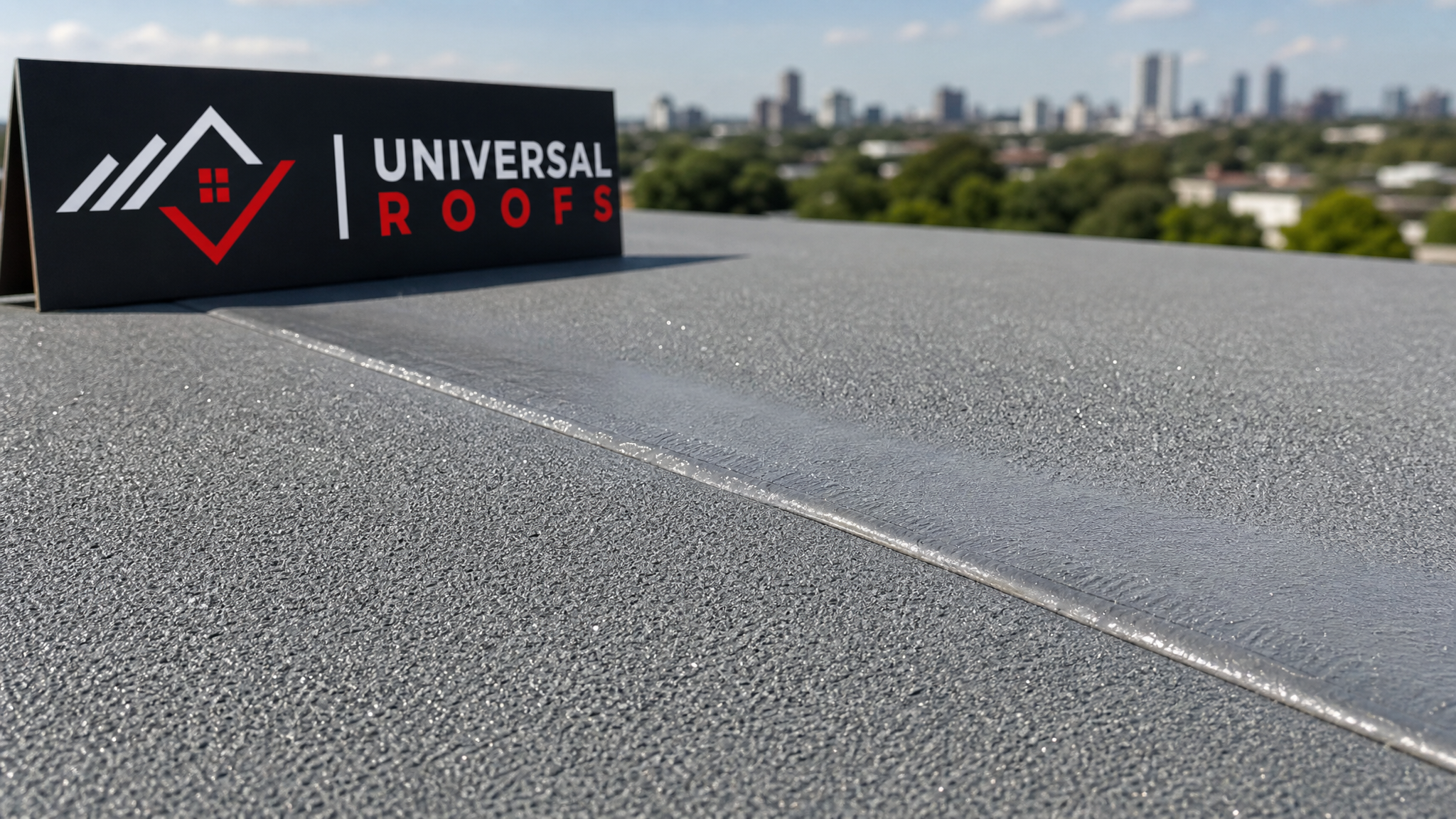
DIY Repair vs. Professional Repair: What’s the Real Difference?
Small hardware-store patch kits exist, and for a homeowner with a tiny garage roof leak, they can occasionally buy time. But professional membrane repair differs in a few critical ways that matter for anything beyond the most minor fix:
- Correct material matching — using EPDM tape on a TPO roof (or vice versa) often fails to bond properly and can void manufacturer warranties
- Surface preparation — professional repairs involve solvent cleaning and primer application that most DIY kits skip entirely
- Underlying damage detection — a contractor can identify saturated insulation beneath a patch site that a homeowner would have no way to detect without removing the membrane
- Warranty coverage — professional repairs typically come with a workmanship warranty; DIY patches do not
- Safety — working at height on a wet or sloped surface carries real fall risk without proper harness equipment and training
For a truly minor cosmetic issue, a DIY patch might hold. But for anything involving active leaking, widespread blistering, or a roof more than 10 years old, the cost of a failed DIY attempt — including the water damage that follows — almost always exceeds the cost of getting it done right the first time.
What to Expect During a Professional Membrane Repair
When you book a roof repair assessment with Universal Roofs, here’s the process our clients can expect:
- Visual and physical inspection of the entire membrane surface, seams, flashing, and drains — not just the area where the leak is visible, since water often travels before it drips through the ceiling
- Moisture scanning where needed, to check for saturated insulation beneath the membrane that would require a larger repair scope
- Written assessment and quote outlining exactly what’s causing the damage and the recommended fix, with options at different price points where applicable
- Repair execution using membrane-appropriate materials and techniques, completed by roofers trained and harnessed for safe rooftop work
- Post-repair walkthrough showing you the completed work and any maintenance recommendations going forward
This structured approach is why so many of our repairs hold up for years rather than needing a repeat visit within a single season — a track record you can see reflected in our reviews from homeowners and property managers across the GTA.
What causes membrane damage in flat roof repair most often?
Can flat roof membrane damage be repaired without replacing the whole roof?
How long does a membrane repair last on a flat roof?
Is ponding water always a sign of membrane damage?
Why does my flat roof membrane keep cracking every winter?
Should I get my flat roof membrane inspected even if I don’t see a leak yet?
Need Help With What Causes Membrane Damage?
If you’re noticing early signs of membrane wear, or you’ve already got an active leak, the team at Universal Roofs can pinpoint the exact cause and recommend the most cost-effective fix for your specific roof.
Call us today at (416) 732-2421 or request a free inspection to get started.
Universal Roofs proudly serves Toronto, Mississauga, Brampton, Vaughan, Markham, Oakville and the GTA since 2005.