
Choosing the right roofing system is one of the most important decisions a homeowner can make, and nowhere is that decision more critical than in regions exposed to severe wind events. While the Greater Toronto Area is not classified as a hurricane zone in the way coastal Florida or the Gulf Coast is, southern Ontario has seen a marked increase in high-wind weather systems, remnant tropical storms tracking up through the Great Lakes, and violent straight-line wind events (derechos) that produce hurricane-force gusts of 90 to 130 km/h or more. The 2022 derecho that tore through southern Ontario, including large parts of the GTA, is a clear example: it stripped shingles, collapsed roof structures, and caused hundreds of millions of dollars in insured damage in a single afternoon. So when homeowners ask what the best roofs for hurricane prone areas actually are, the honest answer for Toronto is that the same principles used in the Carolinas, Florida, and the Caribbean apply here too, just calibrated for our climate.
This guide breaks down the roofing materials, fastening systems, underlayment strategies, and structural details that actually matter when wind resistance is the priority. We will compare asphalt shingles, metal roofing, and other systems side by side, walk through the installation details that separate a roof that survives a major windstorm from one that fails, and explain how Toronto’s freeze-thaw cycles interact with wind-resistant design. Whether you are planning a full roof replacement or simply want to understand what to look for before your next roofing project, this article will give you a genuinely useful framework for making the decision.
At Universal Roofs, we have been installing and repairing roofs across the GTA since 2005, and wind damage claims are one of the most common reasons homeowners call us after a major storm. Understanding what makes a roof wind-resistant before you need a repair is far cheaper than learning the hard way.
Why Wind Rating Matters More Than Material Alone
Many homeowners assume the material itself, whether it is asphalt, metal, or tile, is what determines hurricane resistance. In reality, the wind performance of any roof is a combination of four factors working together: the material’s inherent wind rating, the fastening pattern and fastener type, the underlayment and sealing strategy, and the quality of the installation. A premium metal roof installed with the wrong fastener spacing will fail before a mid-range architectural shingle roof installed to manufacturer specifications with enhanced nailing.
Roofing materials sold in North America carry a wind rating expressed as a maximum sustained wind speed the product has been tested to withstand, typically following ASTM D7158 or UL 2390 testing standards. You will see ratings like Class D (90 mph), Class G (120 mph), or Class H (150 mph). For context, a Category 1 hurricane starts at 119 km/h (74 mph), while a Category 3 major hurricane reaches 178 to 208 km/h (111 to 129 mph). The 2022 Ontario derecho produced gusts measured at over 130 km/h in some locations, putting it solidly in Category 1 hurricane territory. This is why choosing a genuinely high wind-rated system, rather than a basic builder-grade product, is a legitimate consideration for GTA homeowners, not just those on the Atlantic coast.
Comparing Roofing Materials for Wind Resistance
The table below compares the most common roofing materials available to Toronto homeowners on the specific criteria that matter for wind performance: rated wind speed, typical lifespan, relative cost, and how well each performs in our freeze-thaw climate.
| Material | Typical Wind Rating | Lifespan | Relative Cost | Freeze-Thaw Performance |
|---|---|---|---|---|
| 3-Tab Asphalt Shingles | 60-80 mph (Class D) | 15-20 years | $ | Fair; edges can curl and crack |
| Architectural (Laminate) Shingles | 110-130 mph (Class G/H) | 25-30 years | $$ | Good; heavier mat resists lifting |
| Standing Seam Metal | 140-180+ mph | 40-60 years | $$$$ | Excellent; sheds snow and ice fast |
| Metal Shingles/Shakes | 120-150 mph | 40-50 years | $$$ | Very good; interlocking panels |
| Synthetic Slate/Composite | 110-130 mph | 40-50 years | $$$ | Good; lightweight and impact resistant |
| Natural Slate | 90-110 mph | 75-100+ years | $$$$$ | Good, but brittle under thermal cycling |
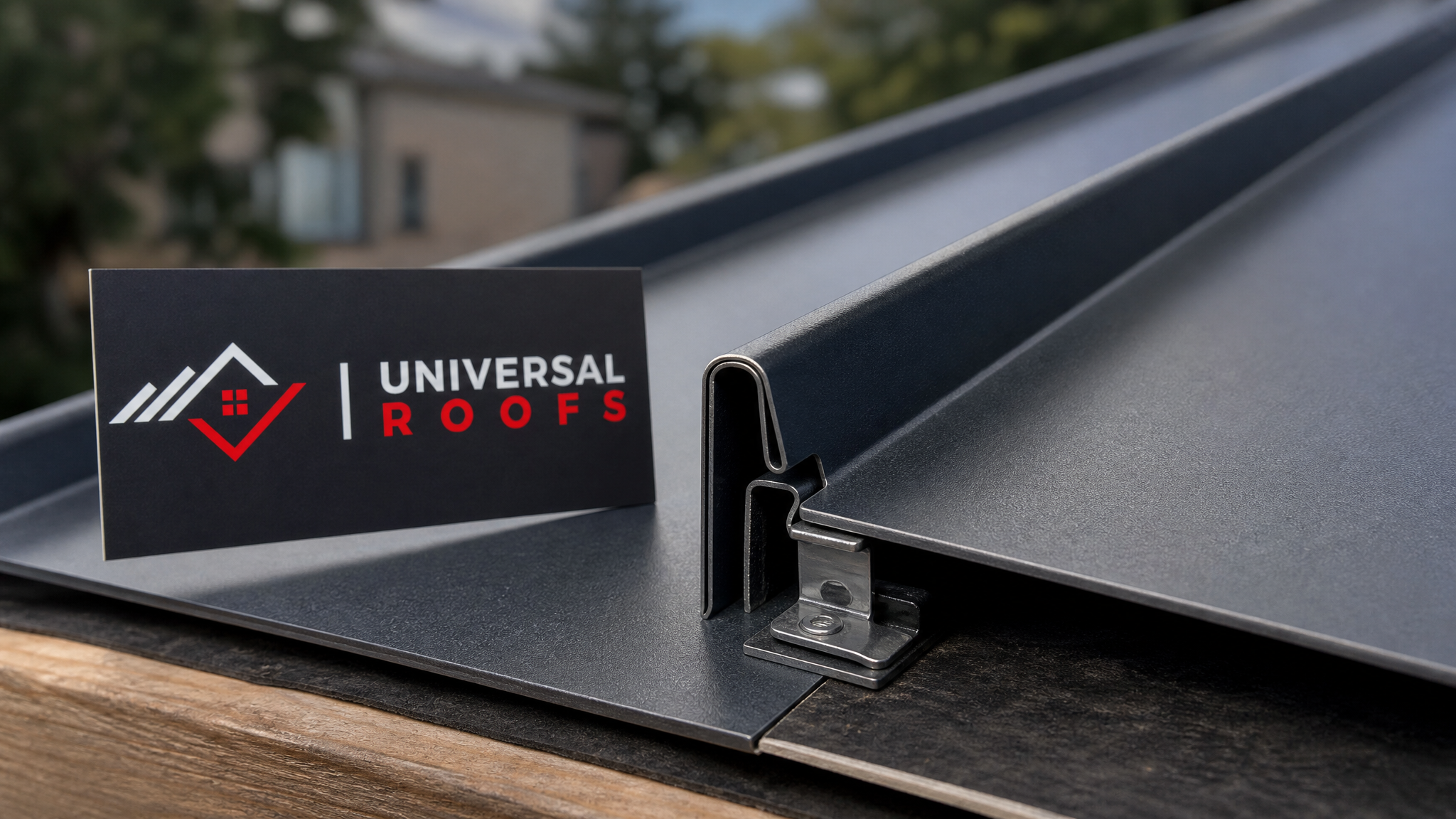
Standing seam metal roofing consistently ranks as the strongest performer for wind resistance because the panels interlock along raised seams that are mechanically fastened or clipped to the deck, eliminating exposed fasteners that can back out or leak under repeated wind flexing. Architectural shingles, when installed with enhanced nailing patterns and rated adhesive sealant strips, are a close second in real-world performance and remain the most popular choice for GTA homeowners because of the balance between cost, appearance, and durability. If you are weighing a full roof replacement, this is the first decision point worth spending real time on.
The Fastening System Is Where Roofs Actually Fail
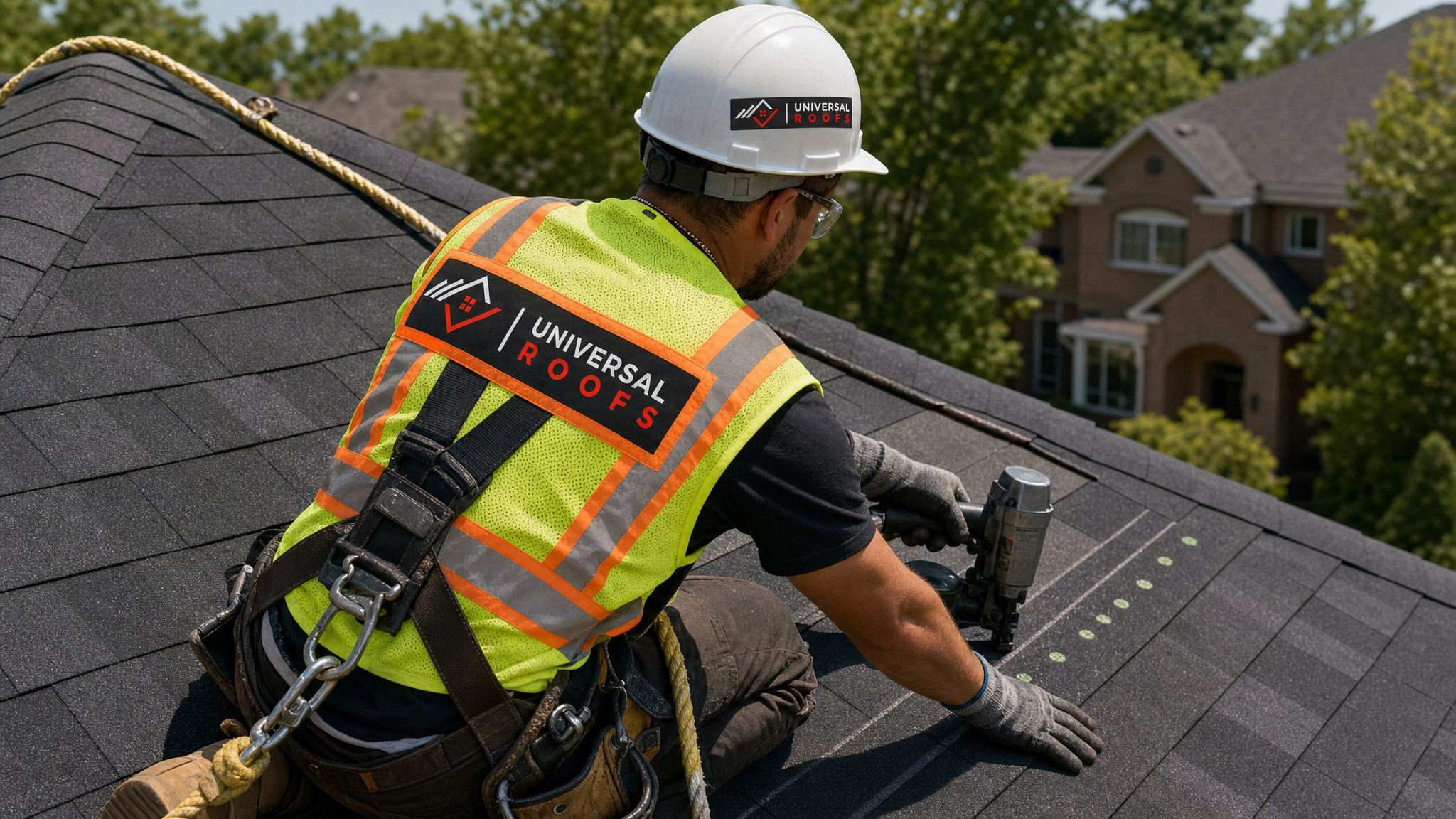
Roofing failure investigations after major wind events consistently point to the same root cause: fastener pull-through, not material failure. A shingle rated for 130 mph winds will still fail at 60 mph if it was nailed with only four fasteners instead of six, or if the nails were placed above the manufacturer’s specified nailing line. This is one of the most overlooked details in ordinary roofing work and one of the biggest differences between a contractor who installs to code minimums and one who installs for genuine wind performance.
Key fastening upgrades that meaningfully improve wind resistance include:
- Six-nail pattern instead of four on every shingle, particularly in high-wind exposure zones like ridgelines, hips, and roof edges.
- Ring-shank nails rather than smooth-shank nails, which resist backing out under repeated flexing.
- Starter strip shingles with factory-applied adhesive along every eave and rake edge, since edges are where uplift forces concentrate first.
- Hand-sealing or enhanced adhesive on shingle tabs in exposed areas, especially for roofs on open lots or near the lake where wind exposure is higher.
- Hurricane clips or straps connecting the roof trusses to the wall framing, a structural upgrade that keeps the entire roof assembly from lifting off the house in extreme gusts.
Hurricane clips deserve special mention because they address a failure mode that has nothing to do with the roofing material at all: the entire roof deck separating from the walls. This is a framing-level detail usually addressed during new construction or a full roof replacement down to the deck, and it is worth asking about explicitly if wind resistance is a priority for your project.
Underlayment and Deck Sealing: The Hidden Wind Defence
Even a roof that loses some shingles in an extreme storm can avoid catastrophic interior water damage if the underlayment layer beneath it is doing its job. Synthetic underlayments and self-adhered peel-and-stick membranes (sometimes called ice and water shield) create a secondary water barrier that keeps the home dry even if the primary shingle layer is compromised. In hurricane-prone regions, builders often specify a fully adhered, self-sealing underlayment across the entire roof deck rather than just along the eaves, and this same approach is increasingly common on higher-end GTA roofing projects.
Deck sealing matters just as much on flat roofing systems, which face a different set of wind challenges. Flat and low-slope roofs rely on membrane adhesion, ballast weight, or mechanical fastening at the perimeter and corners, where wind uplift is strongest. A poorly terminated membrane edge is one of the most common failure points we see after summer wind events on commercial and residential flat roofs alike.
Roof Shape and Slope Also Affect Wind Performance
Material and fasteners aside, the geometry of the roof itself has a significant effect on wind resistance. Hip roofs, which slope on all four sides, perform measurably better in high winds than gable roofs, which have flat vertical ends that catch wind like a sail. Steeper slopes generally shed wind more efficiently than low-slope designs, though this must be balanced against snow load considerations that are specific to our climate.
Roof penetrations, including skylights, vents, and chimneys, are also common failure points in high winds if they are not properly flashed and sealed. A skylight replacement is a good opportunity to upgrade to a unit rated for higher wind and impact resistance, particularly if your existing skylight is more than 15 years old and was installed to older code standards.
| Roof Feature | Wind Performance Impact | Recommended Upgrade |
|---|---|---|
| Gable ends | High risk; act as a sail in crosswinds | Add bracing, consider hip conversion if reframing |
| Roof overhangs | Uplift risk increases with overhang length | Keep overhangs under 60 cm where possible |
| Ridge vents | Can be a weak point if not wind-rated | Use externally baffled, wind-rated ridge vent products |
| Skylights | Older units prone to seal failure under gusts | Upgrade to impact-and-wind-rated glazing |
| Chimney flashing | Common leak point after wind-driven rain | Re-flash with step flashing and counter-flashing |
How Toronto’s Climate Changes the Equation
Southern Ontario adds a layer of complexity that pure hurricane-zone advice does not usually cover: freeze-thaw cycling. Materials that perform beautifully in a warm, humid coastal climate can behave differently after 40 or 50 freeze-thaw cycles each winter. Asphalt shingles can become brittle in extreme cold, which is why cold-weather installation practices, and product formulations rated for northern climates, matter. Metal roofing performs very well here because it sheds snow and ice quickly, reducing the ice-damming that can force water backward under shingles and compromise the wind seal along the eaves.
Attic ventilation and insulation also play a bigger role in the GTA than in most hurricane-prone U.S. states, because poor attic ventilation contributes to ice damming, which in turn degrades the shingle seal and adhesive strips that provide wind resistance. A well-ventilated, well-insulated attic is not just an energy efficiency measure, it is part of a genuinely wind-resilient roofing system in our climate.
Cost and Timeline Expectations for Wind-Resistant Roofing Upgrades
Homeowners considering a wind-resistant roof replacement or upgrade in the GTA should expect the following general ranges, though every home varies based on size, pitch, and existing deck condition.
| Project Type | Typical Cost Range (CAD) | Typical Timeline |
|---|---|---|
| Architectural shingle replacement with enhanced nailing | $9,000 – $16,000 | 2-4 days |
| Standing seam metal roof installation | $20,000 – $40,000+ | 4-8 days |
| Full tear-off with new underlayment and deck sealing | $12,000 – $22,000 | 3-6 days |
| Hurricane clip retrofit (per truss connection) | $15 – $40 per connection | 1-3 days (attic access) |
| Skylight upgrade to wind-rated glazing | $1,800 – $4,500 per unit | 1 day per unit |
Timelines can extend if weather delays work or if deck repairs are discovered once old roofing is removed, which is common on homes over 25 years old. Getting an accurate quote requires an on-site assessment, since roof pitch, size, and access all affect labour time significantly.
What to Ask a Roofing Contractor Before You Sign
Not every contractor installs to the same wind-resistance standard, even when using the same shingle product. Before committing to a roof replacement or major repair, ask your contractor these specific questions:
- What is the manufacturer’s rated wind speed for the shingle or panel you are proposing, and does your nailing pattern meet or exceed the enhanced warranty requirements?
- Will you use ring-shank nails and factory-sealed starter strips along all eaves and rakes?
- What underlayment product will be used, and will it be a full peel-and-stick membrane or standard synthetic felt?
- How will roof penetrations, including skylights, vents, and chimney flashing, be sealed against wind-driven rain?
- Do you offer hurricane clips or truss-to-wall bracing as part of a full tear-off?
A reputable contractor should answer every one of these questions clearly and specifically, not with vague reassurances. You can read what past clients have experienced with our crews on our reviews page, and check common questions on our FAQ page before booking an assessment.
Maintenance Habits That Preserve Wind Resistance Over Time
A wind-resistant roof does not stay that way forever without upkeep. Sealant strips degrade with UV exposure, fasteners can loosen slightly as a house settles, and flashing around penetrations can corrode over 10 to 15 years. Homeowners across our service areas in Toronto, the Peel Region, York Region, Halton Region, and Durham Region should schedule a professional roof inspection at least once every two years, and always after any major wind event, even if no obvious damage is visible from the ground.
During an inspection, a qualified roofer checks for lifted or missing shingle tabs, loose or exposed fasteners, cracked sealant along flashing, and signs of water intrusion in the attic. Catching these issues early, through routine roof repair rather than waiting for a leak, is the most cost-effective way to keep a wind-resistant roof performing the way it was designed to.
What are the best roofs for hurricane prone areas?
Is metal roofing really better than shingles in high winds?
Do Toronto homes actually need hurricane-resistant roofing?
What nailing pattern gives the best wind resistance for shingles?
How do hurricane clips improve roof wind resistance?
How often should a wind-resistant roof be inspected?
Need Help With What Are the Best?
Whatever stage of the decision you are at, from comparing materials to scheduling a full tear-off, the team at Universal Roofs can walk you through exactly which system and installation details make sense for your home’s exposure, slope, and budget.
Call us today at (416) 732-2421 or request a free inspection to get started.
Universal Roofs proudly serves Toronto, Mississauga, Brampton, Vaughan, Markham, Oakville and the GTA since 2005.