
If you have a small leak, a chalky flat roof, or a garage roof that is starting to show its age, a roof coating can buy you real protection without the cost of a full tear-off. There are dozens of products on shelves at Toronto hardware stores and roofing supply yards, and most homeowners have no idea which one actually suits their roof, their timeline, or our climate. Some cure in an hour. Some need three warm, dry days in a row. Some crack the first winter they meet a Toronto freeze-thaw cycle, and some last a decade.
This guide breaks down five easy DIY roof coatings for quick application that homeowners across the Greater Toronto Area actually use with success: acrylic elastomeric, silicone, aluminum asphalt, rubberized liquid membrane, and asphalt-based roof cement coatings. We will walk through what each one is made of, where it works best, how long it takes to apply and cure, and where DIY coatings reach their limit and a professional inspection becomes the smarter move.
Roof coatings are not a substitute for structural repairs, and they are not a fix for a roof that has failed decking, rotted rafters, or widespread membrane splits. But for the right situation, on the right substrate, a good coating applied correctly can add years of service life for a few hundred dollars and a weekend of work. Let’s get into exactly which coating fits which job, and how to apply each one so it actually holds up through a Toronto winter.
Why DIY Roof Coatings Appeal to GTA Homeowners
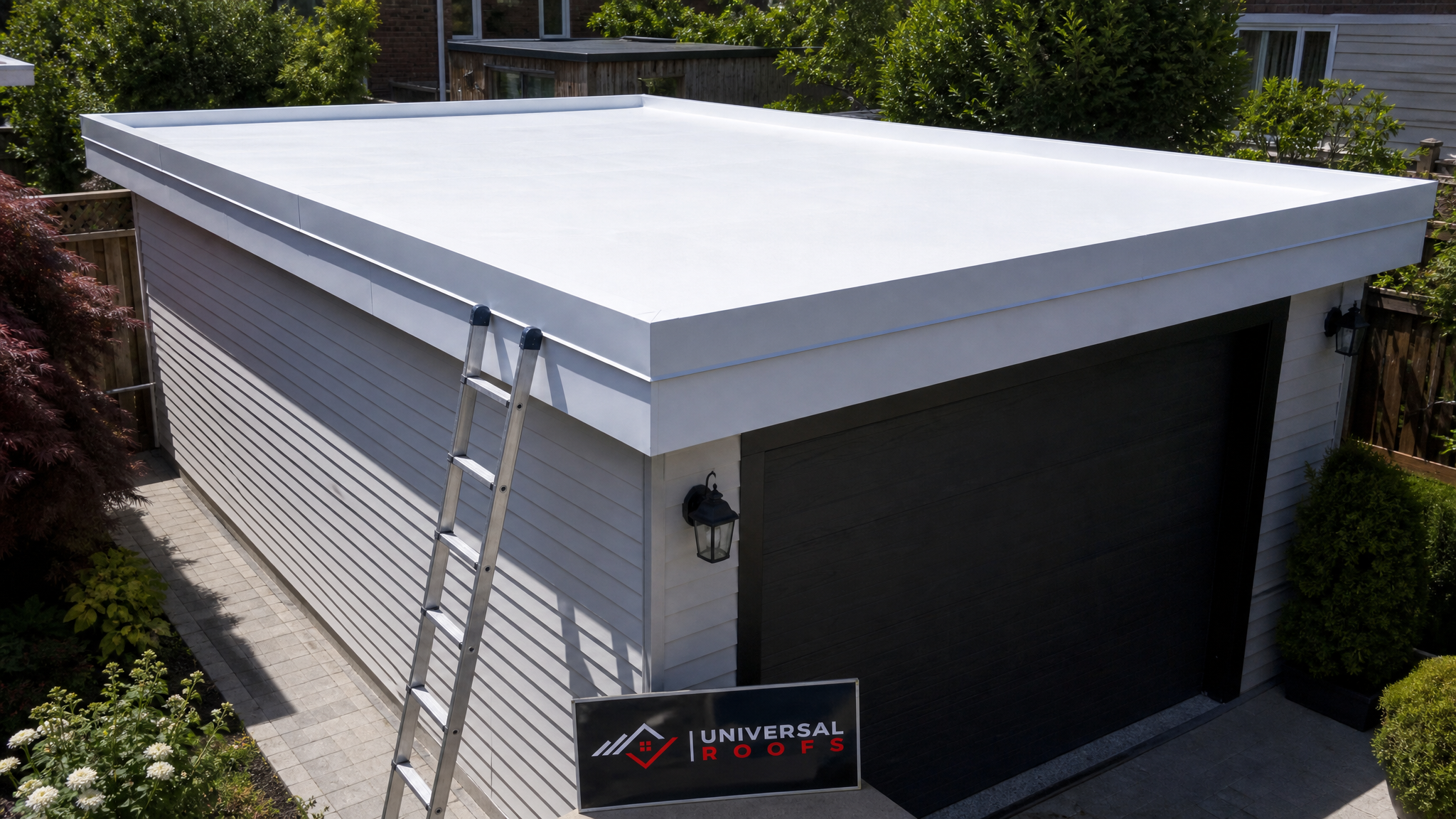
Coatings are popular for a simple reason: they are one of the few roofing jobs a reasonably handy homeowner can complete safely on a low-slope structure, like a garage, shed, sunroom, or porch roof, without specialized equipment. A five-gallon pail of coating, a roller or squeegee, and a dry weekend is often all it takes.
In the GTA, the appeal is amplified by our climate swings. We get intense UV exposure in July and August, ice damming and freeze-thaw cycling from December through March, and heavy spring rain in between. A roof surface that is left unprotected against all three tends to age faster here than in milder climates. A coating adds a sacrificial, weatherproof layer that absorbs UV degradation, resists ponding water, and in many cases reflects heat away from the structure, which can modestly reduce attic temperatures in summer.
That said, coatings work best as a maintenance and life-extension strategy on roofs that are structurally sound. If your attic already shows signs of moisture intrusion, or if the membrane underneath has widespread blistering, a coating will not solve the underlying issue. In those cases, a proper roof repair assessment should come first. For roofs approaching or past their expected service life, coatings can delay a roof replacement by a season or two, not indefinitely.
Coating #1: Acrylic Elastomeric Coating
Acrylic elastomeric is the most common water-based roof coating sold at Canadian hardware and building supply stores, and it is usually the first coating homeowners in Toronto reach for because it is inexpensive, low-odour, and cleans up with water while wet.
Acrylic coatings are typically white or light grey, which gives them strong solar reflectance. They are elastomeric, meaning they stretch and flex with the substrate as temperatures swing, which matters given how much a flat roof surface expands in July heat and contracts in a January cold snap. Because they are water-based, they need dry, warmish conditions to cure properly, generally above 10°C with no rain in the forecast for at least 24 hours.
Application is straightforward: clean the surface of debris and chalking residue, prime bare or porous areas if the product calls for it, then apply two coats with a long-nap roller or airless sprayer, allowing full cure between coats. Most manufacturers recommend a total dry film thickness of around 20 mils, which usually means two generous coats rather than one thick one.
Acrylic coatings are best suited to modified bitumen, built-up roofing (BUR), and metal roofs. They are not the best choice for roofs with standing water, since prolonged ponding can soften the film over time. If your flat roof holds water for more than 48 hours after rain, look at silicone instead, or have someone check the drainage before coating at all.
Coating #2: Silicone Roof Coating
Silicone coatings solve acrylic’s biggest weakness: they are genuinely resistant to ponding water and they do not degrade under prolonged UV exposure the way some acrylics can over many years. For Toronto flat roofs with poor drainage, or sections around drains and low points that never fully dry out, silicone is usually the better performer.
Silicone is moisture-cure rather than water-evaporation cure, which means it can be applied in a wider range of temperatures and humidity levels than acrylic, including cooler, damper autumn days that are common in the GTA shoulder seasons. This is one of the reasons silicone qualifies as a genuinely quick-application option: fewer weather-window headaches.
The tradeoff is cost and mess. Silicone coatings are solvent-based or high-solids formulations that cost more per gallon than acrylic, are harder to clean off skin and tools, and typically require a respirator during application due to stronger fumes. Silicone also becomes very slippery when wet, so if the coated roof doubles as a walkable surface or is accessed for maintenance, that is worth factoring in before choosing it.
Silicone coatings adhere well to existing acrylic, EPDM rubber, spray polyurethane foam (SPF), and most single-ply membranes. Always check compatibility with the existing membrane before applying; incompatible coatings can lift, bubble, or fail to bond at all.
| Coating Type | Best Substrate | Handles Ponding Water? | Cure Time (Typical) | Cost per 5-Gallon Pail (CAD) |
|---|---|---|---|---|
| Acrylic Elastomeric | Modified bitumen, BUR, metal | No | 24-48 hours per coat | $110-$160 |
| Silicone | EPDM, SPF, single-ply, acrylic overcoat | Yes | 4-12 hours (tack-free) | $180-$260 |
| Aluminum Asphalt | Asphalt shingles, BUR, tar and gravel | No | 4-8 hours | $60-$90 |
| Rubberized Liquid Membrane | Metal, flashing, small penetrations | Limited | 1-4 hours per coat | $70-$120 |
| Asphalt Roof Cement | Patch repairs, seams, flashing joints | No | Skins in 1-2 hours | $15-$25 per tube/tub |
Coating #3: Aluminum Asphalt Coating
Aluminum asphalt coating is the old standby for asphalt shingle roofs, tar-and-gravel roofs, and aging built-up roofing that has started to show granule loss and surface cracking. It is bitumen-based with reflective aluminum flake suspended in it, which gives a fresh, silvery finish and meaningfully cuts surface temperature compared to bare black asphalt.
This is one of the fastest coatings to apply on our list. It typically only needs a single coat, brushed or rolled on generously, and it skins over within four to eight hours in good summer weather, which makes it genuinely practical for a same-day weekend project on a garage or shed roof. It is also one of the least expensive options per square metre.
The catch is longevity and appearance. Aluminum asphalt coatings tend to need reapplication every two to four years, especially in a climate with our UV intensity and freeze-thaw cycling, and the aluminum flake can streak or wash unevenly if it rains before the coating has fully skinned. It is a maintenance coating, not a long-term membrane replacement, and it is not elastomeric in the way acrylic or silicone are, so it has less flexibility across large temperature swings.
Where aluminum asphalt genuinely shines is on porch roofs, shed roofs, and older asphalt shingle roofs that are past their prime but not yet ready for a full roof replacement. It buys a few more seasons of watertightness at low cost.
Coating #4: Rubberized Liquid Roof Membrane
Rubberized liquid membrane products, often sold in smaller containers than the full coatings above, are designed for spot application: metal roof seams, flashing details, vent boots, chimney flashing, and small punctures or splits. They cure into a rubber-like, flexible film that bonds tenaciously to metal, and many formulations are safe to apply even on damp or slightly wet surfaces, which is a real advantage during Toronto’s unpredictable spring weather.
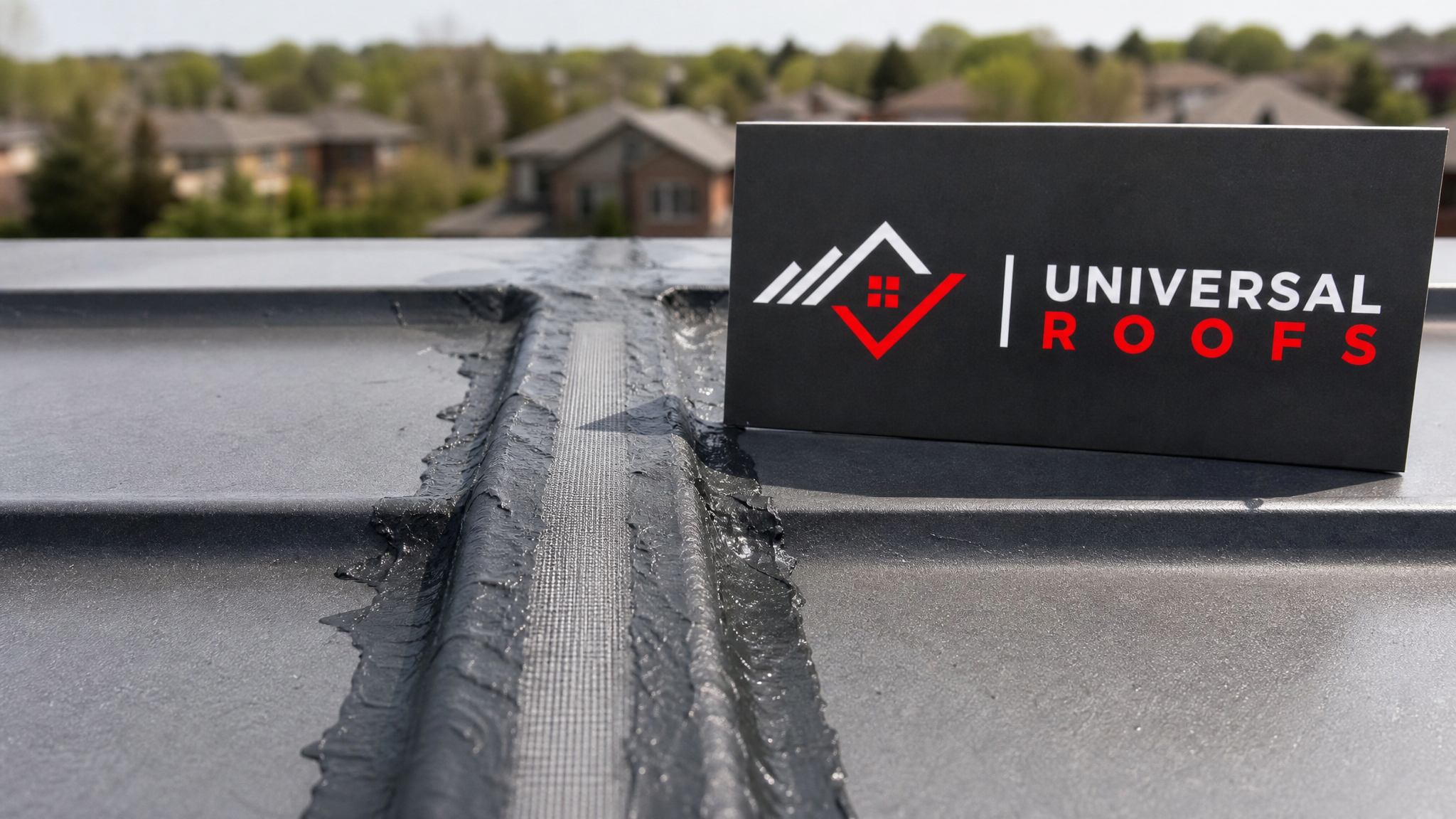
Application is quick: brush or trowel a heavy, even coat directly over the problem area, often embedding a polyester fabric reinforcing strip in the wet coating for extra tensile strength over seams or cracks. Cure time is fast, often just one to four hours to a tack-free surface, and a full cure within a day.
The limitation is scale. Rubberized liquid membrane is not typically used to coat an entire roof deck; it is a targeted repair and detailing product. If you find yourself using multiple pails to cover a whole flat roof, you likely need acrylic or silicone instead. But for fixing the specific spot where water is actually getting in, around a skylight curb, a vent stack, or a chimney base, this is often the fastest fix available. If the leak is around a skylight that is older or improperly flashed, a coating is a stopgap; ask about skylight replacement if the leak recurs.
Coating #5: Asphalt Roof Cement (Trowel-Grade Patching Compound)
Asphalt roof cement, sometimes called flashing cement or plastic roof cement, is the fastest of all five options and the one most homeowners already have a tub of in the garage. It is a thick, tar-like compound applied with a putty knife or trowel directly over cracks, nail heads, seam gaps, and small punctures.
It skins over within one to two hours and is rain-ready faster than almost anything else on this list, which makes it the go-to emergency patch when a leak shows up during a storm and you need something watertight before the next downpour. Many homeowners keep a tub on hand specifically for this reason.
The tradeoff is durability and finish. Roof cement is not UV-stable long term, it will crack and alligator within a year or two if left exposed to direct sun without a top coat of acrylic or aluminum coating over it, and it looks patchy rather than uniform. Treat it as a temporary or spot-repair product, then follow up with a full acrylic or silicone coat once the weather cooperates, or have a professional assess whether the underlying issue needs more than a patch.
Surface Prep: The Step Homeowners Skip and Regret
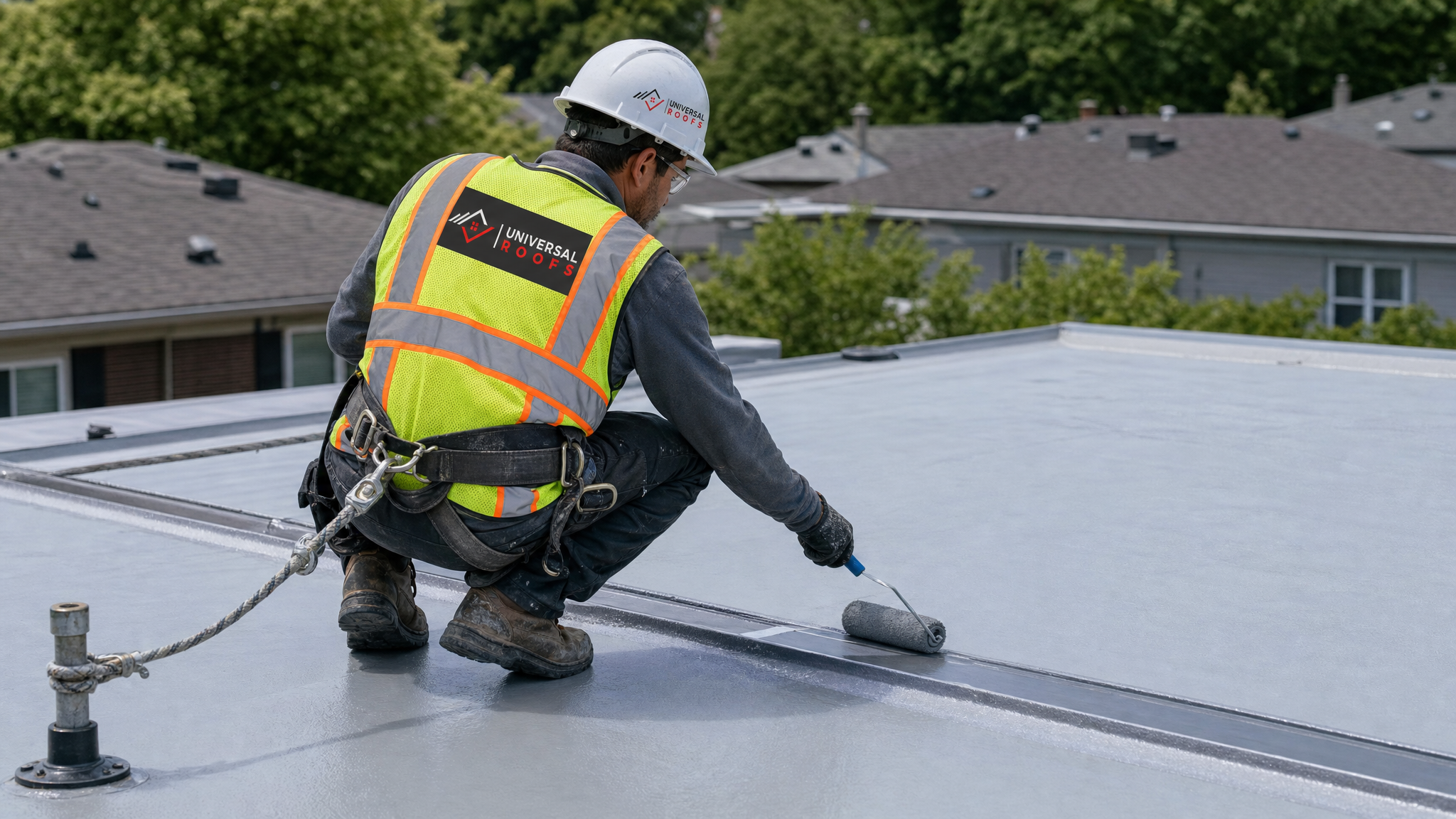
Every coating on this list will fail early if it is applied over a dirty, chalky, or wet substrate. Preparation typically takes longer than the actual coating application, and it is the step most DIYers rush.
Start by sweeping off debris, then power-wash or scrub the surface to remove dirt, algae, and the chalky residue that forms on aged asphalt and acrylic surfaces (a simple test: wipe a dark cloth across the roof; if it comes away white or grey, the surface needs cleaning before anything will bond). Let the roof dry completely, ideally 24 to 48 hours after washing, since trapped moisture under a coating leads to blistering and premature failure.
Inspect for and repair any active leaks, soft spots, or membrane splits before coating. A coating spread over a soft or rotted deck area will not stop the underlying problem; it will just hide it until the coating itself fails. Cut out and patch any split seams with roof cement or a reinforced patch before the full coat goes on. Prime bare metal, exposed fasteners, and highly porous patched areas per the coating manufacturer’s instructions; skipping primer is one of the most common causes of early peeling.
| Prep Step | Why It Matters | Typical Time Required | Skip It and Risk |
|---|---|---|---|
| Power wash or scrub | Removes dirt, chalk, algae that block adhesion | 2-4 hours | Peeling within months |
| Full dry-out period | Prevents trapped moisture and blistering | 24-48 hours | Bubbling, delamination |
| Leak and split repair | Coating cannot fix structural or membrane failure | 1-3 hours | Coating masks an active leak |
| Priming bare/porous areas | Improves bond strength significantly | 1-2 hours plus dry time | Early edge lifting |
| Weather window check | Rain or frost during cure ruins the film | Ongoing, check forecast | Washout, uneven finish |
Timing It Right for the Toronto Climate
Weather windows matter more in the GTA than in milder climates because our temperature and humidity swing widely, sometimes within the same week. Water-based acrylic coatings need daytime temperatures consistently above 10°C and overnight lows that will not dip toward frost during the cure window, which generally limits acrylic application to late spring through early autumn here. Silicone tolerates a wider range and can often be applied into cooler autumn days, provided the surface itself is dry.
Summer, like right now in July, is genuinely one of the best windows for coating work in Toronto: long dry stretches, warm surface temperatures that help the coating flow and level properly, and enough daylight to finish a job in a single session. The main summer hazard is applying a coating in the heat of direct afternoon sun, which can cause water-based coatings to skin over too fast and trap solvents or moisture underneath. Early morning or late afternoon application, out of peak sun, typically gives a better finish.
Avoid coating work entirely if rain is forecast within the coating’s minimum cure window, and never coat a roof with visible frost, dew, or standing water on the surface. A rushed job in the wrong weather is the single most common reason a DIY roof coating fails within its first year.
When a Coating Is the Right Call, and When It Is Not
Roof coatings genuinely make sense when the underlying membrane or shingles are structurally sound but showing surface-level wear: chalking, minor granule loss, small cracks, or early UV degradation. They are also a smart, low-cost option for extending the life of a garage, shed, sunroom, or porch roof that does not need to last another 20 years, just a few more seasons.
A coating is not the right call when there is evidence of deck rot, sagging, widespread membrane splits, or recurring leaks that keep returning to the same spot no matter how many times you patch it. It is also not the right call on a roof that is already at or past its expected service life; in that situation, a coating is essentially spending money to delay an expense that is coming regardless. If you are unsure which category your roof falls into, a professional inspection is worth the half hour it takes, especially before investing a weekend and a few hundred dollars in coating materials.
Flat roofs deserve particular caution, since ponding water and hidden insulation saturation are common and not always visible from a quick look. If you have a flat roof section that has needed repeated coating in consecutive years, that is usually a signal the flat roofing system underneath needs a proper assessment rather than another coat.
Cost and Timeline Comparison Across the GTA
Material costs vary by brand and coverage rate, but the pattern holds consistently across Toronto, Mississauga, Vaughan, Markham, Oakville, and the wider GTA: cheaper coatings need more frequent reapplication, while pricier coatings last longer between jobs. Coverage also depends heavily on substrate porosity; a chalky, weathered surface will absorb more coating per square metre than a newer membrane.
| Coating | Coverage per Pail (approx.) | Expected Lifespan | Reapplication Frequency |
|---|---|---|---|
| Acrylic Elastomeric | 75-100 sq m per coat | 8-15 years | Recoat as needed after 10+ years |
| Silicone | 65-90 sq m per coat | 15-20 years | Recoat rarely, spot repair as needed |
| Aluminum Asphalt | 90-110 sq m | 2-4 years | Every 2-4 years |
| Rubberized Liquid Membrane | Spot use, not full-roof coverage | 5-10 years (detail areas) | Inspect annually |
| Asphalt Roof Cement | Spot patches only | 1-2 years unprotected | Top-coat or redo annually |
Tools and Safety Basics Before You Start
Most coatings only require a stiff push broom, a pressure washer or garden hose with scrub brush, a long-nap roller or squeegee, a paint tray or five-gallon bucket with a roller screen, and a putty knife for cement-based products. Airless sprayers speed up large jobs but are not necessary for garage- or shed-sized roofs.
Safety matters more than the coating choice itself. Any roof work, even a low-slope garage roof, carries fall risk, and solvent-based coatings like silicone require good ventilation and, often, a proper respirator rather than a basic dust mask. Never work on a wet or dew-covered roof surface, since slip risk rises sharply. If the roof pitch, height, or access makes you uneasy at any point, that is the signal to call a professional rather than push through. Our crews handle both minor coating touch-ups and full membrane assessments across Toronto, Peel Region, York Region, Halton Region, and Durham Region.
How to Tell If Your DIY Coating Job Actually Worked
A successful coating job should look uniform in colour and texture with no visible roller lap marks, pinholes, or thin spots once fully cured. Run a garden hose test after the manufacturer’s stated cure time (never sooner) and watch for any water intrusion at seams, penetrations, or the roof edge. Check again after the first heavy rain and after the first hard freeze-thaw cycle of the following winter, since that is when marginal adhesion or under-cured spots tend to reveal themselves.
If you notice bubbling, peeling at the edges, or the coating lifting in sheets within the first year, that is almost always a surface prep or weather-timing issue rather than a product defect. At that point, it is worth having a professional look at the roof before recoating, since repeated failed coatings over the same problem area usually mean there is a moisture source that needs to be found and fixed rather than covered over again. You can see examples of the kind of work we do, and read what past clients have said, on our reviews page, or check our FAQ page for more common roofing questions.
Getting a Second Opinion Before You Commit
DIY roof coatings are a genuinely good option for the right roof, and thousands of GTA homeowners successfully extend the life of a shed, garage, or porch roof this way every summer. But coatings are also frequently misapplied over roofs that actually needed repair or replacement, which wastes the material cost and the weekend, and sometimes delays a necessary fix long enough for water damage to spread into decking or insulation.
If you are not fully certain which of these five categories fits your roof, or whether coating is the right move at all versus a targeted repair, it costs nothing to ask. Universal Roofs has been assessing roofs across the GTA since 2005, and we are happy to tell you honestly if a coating will do the job or if something more is needed. Learn more about our team before reaching out.
What is the easiest DIY roof coating for a beginner to apply?
How long do DIY roof coatings for quick application actually take to cure?
Can I apply a roof coating over an old, already-coated roof?
Will a DIY roof coating stop an active leak?
Is summer the best time in Toronto to apply DIY roof coatings for quick application?
How do I know if my roof needs a coating or a full replacement instead?
Need Help With 5 Easy DIY Roof?
Whether you are weighing a weekend coating project or suspect your roof needs more than a surface fix, Universal Roofs can help you make the right call before you spend a dollar on materials.
Call us today at (416) 732-2421 or request a free inspection to get started.
Universal Roofs proudly serves Toronto, Mississauga, Brampton, Vaughan, Markham, Oakville and the GTA since 2005.