
If you have ever had a roofer point at the metal strips around your chimney, skylight, or roof valley and explain why they matter, you already know flashing is the unglamorous hero of any roof system. What most homeowners do not realize is that the material choice for that flashing matters just as much as the workmanship. After two decades of repairing, replacing, and inspecting roofs across the Greater Toronto Area, our answer to why copper and aluminum are the best roof flashing materials comes down to a simple combination: they resist corrosion, they move with the building through freeze-thaw cycles, and they can be shaped precisely enough to seal every awkward joint a roof throws at them.
This guide walks through exactly what flashing does, why copper and aluminum outperform galvanized steel, plastic, and other alternatives, and how to budget for a flashing job on a typical GTA home. We will also cover the maintenance signs that tell you flashing has failed, and where flashing fits into a broader roof repair or roof replacement project.
Whether you are dealing with a leak right now or simply planning ahead before winter, understanding copper and aluminum the best roof flashing materials debate will help you make a decision that protects your home for the next 30 to 50 years, not just the next storm.
What Roof Flashing Actually Does
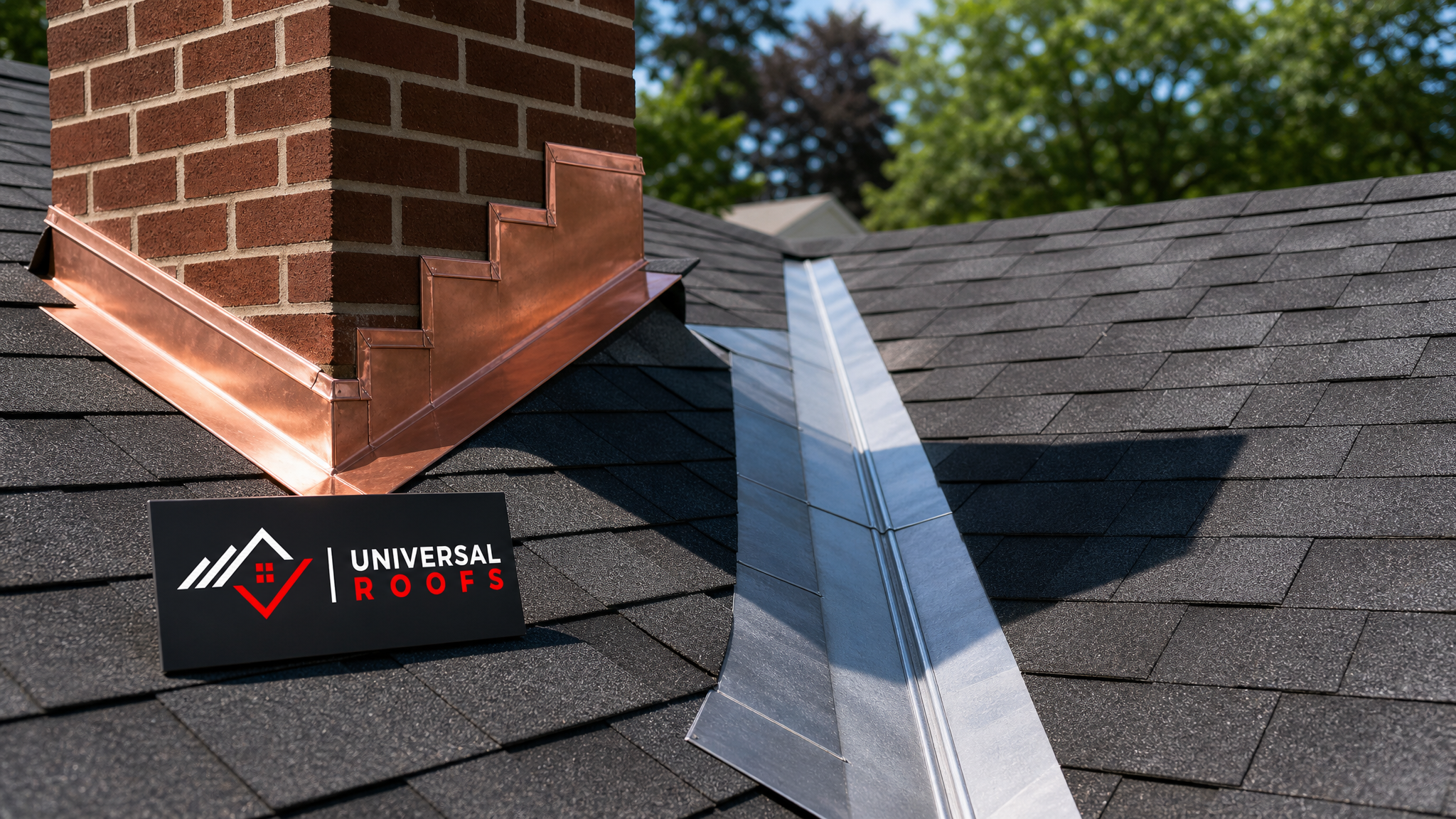
Flashing is the thin, formed metal installed at every point on a roof where two surfaces meet, or where something penetrates the roof deck. Chimneys, skylights, dormers, roof valleys, wall-to-roof transitions, and vent pipes all rely on flashing rather than shingles or membrane alone to stay watertight. Shingles are designed to shed water in a straight, uninterrupted flow down the slope. Wherever that flow is broken by a vertical surface or a change in direction, flashing steps in to redirect water around the penetration instead of letting it pool or seep beneath the shingles.
Without properly installed flashing, water finds the path of least resistance, and on a sloped roof that path is almost always into the wood decking, the attic insulation, or the framing below. A flashing failure rarely announces itself immediately. Instead, homeowners notice a stain on a ceiling months after the seal first cracked, by which time rot, mould, and soaked insulation may already be established in the attic space. That lag between failure and visible damage is exactly why the material behind the flashing matters so much: a flashing system that lasts as long as the roof itself prevents that slow, hidden damage entirely.
Why Copper and Aluminum Outperform Other Flashing Materials
Roofers have flashed buildings with lead, galvanized steel, painted steel, plastic, rubber, and even vinyl over the decades. Copper and aluminum have earned their reputation as the best roof flashing materials because they solve the two problems that cause every other material to fail early: corrosion and metal fatigue from thermal movement.
Copper forms a thin oxide layer, and eventually a green patina, that actually protects the metal underneath rather than eating away at it the way rust does on steel. That patina is also why copper flashing on century-old Toronto churches and heritage homes is often still functioning perfectly today. Aluminum takes a similar self-protecting approach: it develops a dull aluminum oxide film almost immediately on exposure to air, and that film is extremely stable, which is why aluminum resists the kind of pitting corrosion that destroys unprotected steel within a decade or two.
Both metals are also easy to work into tight bends and custom shapes on site, which matters enormously around irregular details like skylights, dormers, and chimney counterflashing. Steel is stiffer and more prone to cracking when bent repeatedly; plastic and rubber flashing degrade under UV exposure and temperature swings far faster than metal. Copper and aluminum simply hold their seal longer under the same Toronto winters, summers, and freeze-thaw cycles that punish every other material on the roof.
| Flashing Material | Typical Lifespan | Corrosion Resistance | Relative Cost | Best Use Case |
|---|---|---|---|---|
| Copper | 50-100+ years | Excellent (self-protecting patina) | Highest | Chimneys, valleys, heritage homes |
| Aluminum | 25-40 years | Very good (oxide film) | Moderate | Most standard residential flashing |
| Galvanized steel | 15-25 years | Fair, degrades once coating scratches | Low-moderate | Budget installations, temporary fixes |
| Painted steel | 10-20 years | Poor once paint chips | Low | Not recommended for long-term use |
| Plastic/rubber | 5-15 years | Degrades under UV exposure | Lowest | Minor, low-visibility penetrations only |
Copper Flashing: Strengths and Ideal Applications
Copper is the premium choice among roof flashing materials, and for good reason. Once the initial bright copper surface weathers to a dull brown and eventually a green patina, the metal essentially stops corroding at any meaningful rate. This is why copper flashing installed on Toronto’s older homes and institutional buildings in the mid-1900s is frequently still intact and functional when a roof is finally replaced for other reasons.
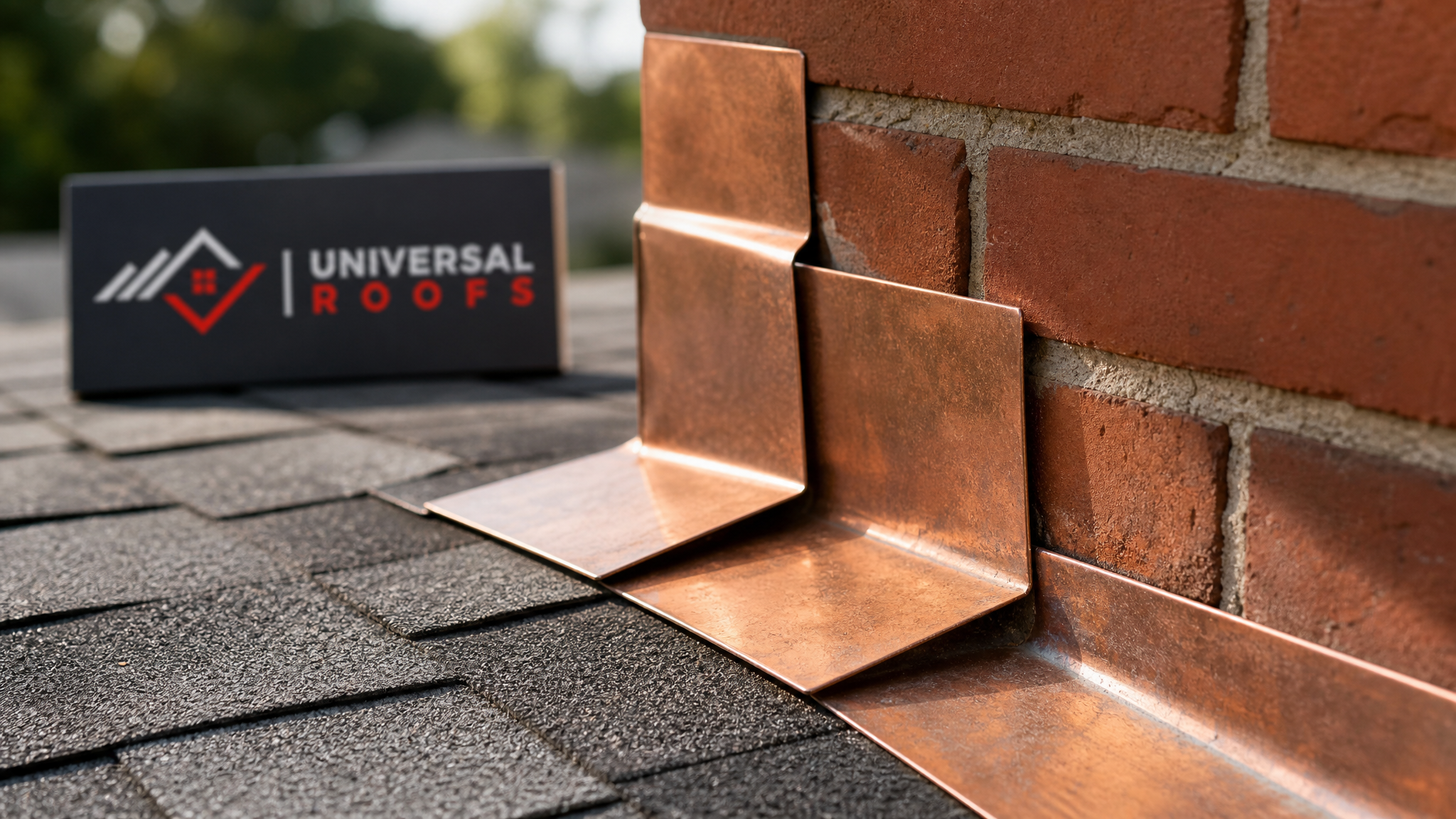
Copper is soft enough to be formed into tight step-flashing pieces that tuck neatly against brick and stone chimneys, yet stiff enough to hold its shape under decades of freeze-thaw cycling without cracking or losing its seal. It also solders cleanly, which lets an experienced roofer create fully soldered, watertight seams at complex valleys or where flashing pieces overlap, rather than relying purely on overlap and gravity the way many other materials do.
The tradeoff is cost. Copper is meaningfully more expensive than aluminum or steel, both in material and in the added labour time skilled copper work requires. For that reason, we typically recommend copper flashing selectively, on chimneys, prominent architectural details, and heritage-style homes where the visual character and multi-generational lifespan justify the investment, rather than across an entire roof deck.
Aluminum Flashing: Strengths and Ideal Applications
Aluminum is the workhorse metal for the majority of residential flashing applications across the GTA, and it earns that role through a strong balance of cost, weight, and durability. It is significantly lighter than copper or steel, which makes it easier to handle and shape on site, especially for long valley runs or wide roof-to-wall transitions.
Aluminum’s oxide layer forms almost instantly on exposure to air and provides genuinely good protection against the moisture, road salt spray, and pollution that Toronto-area roofs are exposed to. It does not rust the way steel does, and it holds paint finishes well if a colour-matched flashing is preferred for aesthetic reasons.
The one caution with aluminum involves direct contact with certain other metals or with pressure-treated lumber, both of which can accelerate galvanic corrosion if the installation is not properly isolated. An experienced roof repair team accounts for this during installation with proper underlayment and separation, which is one more reason flashing work benefits from a licensed, experienced installer rather than a do-it-yourself patch job.
Common Flashing Failure Points on GTA Roofs
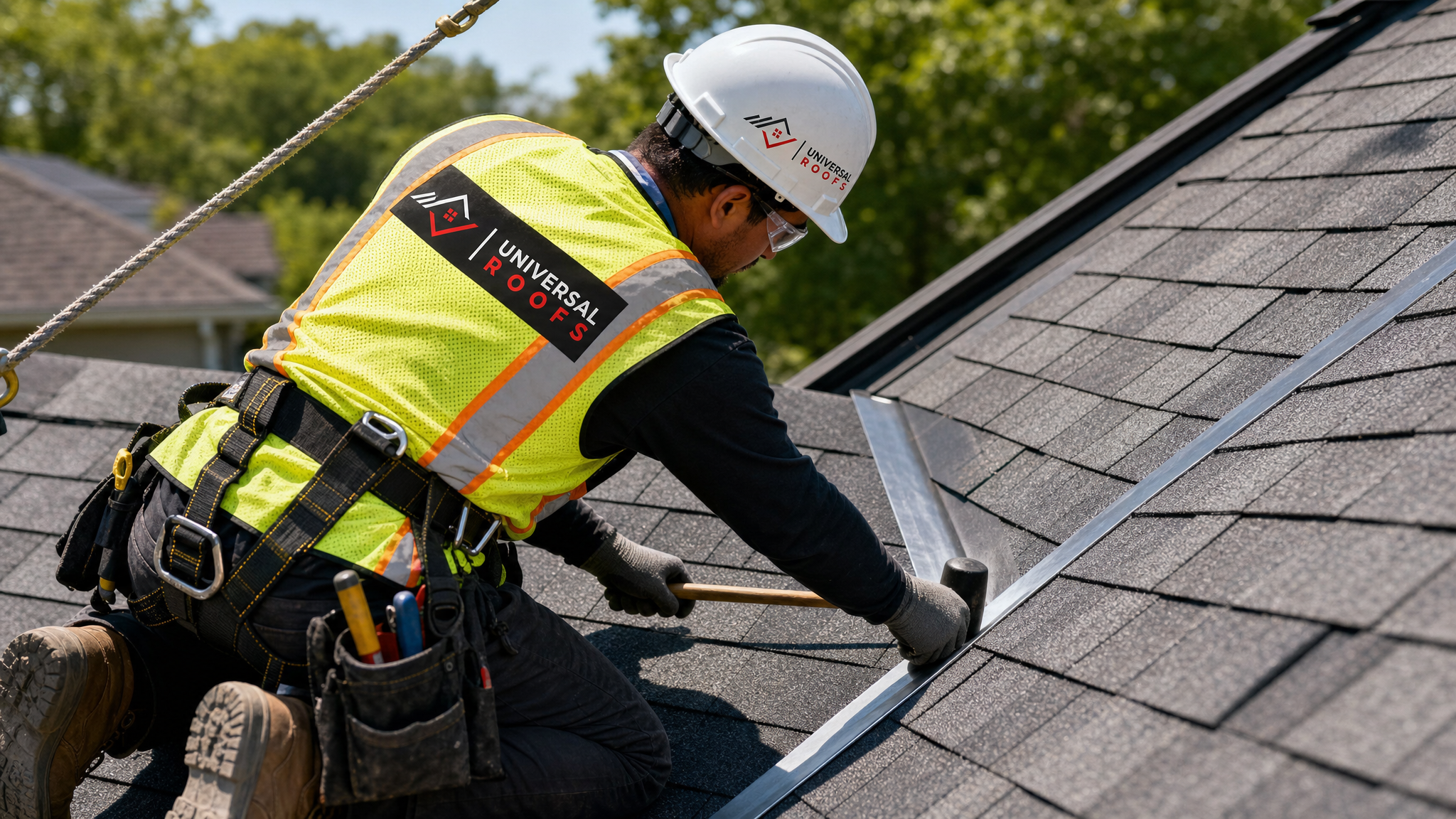
Certain locations fail more often than others, largely because they combine complex geometry with the most water exposure. Recognizing these spots helps homeowners catch problems early, before a small gap becomes a full leak.
Chimney flashing is the single most common failure point we see across Toronto, Mississauga, and Vaughan homes. The step flashing along the sides and the counterflashing at the top need to be intact and properly sealed against the masonry, and mortar joints around older chimneys often deteriorate faster than the flashing itself, opening a path for water. Roof valleys, where two roof slopes meet and funnel a large volume of water, are the second most common trouble spot, especially where cheaper materials were used originally or where ice damming has repeatedly stressed the seam.
Skylight flashing deserves particular attention because the frame expands and contracts with temperature more than the surrounding roof deck, which puts extra strain on the seal over time. If you notice condensation, staining, or a soft spot around a skylight, it is worth having the flashing inspected alongside the unit itself; sometimes a full skylight replacement is the more cost-effective long-term fix rather than repeated flashing patches. Wall-to-roof transitions, such as where a second-storey wall meets a lower roof section, and vent pipe boots are the remaining common failure points, particularly on homes over 20 years old where the original flashing material was steel or plastic rather than copper or aluminum.
| Failure Location | Common Cause | Typical Warning Sign | Recommended Fix |
|---|---|---|---|
| Chimney step/counterflashing | Mortar joint deterioration, thermal movement | Water stains on ceiling near chimney | Re-flash with copper, repoint masonry |
| Roof valleys | Ice damming, undersized original flashing | Granule loss, visible rust streaks | Replace with aluminum valley flashing |
| Skylight perimeter | Frame expansion/contraction, sealant failure | Condensation, staining around frame | Re-flash or replace skylight unit |
| Wall-to-roof transitions | Original steel flashing corroded | Rust streaks below transition line | Replace with aluminum step/base flashing |
| Vent pipe boots | Rubber collar degraded by UV | Cracked collar, staining below pipe | Replace boot, upgrade base flashing to aluminum |
Cost to Replace Roof Flashing in the GTA
Flashing replacement cost depends heavily on which material is used, how much linear footage is involved, and how accessible the roof is. As a general guide for the Toronto area in 2026, most homeowners can expect the following ranges for a typical single-family home, assuming the flashing is being replaced as a standalone repair rather than as part of a full re-roof.
These figures include labour, material, and standard disposal, but can shift based on roof pitch, chimney size, and whether masonry repointing is needed alongside the flashing work. Steep roofs, third-storey chimneys, and roofs requiring extensive scaffolding will trend toward the higher end of each range.
| Flashing Job | Aluminum Cost Range | Copper Cost Range | Typical Timeline |
|---|---|---|---|
| Single chimney flashing (step + counter) | $450 – $800 | $900 – $1,600 | Half day |
| Roof valley (per valley, standard length) | $300 – $600 | $650 – $1,100 | Half day |
| Skylight perimeter re-flash | $350 – $650 | $700 – $1,200 | Half day |
| Wall-to-roof transition (per 6 metres) | $400 – $750 | $850 – $1,400 | Half to full day |
| Whole-roof flashing package (average home) | $1,800 – $3,500 | $3,800 – $7,000 | 1-2 days |
Flashing Installation Timeline and What to Expect
Most flashing replacement jobs on a standard GTA home move quickly compared to a full roof replacement, since the work is concentrated at specific joints rather than the entire deck. A typical single-chimney or single-valley job is completed in half a day, including removal of the old flashing, inspection of the underlying decking for hidden rot, and installation of the new copper or aluminum pieces.
Larger jobs, such as re-flashing an entire roof perimeter or addressing multiple valleys and a chimney at once, generally take one to two full days. Weather is the main variable: flashing work requires a dry deck to install properly, so summer months like July offer some of the most reliable scheduling windows of the year, before the shorter days and wetter weather of late autumn make timing less predictable.
We always recommend a pre-work inspection to confirm what is hiding beneath the existing flashing. Occasionally what looks like a simple flashing replacement reveals soaked decking or compromised sheathing that needs to be addressed first, which is one reason a fixed quote should always follow a proper on-roof assessment rather than a photo-only estimate.
Flashing on Flat and Low-Slope Roofs
Flashing plays an equally critical role on flat and low-slope roofs, though the details differ from a standard sloped shingle roof. On flat roofing systems, metal flashing is used primarily at parapet walls, roof edges, and around mechanical penetrations, working alongside the membrane rather than shingles to manage water movement.
Because flat roofs hold water longer than sloped roofs during heavy rain, the flashing at these transition points takes on outsized importance. Aluminum is generally the preferred metal here due to its light weight and ease of forming into the long, continuous edge details that flat roofs require, while copper is occasionally specified for parapet caps on commercial or architecturally prominent buildings where its durability and appearance are worth the added cost.
Maintenance Tips to Extend Flashing Life
Even the best roof flashing materials benefit from periodic attention. A simple visual check from the ground twice a year, ideally in spring and again in late summer, can catch early warning signs like streaking, gaps, or lifted edges before they become active leaks.
Keeping gutters and valleys clear of leaves and debris prevents water from pooling against flashing seams longer than necessary, which is one of the most common accelerants of premature failure. Homeowners should also watch for any signs of masonry deterioration around chimneys, since a flashing seal is only as good as the surface it is sealed against; repointing loose mortar protects the flashing work above it.
Finally, any roof work involving satellite dishes, solar panel mounts, or new vent installations should always route through a qualified roofer who understands how to properly integrate new penetrations with existing flashing, rather than a general contractor who may caulk around a penetration instead of properly flashing it. Caulk is a maintenance item, not a flashing substitute, and it typically fails within a few years where proper metal flashing would have lasted decades.
Choosing the Right Roofer for Flashing Work
Flashing is detail work, and the quality gap between a rushed installation and a properly formed, soldered, or overlapped flashing system is enormous even though the materials themselves might look similar from the ground. When evaluating a roofing contractor for flashing repair or replacement, ask specifically what material they plan to use and why, and be wary of any quote that defaults to the cheapest steel option without discussing copper or aluminum as alternatives.
It is also worth checking a contractor’s track record directly. Our reviews reflect two decades of flashing, roofing, and attic ventilation work across Toronto, Mississauga, Brampton, Vaughan, Markham, Oakville, and the wider GTA, and our FAQ page answers many of the other questions homeowners commonly have before booking an inspection. You can also read more about our history and licensing on our about page.
We serve homeowners throughout the Toronto core, as well as the Peel Region, York Region, Halton Region, and Durham Region, so wherever your property sits in the GTA, our teams are familiar with the local building conditions and code requirements that affect a proper flashing installation.
Why are copper and aluminum the best roof flashing materials compared to steel?
Is copper or aluminum better for roof flashing?
How do I know if my roof flashing needs to be replaced?
How much does it cost to replace flashing on a roof in Toronto?
Can flashing be repaired instead of fully replaced?
Does copper and aluminum flashing work on flat roofs too?
Need Help With Why Are Copper and?
If you are dealing with a suspected flashing leak, ageing chimney flashing, or simply want to know whether your roof would benefit from upgrading to copper or aluminum, the team at Universal Roofs can inspect the details and give you a clear, honest recommendation.
Call us today at (416) 732-2421 or request a free inspection to get started.
Universal Roofs proudly serves Toronto, Mississauga, Brampton, Vaughan, Markham, Oakville and the GTA since 2005.