
Flashing failure is one of the most common reasons a Toronto roof starts to leak, and it is also one of the most common places where homeowners reach for whatever caulking tube is sitting on the garage shelf. That quick fix rarely lasts a full GTA winter, and many traditional flashing sealants and coatings contain solvents, VOCs, or petroleum-based asphalt products that are hard on both your roof and the environment. The good news is that roof flashing repair does not have to mean reaching for the harshest product on the shelf.
Over the past two decades of working on roofs across the GTA, we have tested nearly every flashing repair method that claims to be “green,” from recycled metal systems to plant-based sealants. Some hold up beautifully through our freeze-thaw cycles; others fail within a single season. This guide walks through seven genuinely eco-friendly alternatives for repairing roof flashing, what each one costs, how long it lasts, and when it makes sense to call in a professional rather than tackle it yourself.
Whether you are dealing with a leaking chimney, a rusted valley, or flashing around a skylight that has started to separate from the roof deck, there is an environmentally responsible way to fix it that will actually hold up to Toronto’s summer heat, winter freeze, and everything in between.
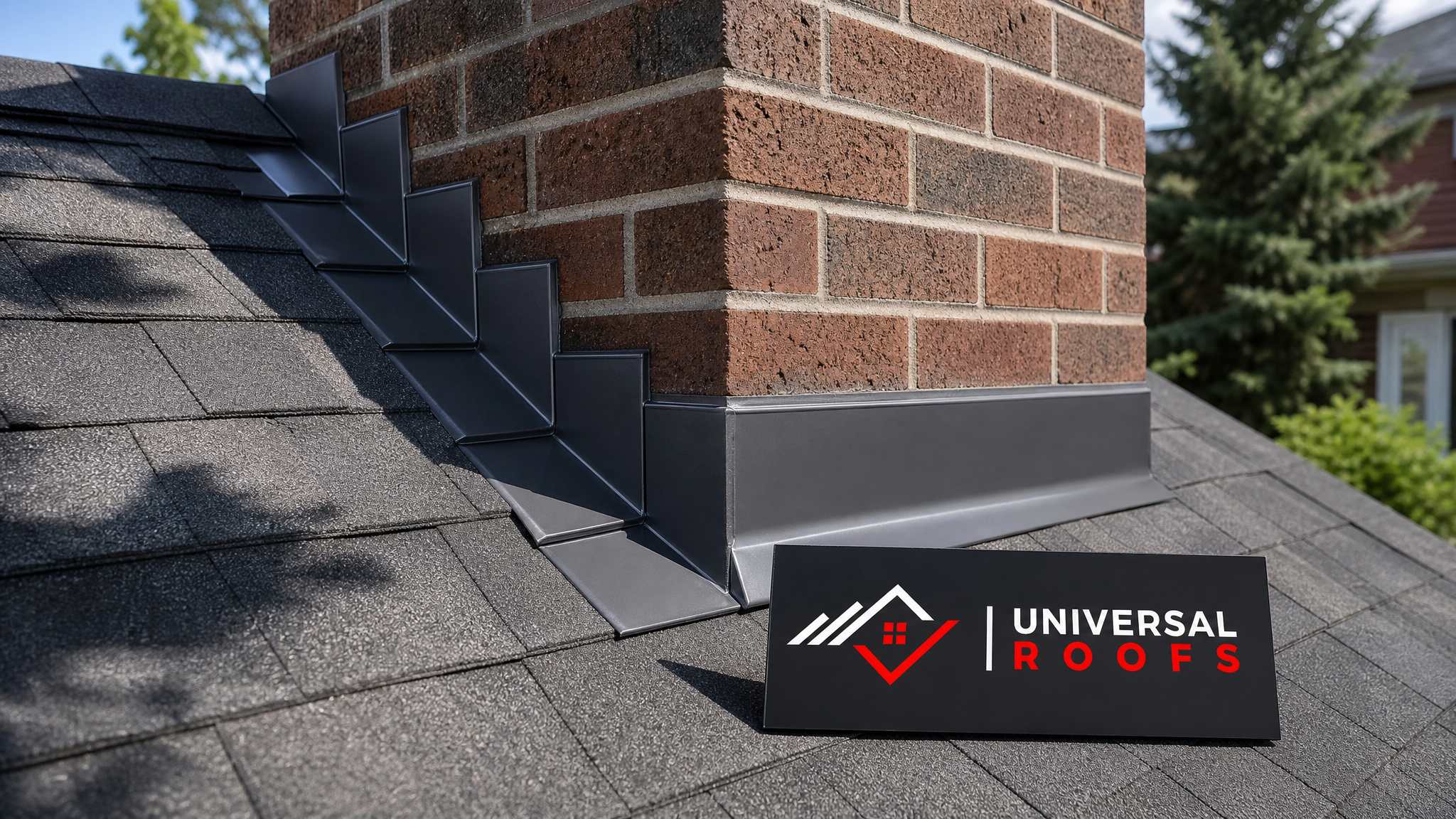
Why Traditional Flashing Repairs Are an Environmental Problem
Before getting into the alternatives, it helps to understand what makes conventional flashing repair products a poor environmental choice in the first place. Most off-the-shelf roofing cements and flashing sealants are built on an asphalt or bitumen base, cut with petroleum solvents to keep them workable in a tube or pail. When these products cure, they off-gas volatile organic compounds (VOCs) into the air. When they eventually fail (most last only three to five years), the old material typically gets scraped off and landfilled along with the flashing itself if it is galvanized steel that has already rusted through.
There is also a hidden energy cost. Producing new aluminum or steel flashing from raw ore is extremely energy-intensive, and manufacturing petroleum-based sealants draws on a non-renewable resource. Add in the transportation footprint of trucking heavy rolls of flashing and pails of cement across the country, and a “simple” flashing repair carries more embodied carbon than most homeowners realize.
Choosing an eco-friendly alternative usually means one, or more, of three things: using recycled or reclaimed materials, choosing low-VOC or solvent-free sealants, or selecting a repair method that extends the service life of the existing flashing so less material needs to be manufactured and disposed of at all. The seven options below cover all three approaches, and each can favour a different part of your roof depending on the type of failure you are seeing.
1. Recycled Aluminum and Steel Flashing
The single biggest environmental win in flashing repair is simply choosing recycled-content metal over virgin stock. Aluminum flashing made from recycled aluminum uses roughly 95 percent less energy to produce than aluminum smelted from raw bauxite ore, and it performs identically once installed. Recycled steel flashing offers similar savings, typically in the 60 to 75 percent range depending on the mill.
Most metal suppliers in Ontario now carry recycled-content coil stock as a standard option, not a specialty order, so there is rarely a price premium. The environmental benefit comes at no functional cost: recycled aluminum flashing resists Toronto’s freeze-thaw cycles just as well as new aluminum, and it will not rust the way old galvanized steel eventually does.
When we replace step flashing, counter-flashing, or valley flashing during a roof repair, we specify recycled-content stock whenever the homeowner asks for a greener option, and it has become close to our default recommendation for anyone renovating in Toronto, Mississauga, or Vaughan.
2. Plant-Based and Low-VOC Flashing Sealants
The sealant used to bed and finish flashing edges matters just as much as the metal itself. Conventional roofing cement is asphalt-based and loaded with solvents that release VOCs for weeks after application. Plant-based alternatives, often formulated from soy, linseed, or other bio-based oils blended with mineral fillers, cure to a similarly flexible, waterproof finish with a fraction of the off-gassing.
Low-VOC acrylic and silicone sealants are another solid option. Many manufacturers now offer sealants rated under 50 grams per litre of VOCs, compared with 300-plus grams per litre for standard roofing cement. These lower-VOC formulas have also improved dramatically in UV resistance over the last five years, which matters given how much direct summer sun a south-facing Toronto roofline takes on.
One caution worth noting: not every “eco” sealant is rated for the temperature swings we see here, from -20 degrees Celsius midwinter nights to 35 degrees Celsius humid July afternoons. Always analyse the manufacturer’s temperature range before committing a whole roof section to a new product.
3. Reclaimed Copper Flashing
Copper is naturally one of the longest-lasting flashing materials available, often outlasting the shingles around it by decades, and reclaimed copper stock is widely available through architectural salvage suppliers in the GTA. Because copper does not degrade the way some metals do, recycled copper flashing performs identically to virgin copper while avoiding the substantial energy cost of copper mining and smelting.
Reclaimed copper is a particularly good match for character homes in older Toronto neighbourhoods where the existing flashing is already copper and a patch repair needs to match. It develops the same green-grey patina over time as new copper, so a well-matched reclaimed piece is visually indistinguishable within a season or two.
The main tradeoff is cost. Reclaimed copper still commands a premium over aluminum or steel, so it tends to make the most sense for heritage properties, prominent street-facing sections, or homeowners who plan to stay in the house long enough to benefit from a flashing repair that could realistically outlast the rest of the roof.
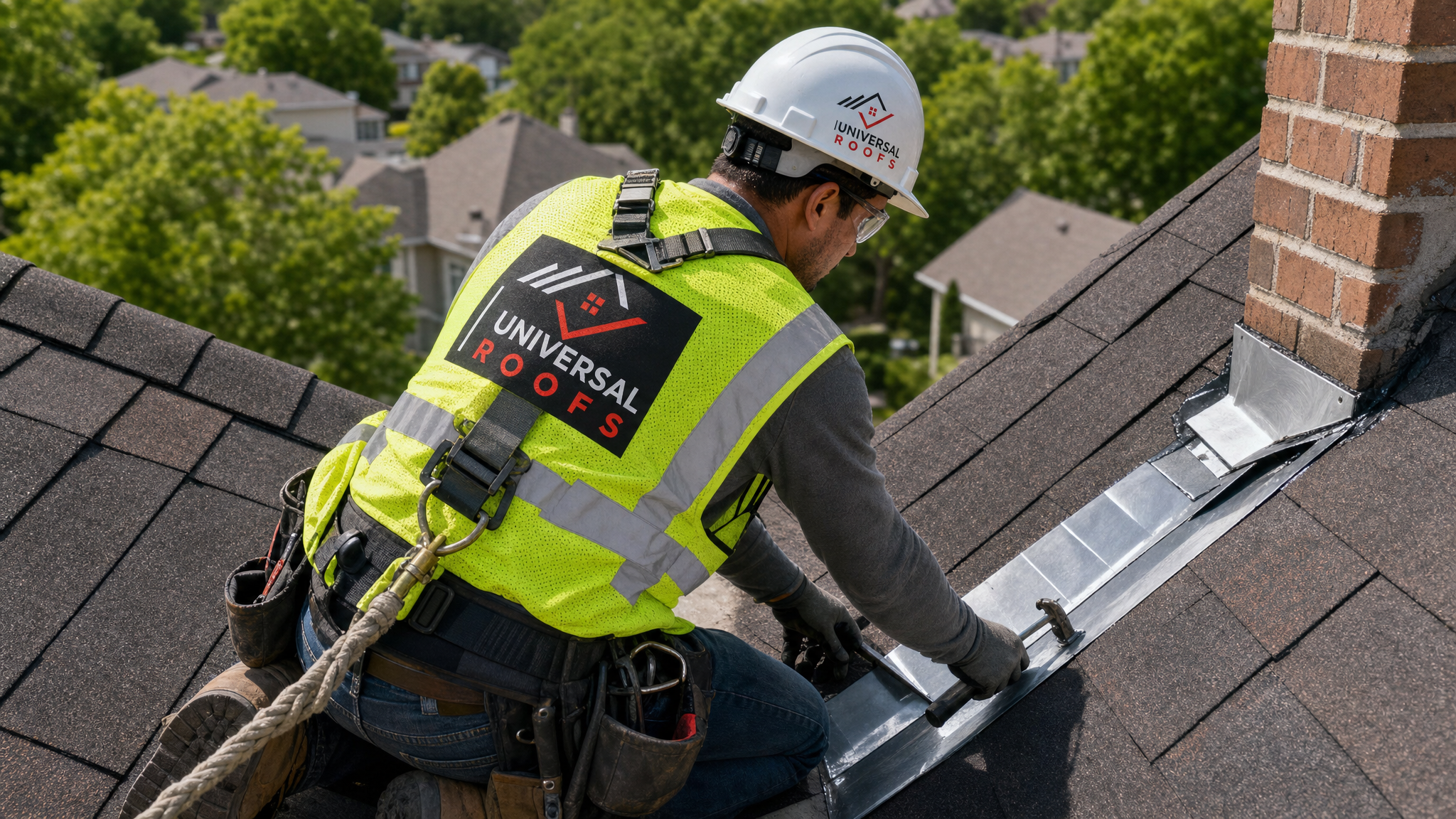
4. Butyl Rubber Flashing Tape (Solvent-Free)
Self-adhering butyl rubber flashing tape has become one of the most practical eco-friendly repair options for smaller flashing failures, particularly around vent pipes, chimney corners, and skylight curbs. Unlike traditional roofing cement, butyl tape contains no solvents and requires no torch, no mixing, and no curing time that off-gasses VOCs into the surrounding air.
Butyl tape bonds through pressure and heat from the sun rather than a chemical reaction, and it stays flexible across an extremely wide temperature range, which suits Toronto’s climate well. It also produces almost no waste: a homeowner can cut exactly the length needed from a roll, rather than opening a full pail of cement and discarding the unused portion once it skins over.
Butyl tape is best suited to smaller repairs and transitions rather than as a substitute for proper metal flashing on a full valley or chimney saddle. Combined with recycled metal flashing, it forms one of the most genuinely low-impact repair combinations available for a targeted roof repair job.
5. Recycled Rubber and EPDM Flashing Boots
Pipe boots and collar flashings around vents, exhaust stacks, and skylight penetrations wear out faster than almost any other flashing component because they flex with every temperature swing. Traditional replacement boots are made from virgin neoprene or PVC. Recycled rubber and post-industrial EPDM boots now match or exceed the performance of virgin material while diverting rubber waste from landfill.
EPDM (ethylene propylene diene monomer) rubber is inherently well-suited to reuse because it is a thermoset material that holds its properties through recycling far better than many plastics. Recycled EPDM boots carry the same 20-plus year expected service life as virgin EPDM and install with the same techniques, so there is no compromise for the roofer or the homeowner.
This is one of the easiest substitutions to make, since the recycled version is often priced the same as standard stock at most Ontario roofing suppliers. If your contractor does not mention it, it is worth asking directly whether recycled rubber boots are available for the repair.
6. Reflective, Low-Carbon Metal Coatings
For flashing that is structurally sound but showing surface corrosion or chalking, a reflective aluminum or acrylic-based metal coating can extend its service life by five to ten years without removing and replacing the metal at all. Reusing existing flashing rather than manufacturing new material is, from an embodied-carbon standpoint, almost always the greenest option on this list.
Modern reflective coatings also reduce the surface temperature of the flashing on hot summer days, which lowers thermal cycling stress on the seams and the surrounding shingles. Many are water-based rather than solvent-based, cutting VOC emissions significantly compared with older oil-based metal paints.
Coating only makes sense when the underlying metal has not rusted through. A quick inspection during your roof repair visit will tell you whether the flashing is a good coating candidate or whether it has deteriorated past the point where a coating will hold.
7. Rainwater-Diverting Design Repairs (Material-Free Prevention)
The most sustainable flashing repair is sometimes the one that requires no new material at all: correcting the underlying drainage problem that caused the flashing to fail in the first place. Flashing rarely fails purely from age; more often, it fails because water is pooling against it, ice is damming above it, or a nearby gutter is overflowing onto it every time it rains.
Adjusting the slope of a cricket behind a chimney, adding a properly sized diverter above a dormer, or improving attic ventilation to reduce ice damming (see our attic ventilation services) can eliminate the conditions that keep degrading the flashing, meaning the repair you just completed with any of the six materials above will last far longer than it otherwise would. In some cases, correcting drainage means a flashing repair does not need to be repeated again for 15 to 20 years instead of five.
This is genuinely the lowest-impact option on the list because it uses the least new material overall, but it requires a trained eye to diagnose correctly, which is why we always assess the surrounding roof geometry, not just the failed flashing itself, whenever we are called out for a repair.
Comparing the Seven Eco-Friendly Flashing Repair Alternatives
| Method | Typical Lifespan | Relative Cost | Best Use Case |
|---|---|---|---|
| Recycled aluminum/steel flashing | 25-40 years | Low-Medium | Full flashing replacement, any roof type |
| Plant-based/low-VOC sealants | 5-8 years | Low | Sealing joints, seams, and edges |
| Reclaimed copper flashing | 50-plus years | High | Heritage homes, prominent rooflines |
| Butyl rubber flashing tape | 10-15 years | Low | Small penetrations, spot repairs |
| Recycled EPDM/rubber boots | 20-plus years | Low-Medium | Vent pipes, exhaust stacks |
| Reflective metal coatings | 5-10 years added | Low | Sound metal with surface wear only |
| Drainage/design correction | 15-20 years | Medium | Recurring failures at the same spot |
Estimated Costs for GTA Homeowners
Costs vary by roof pitch, access difficulty, and how much of the flashing run needs replacing, but here are realistic ranges we see across Toronto, Mississauga, and the surrounding region.
| Repair Type | Materials Cost Range | Labour Cost Range | Total Estimate |
|---|---|---|---|
| Spot repair with butyl tape | $15 – $60 | $150 – $300 | $165 – $360 |
| Recycled rubber pipe boot swap | $25 – $75 | $150 – $250 | $175 – $325 |
| Chimney flashing (recycled aluminum) | $150 – $400 | $400 – $900 | $550 – $1,300 |
| Valley flashing (recycled steel) | $200 – $500 | $500 – $1,100 | $700 – $1,600 |
| Reclaimed copper accent flashing | $400 – $1,200 | $500 – $1,200 | $900 – $2,400 |
| Full metal coating application | $100 – $300 | $300 – $700 | $400 – $1,000 |
These figures assume a straightforward single-storey or two-storey roof with normal access. Steep pitches, multiple dormers, or roofs requiring specialized fall-protection setups will push labour costs toward the higher end of these ranges.
Troubleshooting: Matching the Symptom to the Right Fix
Not every flashing problem calls for the same solution. Use this table to narrow down which of the seven alternatives above is the best starting point for what you are actually seeing on your roof.
| Symptom | Likely Cause | Recommended Fix |
|---|---|---|
| Rust streaks below chimney | Corroded galvanized flashing | Replace with recycled aluminum or steel |
| Cracked caulking at flashing edges | Solvent-based sealant dried out | Re-seal with plant-based/low-VOC sealant |
| Small drip near a vent pipe | Perished rubber boot | Replace with recycled EPDM boot |
| Recurring leak at same spot each spring | Ice damming or poor drainage | Correct drainage/attic ventilation |
| Chalky, faded metal but no holes | UV and oxidation wear | Apply reflective metal coating |
| Small gap opening at a skylight curb | Minor seam separation | Seal with butyl rubber flashing tape |
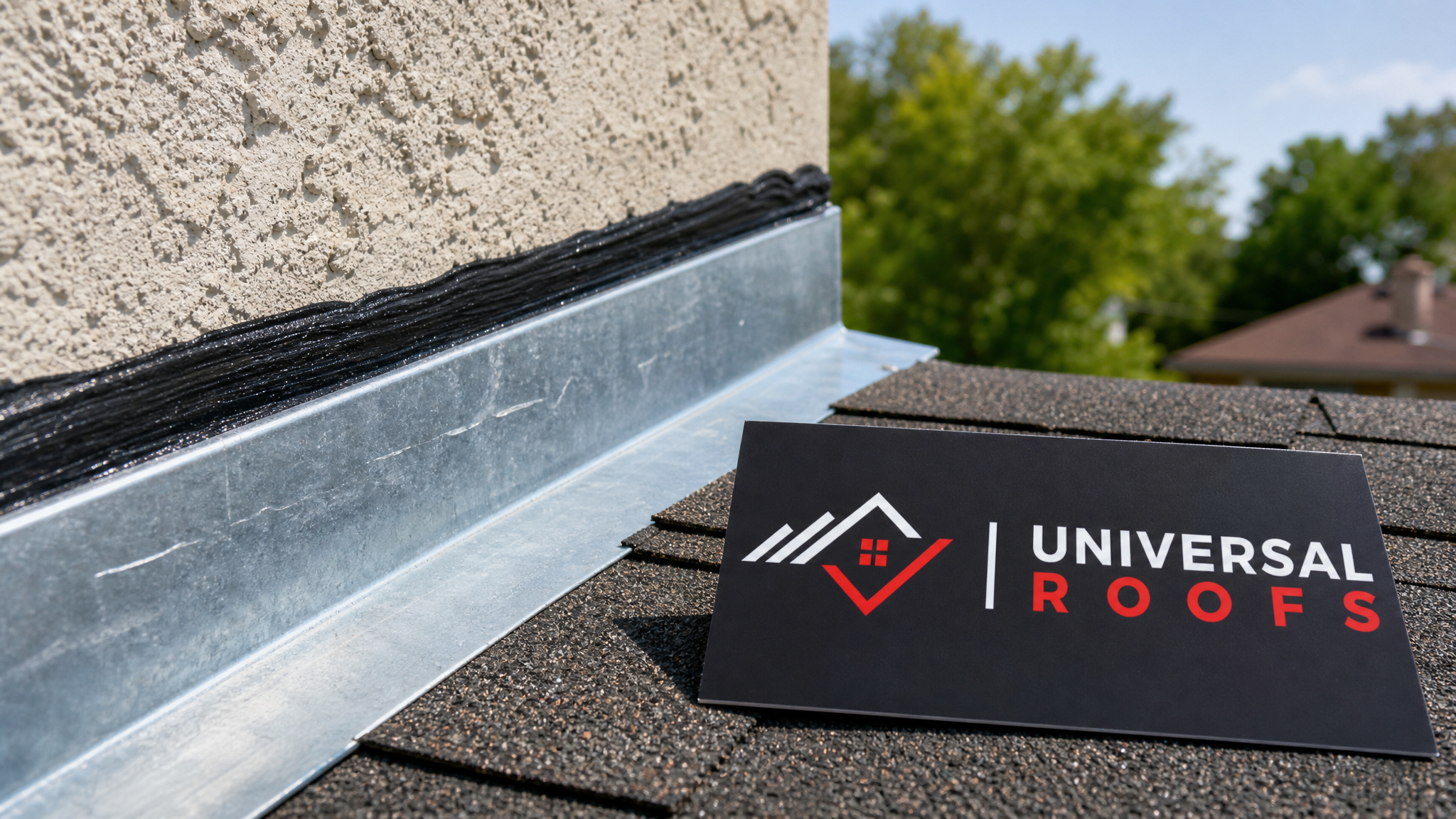
When to DIY and When to Call a Professional
Butyl tape spot repairs and small sealant touch-ups are within reach for a comfortable DIYer working from a stable ladder on a single-storey section. Anything involving removing shingles to swap out step flashing, working on a steep pitch, or replacing valley or chimney flashing should go to a licenced roofer. Flashing sits at the most leak-prone junctions on the entire roof, and a rushed reinstall can turn a $300 repair into a $3,000 interior water-damage claim.
It is also worth having a professional assess whether the flashing failure is isolated or a symptom of a broader issue, such as an aging roof nearing the end of its service life. If more than one flashing section has failed within the same year or two, that is often a sign the whole roofing system, not just the flashing, needs a closer look through a roof replacement assessment rather than a series of repeated patches.
Our crews serve homeowners across Toronto, the Peel Region, York Region, Halton Region, and Durham Region, and flashing repair is one of the most frequent calls we get each summer once homeowners notice water stains that appeared over the winter.
Maintaining Eco-Friendly Flashing Repairs Long-Term
Even the greenest repair will fail early if it is never inspected. A twice-yearly check, ideally each spring and each fall, catches small gaps in sealant or minor rust spots before they become full leaks. Clear away leaves and debris that collect against flashing seams, since trapped organic matter holds moisture directly against the metal and accelerates corrosion, even on recycled aluminum or steel.
If your roof has flat roofing sections, pay particular attention to the flashing where the flat section meets a sloped roofline or parapet wall, since these transitions see the highest water volume during heavy summer storms. For homes with a skylight, flashing around the curb is worth checking any time you notice condensation or staining on the interior trim, since a slow flashing leak there can go unnoticed for months before it shows up as a ceiling stain. If the skylight unit itself is older, it may be worth pairing the flashing repair with a broader look at skylight replacement options.
Keeping a simple record of when each flashing section was last repaired or coated also helps a future contractor, or future you, understand which sections are due for another look, particularly for reflective coatings that need reapplication every five to ten years.
Choosing Between Repair and Replacement
Eco-friendly flashing repair makes the most sense when the surrounding shingles and roof deck are still in good condition and the flashing failure is isolated. If the roof itself is approaching 20 to 25 years old, or if flashing failures are appearing in multiple locations simultaneously, it is often more sustainable overall, counting materials, labour trips, and long-term water damage risk, to plan a full roof replacement that incorporates recycled flashing throughout rather than repeatedly patching an ageing system section by section.
A straightforward way to decide is to ask how many separate flashing repairs the roof has needed in the last three years. One or two isolated repairs still favour patching with one of the methods above. Three or more, especially if they involve different locations on the roof, usually points toward a system-wide problem worth a full inspection.
You can read about how other GTA homeowners have approached similar decisions on our reviews page, and our FAQ page covers additional questions about repair timelines, warranty coverage, and what to expect during an inspection visit. You can also learn more about our crews and our history on the about page.
What are the best eco friendly roof flashing repair alternatives for a Toronto home?
Are eco friendly roof flashing repair alternatives more expensive than traditional methods?
How long do eco friendly flashing repairs last compared to traditional cement patches?
Can I install eco friendly flashing repairs myself?
Do eco friendly roof flashing repair alternatives work well in Toronto’s winter climate?
How do I know if my flashing needs repair or the whole roof needs replacing?
Need Help With 7 Eco Friendly Roof?
Whether you need a single spot repair or a full flashing overhaul using recycled and low-VOC materials, Universal Roofs has the experience to get it right the first time.
Call us today at (416) 732-2421 or request a free inspection to get started.
Universal Roofs proudly serves Toronto, Mississauga, Brampton, Vaughan, Markham, Oakville and the GTA since 2005.