
A slow drip in the attic or a stain spreading across the ceiling usually means the same thing: water has found a weakness in your roof, and it is not going to fix itself. Before you commit to a full tear-off, it is worth understanding how modern roof coatings for effective leak repair can seal, waterproof, and extend the life of an ageing roof system for a fraction of the cost of replacement. Coatings are not a fix for every situation, but when used correctly on the right substrate, they are one of the most cost-effective tools in a roofer’s kit.
This guide breaks down the major coating types available to homeowners and property managers across the Greater Toronto Area, explains which leaks each one is actually suited to fix, and walks through realistic costs, application steps, and the situations where a coating is the wrong choice. We have been repairing and coating roofs across the GTA since 2005, and the patterns we see are consistent: most coating failures come from applying the wrong product to the wrong surface, or skipping proper prep. Get those two things right and a quality coating can outperform expectations for a decade or more.
Why Roof Coatings Work for Leak Repair
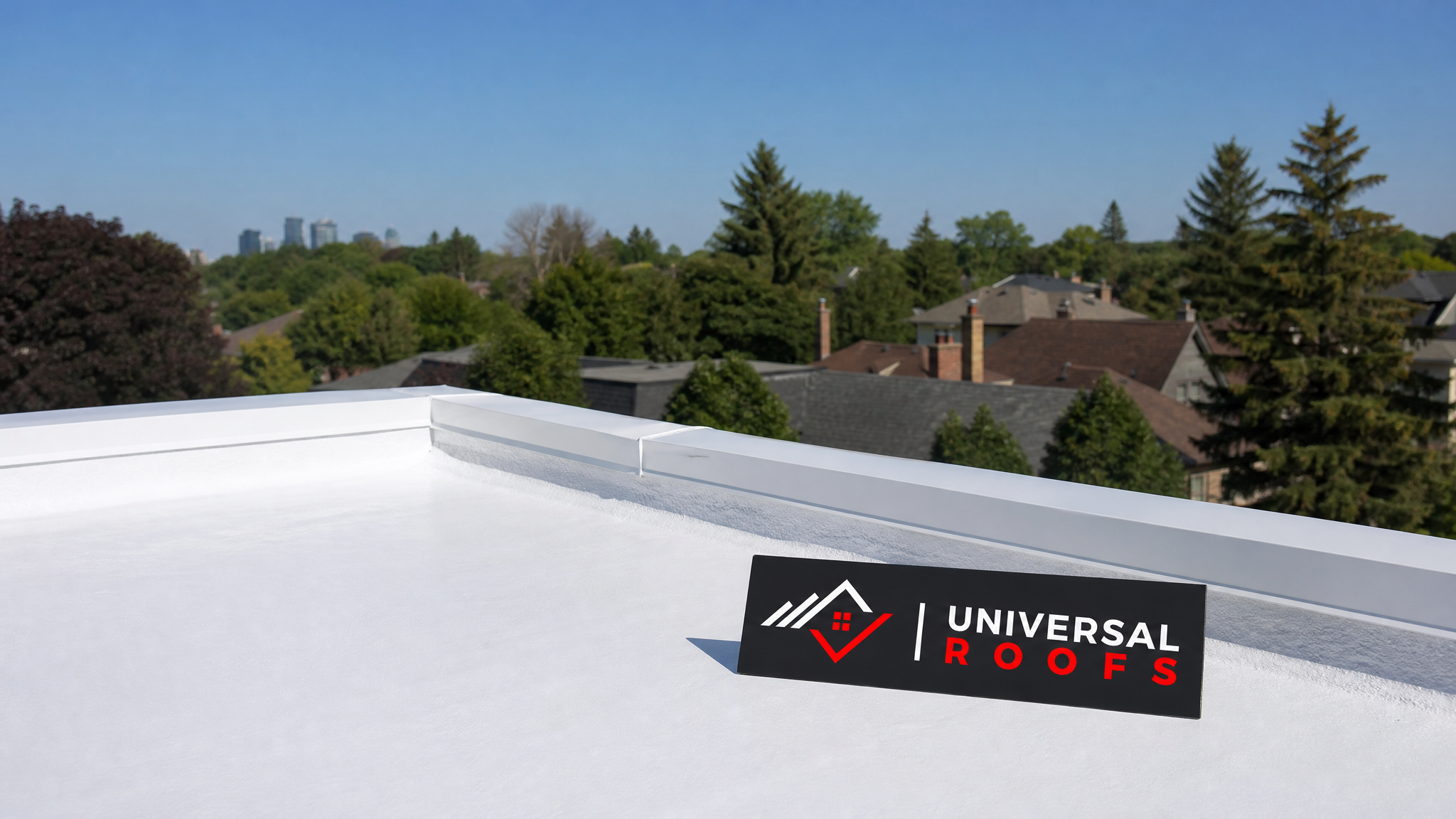
A roof coating is a fluid-applied membrane, usually rolled, sprayed, or brushed on, that cures into a seamless, monolithic layer over the existing roof surface. Unlike shingles or membrane sheets, which rely on overlaps and seams, a properly applied coating has no joints for water to exploit. That seamlessness is exactly why coatings are so effective at solving chronic leak problems around flashings, pipe boots, seams, and hairline cracks that keep reopening no matter how many times someone patches them with roofing cement.
Coatings do two jobs at once. First, they waterproof: a cured coating is essentially a rubber-like or resin-like skin that shrugs off ponding water, wind-driven rain, and the freeze-thaw cycling that is brutal on Toronto roofs every winter and spring. Second, many coatings reflect solar heat, which reduces thermal expansion and contraction of the roof deck and membrane underneath. Less movement means fewer new cracks forming at fasteners and seams, which means fewer future leaks. Homeowners considering a coating as part of a broader roof repair plan should think of it as leak prevention as much as leak correction.
It is important to be honest about limitations too. Coatings restore and extend an existing roof system; they do not replace structurally compromised decking, rotted wood, or a membrane that has already deteriorated past the point of adhesion. If your roof deck is soft underfoot or you can see daylight through the sheathing, a coating is not the answer — you need a proper roof replacement assessment first.
Silicone Roof Coatings: Best for Ponding Water and Flat Roofs
Silicone coatings have become the go-to choice for flat and low-slope roofs in our market, and for good reason. Silicone is inherently hydrophobic, meaning it does not absorb water and will not soften, blister, or degrade even when it sits in standing water for days at a time. That makes it the strongest option for the ponding-water problems so common on flat commercial and residential roofs across Toronto, Mississauga, and the rest of the GTA, where drainage slopes are often minimal.
Silicone also holds up exceptionally well to UV exposure without chalking or eroding the way some acrylics do over long exposure periods. The trade-off is that silicone is slippery when wet and it is genuinely difficult to recoat down the road, since almost nothing bonds well to a fully cured silicone surface except more silicone. It is also one of the pricier coating options up front. For flat roofs with chronic ponding leaks, though, silicone consistently delivers the best long-term result, which is why it is our default recommendation on most flat roofing projects where leak history points to standing water.
Acrylic Roof Coatings: Cost-Effective for Sloped and Metal Roofs
Acrylic coatings are water-based, easy to apply, and considerably less expensive than silicone or polyurethane systems. They bond well to a wide range of substrates including metal, modified bitumen, and properly primed asphalt, and they offer strong reflectivity that helps knock down summer attic temperatures. For sloped roofs where ponding is not the primary concern, acrylic is often the most sensible economic choice for sealing seam leaks, fastener leaks, and minor cracking.
The catch with acrylic is water sensitivity during cure. If a fresh acrylic coating gets rained on before it has fully cured, it can wash off or fail to bond properly, which is a real scheduling risk in a climate like ours where a clear forecast window is never guaranteed. Acrylic also is not the right call for roofs with standing water, since prolonged saturation will eventually break down the film. We typically recommend acrylic coatings for metal roofing, or as a maintenance recoat on membranes that are still structurally sound but showing surface wear.
Polyurethane Coatings: Built for Foot Traffic and Impact Resistance
Polyurethane coatings come in two forms: aromatic (a cheaper base coat, UV-sensitive) and aliphatic (a UV-stable topcoat). Together, or as an aliphatic-only system, polyurethane delivers the best abrasion and impact resistance of any common coating type. If your roof gets regular foot traffic from maintenance access, rooftop equipment servicing, or patio use, polyurethane resists punctures and scuffing far better than silicone or acrylic.
Polyurethane also performs reasonably well with some ponding tolerance, though not as well as silicone in permanent ponding conditions. It is more expensive and generally requires more careful surface prep and moisture testing before application, since it is less forgiving of a damp substrate than acrylic. For roofs that combine leak concerns with heavy mechanical or foot traffic, a polyurethane system is often worth the extra investment.
Comparing the Top Roof Coating Options
| Coating Type | Best For | Ponding Water Tolerance | Typical Lifespan | Relative Cost |
|---|---|---|---|---|
| Silicone | Flat roofs, chronic ponding, UV exposure | Excellent | 15-20 years | High |
| Acrylic | Sloped roofs, metal roofs, budget recoats | Poor | 8-12 years | Low-Moderate |
| Polyurethane (aliphatic) | Foot traffic, mechanical rooms, durability | Moderate | 12-15 years | High |
| Elastomeric rubber (EPDM-based) | Older flat membranes, seam sealing | Good | 10-15 years | Moderate |
| Asphalt emulsion | Quick, low-cost patch sealing | Fair | 3-5 years | Low |
Matching the Coating to the Type of Leak
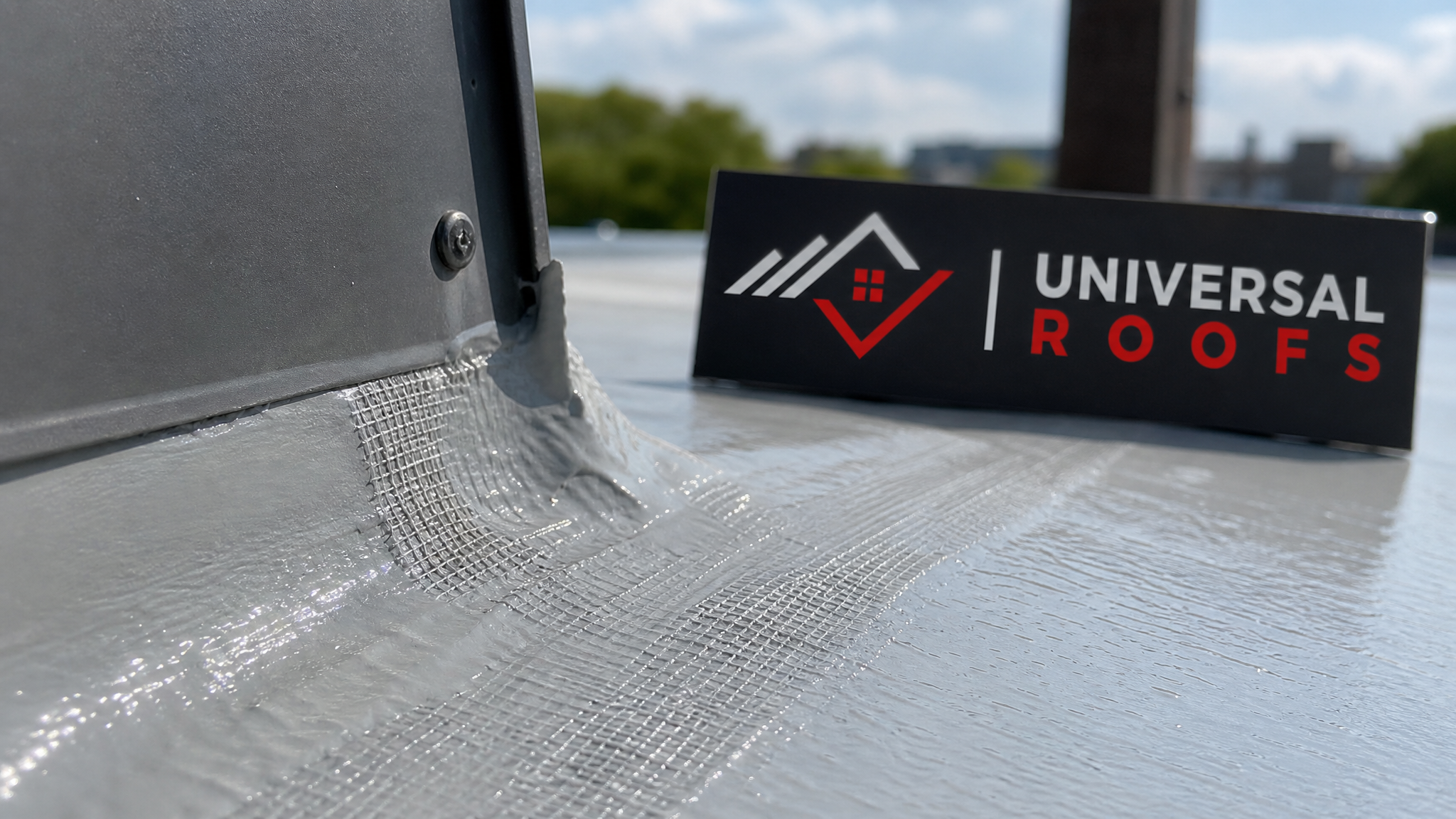
Not every leak calls for the same coating, and diagnosing the failure point correctly matters more than the coating brand you choose. Seam leaks on a membrane roof are usually best handled with a fabric-reinforced base coat under a silicone or polyurethane topcoat, since the fabric bridges movement at the seam. Flashing leaks around chimneys, vents, and parapet walls typically need a liquid-applied flashing-grade coating with embedded polyester mesh, applied generously and built up in layers rather than a single thin pass.
Fastener-related leaks on metal roofs, common on older standing-seam and corrugated systems, respond well to acrylic coatings applied over properly primed and treated fastener heads. Skylight curb leaks are their own category entirely — coatings can help seal the surrounding roof deck, but if the leak originates at the skylight seal itself, no roof coating will solve it. That requires attention to the unit itself; our skylights and skylight replacement teams handle that separately from general roof coating work.
Application Process: What a Proper Coating Job Involves
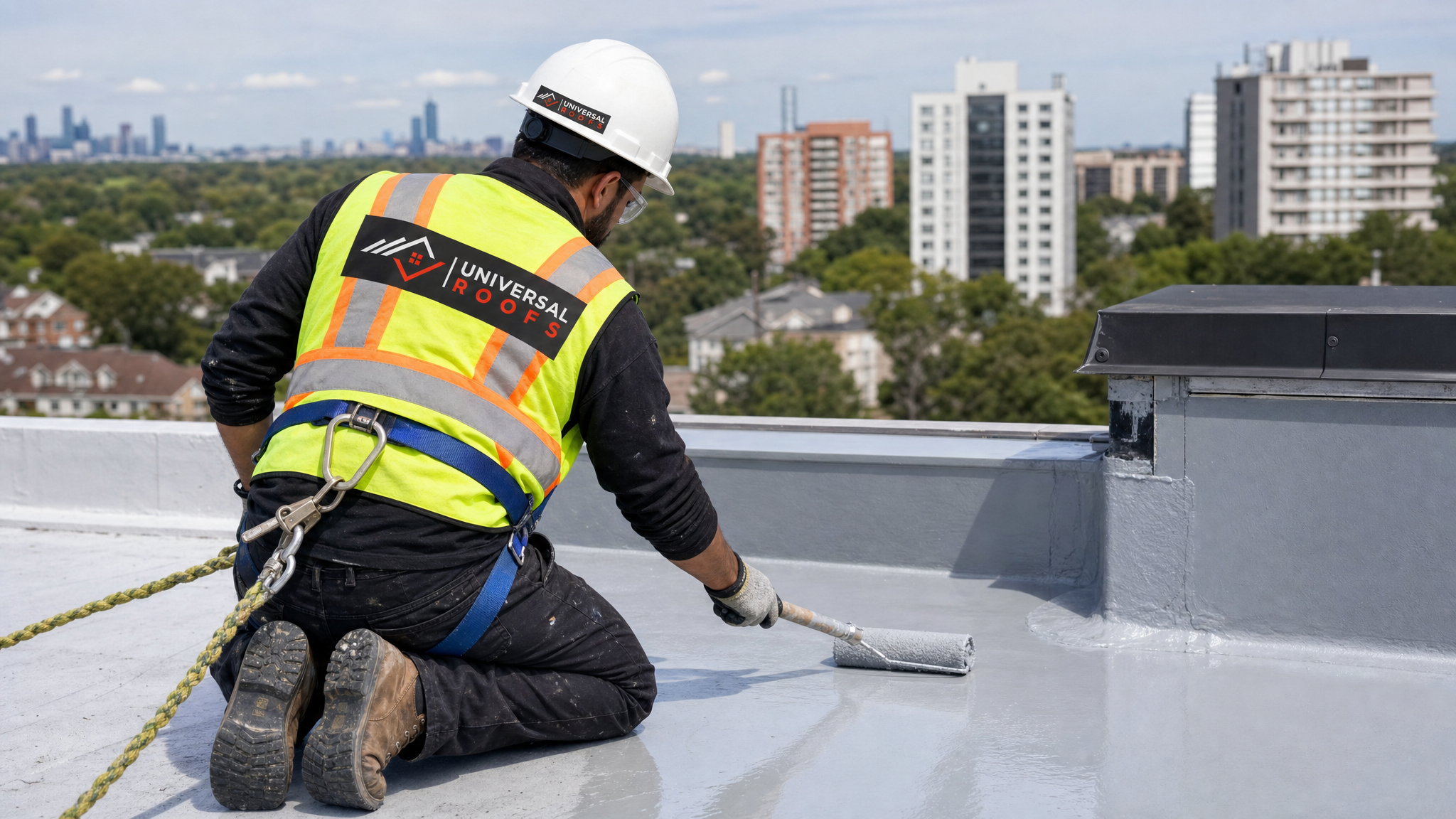
A coating is only as good as the prep work underneath it. Skipping steps here is the single most common reason coatings fail within a year or two instead of lasting a decade.
| Step | What Happens | Why It Matters |
|---|---|---|
| 1. Roof inspection and moisture scan | Technician checks for wet insulation, soft decking, and active leak sources | Coating over trapped moisture traps the problem, not the fix |
| 2. Cleaning and pressure washing | Removes dirt, algae, chalking, and loose debris | Poor adhesion is the top cause of early coating failure |
| 3. Repair of cracks, blisters, and seams | Cut out and patch failed membrane sections before coating | A coating cannot bridge a structural or membrane failure on its own |
| 4. Priming (where required) | Bonds the coating chemically to metal, asphalt, or aged membrane | Some coatings will not adhere to bare substrate without primer |
| 5. Detail work at flashings and penetrations | Reinforcing fabric embedded in a base coat around vulnerable points | Most leaks originate at penetrations, not open field areas |
| 6. Base coat and topcoat application | Applied at manufacturer-specified thickness, often two coats | Under-thickness coatings wear through and fail prematurely |
| 7. Cure time and final inspection | Allowed to cure fully before foot traffic or rain exposure | Premature exposure to moisture during cure compromises the membrane |
Cost Considerations and Return on Investment
Coating costs vary by product, roof condition, and square footage, but the general pattern holds across the GTA market: coatings run meaningfully less than full replacement while extending roof service life by 10 years or more when applied correctly. Silicone systems sit at the top of the price range because of material cost and the labour required for proper detail work, while acrylic recoats are the most budget-friendly option for roofs that are structurally sound but showing surface-level wear.
| Scope of Work | Typical Cost Range (CAD, per sq ft) | Expected Life Extension | Best Fit |
|---|---|---|---|
| Spot flashing/seam coating repair | $3 – $6 | 3-5 years | Isolated leaks, budget-limited repairs |
| Full acrylic recoat | $1.50 – $3 | 8-12 years | Sound membrane, cosmetic and minor leak issues |
| Full silicone recoat (with ponding) | $3 – $6 | 15-20 years | Flat roofs with chronic ponding water leaks |
| Full polyurethane system | $4 – $7 | 12-15 years | High-traffic commercial or mechanical roofs |
Compare that to full roof replacement, which typically runs several multiples higher per square foot once tear-off, disposal, and new materials are factored in. For a roof that still has sound decking and a membrane with 5 to 10 years of theoretical life left, a coating investment recovers itself quickly by deferring that bigger expense while eliminating the leak in the meantime.
When a Coating Is Not the Right Fix
We would rather tell a homeowner honestly that a coating will not solve their problem than sell a product that fails in a year. Coatings are the wrong choice when the roof deck itself has rotted or delaminated, when there is widespread membrane blistering from trapped moisture beneath the surface, or when a roof has already exceeded its practical service life and is due for full replacement regardless of surface condition. Coating over a fundamentally compromised roof just delays an inevitable, more expensive repair and can mask a problem that keeps getting worse underneath.
Attic condensation issues are another situation worth flagging separately. Sometimes what looks like a roof leak is actually poor ventilation causing moisture to condense on the underside of the deck. No amount of exterior coating fixes that; it requires proper venting and insulation review, which is part of what our attic assessments cover. A thorough inspection before any coating work begins should always rule this out first.
Seasonal Timing for Coating Applications in the GTA
Timing matters more with roof coatings than with most other exterior work, because most products need a sustained window of dry, moderate-temperature weather to cure properly. Late spring through early autumn is the sweet spot for our region — which makes right now, midsummer, one of the better windows of the year to get a coating applied, provided daytime temperatures are not at the extreme end and there is no rain in the forecast for the cure period.
Cold-weather application is possible with certain cold-formulated products, but most standard acrylic and silicone coatings need substrate and ambient temperatures within a manufacturer-specified range to cure and bond properly. Applying a coating too late in the season, right before a Toronto winter, risks a rushed or incomplete cure right as freeze-thaw cycling begins — precisely the condition a coating is meant to protect against. If you are planning a coating project, booking it during the warmer months gives the material the best possible chance to perform for its full expected lifespan.
Maintenance After a Coating Is Applied
A newly coated roof is not maintenance-free forever, though it requires far less attention than an untreated one. An annual inspection, ideally after winter and again before the coating’s expected recoat interval approaches, catches small issues — a scuffed spot near a mechanical unit, a hairline crack at a penetration — before they become active leaks again. Keeping drains, scuppers, and gutters clear prevents unnecessary ponding stress on the coating, even on silicone systems rated for standing water.
Most reputable coating systems are also designed to be recoated at the end of their service life rather than fully removed, which keeps long-term maintenance costs down. Homeowners and property managers across our Toronto, Peel Region, York Region, Halton Region, and Durham Region service areas who stay on top of annual inspections consistently get the longest life out of their coating investment.
Choosing a Qualified Contractor for Coating Work
Coating application looks simple from the outside — roll on a liquid, let it dry — but the diagnostic work behind a successful leak repair is where experience matters most. A qualified contractor identifies the actual source of a leak (which is not always directly above the visible stain), selects the coating chemistry suited to the substrate and exposure conditions, and applies reinforcing detail work at every seam, flashing, and penetration rather than treating the field area as the only priority.
Ask any contractor you are considering about manufacturer certification for the specific coating system they are proposing, the warranty terms attached to both material and labour, and whether they will document moisture testing results before recommending a coating over a full repair or replacement. Reading through reviews from other homeowners in your area is one of the fastest ways to gauge whether a contractor follows through on that level of diagnostic care. If you have more questions before committing to a scope of work, our FAQ page and about page cover our process and background in more detail.
What are the best roof coatings for effective leak repair on a flat roof?
How long do roof coatings for effective leak repair typically last?
Can a roof coating fix an active leak, or only prevent future ones?
Is a roof coating cheaper than full roof replacement?
What time of year is best for applying roof coatings in the GTA?
Do roof coatings work on metal and shingle roofs, or only flat roofs?
Need Help With Top Roof Coatings for?
Whether you are dealing with a chronic ponding-water leak on a flat roof or persistent moisture around ageing flashings, Universal Roofs can assess your roof and recommend the coating system that actually fits your situation, not just the one that is easiest to sell.
Call us today at (416) 732-2421 or request a free inspection to get started.
Universal Roofs proudly serves Toronto, Mississauga, Brampton, Vaughan, Markham, Oakville and the GTA since 2005.