
Standing water on a tile roof is one of those problems that looks harmless from the ground and turns expensive fast once you climb up and see it firsthand. If you have noticed discoloured tiles, a musty smell in the attic, or a section of roof that never seems to dry out after a Toronto rainstorm, you are likely dealing with tile roof water ponding. The good news is that ponding on a tile roof is almost always fixable once you understand why it is happening.
In this guide we walk through four practical tips to fix tile roof water ponding, explain why GTA weather makes the problem worse, and cover the warning signs that tell you it is time to call in a professional rather than attempt a patch job yourself. Whether your home has clay tile, concrete tile, or a tile-look composite system, the underlying causes of ponding are the same: poor slope, blocked drainage, damaged underlayment, or a roof deck that has started to sag.
Universal Roofs has been diagnosing and repairing ponding issues on tile and low-slope roofs across the Greater Toronto Area since 2005, and we have seen just about every version of this problem, from a single low tile bed to widespread ponding across an entire rear addition. Below, we break down the fixes that actually work, along with realistic costs, timelines, and the red flags that separate a simple tune-up from a full roof replacement.
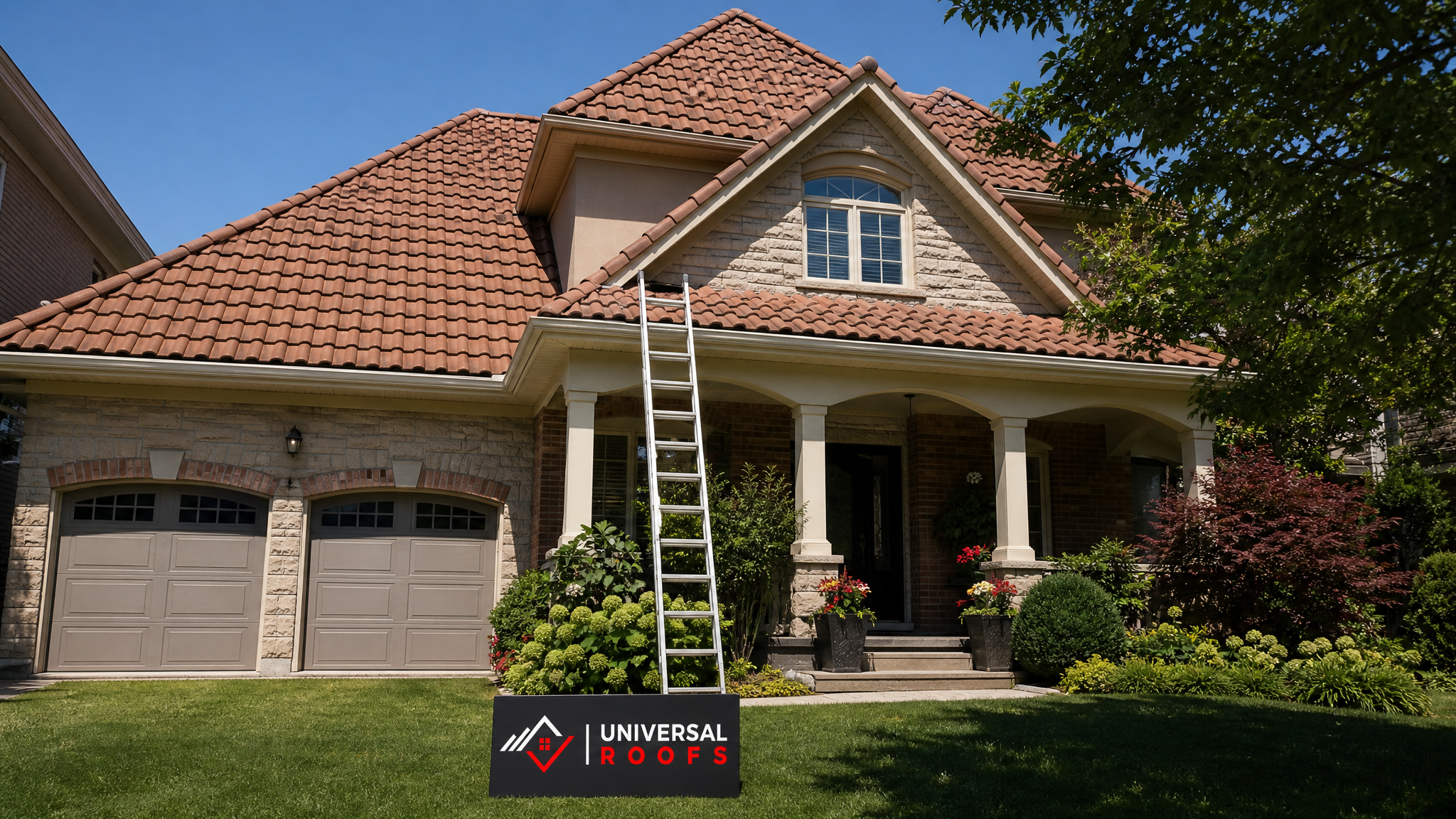
What Causes Tile Roof Water Ponding in the First Place
Before you can fix tile roof water ponding, it helps to understand why it happens. Tile roofing is designed to shed water quickly down a sloped plane and off the eaves. Ponding occurs when water is prevented from reaching the edge and instead collects in a low spot, a valley, or against a wall. In our experience inspecting roofs across Toronto, Mississauga, Brampton, and the surrounding regions, four causes show up again and again.
The first is inadequate slope. Building codes generally call for a minimum slope on tile applications, but additions, dormers, and porch roofs are sometimes built flatter than the main roof to fit under a sightline or window. Any slope under roughly 2:12 struggles to clear water fast enough, especially with heavier concrete tile.
The second cause is deck sagging. Roof decks flex over time as fasteners loosen, as wood ages, or as a structural member below the deck weakens. A dip of even a centimetre or two in the decking is enough to trap water once the tile is laid over it, because the tile simply follows the shape of what is underneath it.
The third cause is blocked or undersized drainage. Valleys, crickets, and gutters that fill with granules, moss, leaves, or nesting debris cannot move water efficiently. On tile roofs specifically, broken or slipped tiles can funnel water into a channel that was never designed to carry that volume, creating a bottleneck.
The fourth cause is underlayment and flashing failure. Even a well-sloped tile roof relies on the underlayment membrane beneath the tiles to carry water to the drainage points. When that membrane cracks, is punctured, or was installed with poor laps, water finds a low spot and sits there instead of continuing its path off the roof.
| Cause of Ponding | How to Identify It | Typical Severity | Best First Step |
|---|---|---|---|
| Inadequate roof slope | Visible flat or near-flat section, water sits after every rain | Moderate to severe | Professional slope assessment |
| Sagging or deflected deck | Visible dip when viewed from the eave line or attic | Severe | Structural inspection |
| Blocked valleys or gutters | Debris visible, staining below the blockage | Mild to moderate | Cleaning and clearing |
| Cracked or failed underlayment | Interior leaks despite intact-looking tiles | Moderate to severe | Underlayment inspection |
Tip 1: Clear and Restore Proper Drainage Paths
The simplest and most common fix for tile roof water ponding is also the most overlooked: clearing the drainage path. Over a Toronto winter, valleys and gutter lines collect granules from asphalt sections, wind-blown leaves, seed pods, and in some neighbourhoods a surprising amount of squirrel debris. All of that material narrows the channel that water needs to travel through, and a narrowed channel backs up quickly during a heavy summer downpour.
Start by inspecting every valley, the base of any chimney or wall flashing, and the gutter line along the eaves. Clay and concrete tiles are brittle and can crack under foot traffic, so this is not a job to do casually in running shoes — walking a tile roof requires knowing where the structural battens are and how to distribute your weight. If you are comfortable and safe doing so from a ladder without stepping onto the tile field, clear obvious debris from the gutters and any visible valley sections you can reach.
For anything beyond gutter-level debris, this becomes a job for a professional roof repair visit. A trained technician can walk the tile safely, clear valleys and crickets without cracking tiles, and confirm that water is actually reaching the drainage points once the debris is removed. In many cases, this single step resolves ponding that looked far more serious than it actually was.
It is also worth checking downspouts at ground level. A gutter that drains perfectly but empties into a clogged downspout will still back up, and that backup can push water uphill into valleys during a heavy rain event, which mimics the appearance of a roof-level ponding problem when the real issue is downstream.
Tip 2: Correct Low Spots and Deck Deflection
If clearing debris does not solve the ponding, the next most common cause is a low spot in the roof deck itself. This is different from a drainage blockage because the water has nowhere better to go — the deck has physically dipped, and tiles laid over that dip will always collect water in the same spot no matter how clean the valleys are.
Diagnosing deck deflection usually requires removing a section of tile to inspect the decking and, if accessible, viewing the underside from the attic. Signs of a problem from inside the attic include daylight visible through the deck at the low point, water staining on the underside of the sheathing, or sagging rafters that you can see with a straightedge or level held against them.
The fix depends on severity. A minor dip caused by a slightly under-sized rafter can sometimes be corrected with sistered framing members that add support without removing the entire section of roof. A more significant sag, especially one caused by long-term water damage to the structural wood, usually requires replacing the affected decking and possibly the rafters beneath it before new underlayment and tile go back down.
This is not a cosmetic repair — a sagging deck under ponding water is a structural issue that gets worse every time it rains, because the added weight of standing water accelerates the deflection. If you notice a visible dip in your roofline from the street, or if an interior ceiling has developed a soft spot or stain, treat it as a priority and have it assessed before the next significant rainfall.
| Repair Approach | Typical Cost Range (CAD) | Timeline | Best For |
|---|---|---|---|
| Valley and gutter clearing | $250 – $600 | Half day | Debris-caused ponding |
| Localized tile and underlayment repair | $600 – $2,200 | 1 day | Cracked tile, minor membrane failure |
| Sistered rafter reinforcement | $1,500 – $4,500 | 1 to 2 days | Minor deck deflection |
| Deck and framing replacement (partial) | $4,000 – $12,000+ | 3 to 7 days | Significant sagging or rot |
| Full tile roof replacement | $25,000 – $60,000+ | 1 to 3 weeks | Widespread ponding, aged underlayment |
Costs vary based on roof size, tile type, and access, so treat these figures as a planning range rather than a quote. A proper on-site inspection is the only reliable way to know which category your roof falls into, and it is always worth getting that assessment before water finds its way into your attic insulation or ceiling drywall.
Tip 3: Repair or Replace Failed Underlayment and Flashing
Tiles themselves are largely decorative and weather-resistant, but the underlayment membrane underneath them is what actually keeps your home dry. On a tile roof, the underlayment does the heavy lifting: it channels water down to the eaves and out through the drainage system even if a few tiles crack or shift. When that membrane degrades, cracks, or was installed with insufficient overlap at the seams, ponding water finds those weak points and begins to seep through, regardless of how good the tiles above still look.
Underlayment failure is more common on older tile roofs, particularly those approaching or past the 20-year mark, and it accelerates on any section where water regularly ponds, because standing water puts sustained pressure on every seam and fastener penetration. This is part of why ponding is a problem that compounds over time — a small pond that would have evaporated harmlessly on a properly draining roof instead sits for days, slowly working its way through weakened underlayment.
Flashing around chimneys, skylights, and wall intersections is another common failure point that gets mistaken for a tile problem. If you have a skylight near the ponding area, check the flashing kit around its perimeter, since a failed skylight flashing can allow water to travel sideways under the tile field and pond well away from the skylight itself. Homeowners considering an upgrade during this kind of repair sometimes ask about skylight replacement at the same time, since opening up that section of roof is a practical opportunity to address both issues in a single project.
Repairing underlayment on a tile roof requires carefully lifting and setting aside the existing tiles, replacing the compromised membrane section with new self-adhered or synthetic underlayment, and then resetting the original tiles (or replacing any that cracked during removal). This is detailed, labour-intensive work that rewards experience — tiles that are decades old can be brittle, and matching colour and profile on replacement pieces takes a trained eye.
Tip 4: Address Attic Ventilation and Moisture Buildup
This tip surprises a lot of homeowners, but attic ventilation plays a direct role in how long ponding water sits on a tile roof and how much damage it causes while it is there. A poorly ventilated attic traps heat and humidity, which does two things that make ponding worse. First, trapped heat can cause uneven snow melt and ice patterns in winter that lead to ice damming, which itself creates a ponding-like backup behind ice ridges. Second, ongoing attic moisture softens roof decking from underneath over years, making that deck more prone to the sagging described in Tip 2.
During the warmer months, proper attic ventilation also helps the underside of the roof deck dry out faster after any minor moisture intrusion, reducing the odds that a small leak turns into rot. If your ponding issue has been recurring in the same spot for more than one season, it is worth having your attic ventilation checked at the same time as the roof surface, since fixing the surface without addressing chronic attic moisture often means the deck underneath stays weak and the ponding returns.
Signs of poor attic ventilation include visible mould or dark staining on the underside of the sheathing, a noticeably hot and stuffy attic in summer, frost on nail tips in winter, and higher than expected cooling costs. A balanced ventilation system with adequate intake at the soffits and exhaust at the ridge keeps air moving continuously, which protects the wood structure that your tile roof and its drainage system depend on.

Toronto Weather and Why Tile Roof Ponding Gets Worse Here
The Greater Toronto Area throws a specific combination of conditions at tile roofs that makes ponding more likely than it would be in a drier or more temperate climate. Winters bring repeated freeze-thaw cycles, where water that ponds in a low spot freezes, expands, and stresses the tile and underlayment beneath it, then thaws and refreezes again days later. Over several winters, this cycle can turn a minor low spot into a cracked tile field with compromised waterproofing underneath.
Summer in the GTA brings its own challenge in the form of intense, fast-moving thunderstorms that can drop a significant volume of rain in a short window. A roof with marginal drainage capacity that handles a slow, steady rain acceptably can be overwhelmed by a July downpour, leading to temporary ponding that would not occur in a lighter or more evenly distributed rainfall pattern.
Spring is often when ponding damage becomes most visible, as melting snow reveals staining, sagging, or displaced tiles that were hidden under a snow load all winter. This is a good time of year to walk your property and look up at the roofline, checking for any section that appears to hold water or snow longer than the rest of the roof after a storm has passed.
| Season | Ponding Risk Factor | What to Watch For | Recommended Action |
|---|---|---|---|
| Spring | Snowmelt exposes winter damage | Staining, displaced or cracked tiles | Full roof inspection |
| Summer | Intense, fast rainfall events | Water sitting more than 48 hours after rain | Drainage check and clearing |
| Fall | Leaf and debris accumulation | Clogged valleys and gutters | Seasonal cleaning |
| Winter | Freeze-thaw cycling and ice damming | Ice ridges near eaves, icicles at valleys | Ventilation and insulation review |
Because of this cycle, we generally recommend at least two roof checks per year for tile roofs in this region: one in spring after the snow clears, and one in fall before leaves accumulate. Catching a small ponding issue in either of those windows is far less expensive than discovering a saturated deck the following spring.
DIY Steps Versus When to Call a Professional
Not every ponding issue requires a professional visit right away, but knowing where the line sits protects both your safety and your roof. Walking a tile roof without training is genuinely dangerous — tiles crack underfoot, surfaces are slippery even when they look dry, and a fall from a sloped roof edge is a serious injury risk. Anything that requires stepping onto the tile field itself should be left to a trained crew with proper harnesses and rope access.
What you can reasonably do from ground level or a stable ladder includes visually inspecting the roofline for obvious low spots after a rain, checking gutters and visible valley openings for debris buildup, looking at ceilings and attic spaces for staining after storms, and keeping a simple log of which areas of the roof seem to hold water longest. That information is genuinely useful to share with a roofing technician, since it helps narrow down where to focus the inspection.
Anything involving lifting tiles, accessing valleys or crickets directly, inspecting or replacing underlayment, or evaluating deck and rafter condition should go to a professional. These tasks require both the training to move safely across a tile surface and the experience to diagnose whether a repair will hold or whether the ponding will simply return in a different spot.
| Task | Safe for Homeowner? | Tools/Access Needed | Risk If Done Incorrectly |
|---|---|---|---|
| Visual inspection from ground or ladder | Yes | Ladder, binoculars optional | Low |
| Clearing visible gutter debris | Yes, with caution | Ladder, gloves | Low to moderate (fall risk) |
| Walking the tile field | No | Harness, rope access, roof-walk training | High (cracked tiles, falls) |
| Lifting tiles to inspect underlayment | No | Professional tools, tile experience | High (broken tiles, water intrusion) |
| Structural deck or rafter repair | No | Framing expertise, permits in some cases | Severe (structural failure) |
Preventing Ponding From Coming Back
Fixing existing ponding is only half the job. Preventing it from recurring means treating your roof as part of an ongoing maintenance routine rather than a one-time repair. A few habits go a long way in the GTA climate.
Schedule seasonal gutter and valley cleaning, ideally in late spring and again in late fall, so debris never has a chance to accumulate to the point of blocking flow. Trim overhanging tree branches that drop leaves, seed pods, or sap directly onto the roof surface, since this is one of the single biggest contributors to valley blockages we see on inspections. Keep an eye on your attic’s temperature and humidity, since a well-ventilated attic protects the deck that everything else depends on.
If your home has a flat or low-slope section adjoining the main tile roof, such as over a rear addition or a garage, understand that these sections have different drainage needs than a steep tile field. Our flat roofing team frequently finds that transition points between a sloped tile roof and an adjoining flat section are where ponding problems concentrate, because water from the larger sloped area drains directly onto the smaller flat section and can overwhelm it.
Finally, if your tile roof is approaching or past 20 years old, factor a full roof replacement into your long-term planning even if it is not needed immediately. Underlayment degrades faster than the tiles themselves, and a roof nearing the end of its underlayment life will see ponding-related leaks become more frequent even with excellent maintenance, simply because the waterproofing layer beneath the tiles has reached the end of its service life.
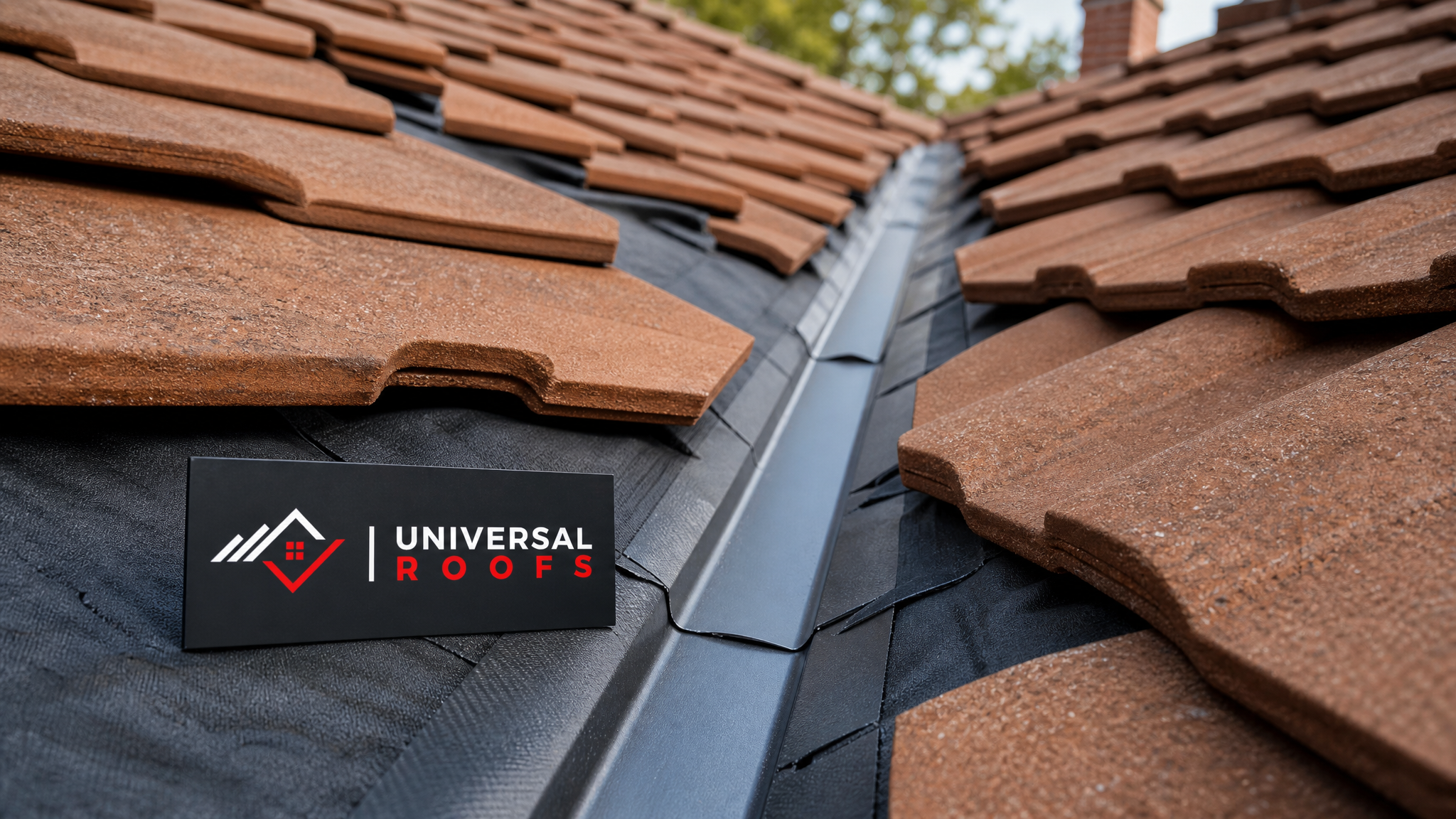
Choosing a Contractor to Fix Tile Roof Water Ponding
Tile roofing is a specialty trade, and repairing it correctly requires different skills than asphalt shingle work. When you are evaluating who to hire, ask specifically about their experience with tile systems, whether they carry the right tiles or can source matching replacements, and how they diagnose the root cause of ponding rather than simply resealing the visible symptom.
A reputable contractor will walk you through what they find, show you photos of the underlying issue if accessible, and explain why they are recommending a particular fix rather than jumping straight to a full re-roof. You can read what past clients have said about our process and results on our reviews page, and our FAQ page answers many of the most common questions we get about tile and flat roof repairs. For more on our background and the areas we serve, our about page has the full story of how Universal Roofs has grown since 2005.
We serve homeowners across the Toronto area, as well as the Peel Region, York Region, Halton Region, and Durham Region, so wherever your tile roof is located in the GTA, our crews are familiar with the local building stock and the specific weather patterns that drive ponding issues in each area.
What are the most effective tips to fix tile roof water ponding?
How long can water safely pond on a tile roof before it causes damage?
Can I fix tile roof water ponding myself, or do I need a professional?
Does Toronto’s climate make tile roof ponding worse?
How much does it cost to fix tile roof water ponding?
Will attic ventilation actually help with tile roof water ponding?
Need Help With 4 Tips to Fix?
Tile roof water ponding rarely fixes itself, and the longer it sits, the more of your roof’s structure it can quietly damage. If you have noticed standing water, staining, or a section of roof that never seems to dry, the team at Universal Roofs can identify the exact cause and recommend the right level of repair for your situation.
Call us today at (416) 732-2421 or request a free inspection to get started.
Universal Roofs proudly serves Toronto, Mississauga, Brampton, Vaughan, Markham, Oakville and the GTA since 2005.