
A leaking or foggy skylight on a pitched roof is one of the most common service calls we get across the GTA, and for good reason. Steep-slope skylights take a beating from freeze-thaw cycles, wind-driven rain, ice damming and UV exposure, and the repair that actually solves the problem depends entirely on where the failure is coming from. Homeowners often assume a leak means the skylight itself is broken, when in most cases the real culprit is the flashing, the seal, or the surrounding roofing material.
This guide walks through the nine most effective skylight repair solutions for pitched roofs, in the order we typically diagnose and recommend them, from the simplest sealant fix to a full skylight replacement. Whether you have a curb-mounted skylight on an asphalt shingle roof in Scarborough or a deck-mounted unit on a steep Victorian roofline in Cabbagetown, the diagnostic logic is the same: find the water’s actual entry point before you spend a dollar on repairs.
We will also cover realistic Toronto-area costs, how long each fix typically lasts, and the specific warning signs that tell you which of the nine solutions applies to your situation. If you want a professional to look at it directly, our team handles skylight repair and inspection across the region and can usually diagnose a leak on the first visit.
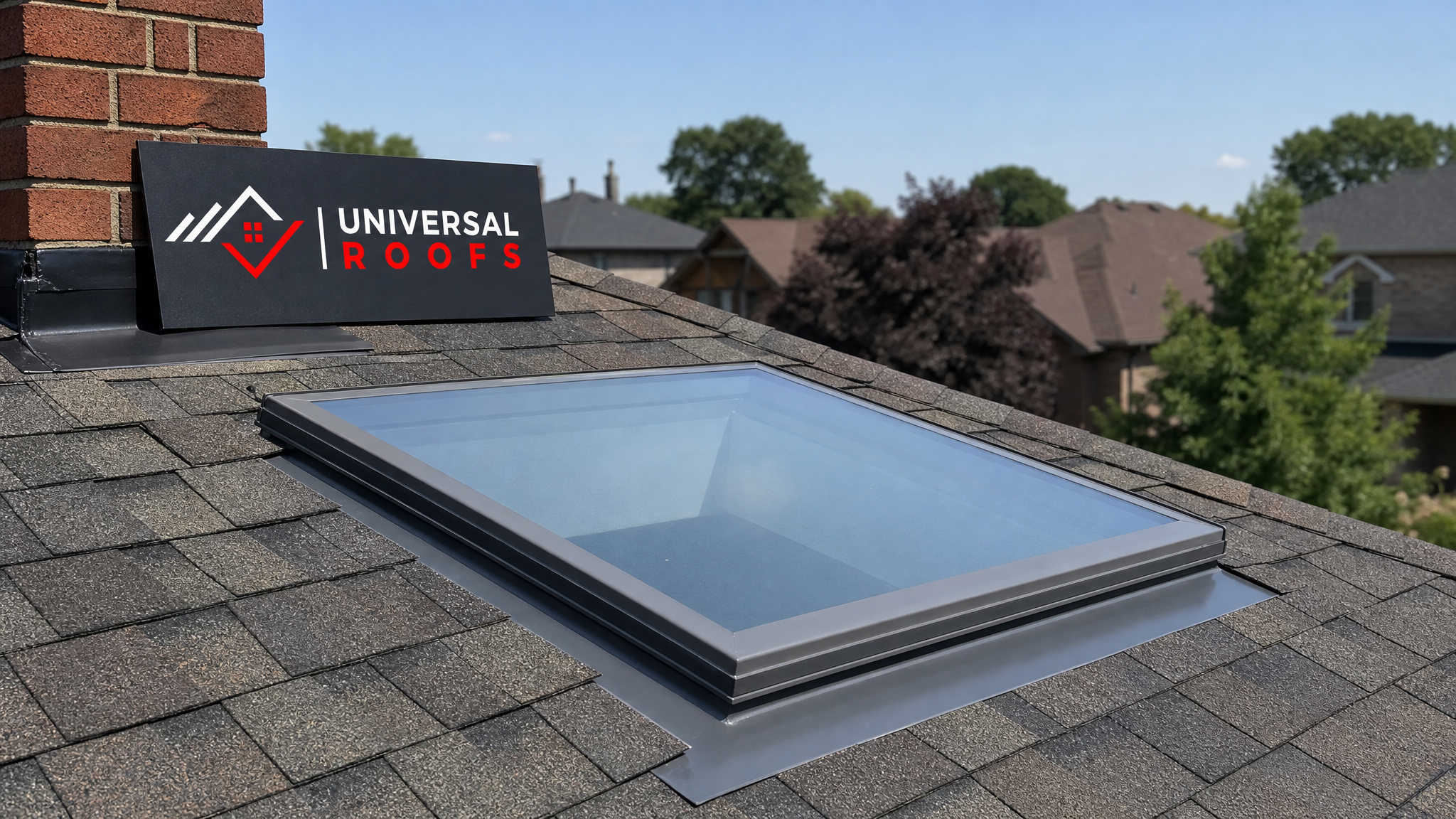
How to Diagnose a Leaking Skylight Before Choosing a Repair
Before jumping to any of the nine solutions below, it helps to understand where skylight leaks actually originate. On a pitched roof, water travels downhill along the path of least resistance, so the spot where you see a stain on your ceiling is frequently several feet away from the actual entry point higher up the slope. The four most common failure zones are:
- Flashing failure — the metal apron, step flashing, and head flashing around the skylight curb have separated, corroded, or were never installed correctly.
- Seal or gasket failure — the rubber gasket between the glass or acrylic dome and the frame has hardened, cracked, or shrunk with age.
- Condensation, not a leak — moisture forming on the inside of the glazing due to poor attic ventilation, which homeowners frequently mistake for a roof leak.
- Structural or frame damage — cracked acrylic domes, broken glass seals (visible as fogging between panes), or a warped frame from age or storm impact.
A simple test: run a garden hose over the roof above the skylight, starting low and working upward in stages, while someone watches inside. The moment water appears, you have isolated the zone. This single step prevents the most expensive mistake homeowners make, which is resealing the glass when the actual leak is coming from the flashing a foot away. If your roof’s ventilation is suspect, it’s worth having your attic ventilation checked at the same time, since poor airflow accelerates both condensation issues and shingle deterioration around the skylight curb.
1. Flashing Repair and Replacement
Flashing failure is, by a wide margin, the most common reason skylights leak on pitched roofs in the GTA. Ontario’s freeze-thaw cycle expands and contracts metal flashing dozens of times each winter, gradually working fasteners loose and opening small gaps at the seams. On steep slopes, wind-driven rain can also drive water sideways under improperly lapped flashing.
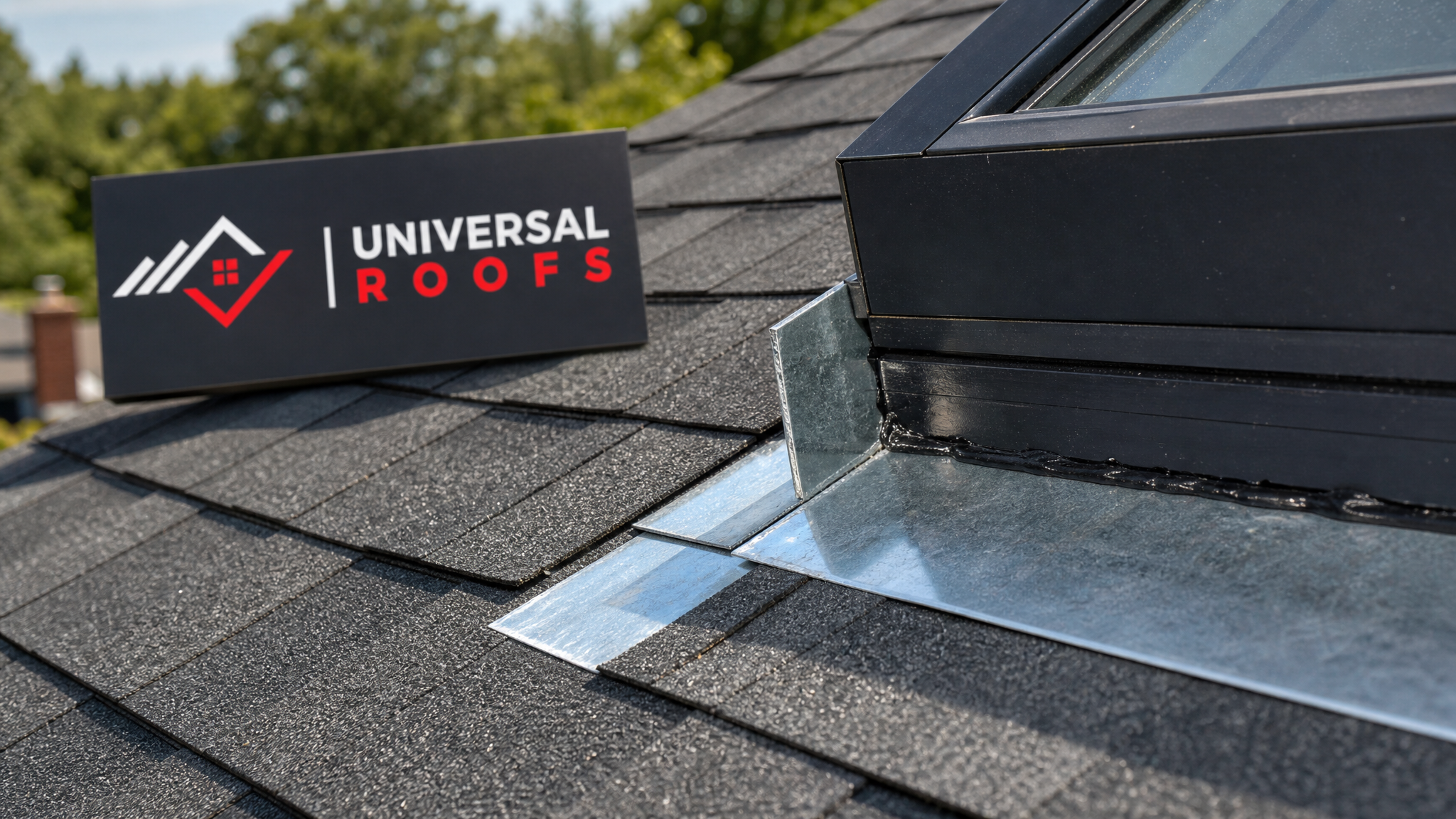
A proper flashing repair involves removing the surrounding shingles, inspecting the step flashing, head flashing, and apron flashing for corrosion or gaps, and replacing any sections that have failed. This is not a job for surface-level caulking; the flashing needs to be integrated correctly with the shingle courses so water sheds downhill and never pools against the skylight curb. On older installations we frequently find that flashing was undersized or installed with exposed fasteners, both of which are almost guaranteed leak points within a few years.
Cost in the GTA typically runs $350 to $900 depending on roof pitch, skylight size, and accessibility. This is one of the most cost-effective fixes on this list because it addresses the root cause rather than a symptom, and when done correctly it should outlast the shingles around it.
2. Resealing the Skylight Perimeter
When flashing is intact but a gasket or sealant bead has degraded, a full reseal of the skylight perimeter is the next-most-common repair. Over 8 to 12 years of Toronto summers and winters, the sealant that bonds the frame to the curb and the glazing to the frame becomes brittle and shrinks, creating hairline gaps that let water wick in during heavy rain.
A quality reseal involves removing all old sealant down to bare material, cleaning the surfaces thoroughly, and applying a new bead of a purpose-made, UV-stable polyurethane or silicone sealant rated for roofing applications. Cheap acrylic caulk from a hardware store is not adequate here; it degrades within a season or two under direct sun exposure on a south-facing pitched roof.
This repair costs roughly $200 to $450 and typically buys another 5 to 8 years of service life, though it is a maintenance item rather than a permanent fix. If you’re already having a technician on the roof for a reseal, it’s worth asking them to check the broader roof repair needs nearby, since sealant failure often coincides with aging shingles in the same area.
3. Replacing Cracked or Fogged Glazing
If you notice fogging or condensation trapped between two panes of glass, that is a broken seal inside the insulated glass unit (IGU) itself, not a roof leak. This is common on skylights installed before roughly 2012, and it cannot be fixed with sealant. The IGU needs to be replaced.
For acrylic dome skylights, a cracked, yellowed, or crazed dome (fine spiderweb cracking from UV exposure) needs full replacement of the dome unit. On pitched roofs, this typically does not require removing the whole skylight frame, since most manufacturers design the glazing to be replaceable independently of the curb and flashing.
Expect $400 to $1,200 for glazing replacement depending on whether it’s a standard rectangular unit or a custom size, and whether the glass is tempered, laminated, or low-E coated. This is a strong middle-ground repair: it restores clarity and insulation performance without the cost of tearing out the whole unit.
4. Fixing Condensation Through Better Attic Ventilation
A significant number of “skylight leak” calls we get in the GTA turn out to be condensation, not water intrusion. When warm, moist household air rises into a poorly ventilated attic or the skylight shaft itself, it condenses on the cooler glazing surface and drips down, mimicking a leak almost exactly.
The fix here isn’t at the skylight at all — it’s improving airflow. This can mean adding or clearing soffit vents, ensuring the skylight shaft is properly insulated and air-sealed where it meets the attic, or adding a bathroom or kitchen exhaust fan that was previously venting into the attic space instead of outside. In some cases a simple weatherstripping upgrade around a vented skylight solves the problem entirely.
Cost varies widely, from under $150 for air-sealing to $800+ if soffit and ridge ventilation need upgrading. This fix is often overlooked because homeowners assume any dripping near a skylight must be a roof problem, but our technicians can usually tell condensation from a true leak within minutes of an inspection.
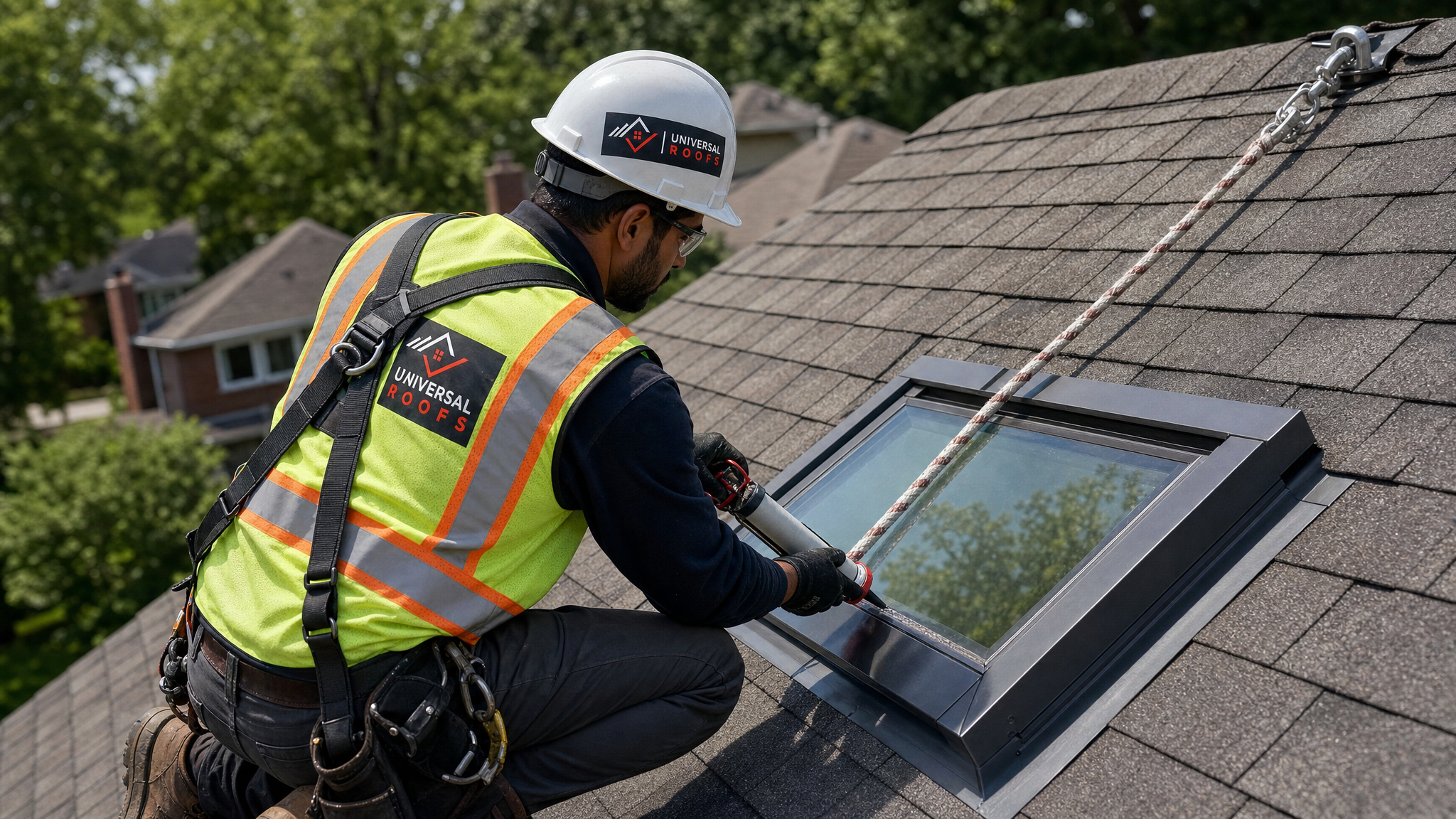
5. Step Flashing and Shingle Integration Repair
On pitched roofs, the skylight’s step flashing must be interwoven with each course of shingles as it climbs the slope. When a previous roofing job or DIY repair skipped this integration, or shingles were replaced without properly re-lacing the flashing, water can channel directly down into the roof deck at the skylight’s sides.
This repair goes beyond resealing; it means pulling back the shingle courses on both sides of the skylight, correcting the step flashing overlap (each piece should overlap the one below by at least 2 inches), and reinstalling shingles with proper nailing patterns. This is a job we see needed most often on homes where a skylight was added after the original roof was installed, since retrofit installations are more prone to shortcuts.
Budget $500 to $1,100 for this repair. It is more involved than a simple flashing patch because it touches the shingle field itself, but it is far cheaper than the water and insulation damage that results from ignoring it.
6. Curb Repair or Reinforcement
The curb is the raised wooden or insulated frame the skylight sits on. On older pitched-roof installations, especially anything installed before modern curb-mounted units became standard, the curb itself can rot from years of trapped moisture, or it may have been built too low relative to the shingle courses, allowing water to back up against it during heavy rain or snowmelt.
Curb repair involves removing the skylight temporarily, inspecting the wood framing for rot, replacing damaged sections, and in some cases raising the curb height to modern code-recommended clearances. This is one of the more labour-intensive repairs on this list because it requires temporarily detaching the skylight unit, but it addresses a structural issue that no amount of resealing can fix.
Expect $800 to $2,000 depending on the extent of rot and whether the skylight needs to be craned or hand-lifted off during the repair. If the curb has failed, it is also worth having the surrounding roof deck checked, since sustained moisture exposure often affects the plywood sheathing nearby.
7. Ice and Water Shield Upgrade Around the Skylight
Many skylight leaks in the GTA show up specifically in late winter and early spring, which is a strong signal that ice damming is the cause rather than ordinary rain. When ice builds up along the roof edge or around a skylight curb, meltwater backs up under the shingles rather than running off, and standard shingle underlayment isn’t designed to resist that kind of standing water.
The fix is installing a self-adhering ice and water membrane in a wide perimeter around the skylight curb, extending well beyond the code-minimum requirement in areas prone to damming. This membrane is fully sealed to the roof deck and creates a waterproof barrier even if ice forms directly over it. On steep pitched roofs this is usually done during a broader section of roof repair rather than as a standalone service, since it requires removing shingles in the surrounding area anyway.
Cost runs $400 to $900 for a localized upgrade around one skylight, more if multiple skylights or a full roof section is involved. This is a preventive solution as much as a repair — it stops the specific winter failure mode that flashing alone cannot fully prevent.
8. Frame and Hardware Replacement (Operable Skylights)
Vented or electrically operated skylights have moving hardware: hinges, motors, remote-control openers, and weatherstripping gaskets around the operable sash. On pitched roofs, these components see more mechanical stress than fixed skylights, and after 10 to 15 years the hinges can loosen, motors can fail, or the compression seal that keeps the sash watertight when closed can wear out.
This repair replaces the operable hardware, weatherstripping, and sometimes the motor assembly, without necessarily replacing the entire glazing or frame. It restores both the watertight seal and the function of the vent. On solar-powered vented units this can also include replacing the solar panel or battery that drives the motor, a detail homeowners are often surprised to learn is a separate component.
Cost ranges from $300 for weatherstripping alone up to $1,500 for a full motor and hardware replacement on an electric unit. Given how often this issue is misdiagnosed as a general leak, it’s worth having a technician specifically test the operable seal under pressure before assuming the problem is elsewhere.
9. Full Skylight Replacement
When a skylight is more than 15 to 20 years old, has multiple failure points (rotted curb, failed seals, fogged glazing, and worn flashing all at once), or the repair costs start approaching 60 percent or more of a new unit’s installed price, full replacement is the most sensible long-term solution. Modern skylights offer significantly better energy performance, with double- or triple-pane low-E glazing, improved frame insulation, and factory-integrated flashing kits engineered specifically for pitched-roof installations.
Replacement also gives you the opportunity to correct any of the underlying issues from this list in one project: a new, properly sized curb, correctly integrated step flashing, upgraded ice and water membrane, and a fresh compression seal, all installed together rather than patched individually over several service calls. For homes with an aging skylight nearing the end of its service life, our skylight replacement service handles the full removal and reinstallation, matched to your roof’s pitch and shingle profile.
Full replacement in the GTA typically runs $1,800 to $4,500 per unit depending on size, glazing type, and whether it is fixed, manual-vent, or electric. While it is the highest upfront cost on this list, it is also the only option that resets the clock on every component at once rather than addressing one failure point at a time.
Comparing the 9 Skylight Repair Solutions
| Repair Solution | Typical GTA Cost | Best For | Expected Lifespan of Fix |
|---|---|---|---|
| 1. Flashing repair/replacement | $350–$900 | Leaks tied to metal seams around the curb | 15–20 years |
| 2. Perimeter resealing | $200–$450 | Minor seepage, hardened old sealant | 5–8 years |
| 3. Glazing/dome replacement | $400–$1,200 | Fogged IGUs, cracked acrylic domes | 15–20 years |
| 4. Ventilation/condensation fix | $150–$800 | Interior dripping with no active rain | Ongoing, permanent fix |
| 5. Step flashing/shingle integration | $500–$1,100 | Side leaks near shingle courses | 15–20 years |
| 6. Curb repair/reinforcement | $800–$2,000 | Rotted or undersized curb framing | 20+ years |
| 7. Ice and water shield upgrade | $400–$900 | Late-winter/spring leaks from ice damming | 20+ years |
| 8. Hardware/weatherstripping replacement | $300–$1,500 | Vented or electric skylight leaks | 10–15 years |
| 9. Full skylight replacement | $1,800–$4,500 | Multiple failure points, aging units | 20–25 years |
Warning Signs and Which Repair They Point To
| Symptom | Likely Cause | Recommended Solution |
|---|---|---|
| Staining at the corners of the skylight only | Flashing gap or corrosion at the seam | Flashing repair (#1) |
| Cloudy or foggy glass between panes | Failed IGU seal | Glazing replacement (#3) |
| Dripping only in cold weather with no rain | Condensation from poor ventilation | Ventilation fix (#4) |
| Leak appears only after heavy snowmelt | Ice damming backing water under shingles | Ice and water shield upgrade (#7) |
| Soft or spongy wood visible around the frame | Curb rot from long-term moisture | Curb repair (#6) |
| Vented skylight won’t seal fully when closed | Worn hardware or weatherstripping | Hardware replacement (#8) |
Repair Timelines: What to Expect on Site
| Repair Type | Typical On-Site Time | Weather Dependency | Warranty Range Offered |
|---|---|---|---|
| Perimeter resealing | 1–2 hours | Requires dry, above 5°C conditions | 2–3 years |
| Flashing repair | Half day | Dry weather only | 5–10 years |
| Glazing replacement | 2–4 hours | Low wind preferred | 10 years (manufacturer) |
| Curb repair | 1 full day | Dry weather, moderate temperatures | 10 years |
| Full skylight replacement | 4–8 hours | Dry weather essential | 10–20 years (unit + labour) |
Preventing Future Skylight Leaks on a Pitched Roof
Once a repair is complete, a few habits go a long way toward avoiding a repeat visit. Have your roof and skylights inspected each spring after the freeze-thaw season, since that is when flashing and sealant take the most cumulative stress. Keep an eye on your attic for musty odours or visible frost on the underside of the roof deck in winter, both early indicators of ventilation problems before they show up as ceiling stains. If your skylight is more than 15 years old, ask your technician to evaluate it during any unrelated roof replacement project, since replacing an aging skylight at the same time as the surrounding shingles avoids paying for access and labour twice.
It is also worth checking whether nearby trees are dropping debris that dams water against the upper edge of the skylight curb, a surprisingly common contributor to slow leaks that homeowners overlook. A five-minute seasonal check from the ground with binoculars can catch this before it becomes a repair.
Choosing the Right Contractor for Skylight Repairs in the GTA
Skylight repair on a pitched roof is not a job for a general handyman or a single-person caulking service. It requires someone comfortable working at height on steep slopes, familiar with how flashing integrates into different shingle profiles, and equipped to diagnose whether you’re dealing with a leak or condensation before any work begins. Ask any contractor you’re considering how they isolate the source of a leak, and be cautious of anyone who proposes resealing without first inspecting the flashing and curb.
We serve homeowners across Toronto, the Peel Region, York Region, Halton Region, and Durham Region, and our technicians diagnose the actual failure point before recommending a fix, rather than defaulting to the most expensive option. You can see how past clients rate our skylight work on our reviews page, and if you have a broader roofing question, our FAQ page covers most of what homeowners ask before booking an inspection.
What are the best skylight repair solutions for pitched roofs?
How do I know if my skylight leak is from flashing or the seal?
Can a leaking skylight on a pitched roof be repaired without replacing it?
How much does skylight repair cost in the Toronto area?
Why does my skylight only leak in winter or after snow melts?
Is condensation on a skylight the same as a roof leak?
Need Help With 9 Best Skylight Repair?
Whether your skylight needs a simple reseal or a full curb rebuild, the team at Universal Roofs diagnoses the actual source of the leak before recommending a fix, so you only pay for the repair you actually need.
Call us today at (416) 732-2421 or request a free inspection to get started.
Universal Roofs proudly serves Toronto, Mississauga, Brampton, Vaughan, Markham, Oakville and the GTA since 2005.