
Standing water on a flat roof is one of the most common calls Universal Roofs gets after a heavy summer storm. A puddle that lingers for more than 48 hours after rainfall, known as ponding water, is more than a cosmetic nuisance. It adds weight to the roof deck, accelerates membrane breakdown, invites algae and debris, and eventually finds its way through seams and flashings into your attic and ceilings.
The good news is that ponding water is almost always fixable, and in most cases it is preventable altogether. This guide walks through the nine most effective solutions for flat roofs with ponding water, from simple drain maintenance you can do yourself to structural tapered insulation systems that permanently correct the slope of the roof. We will also cover why ponding happens in the first place, how Toronto’s freeze-thaw climate makes the problem worse, what each fix costs, and when it is time to call a professional roofer instead of reaching for a squeegee.
Whether you own a bungalow with a flat-roofed addition, a commercial plaza, or a multi-unit building anywhere across the GTA, the same core principles apply: water needs somewhere to go, and a flat roof needs to be designed and maintained so it gets there quickly.
What Causes Ponding Water on a Flat Roof?
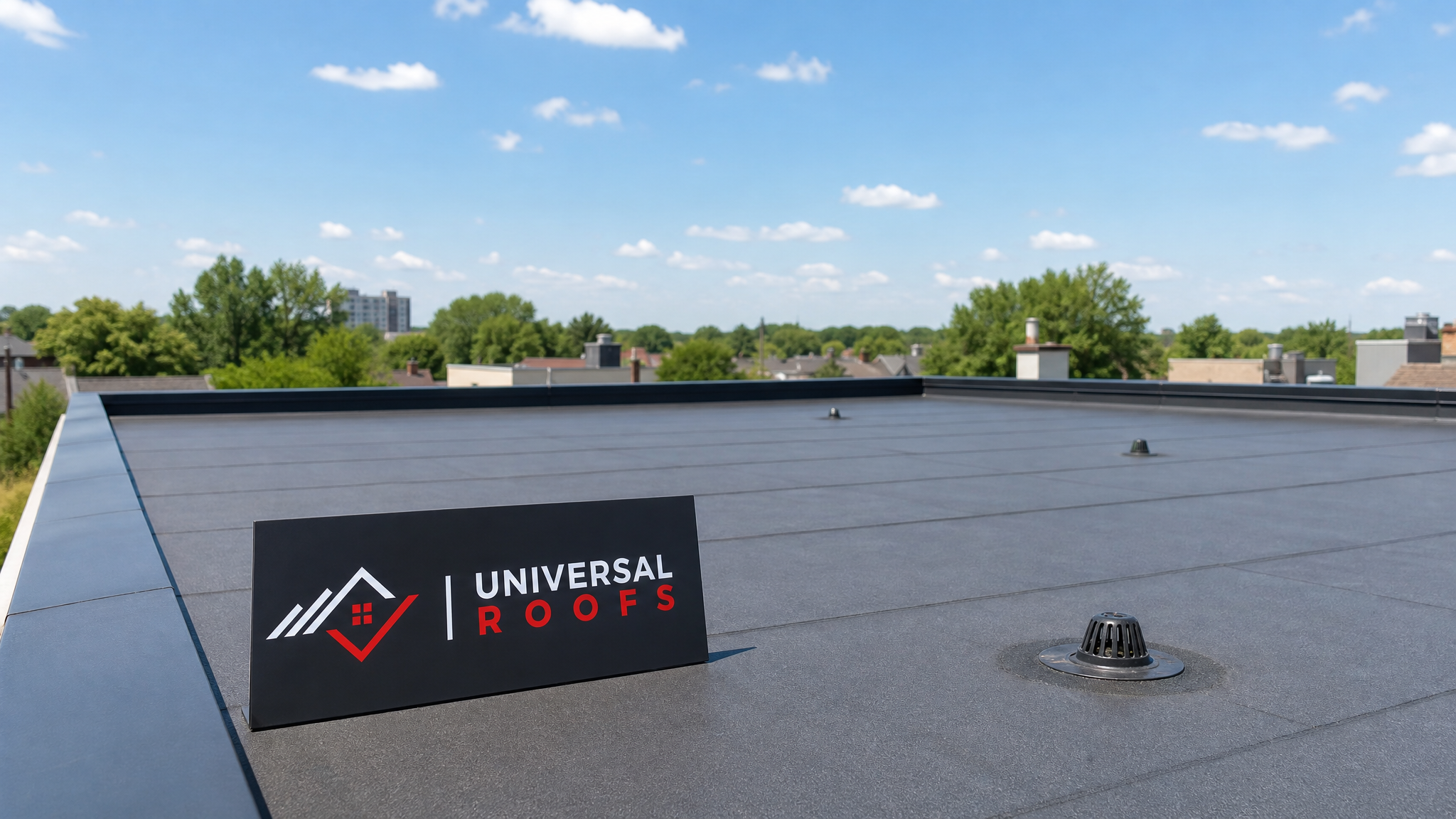
Before jumping into solutions, it helps to understand why a roof ponds in the first place. “Flat” roofs are never perfectly flat. Building codes and manufacturer specifications call for a minimum slope of about 2 percent, roughly 6 millimetres of drop per 300 millimetres of run, so that water flows toward drains or scuppers rather than sitting still. When that slope is missing, undersized, or compromised, ponding follows.
Common root causes include:
- Structural deflection. Over years, roof joists and decking sag slightly under the roof’s own weight, HVAC units, and accumulated snow load, creating low spots called “bird baths.”
- Clogged or undersized drains. Leaves, granules from an ageing membrane, and wind-blown debris block internal drains and scuppers, especially near mature trees.
- Poor original design. Some older flat roofs, particularly additions built decades ago, were installed with insufficient slope from day one.
- Membrane wear. As a membrane ages it can lose its ability to shed water efficiently, and repairs or patches sometimes create small dams that trap water nearby.
- Freeze-thaw cycling. Toronto’s climate swings through repeated freeze-thaw cycles each winter and spring. Water that ponds and freezes expands, stressing seams and fasteners, which can worsen low spots over time.
Identifying which of these applies to your roof is the first step toward choosing the right fix. A quick roof inspection after a rainstorm, while puddles are still visible, is the easiest way to map exactly where water is collecting and why.
Solution 1: Clear and Maintain Roof Drains and Scuppers
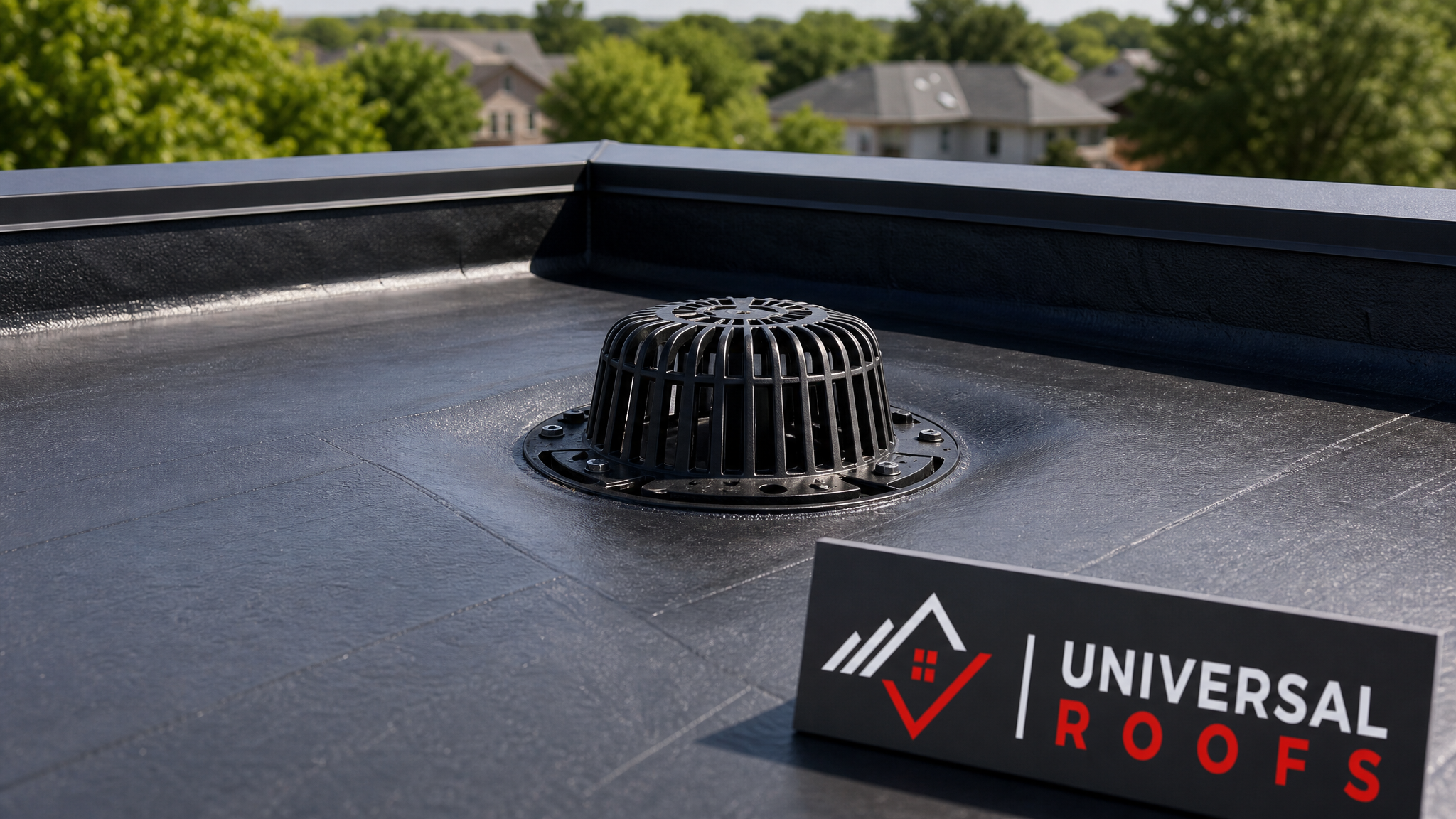
The single most common cause of ponding is a blocked drain, and it is also the cheapest fix. Internal drains, scuppers, and gutters need to be physically cleared of leaves, granules, moss, and silt at least twice a year, in spring and autumn, and ideally after any major windstorm.
Homeowners can safely check ground-level scuppers and downspouts themselves, but climbing onto a flat roof to clear internal drains carries real fall risk, especially on wet or sloped surfaces. For roofs higher than a single storey, or any roof with limited safe access, this is a job best left to a professional with proper fall protection.
What to check during drain maintenance:
- Drain strainers or domes are present and not crushed or missing
- No standing debris mat has formed around the drain bowl
- Downspouts drain freely at ground level, away from the foundation
- Scupper openings are not blocked by ice, leaves, or nesting material
Solution 2: Install Additional or Larger Drains
Sometimes the existing drains are clean and functioning, but there simply are not enough of them, or they are undersized for the roof area and rainfall intensity. This is common on additions or roofs that were extended after the original drainage plan was designed.
Adding a secondary drain or upsizing an existing one gives water more paths off the roof and reduces the volume that has to travel across the membrane to reach a single low point. This work involves cutting into the membrane and roof deck, so it should always be paired with proper flashing and membrane repair to avoid creating a new leak point.
Solution 3: Tapered Insulation to Correct the Slope
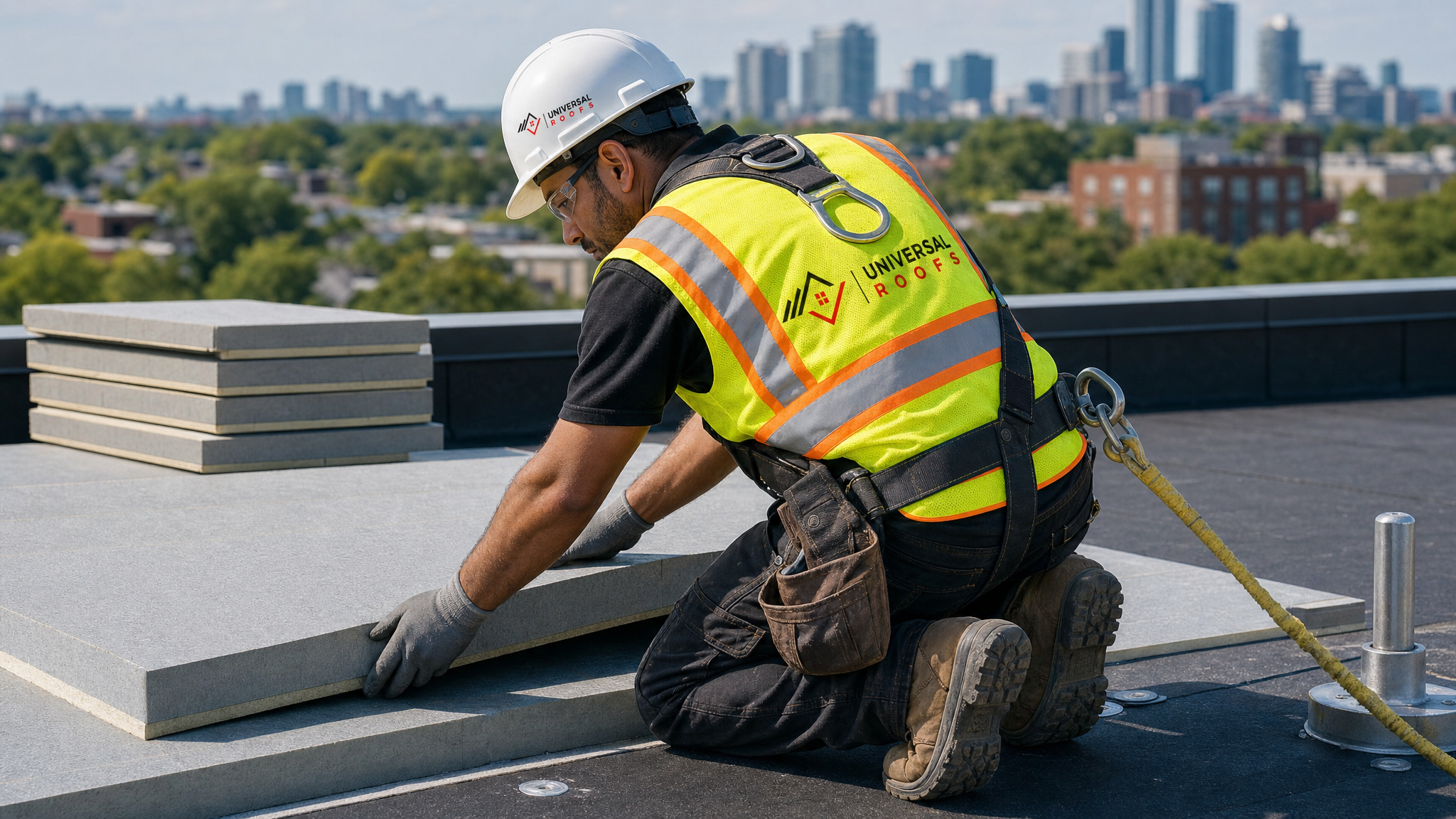
For roofs with widespread or recurring ponding rather than one isolated low spot, tapered insulation is often the most effective long-term solution. Tapered polyiso insulation boards are custom-cut to create a gradual slope across the entire roof surface, directing water toward drains far more reliably than the original deck ever could.
This is a more involved project. It typically requires removing the existing membrane, installing the tapered board layout, and re-covering with a new membrane, but it addresses the structural cause of ponding rather than just treating a symptom. Many commercial and larger residential flat roofs across the GTA are re-sloped this way during a full roof replacement.
Solution 4: Crickets and Saddles Around Rooftop Equipment
HVAC units, skylight curbs, and other rooftop equipment frequently create dams that trap water on their uphill side. A cricket, a small triangular built-up area, or a saddle diverts water around the obstruction instead of letting it collect against it.
This is especially important around skylight curbs on flat and low-slope roofs, where standing water sitting against the curb dramatically increases the risk of a leak at the flashing seam. If you notice a skylight surrounded by a persistent puddle, a cricket is usually a far more durable fix than repeated caulking.
Solution 5: Spot-Level Low Areas with Insulation Fill
Not every ponding problem needs a full tapered system. When there are one or two isolated low spots, often called “bird baths,” a roofer can remove the membrane in that localized area, add tapered or built-up insulation fill to raise the deck level, and re-install the membrane over top.
This spot-repair approach is significantly less expensive than re-sloping an entire roof and is a good middle-ground solution when 80 to 90 percent of the roof drains properly and only a small percentage collects water.
Solution 6: Upgrade to a Fully Adhered or Reinforced Membrane
Ponding water that is allowed to remain, even temporarily while other fixes are scheduled, puts extra stress on the membrane itself. Mechanically fastened or loosely laid membranes are more prone to wind uplift and seam separation when water repeatedly sits and drains. Fully adhered TPO, PVC, or modified bitumen membranes with reinforced seams hold up far better under standing water and UV exposure.
If your roof already has recurring minor ponding that isn’t severe enough to warrant re-sloping, upgrading to a more ponding-resistant membrane during your next flat roofing replacement can meaningfully extend the roof’s service life.
Solution 7: Repair Structural Deflection at the Source
When ponding is caused by sagging joists or a weakened roof deck rather than a drainage layout problem, surface-level fixes will only mask the issue temporarily. In these cases, the deck itself may need sistering of joists, additional structural support, or partial deck replacement before any new insulation or membrane goes down.
This is more common on older additions, garages converted to living space, or roofs that have carried heavy snow loads for many winters without adequate support. A structural assessment should always be the starting point if a low spot keeps reappearing shortly after being levelled.
Solution 8: Improve Attic Ventilation to Reduce Deck Movement
It may not be obvious at first, but poor attic ventilation and insulation can contribute indirectly to ponding. Uneven heat loss through the roof deck causes localized freeze-thaw cycling and slight warping of the decking material over time, which can create or deepen low spots.
Balanced intake and exhaust ventilation, paired with proper attic insulation, keeps the roof deck temperature more consistent, reducing the freeze-thaw stress that contributes to deck movement in the first place. This is a preventive measure rather than a direct fix for existing ponding, but it protects the investment made in any of the structural repairs above.
Solution 9: Schedule Proactive Roof Maintenance Inspections
The most cost-effective long-term “solution” to ponding water is catching it early, before it causes membrane failure or interior damage. A proactive maintenance inspection twice a year, ideally in spring after snowmelt and in autumn before leaves clog drains, lets a roofer spot developing low spots, ageing membrane, and drainage issues while they are still inexpensive to correct.
Many ponding-related emergency repairs Universal Roofs is called out for could have been resolved for a fraction of the cost with an earlier inspection. If it has been more than a year since your flat roof was checked, now is a good time to schedule one.
Comparing the Nine Solutions
| Solution | Best For | Typical Timeline | Relative Cost |
|---|---|---|---|
| Clear drains and scuppers | Minor, seasonal ponding from debris | 1 to 2 hours | Low |
| Add or enlarge drains | Insufficient drainage capacity | 1 day | Low to Medium |
| Tapered insulation re-slope | Widespread or recurring ponding | 2 to 5 days | High |
| Crickets around equipment | Ponding beside HVAC units or curbs | 1 day | Low to Medium |
| Spot-level low areas | One or two isolated bird baths | 1 day | Medium |
| Upgrade membrane | Ageing or seam-prone roofing | 2 to 4 days | Medium to High |
| Structural deck repair | Sagging joists or weakened decking | 2 to 5 days | High |
| Improve attic ventilation | Preventing future deck movement | 1 day | Low to Medium |
| Proactive inspections | Ongoing prevention | 1 hour, twice yearly | Low |
DIY Checks vs. When to Call a Professional Roofer
Some ponding-water tasks are safe and reasonable for a homeowner to handle; others carry real fall and water-damage risk and should always go to a licensed roofer.
| Task | DIY-Appropriate? | Notes |
|---|---|---|
| Clearing ground-level downspouts | Yes | Safe from the ground with a ladder if needed for lower sections |
| Clearing rooftop drains and scuppers | Caution | Only if the roof is single-storey with safe, stable access |
| Diagnosing recurring low spots | No | Requires roof-slope measurement and membrane inspection |
| Installing tapered insulation | No | Specialized materials and membrane work |
| Repairing structural deflection | No | Requires structural assessment and carpentry expertise |
| Membrane seam repair | No | Improper repairs often void manufacturer warranties |
Signs Ponding Water Has Already Caused Damage
If ponding has been present for a while, it is worth checking for early signs of damage before it worsens. Watch for:
- Discoloured or sagging ceiling tiles or drywall directly below the ponding area
- A musty odour in the attic or top-floor rooms after rain
- Visible algae, moss, or dark staining on the membrane surface
- Blistering or bubbling in the membrane near the low spot
- Rust or corrosion around metal flashings and drain bowls
Any of these signs warrant a prompt inspection rather than waiting for the next scheduled maintenance visit.
Cost Ranges by Solution Type
| Repair Category | Scope | General Price Range (CAD) |
|---|---|---|
| Drain clearing and maintenance | Per visit, standard roof size | $150 to $400 |
| New or enlarged drain installation | Per drain, including flashing | $600 to $1,500 |
| Spot-level repair (bird bath) | Per low-spot area | $800 to $2,500 |
| Cricket installation | Per HVAC unit or curb | $400 to $1,200 |
| Tapered insulation re-slope | Full roof, part of re-roofing project | $8 to $16 per sq. ft. |
| Structural deck repair | Localized joist or deck repair | $1,500 to $6,000+ |
Exact pricing depends on roof size, access, membrane type, and the extent of any structural work required. A site visit is the only reliable way to get an accurate number for your property.
Preventing Ponding Water From Coming Back
Once a ponding issue has been corrected, a short list of maintenance habits will keep it from returning:
- Schedule a professional inspection each spring and autumn
- Trim back overhanging tree branches that drop leaves and debris onto the roof
- Keep an eye on the roof after any major storm, ice storm, or heavy snowfall event
- Address any new blistering, seam separation, or discolouration promptly rather than waiting
- Keep rooftop equipment access clear so technicians can reach drains and low spots safely
Consistent, low-cost maintenance is almost always cheaper than an emergency repair after a leak has already reached the interior of the building.
What are the best solutions for flat roofs with ponding water?
How long can water sit on a flat roof before it’s a problem?
Can I fix flat roof ponding water myself?
Does ponding water always mean I need a new roof?
Why does my flat roof pond water even though it looks flat and level?
How much does it cost to fix ponding water on a flat roof?
Need Help With Your Roof?
Ponding water on a flat roof rarely fixes itself, and the longer it sits, the more it costs to correct. The team at Universal Roofs has been diagnosing and solving drainage problems on flat roofs across the GTA since 2005, from simple drain clearing to full tapered insulation re-slopes.
Call us today at (416) 732-2421 or request a free inspection to get started.
Universal Roofs proudly serves Toronto, Mississauga, Brampton, Vaughan, Markham, Oakville and the GTA since 2005.