
A leak that shows up near the roofline is not always a roofing problem. In a large share of the service calls our crews run across Toronto, Mississauga, Vaughan and the surrounding GTA, the actual culprit is a failed gutter joint, a clogged downspout, or flashing that has pulled away from a gutter’s back edge. Water finds the path of least resistance, and when your gutters and downspouts stop moving water efficiently off the roof, that water backs up, overflows, and eventually finds its way behind fascia boards, under shingles, and into your attic or exterior walls.
This guide walks through the 3 best solutions for roof leak repair on gutters and downspouts, ranked from the least invasive fix to the most comprehensive one, so you can match the right solution to the severity of the problem in front of you. We will cover how to diagnose whether your leak is truly gutter-related, what each repair option actually involves, realistic costs for the Toronto market, and how our climate’s freeze-thaw cycles make gutter maintenance different here than almost anywhere else in Canada.
Whether you are dealing with a slow drip after every rainstorm or a sudden interior stain following a summer downpour, understanding these three approaches will help you make an informed decision before you call a contractor, and help you ask the right questions when you do.
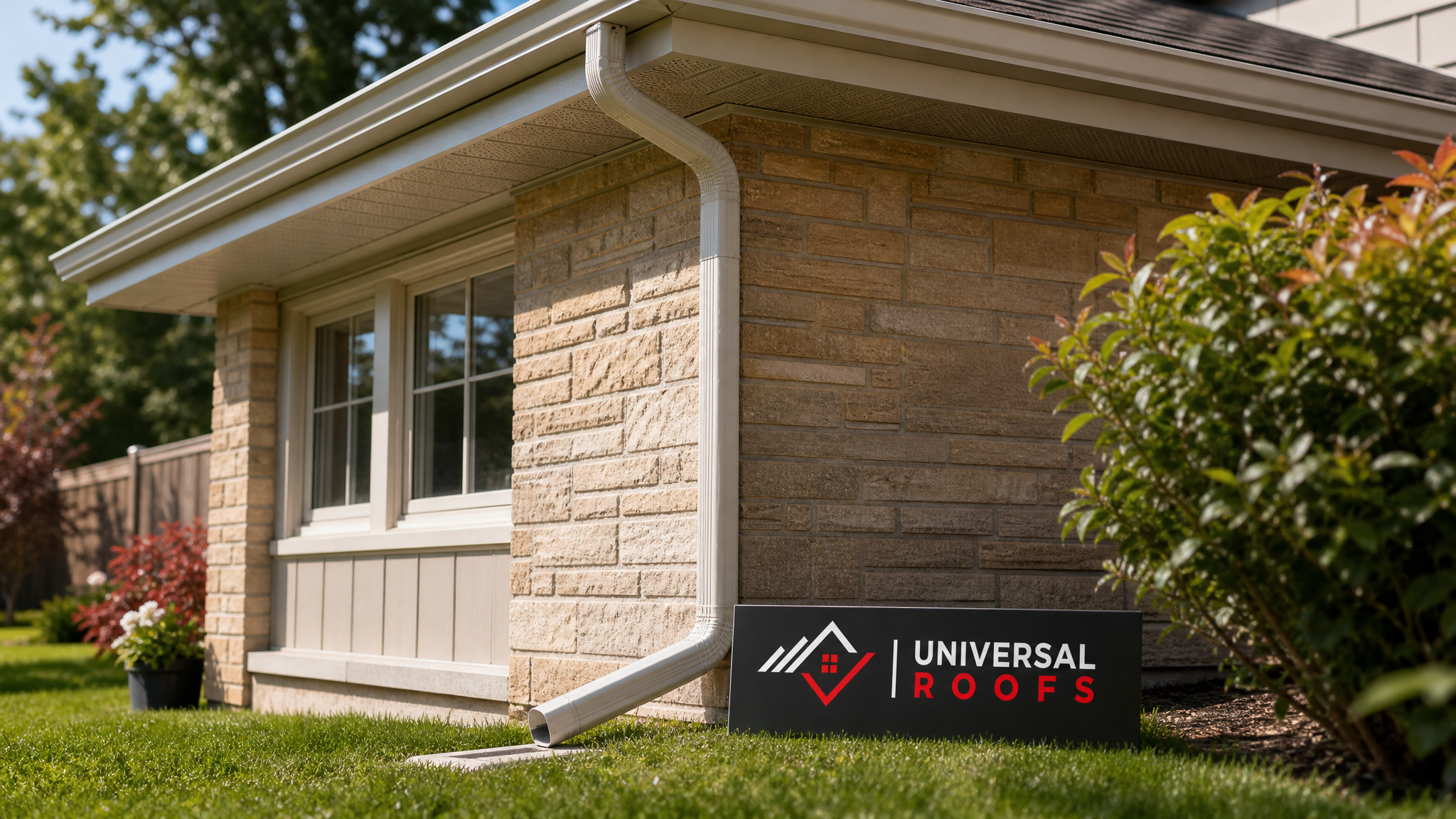
How to Tell If Your Roof Leak Is Actually a Gutter Problem
Before jumping to any repair, it pays to confirm the source. Gutter-related leaks tend to have a distinct signature compared to leaks that originate from a compromised shingle field, a cracked vent boot, or a skylight seal. Here is what typically points to the gutters and downspouts rather than the roof deck itself:
- Staining or dripping that appears specifically along the eaves, not in the middle of a ceiling
- Water marks that follow the line of the fascia board rather than a random interior spot
- Visible sagging, pulling away, or rust streaks on the gutter itself
- Overflow “waterfalls” spilling over the gutter’s front lip during moderate rain
- Puddling or erosion at the base of a downspout, or a downspout that is disconnected from the elbow
- Ice damming in winter that reappears every year in the same spot along the eave
If you are seeing any combination of these signs, the gutter and downspout system is the most likely starting point for your roof repair investigation. That said, gutters and roofing work as one connected water-management system, so it is still worth having a professional confirm that the underlying flashing, drip edge, and shingle courses above the gutter line are intact. A five-minute inspection can save you from patching a gutter while a hidden flashing gap keeps feeding the same leak.
Solution 1: Sealant and Joint Repair for Minor Leaks
The first and least invasive of the 3 best solutions for roof leak repair on gutters and downspouts is targeted sealant and joint repair. This approach is appropriate when the gutter system is structurally sound — properly pitched, securely fastened, and free of major rust or warping — but has developed small leaks at seams, end caps, or fastener holes.
Aluminum and steel gutter sections are typically joined with a combination of overlapping seams and gutter-grade sealant (usually a polyurethane or butyl-based caulk rated for continuous water exposure). Over years of Toronto’s freeze-thaw cycles, that sealant contracts, expands, and eventually cracks or separates from the metal. The fix involves:
- Cleaning the joint thoroughly with a wire brush and solvent to remove old, failed sealant and debris
- Drying the area completely — sealant applied over damp metal will not bond and will fail again within a season
- Applying a bead of exterior-grade, UV-stable gutter sealant along the full seam, not just the visible gap
- Smoothing the sealant with a putty knife or gloved finger to ensure full contact with both metal surfaces
- Allowing full cure time (typically 24 to 48 hours) before the next rain event, when possible
This same technique applies to small punctures or nail-hole leaks along the gutter trough, and to loose downspout elbow joints where the crimped sections have separated slightly. For end caps that have rusted through, replacing the cap entirely with a matching aluminum or galvanized piece is more durable than sealant alone.
Sealant repair is a genuinely good long-term fix when the underlying gutter is otherwise healthy — but it is not a substitute for addressing structural sag, chronic overflow, or advanced rust, which is where the next two solutions come in.
Solution 2: Realignment, Resupport, and Downspout Reconnection
The second solution addresses leaks caused not by a hole or failed seam, but by water management failure — gutters that no longer drain properly because they have lost their pitch, pulled away from the fascia, or disconnected from their downspouts. This is an extremely common issue on homes 10 to 20 years old across the GTA, where original hangers have loosened from repeated ice loading each winter.
A gutter needs a consistent slope — typically a drop of about 6 millimetres for every 3 metres of run — toward each downspout outlet. When hangers loosen, sag develops, low points form, and standing water collects. That standing water finds the nearest weak point (a seam, a nail hole, a hairline crack) and drips down behind the fascia into the soffit and roof deck. The repair process includes:
- Removing all debris and flushing the gutter run with a hose to confirm current flow patterns and locate low spots
- Re-setting or replacing hidden hangers (spaced roughly every 60 to 90 centimetres) to restore proper pitch
- Adjusting the gutter’s attachment to the fascia board, replacing any rotted fascia sections that no longer hold fasteners securely
- Reconnecting or re-crimping downspout sections that have separated from the gutter outlet or from each other
- Extending downspout discharge at least 1.2 to 1.8 metres away from the foundation to prevent basement seepage, particularly important on properties with clay-heavy soil common across the Peel Region and York Region
- Installing or cleaning out gutter outlet strainers to prevent future clogs from re-triggering the same overflow pattern
This solution is also the right call when downspouts are undersized for the roof area they serve. Many older GTA homes still have 2×3 inch downspouts that were adequate decades ago but cannot keep pace with the intense, short-duration summer thunderstorms we now see more frequently. Upsizing to a 3×4 inch downspout on the heaviest-draining sections of roof is a small change that meaningfully reduces overflow-driven leaks.
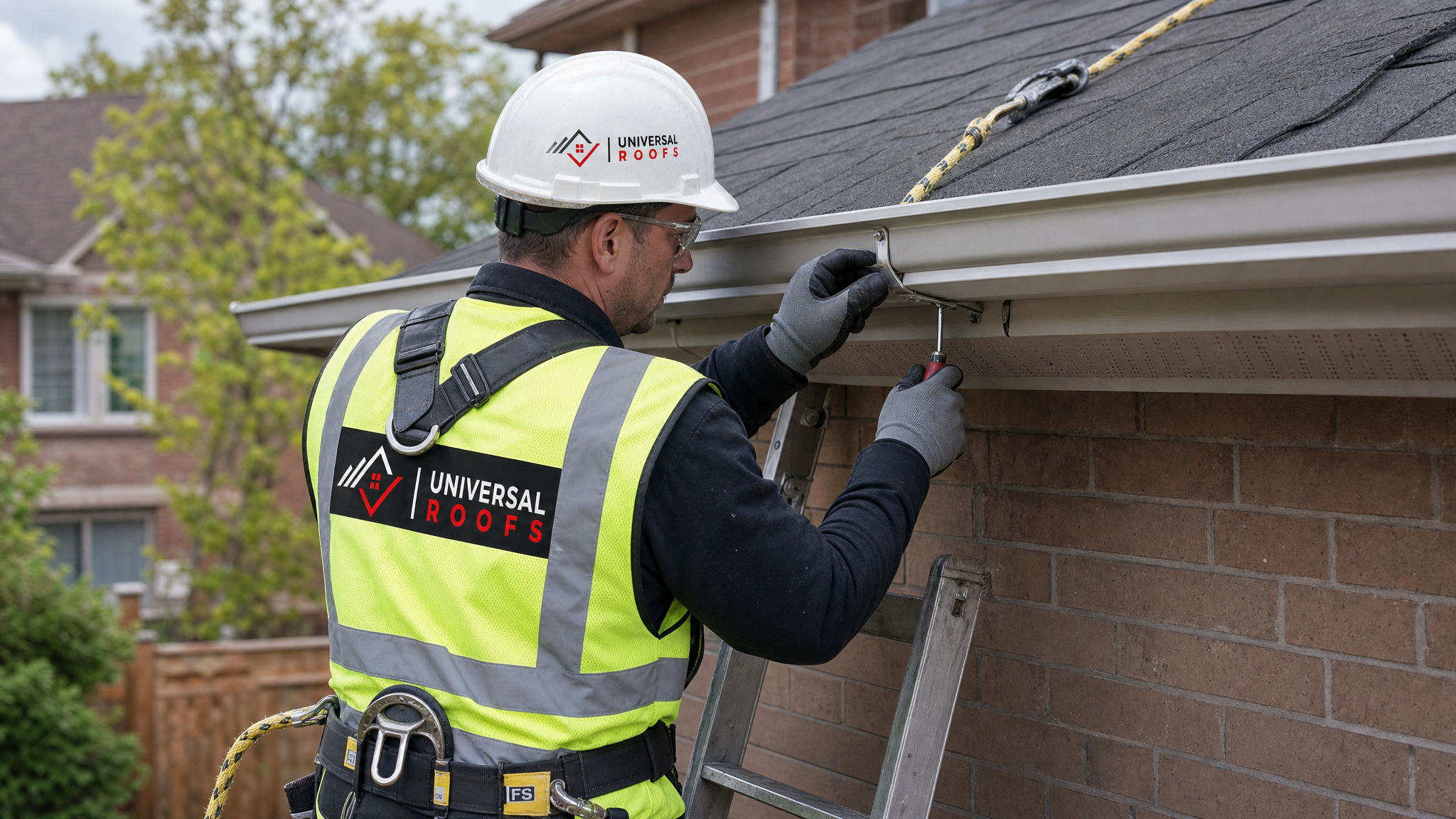
Solution 3: Full Gutter and Downspout Replacement
The third and most comprehensive of the 3 best solutions for roof leak repair on gutters and downspouts is complete replacement of the gutter and downspout system. This is the right call when the gutters show widespread rust-through, repeated sag despite re-hanging, sectional damage from ice or falling branches, or when the leaks keep returning across multiple locations rather than one isolated spot.
Replacement is also frequently paired with broader roof replacement projects, since it is far more cost-effective to install new gutters at the same time as new shingles, drip edge, and fascia than to schedule the work separately. When we replace a system, the scope typically includes:
- Removing the old gutter, downspouts, hangers, and any damaged fascia board sections
- Installing new drip edge flashing to ensure water sheds directly into the new gutter rather than behind it
- Fitting seamless aluminum gutter, formed on-site to the exact run length, which eliminates most of the seam-leak points that plague sectional gutter
- Setting hidden hangers at correct intervals and pitch for the specific roof’s drainage load
- Installing properly sized downspouts with secure straps and correctly angled elbows and extensions
- Adding gutter guards or leaf screens where tree coverage is heavy, reducing the debris load that causes future clogging
Seamless aluminum is the standard choice for most GTA homes because it balances cost, durability, and low maintenance. Homes with heavier snow-load concerns, or owners who want a longer service life, sometimes opt for 26-gauge steel gutter, which resists denting from ice and ladder contact better than standard aluminum. For homes with a flat roofing section feeding into a gutter run, we also verify that the internal drain or scupper is properly tied into the downspout system, since flat-roof drainage failures often masquerade as gutter leaks.
Comparing the 3 Best Solutions for Roof Leak Repair on Gutters and Downspouts
Every property is different, but the table below summarizes how these three approaches compare in scope, typical turnaround, and expected lifespan once completed.
| Solution | Best For | Typical Turnaround | Expected Lifespan of Fix |
|---|---|---|---|
| 1. Sealant and Joint Repair | Minor seam leaks, small punctures, otherwise sound gutters | Same day, 1-2 hours per section | 3-7 years depending on exposure |
| 2. Realignment and Reconnection | Overflow leaks, sagging runs, disconnected downspouts | Half day to full day | 8-12 years with routine cleaning |
| 3. Full Replacement | Widespread rust, chronic multi-point leaks, aging systems | 1-2 days | 20-25+ years (seamless aluminum) |
| Downspout resizing add-on | Undersized downspouts causing repeat overflow | Half day | Matches host system lifespan |
| Gutter guard installation | Heavy tree coverage, recurring clogs | Same day as install/replacement | 10-15 years, cleaning still required |
Estimated Costs for Gutter and Downspout Leak Repair in the GTA
Costs vary based on the length of the gutter run, the material, accessibility (a single-storey bungalow versus a three-storey home with steep pitches), and how much fascia repair is needed underneath. The table below reflects typical ranges we see across Toronto and the surrounding regions.
| Repair Type | Typical Cost Range (CAD) | What Affects the Price | Notes |
|---|---|---|---|
| Sealant/joint spot repair | $150 – $400 | Number of seams, accessibility, fascia condition | Often bundled if multiple small spots found in one visit |
| Hanger reset and downspout reconnection | $300 – $900 | Length of run, number of hangers replaced, ladder access | Fascia repair adds $10-$20/linear metre if rotted |
| Full seamless aluminum replacement | $14 – $22 per linear metre | Roof height, colour/gauge choice, number of downspouts | Steel gutter runs 20-30% higher than aluminum |
| Downspout upsizing (per downspout) | $120 – $250 | Length, number of elbows, extension length | Best done alongside a full gutter service call |
| Gutter guards (per linear metre) | $25 – $45 | Mesh vs. solid-cover style, roof pitch | Reduces cleaning frequency, not a leak fix on its own |
Troubleshooting Recurring Gutter and Downspout Leaks
Some leaks come back even after a repair, and it is almost always because the underlying cause was addressed only partially. Use this troubleshooting reference to narrow down what is still going wrong before booking a follow-up visit.
| Symptom | Likely Cause | Recommended Next Step | Priority |
|---|---|---|---|
| Leak returns at the same seam within weeks | Sealant applied to dirty/damp metal, or seam movement from a loose hanger nearby | Re-clean and reseal; check hangers within 1 metre of the seam | Medium |
| Overflow continues despite cleaning | Undersized downspout or blocked underground drain connection | Upsize downspout, inspect buried drain line for blockage | High |
| Water stains appear only in winter | Ice damming from poor attic insulation or ventilation | Have your attic insulation and ventilation assessed | High |
| Leak near a downspout that empties near the foundation | Insufficient discharge extension, water re-entering at grade | Add or lengthen downspout extension to 1.2-1.8m minimum | Medium |
| New staining appears after a skylight was installed nearby | Flashing transition between skylight curb and gutter run disturbed | Have the skylight replacement flashing checked against the gutter tie-in | High |
| Whole gutter run pulling away from fascia | Rotted fascia board no longer holding fasteners | Replace fascia section before rehanging gutter | High |
Why Toronto’s Climate Makes Gutter Maintenance a Priority
Freeze-thaw cycling is the single biggest reason GTA gutters fail faster than the manufacturer’s stated lifespan would suggest. Water that sits in a low spot on a January afternoon can freeze solid overnight, expand, and pry a sealed seam apart by spring. Add heavy spring rain, humid summer thunderstorms, and autumn leaf litter from mature tree canopies in neighbourhoods across Toronto, Mississauga, and Vaughan, and you have a system that needs a real inspection at least twice a year — ideally in late spring and again in late autumn before the first freeze.
Homes in the Halton Region and Durham Region that back onto ravines or wooded lots see the heaviest debris load and benefit most from gutter guards paired with a full replacement. Properties closer to the lake in central Toronto tend to see more wind-driven rain, which stresses seams and end caps more than debris does. Understanding which pattern applies to your property helps prioritize which of the 3 best solutions for roof leak repair on gutters and downspouts is the right starting point.
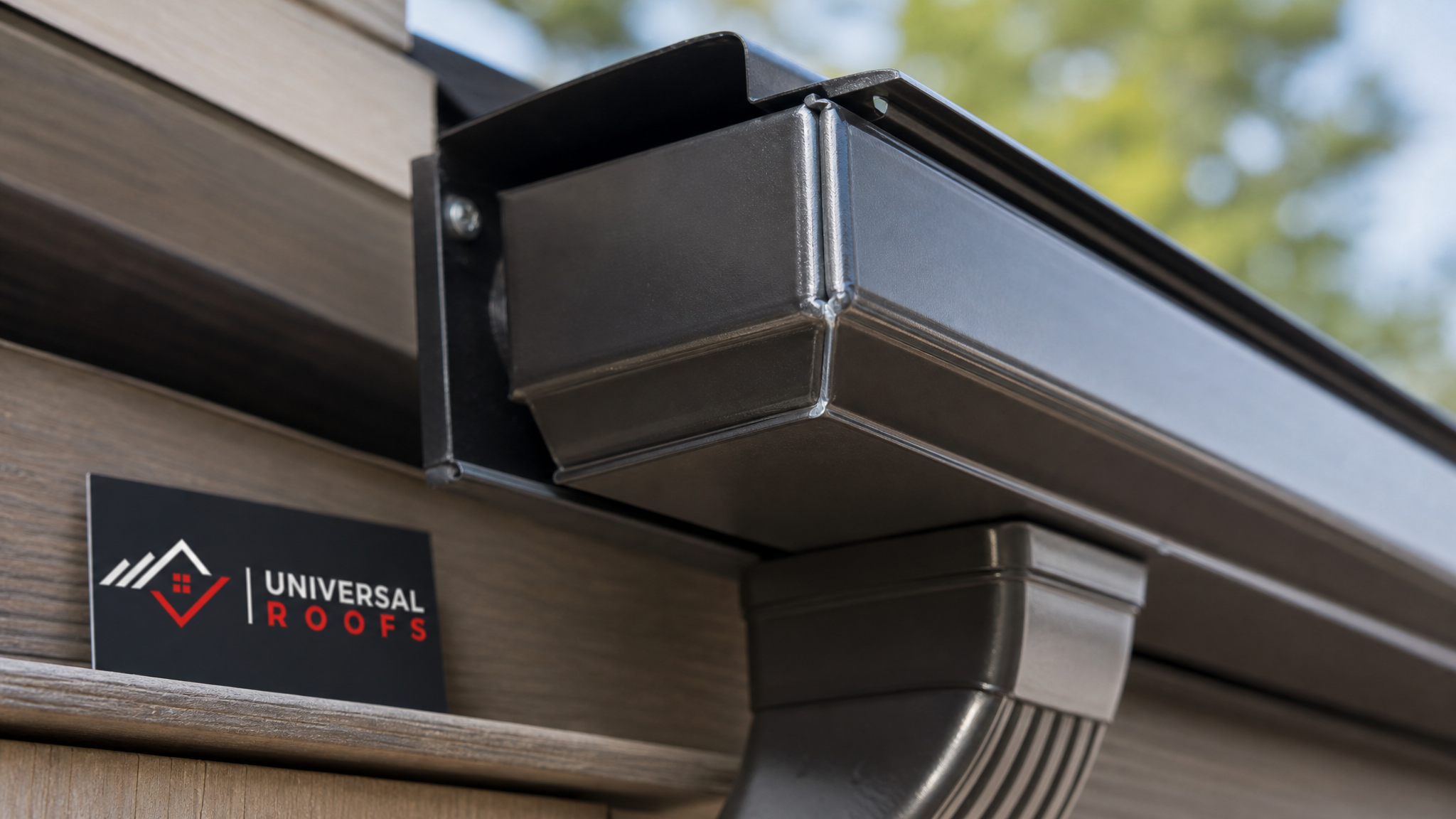
Preventing Future Gutter and Downspout Leaks
Once a leak is resolved, a short list of maintenance habits keeps it from coming back:
- Clean gutters at minimum twice yearly — late spring after seed and blossom drop, and late autumn after leaf fall
- Check downspout outlets and underground drain connections for blockage after major storms
- Inspect hangers annually for looseness, especially after a heavy ice season
- Trim overhanging branches that deposit heavy debris loads directly into the gutter run
- Confirm downspout extensions still discharge well clear of the foundation, especially after landscaping changes
- Have your roofline reviewed whenever you schedule other exterior work, since flashing, fascia, and gutters all interact as one system
A quick annual walk-around, camera-in-hand, documenting the condition of seams, hangers, and downspout connections gives you (or your contractor) a clear before-and-after reference and often catches small issues before they become interior water damage. If you are ever unsure whether what you are seeing is a minor seasonal quirk or a genuine structural concern, our FAQ page covers many of the most common homeowner questions, and our reviews page shares how other GTA homeowners have handled similar repairs with our team.
When to Call a Professional vs. DIY
Sealant touch-ups on a single-storey home with safe ladder access are within reach for a comfortable DIYer, provided the correct gutter-grade sealant is used and the surface is properly prepared. Anything involving hanger replacement, fascia repair, downspout resizing, or work above a single storey should go to a professional roofer, both for safety (working at height without harness training is genuinely dangerous) and for correctness — pitch, hanger spacing, and flashing tie-ins are easy to get subtly wrong in ways that only show up as a leak eight months later.
If your home has multiple leak points, recurring issues after a previous repair, or gutters that are visibly rusted or pulling away from the house, it is worth having a full roofline assessment rather than chasing one symptom at a time. Our team has been solving exactly these problems across the GTA Universal Roofs since 2005, and a proper diagnosis up front almost always costs less than repeated spot repairs.
What are the 3 best solutions for roof leak repair on gutters and downspouts?
How do I know if my roof leak is coming from the gutters instead of the roof deck?
Can I repair a leaking gutter seam myself?
How much does gutter and downspout leak repair cost in the GTA?
Why do gutter leaks keep coming back after repair in Toronto?
Should I replace my gutters at the same time as my roof?
Need Help With 3 Best Solutions for?
Water that lingers where it shouldn’t rarely stays a small problem for long. Whether you need a quick sealant fix, a full realignment, or a complete replacement, the team at Universal Roofs can diagnose the real cause and recommend the right fix the first time.
Call us today at (416) 732-2421 or request a free inspection to get started.
Universal Roofs proudly serves Toronto, Mississauga, Brampton, Vaughan, Markham, Oakville and the GTA since 2005.