
When heavy snow piles up on a sloped or flat roof, homeowners across the Greater Toronto Area start asking the same question every winter: which residential roof snow removal services for you actually make sense for your home, your budget, and your roof type? The answer depends on your roof’s pitch, its age, the depth of snow load, and whether ice dams have already started forming along the eaves. Some situations call for a simple roof rake you can use yourself from the ground. Others require a licensed contractor with ropes, harnesses, and specialized tools to safely clear snow without damaging shingles, flashing, or gutters.
This guide breaks down every major snow removal method available to GTA homeowners, compares their costs and safety profiles, explains how to recognize when a snow load has become a genuine structural risk, and walks through what a professional roof snow removal visit actually involves. We will also cover ice dam prevention, the warning signs that mean you should stop delaying and call a contractor, and how to choose a reputable company rather than a door-knocking storm chaser.
Toronto’s freeze-thaw cycle is uniquely hard on roofs. Unlike regions that get one big snowfall and stay frozen all winter, the GTA regularly swings above freezing during the day and drops well below zero at night. That cycle melts the bottom layer of snow on a roof, sends water down toward the cold eaves, and refreezes it into ice dams that back water up under shingles. Understanding this pattern is the first step to choosing the right removal approach for your home.
Why Roof Snow Removal Matters for GTA Homeowners
A fresh snowfall looks harmless sitting on a roof, but snow is heavier than most homeowners assume. Fresh, dry powder can weigh around 7 kilograms per square metre, while wet, compacted, or ice-laden snow can weigh 25 kilograms per square metre or more. On a typical 140 square metre roof, that difference is the gap between a manageable load and several tonnes of accumulated weight pressing down on rafters, trusses, and decking.
Most homes built to Ontario Building Code standards are engineered to handle standard snow loads for our climate zone, but that safety margin assumes the snow is evenly distributed and the structure has been properly maintained. Older homes, additions, sunrooms, and porch roofs are frequently under-built relative to the main roof, and repeated freeze-thaw cycles accelerate the mechanical wear on shingles, flashing, and fasteners. Combine an aging structure with an unusually heavy snow year, and the risk of sagging, leaks, or in the worst case, structural failure, rises quickly.
Snow removal is not only about weight. Standing snow and ice also drive moisture into places it should never reach. As snow melts and refreezes at the roof edge, it forms ice dams that force water backward under the shingles instead of down into the gutters. That water finds every seam, nail hole, and flashing gap on its way to your attic and ceiling. If you have already noticed water stains, peeling paint near the ceiling line, or ice buildup along your eaves, it is worth having a roof repair assessment done alongside any snow removal to catch damage before it spreads.
Comparing Residential Roof Snow Removal Methods
Not every home needs the same approach. A single-storey bungalow with a simple gable roof has very different removal needs than a two-and-a-half storey home with dormers, valleys, and a steep pitch. The table below compares the main methods used across the GTA, along with their relative safety and best-use cases.
| Method | Best For | Typical Cost (GTA) | Safety Level |
|---|---|---|---|
| Ground-level roof rake | Single-storey homes, first 1.2m of eave | $40–$120 (tool purchase) | Safe when used from the ground |
| Professional manual shovelling | Multi-storey, steep-pitch, or heavily loaded roofs | $300–$700 per visit | High risk without proper harness and rope systems |
| Steam/hot water removal | Ice dam removal without shingle damage | $400–$900 per visit | Very safe for the roof surface, requires trained technicians |
| Calcium chloride ice melt socks | Preventing new ice dams after removal | $25–$60 in materials | Safe, but not a substitute for physical removal |
| Heated cable systems (installed) | Chronic ice dam locations, valleys, eaves | $800–$2,500 installed | Safe long-term prevention, professional install recommended |
For most GTA homeowners, the practical answer combines two of these: a roof rake for light, accessible snow near the ground, and a professional visit for anything beyond safe reach, anything on a steep or multi-storey roof, or any situation involving ice dams. Chipping at ice with a shovel or hammer is one of the fastest ways to crack shingles and create a repair bill far larger than the snow removal itself.
The Case for Professional Roof Snow Removal Services
DIY roof rakes work well for single-storey homes where you can reach the first metre or two of eave from a stable position on the ground. Beyond that, the calculus changes. Climbing a loaded, snow-covered roof without fall protection is genuinely dangerous, and it is one of the most common causes of serious winter injury among GTA homeowners who try to handle it themselves.
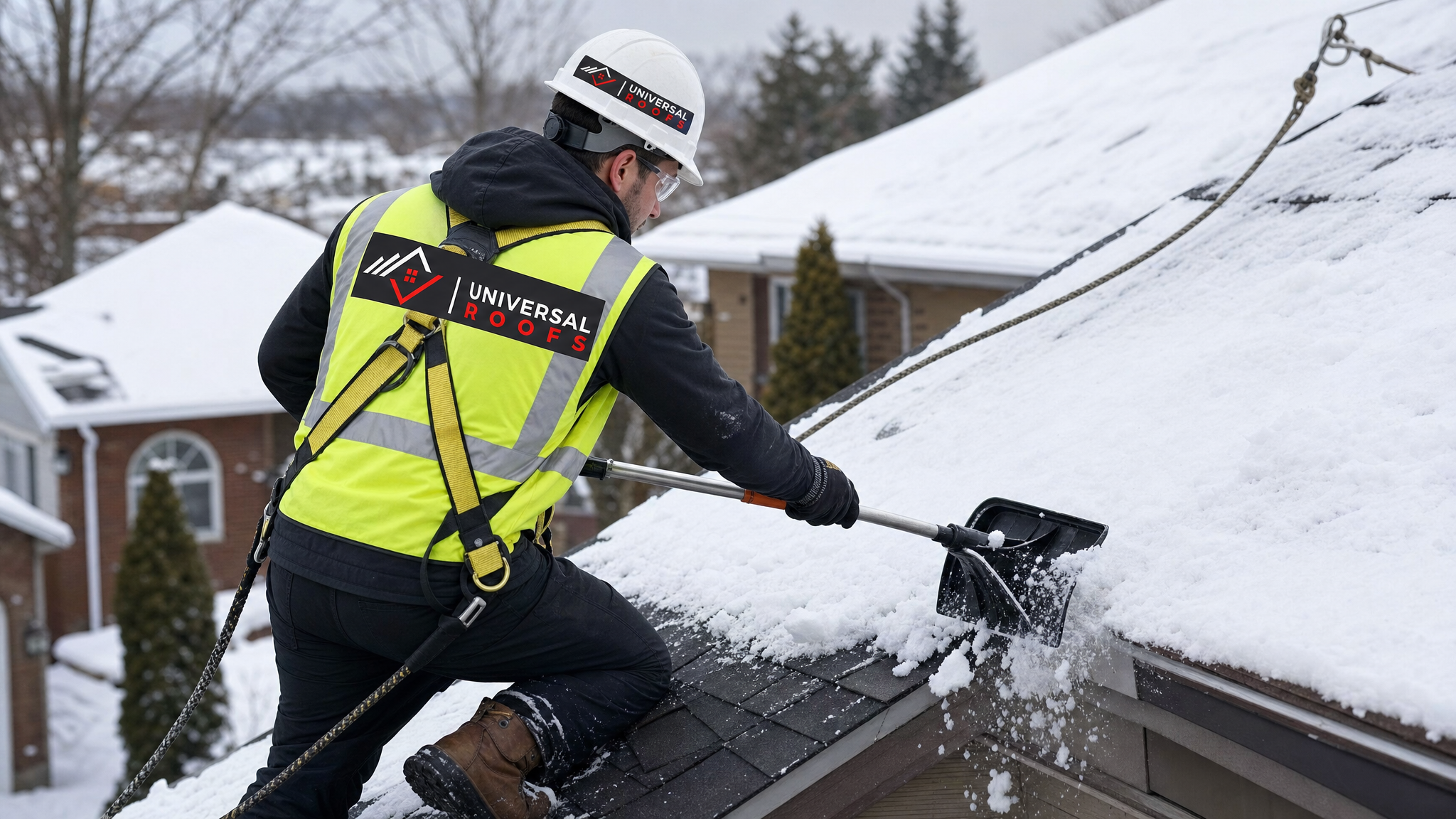
Professional residential roof snow removal services for you should include a few non-negotiable elements: a harness and rope anchor system, plastic or rubber-edged shovels that will not gouge shingles, a plan for where the removed snow will land relative to walkways and vehicles, and an inspection of the roof surface before and after the work. A reputable contractor will also check your attic ventilation and insulation while they are up there, since poor ventilation is one of the biggest contributors to repeat ice dam formation.
Recognizing Ice Dams and When to Call for Help
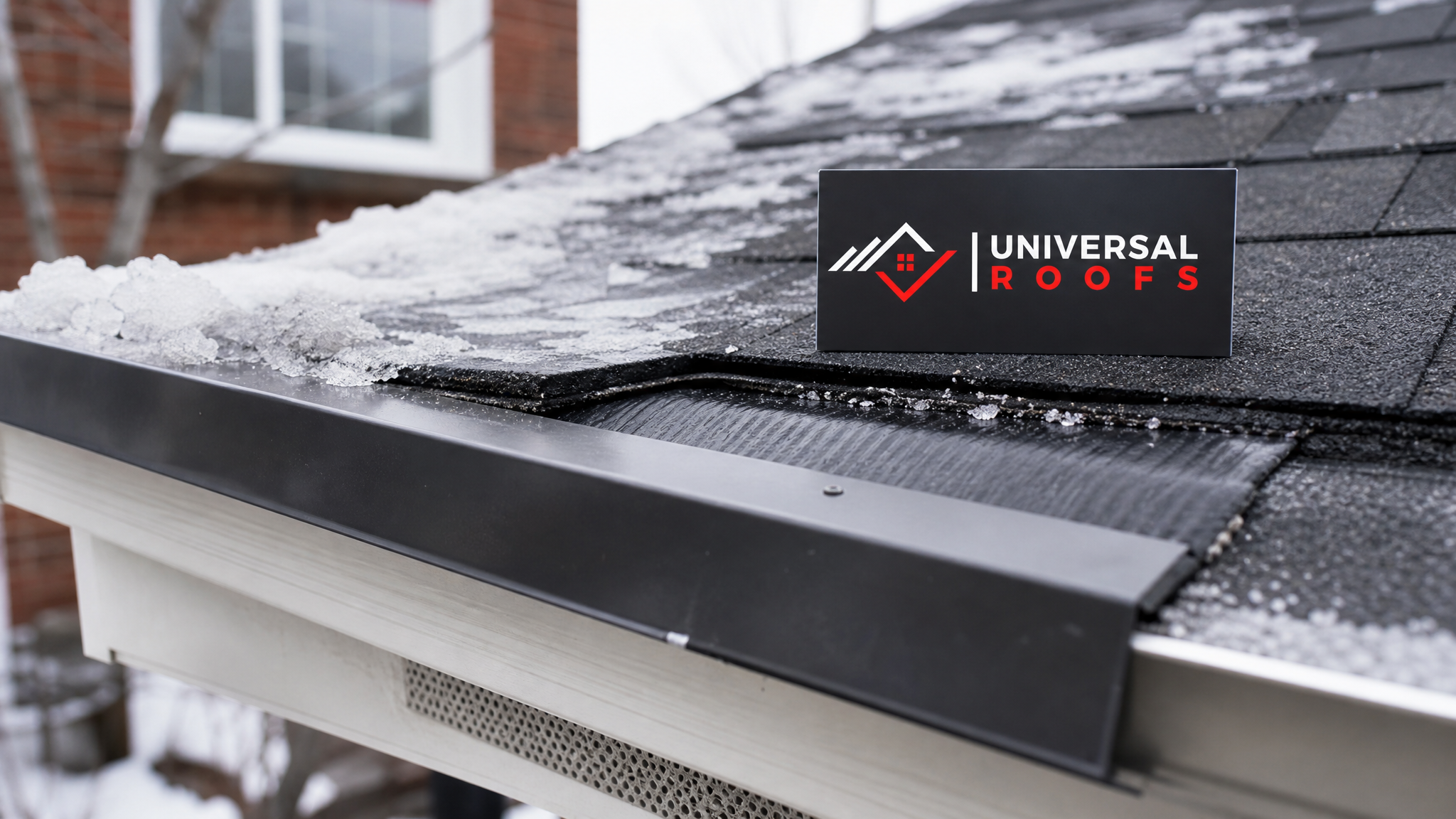
Ice dams form when heat escaping from your attic melts the underside of the snow layer on your roof. That meltwater runs down the roof deck until it reaches the colder overhang past the exterior wall, where it refreezes into a ridge of ice. As the process repeats, the ridge grows into a dam that traps standing water behind it, and that water has nowhere to go but under your shingles.
Some signs point clearly to an ice dam problem that needs professional attention rather than a weekend DIY fix:
| Warning Sign | What It Usually Means | Recommended Action |
|---|---|---|
| Icicles thicker than 3-4cm along the eaves | Meltwater is refreezing faster than it drains | Schedule steam-based ice dam removal |
| Visible ice ridge at the roof edge | An active ice dam is likely trapping water | Call a contractor before more snow falls |
| Water stains on interior ceilings | Water has already breached the shingles | Book a roof repair inspection immediately |
| Sagging or bowing roofline | Structural load may be approaching capacity | Emergency snow removal, same-day if possible |
| Ice forming inside the attic | Poor ventilation combined with heat loss | Attic inspection alongside snow removal |
If you are seeing any of the more serious signs in that table, particularly interior water stains or a visibly sagging roofline, do not wait for the next scheduled snowfall to pass. Reach out for a free inspection so a technician can assess both the immediate snow load and any damage that has already occurred underneath it.
How Professional Snow Removal Protects Different Roof Types
The right removal technique changes depending on what is under the snow. A steep asphalt shingle roof sheds snow naturally in many cases, but valleys and north-facing slopes that stay shaded all day accumulate ice more aggressively. A flat roof behaves completely differently: without slope to help drainage, flat and low-slope roofs need snow load monitored closely and drains kept clear of ice, since ponding water on a flat membrane is one of the fastest ways to cause a leak.
Homes with skylights need extra care during snow removal, since the flashing around a skylight is a common ice dam entry point and the glazing itself can be damaged by a poorly aimed shovel or by ice sliding off an upper roof section. If your skylights are older units, this is also a good time to consider whether a skylight replacement makes sense, since newer units are built with improved flashing details that resist ice dam intrusion far better than models from even 10-15 years ago.
Attic conditions matter just as much as the roof surface itself. A well-insulated, well-ventilated attic keeps the roof deck closer to outdoor temperature, which slows the melt-refreeze cycle that creates ice dams in the first place. Many homeowners who call for repeat snow removal every year eventually find that the root cause is heat loss through the attic, not the snowfall itself.
Snow Removal Timelines and What to Expect
Homeowners often ask how quickly a professional crew can respond and how long the work takes. Timelines vary with weather severity and roof size, but the table below reflects typical GTA scheduling during an active winter season.
| Service Stage | Typical Timeline | What Happens |
|---|---|---|
| Initial call or online request | Same day to 24 hours | Roof size, pitch, and access are discussed |
| On-site assessment | 1-2 business days (sooner for emergencies) | Technician evaluates snow load and ice dam presence |
| Snow and ice removal | 2-5 hours depending on roof size | Manual shovelling and/or steam removal performed |
| Post-removal inspection | Same visit | Shingles, flashing, and gutters checked for damage |
| Follow-up repair (if needed) | Scheduled separately | Any leaks or damaged shingles addressed |
Emergency requests, such as a visibly sagging roof or active interior leaking, should always be flagged as urgent when you contact a contractor. Most established roofing companies keep some flexibility in their winter schedule specifically for these situations, since a delayed response can mean the difference between a straightforward snow removal and a full structural repair.
Preventing Repeat Snow and Ice Problems
Removing snow after the fact treats the symptom. The more durable fix addresses why ice dams and heavy snow loads keep recurring on the same sections of roof. A few upgrades consistently reduce the frequency and severity of winter roof problems for GTA homeowners:
- Improving attic insulation to reduce heat loss through the roof deck
- Adding or upgrading ridge and soffit ventilation so warm air does not pool under the roof sheathing
- Installing ice and water shield membrane at the eaves during a roof replacement, which is now standard practice on new installations
- Extending gutter downspouts well away from the foundation so meltwater drains properly instead of refreezing near the eave
- Trimming overhanging tree branches that shade sections of roof and slow natural melt
If your roof is due for renewal in the next few years, it is worth having that conversation now rather than after another difficult winter. A properly installed roof with modern ice and water protection at the eaves and valleys dramatically reduces how often you will need emergency snow or ice dam removal in future seasons.
Choosing a Reputable Snow Removal Contractor
Winter storms bring out door-knocking crews offering fast, cheap snow removal with no license, no insurance, and no accountability if something goes wrong. Before hiring anyone to get on your roof, confirm a few basics: valid liability insurance, WSIB coverage for their crew, proper fall protection equipment, and references or reviews you can actually verify.
Reading recent customer reviews is one of the fastest ways to separate an established local contractor from a seasonal storm chaser. A company that has served the GTA for years will have a track record you can check, a permanent business address, and a crew trained specifically on the safety requirements of working on snow-loaded roofs. You can also check our FAQ page for answers to common questions about scheduling, pricing, and what to expect during a visit, or read more about our history on the about page.
Service Areas Across the GTA
Snowfall patterns and freeze-thaw severity vary somewhat across the Greater Toronto Area depending on proximity to Lake Ontario and elevation, but every municipality in the region deals with the same fundamental ice dam and snow load risks each winter. We provide residential roof snow removal and related roofing services throughout Toronto, Peel Region including Mississauga and Brampton, York Region including Vaughan, Markham, and Richmond Hill, Halton Region including Oakville and Burlington, and Durham Region including Ajax and Pickering.
No matter which part of the GTA you are in, the same principles apply: monitor snow load after major storms, watch for ice dam warning signs at your eaves, and do not attempt to clear a steep or multi-storey roof yourself without proper fall protection.
What are the best residential roof snow removal services for you if you have a single-storey home?
How much do professional residential roof snow removal services for you typically cost in the GTA?
Is it safe to remove roof snow myself?
How do I know if my roof has an ice dam that needs professional removal?
Can heavy snow actually cause structural damage to a residential roof?
What can I do to prevent needing residential roof snow removal services every winter?
Need Help With Top Residential Roof Snow?
Heavy snow load and ice dams are not problems to gamble on. If your roof needs a safe, professional assessment or removal, the team at Universal Roofs has the equipment, training, and local experience to handle it properly the first time.
Call us today at (416) 732-2421 or request a free inspection to get started.
Universal Roofs proudly serves Toronto, Mississauga, Brampton, Vaughan, Markham, Oakville and the GTA since 2005.