
A metal roof is one of the most resilient roofing systems you can install on a home in the Greater Toronto Area, but no material is entirely immune to a severe summer hailstorm. When a hailstorm sweeps through the GTA, homeowners with metal roofing often assume their investment is bulletproof, only to discover dents, coating damage, or loosened fasteners once the storm clears. Understanding hail damage how to repair metal roofs properly is essential to protecting your home’s value and avoiding leaks that can develop months after the storm.
This guide walks through how to identify hail damage on a metal roof, what repair methods actually work, how much repairs typically cost in the Toronto market, and when a full replacement makes more financial sense than patchwork repairs. We also cover the insurance process, seasonal timing, and the specific risks that Toronto’s freeze-thaw climate adds to storm-damaged metal panels.
Whether you have standing seam steel, corrugated panels, or a metal shingle system, the fundamentals of hail damage assessment and repair are similar. Read on for a complete, homeowner-friendly breakdown before you climb a ladder or call in a contractor.
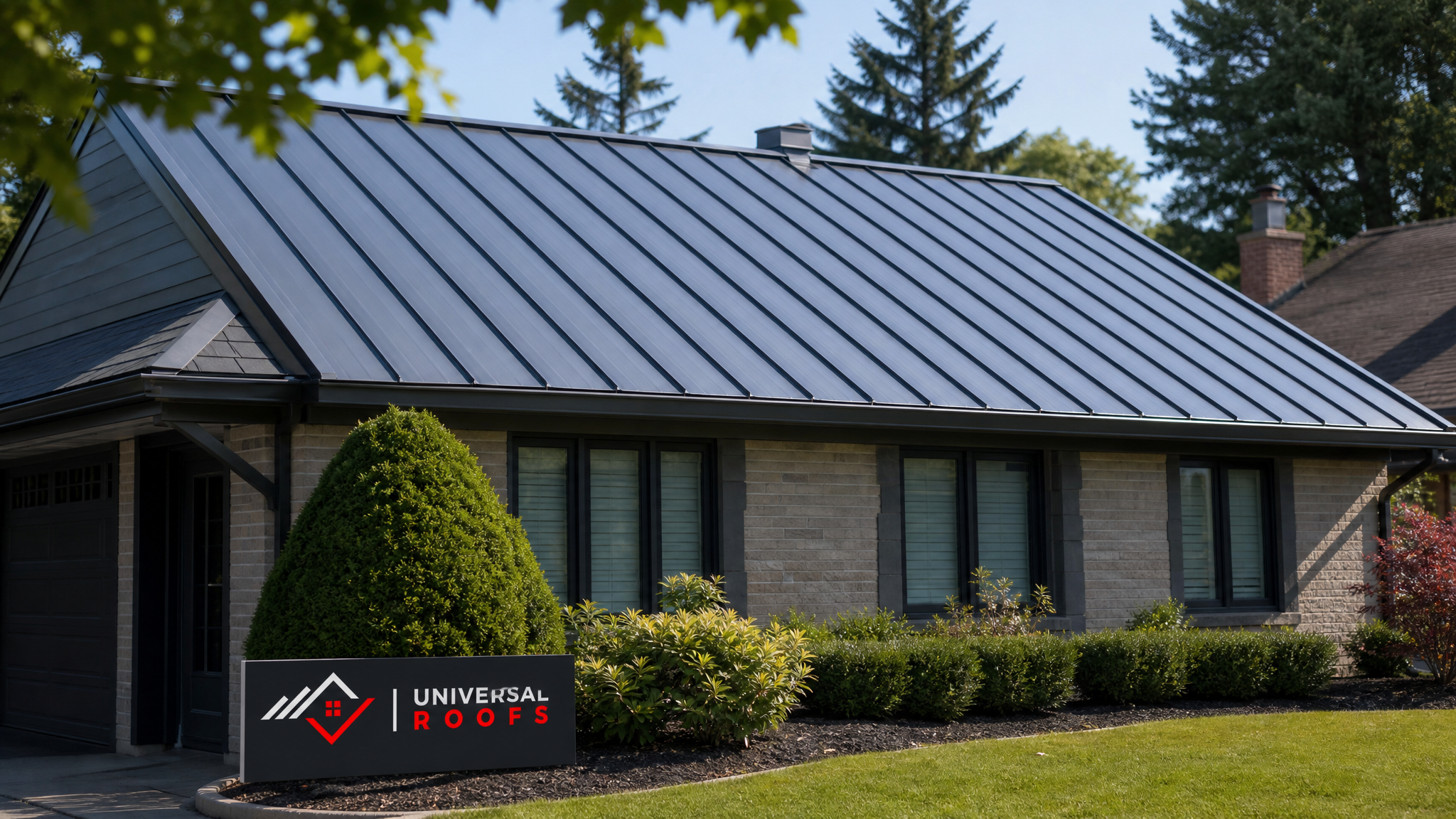
How to Identify Hail Damage on a Metal Roof
Hail damage on metal roofing looks different from what you’d see on asphalt shingles, and it is often subtler. Because metal panels don’t lose granules or crack the way asphalt does, damage can be easy to miss from the ground. A careful inspection after any storm with hail larger than dime-sized stones is worth the time, especially if you’ve heard hail striking the roof or noticed dents on outdoor furniture, siding, or vehicles.
The most obvious sign is dimpling or denting across exposed panel surfaces, particularly on south and west-facing slopes that catch the brunt of wind-driven hail. These dents are usually small and circular, sometimes only a few millimetres deep, but they can compromise the protective finish. Look closely at ridge caps, valleys, and flashing too, since these thinner-gauge components dent more easily than the main field panels.
Beyond dents, check for chipped or cracked paint and coating. Metal roofing relies on its factory-applied coating (often Kynar 500 or a comparable resin) to resist corrosion. Once hail chips through that coating, bare metal is exposed, and rust can begin within a single wet Toronto season. Also inspect fasteners, since impact can loosen screws or pop washers, creating small gaps where water infiltrates during the next rainfall.
Finally, walk your attic space with a flashlight after a storm. Watermarks, damp insulation, or a musty smell can indicate a breach even before you spot it on the exterior. If you’re unsure what you’re looking at, a professional inspection through our roof repair team can confirm the extent of the damage using close-range imaging and moisture metres.
Types of Hail Damage by Metal Roofing Material
Not all metal roofing responds to hail the same way. The gauge (thickness) of the metal, the panel profile, and the underlying substrate all affect how much damage a given hailstorm causes.
Standing seam steel panels, typically 24-gauge or heavier, are the most hail-resistant metal option and are common on higher-end GTA homes. They rarely dent from anything smaller than golf-ball-sized hail, but the raised seams and ridge caps remain vulnerable points.
Corrugated or ribbed steel panels, often lighter gauge (26 to 29-gauge), dent more readily because the flat sections between ribs have less structural rigidity. These are common on garages, sheds, and some older residential installs.
Metal shingles and stone-coated steel mimic the look of asphalt or slate but use a granular coating over steel. Hail impact can crack or dislodge the granular coating, exposing the metal substrate similarly to how coating damage occurs on standing seam panels, though the textured surface can sometimes hide minor denting from ground view.
Aluminum roofing, while corrosion-resistant, is softer than steel and dents more easily under hail impact, even from moderate-sized stones. Aluminum won’t rust like exposed steel, but repeated denting weakens the panel’s water-shedding profile over time.
| Material | Typical Gauge | Hail Resistance | Common Damage Type |
|---|---|---|---|
| Standing seam steel | 22-24 gauge | Excellent | Seam and ridge cap denting |
| Corrugated/ribbed steel | 26-29 gauge | Good | Panel field denting |
| Stone-coated steel shingles | 26-29 gauge | Good | Granule loss, coating cracks |
| Aluminum panels | 24-26 gauge | Fair | Widespread denting |
| Copper roofing | 16-20 oz | Fair to Good | Surface denting, patina disruption |
Step-by-Step: How to Repair Hail Damage on a Metal Roof
Once damage is confirmed, the repair approach depends on severity. Below is the general process our crews follow when repairing hail-damaged metal roofing across the GTA.
Step 1: Full roof assessment. A technician walks the entire roof surface (not just the visible slopes from the ground) and documents every dent, coating chip, and fastener issue with photos and measurements. This documentation matters enormously for insurance claims.
Step 2: Clean and dry the surface. Debris, granules, and standing water are cleared from panel seams and valleys before any repair work begins, since trapped moisture under a patch or coating will cause problems later.
Step 3: Address minor dents. Small, cosmetic dents that haven’t broken the coating usually don’t need structural repair, but if they’ve compromised the finish, the affected area is sanded lightly and treated with a matching touch-up coating or cold-galvanizing compound to prevent corrosion.
Step 4: Repair or replace damaged panels. Panels with deep dents, cracked coatings exposing bare metal, or compromised seams are typically replaced outright rather than patched, since a patched panel rarely matches the surrounding finish or performs as well long-term. This is standard practice under our roof repair service for storm damage.
Step 5: Reseal fasteners and flashing. Hail impact commonly loosens screws and disturbs rubber washers. Every fastener in the affected zone is checked, re-torqued, or replaced, and flashing at valleys, chimneys, and skylight curbs is resealed with fresh sealant.
Step 6: Final inspection and warranty documentation. The completed repair is inspected for water-tightness, photographed for records, and any workmanship warranty is issued in writing.
DIY Repair vs. Professional Repair: What You Should Know
Homeowners often ask whether minor hail damage on a metal roof can be handled without a contractor. For very small, cosmetic dents on an accessible, low-slope section, a careful homeowner can sometimes apply a touch-up coating themselves. However, there are real risks worth weighing before climbing up with a bucket of paint.
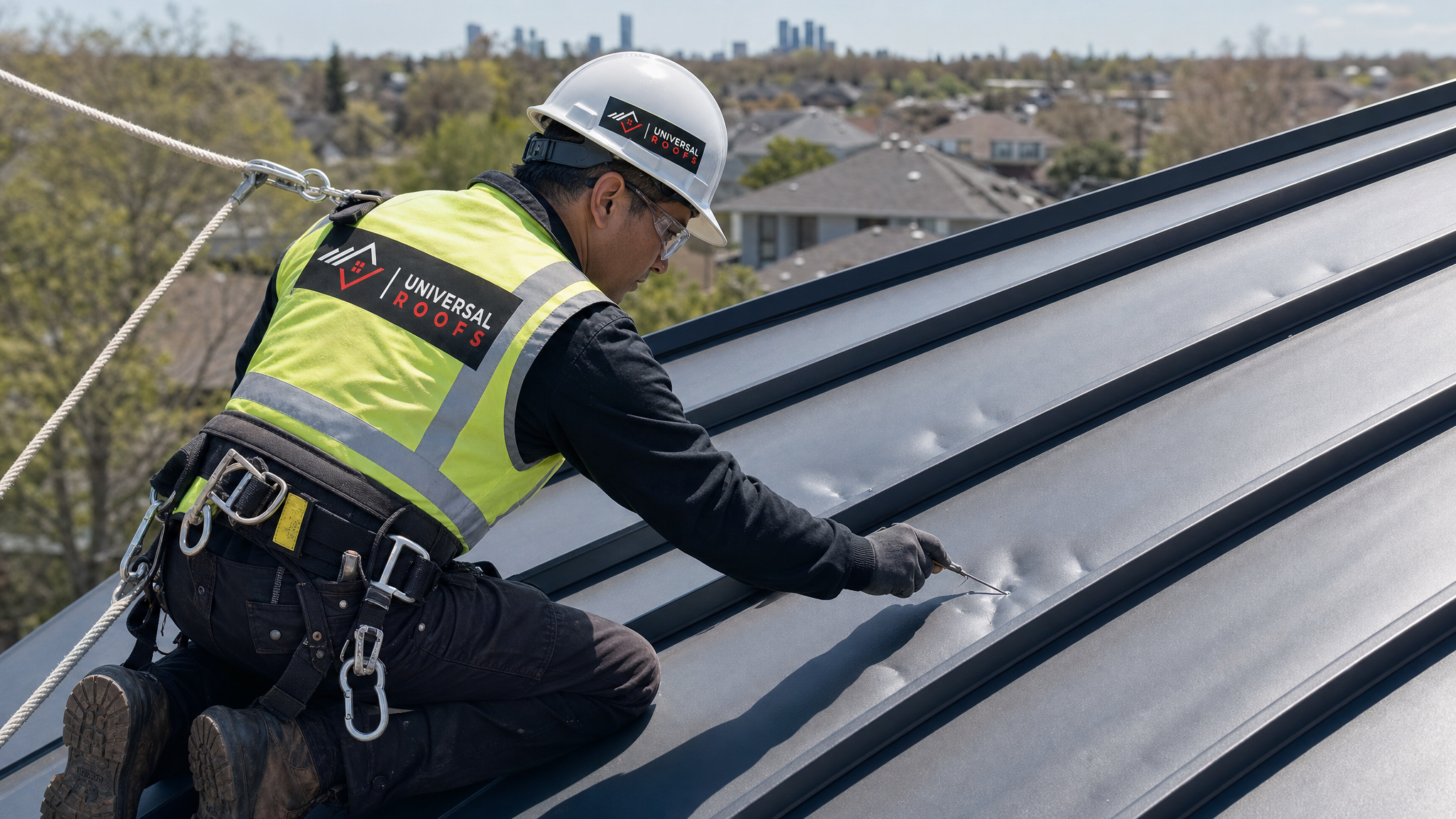
Working at height on a metal roof is inherently more hazardous than on asphalt shingles, since the surface is slick, especially when wet or frosted, and offers little traction. Professional crews use fall-protection harnesses and anchored safety lines for every repair, which most homeowners simply don’t have access to.
There’s also a technical risk: mismatched touch-up paint, improperly prepped bare metal, or sealant applied over a damp surface can trap moisture and accelerate corrosion rather than prevent it. A repair that looks fine for a season can fail within a year if the substrate wasn’t properly treated first.
Finally, DIY repairs can complicate insurance claims. If you’ve already altered the damaged area before an adjuster inspects it, you may lose the ability to document the original extent of the loss. For anything beyond the most superficial cosmetic marks, it’s worth having a licenced professional assess the roof through our roof repair team before making any changes.
| Factor | DIY Repair | Professional Repair |
|---|---|---|
| Safety equipment | Rarely available to homeowners | Harness, rope, anchored fall protection |
| Coating match | Often visibly mismatched | Factory-matched finishes available |
| Insurance documentation | Can jeopardize claim evidence | Photo-documented for adjusters |
| Warranty | None | Written workmanship warranty |
| Long-term corrosion risk | Higher if prep is rushed | Lower with proper substrate prep |
How Much Does Hail Damage Repair Cost in Toronto?
Repair costs for hail-damaged metal roofing vary widely depending on the extent of denting, whether panels need full replacement, and the roof’s pitch and accessibility. Below is a general cost range we see across GTA homes, useful for budgeting before you get a firm quote.
Minor cosmetic touch-up work on a small area is the least expensive option, while full panel replacement across multiple slopes climbs quickly given the cost of matching materials and labour at height. Homes with steep pitches, multiple roof levels, or difficult access (tight lot lines, mature trees) also see higher labour costs.
It’s worth noting that many hail damage repairs are at least partially covered by homeowner’s insurance, since hail is a recognized peril in most standard policies. Getting a written estimate that clearly separates cosmetic versus functional damage helps when negotiating with your insurer.
| Repair Scope | Estimated Cost (CAD) | Typical Timeline |
|---|---|---|
| Cosmetic touch-up (small area) | $300 – $800 | Half day |
| Fastener and flashing resealing | $500 – $1,500 | 1 day |
| Partial panel replacement | $1,500 – $5,000 | 1-2 days |
| Multi-slope panel replacement | $5,000 – $12,000 | 3-5 days |
| Full roof replacement (severe hail) | $15,000+ | 1-2 weeks |
When Repair Isn’t Enough: Signs You Need a Full Roof Replacement
Not every hailstorm calls for a full roof replacement, but there are situations where repairing panel by panel stops making financial or practical sense. If more than 25 to 30 percent of the roof surface shows denting or coating failure, patchwork repairs often cost nearly as much as replacement once labour, staging, and material matching are factored in.
Another consideration is age. A metal roof that was already approaching the end of its coating warranty (typically 25 to 40 years depending on the finish) may not be worth repairing if hail has accelerated wear that was already underway. Combining hail repair with a broader roof replacement can also be a good opportunity to upgrade attic ventilation or add improvements through our attic services, since proper ventilation extends the life of any new roofing system.
If your home also has a low-slope section or an attached garage roof, it’s worth having that inspected too. Flat and low-slope membranes handle hail very differently than metal panels, and our flat roofing team can assess whether the same storm caused issues there as well. Similarly, if your roof includes a skylight, hail can crack glazing or dent frames; our skylights and skylight replacement pages cover that scope of repair.
Insurance Claims for Hail-Damaged Metal Roofs
Filing an insurance claim for hail damage is usually straightforward, but a few steps make the process smoother and improve your chance of full coverage.
First, document everything before any repairs begin. Photograph dents from multiple angles, including a coin or tape measure for scale, and note the date of the storm from local weather records. Second, request a written inspection report from a roofing contractor rather than relying solely on the insurance adjuster’s assessment; a second, independent opinion often catches damage the adjuster’s brief walkthrough misses.
Third, be aware that adjusters sometimes classify hail damage as purely cosmetic on metal roofs, since dents alone don’t always cause immediate leaks. Push back with documented evidence of coating breaches or exposed substrate, since coating failure is a legitimate functional issue that leads to corrosion, not just an aesthetic one.
Finally, keep in mind that most policies have a claim window, often one year from the date of loss, so don’t delay reporting even minor-looking damage. A roof that looks fine in August can develop rust streaks and leaks by the following spring thaw if coating breaches go untreated over a Toronto winter.
| Insurance Step | What to Do | Why It Matters |
|---|---|---|
| Documentation | Photograph all dents and coating damage | Establishes proof of loss |
| Independent inspection | Get a contractor report before adjuster visit | Catches damage adjusters may miss |
| Claim timing | File within your policy’s claim window | Avoids automatic denial for late filing |
| Damage classification | Distinguish cosmetic vs. functional coating loss | Affects whether claim is approved |
| Repair scheduling | Wait for adjuster sign-off before repairs | Preserves evidence for the claim |
Why Toronto’s Climate Makes Hail Repair Urgent
The GTA’s climate adds a layer of urgency to hail damage repair that homeowners in milder regions don’t face. Summer hailstorms, most common from May through August, are frequently followed by heavy rainfall, which finds its way into any coating breach almost immediately. Left unaddressed through autumn, that moisture then faces a Toronto winter of repeated freeze-thaw cycles.
Water that seeps beneath a chipped coating or a loosened fastener can freeze and expand overnight, then thaw the next afternoon, gradually widening the breach with every cycle. What started as a small, cosmetic dent in July can become a genuine leak by the following March if repairs are delayed through the fall.
This is one reason we recommend addressing hail damage promptly rather than waiting, even if the roof appears watertight immediately after the storm. Since it’s currently summer, this is actually the ideal window to have panels repaired or replaced before autumn rains and winter freeze-thaw cycles set in. Homeowners across our Toronto, Peel Region, York Region, Halton Region, and Durham Region service areas often see the same seasonal storm patterns, so scheduling ahead of the fall rush is wise.
Preventing Future Hail Damage on Your Metal Roof
While you can’t stop a hailstorm, there are steps that reduce the severity of future damage and help your roof recover faster when hail does occur.
Choosing a heavier gauge metal at your next install or replacement significantly improves hail resistance; 24-gauge steel resists denting far better than 29-gauge panels, even though the material cost is higher upfront. If you’re planning a roof replacement soon, this is worth discussing with your contractor.
Regular maintenance also helps. Keeping gutters, valleys, and fastener lines clear of debris means water can shed properly even if a storm chips a section of coating, reducing the chance that trapped moisture causes corrosion before you notice the damage. An annual inspection, ideally each spring after winter and again after major summer storms, catches small issues before they compound.
Trimming overhanging branches also reduces secondary impact damage, since falling limbs during a hailstorm can cause more severe denting than the hail itself. Finally, keep a maintenance file with photos of your roof’s condition each year; this baseline record makes future insurance claims far easier to substantiate, and it helps any contractor quickly identify what’s new damage versus pre-existing wear.
What does hail damage look like on a metal roof?
Can you repair hail damage on a metal roof without replacing the whole panel?
How much does it cost to repair hail damage on a metal roof in Toronto?
Is hail damage on a metal roof covered by insurance?
How urgent is it to repair hail damage on a metal roof before winter?
Can I repair minor hail damage on my metal roof myself?
Need Help With Hail Damage How to?
If a recent storm has left dents, coating damage, or loosened fasteners on your metal roof, don’t wait for small issues to become expensive leaks. Universal Roofs has been repairing storm-damaged roofing across the GTA since 2005, and our crews know exactly what hail damage on metal roofing looks like, both from the ground and up close.
Call us today at (416) 732-2421 or request a free inspection to get started.
Universal Roofs proudly serves Toronto, Mississauga, Brampton, Vaughan, Markham, Oakville and the GTA since 2005.